Quick Answer: No ADAS is best in every market or vehicle. Huawei ADS 5, Tesla FSD (Supervised), XPeng XNGP and VLA 2.0, NIO NWM-based NOP+, and Li Auto MindVLA all remain driver-assistance products in the consumer configurations compared here. Compare the exact car, trim, hardware generation, software date, country and activated functions—not a brand name or TOPS figure.
Last verified: July 17, 2026. Tesla pricing is the U.S. price shown on that date. China product examples, software releases and regulatory references are dated individually because availability can change through configuration, homologation and OTA updates.
Comparison rule: ADAS means advanced driver-assistance system. In this article, “ADS” inside Huawei’s product name does not mean the consumer vehicle is an SAE Level 3–5 automated driving system. China’s GB 47955—2026 standard defines combination driver assistance around a driver who continuously observes traffic and controls the vehicle; NHTSA likewise says Level 2 ADAS requires the human driver to remain fully engaged.
Knowledge path: This is BYDToday’s single cross-brand ADAS comparison owner. Return to the China NEV Knowledge Hub for the wider brand, founder, battery, charging and technology map.
ADAS comparison 2026: the useful answer
The systems are converging on a similar user promise: assisted navigation across highways, urban roads and parking, with the driver still responsible. Their real differences are how broadly that promise is delivered on a named vehicle, which sensors and computer are fitted to that trim, how the software is trained, how attentiveness is monitored, and where regulators allow the feature to operate.
| System | Verified production example | Hardware boundary | Verified function direction | Supervision and market boundary |
|---|---|---|---|---|
| Huawei Qiankun ADS 5 | Available through partner vehicles; exact support must be checked in the model configurator. | Multi-sensor fusion is the platform direction, but LiDAR count and compute are vehicle-specific. | WEWA 2.0, CAS 5.0 and parking-space-to-parking-space 3.0; some scenarios open only after testing. | Current passenger-car use is driver assistance. China-focused evidence; feature and OTA availability vary by partner model. |
| Tesla FSD (Supervised) | Current U.S. Model 3 manual and eligible Tesla vehicles. | Camera-based perception; eligibility varies by model, year, configuration, computer and software. | Navigation, lane changes, turns, ramps, intersections, traffic controls, pull-over and parking where available. | Driver must stay attentive and take over. Features vary by region; U.S. subscription was $99/month on July 16. |
| XPeng XNGP / VLA 2.0 | 2025 G6 is a documented XNGP example; VLA 2.0 had a 2026 deployment plan. | The G6 example uses two Orin processors and 508 TOPS; newer Turing-chip vehicles must be checked separately. | XNGP supports assisted driving from parking space to parking space on the documented trim. VLA 2.0 is the next architecture, not proof of fleet-wide delivery. | Driver assistance. The strongest verified consumer scope is China; international functions and rollout dates are market-specific. |
| NIO NWM-based NOP+ | New ET5/ET5T with NT.Cedar S; 2026 ES8 five-seat version with NT.Cedar. | New Cedar vehicles use NIO’s NX9031; older Adam vehicles used four Orin processors. Sensor suites differ by model. | Point-to-point NOP+ can connect highway, urban, toll, parking and compatible swap-station scenarios on named China models. | Driver assistance. China NOP+ should not be assumed identical to functions offered in Europe or on older vehicles. |
| Li Auto MindVLA | All-new 2026 Li L9 Ultra and Livis. | Ultra uses one MAHE M100; Livis uses two M100 chips and four LiDAR units. Earlier AD Max hardware is different. | MindVLA plus a 3D ViT encoder is the new 2026 stack. It must not be conflated with the VLA Driver rollout to earlier AD Max models. | Driver remains responsible in the production comparison. Availability is vehicle, trim, software and China-market specific. |
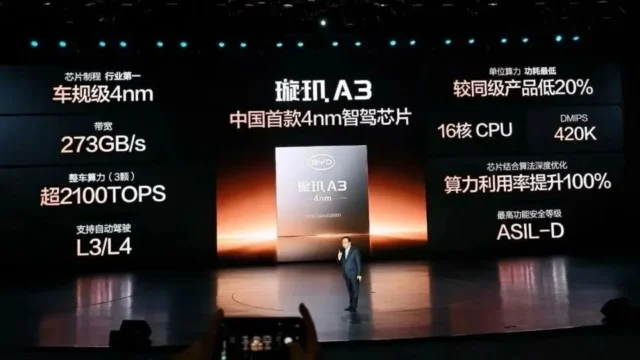
| BYD God’s Eye supplement | God’s Eye A, B and C span different vehicles and price bands. | A, B and C are not one sensor suite. BYD says A/B use Xuanji 2.0; A3 is its new 4 nm driving chip. | Highway, urban and parking functions depend on tier and vehicle; a 2026 China update added an L3/L4 development version. | The current consumer tiers remain assistance unless the exact vehicle, approval and operational domain establish otherwise. |
The table deliberately avoids declaring a winner. Huawei may offer an attractive China partner-vehicle experience, Tesla has the clearest official U.S. subscription path, XPeng and NIO tightly integrate software with their own vehicles, Li Auto is introducing its own chip-and-model stack, and BYD is using multiple tiers to spread assistance across more price bands. None of those strengths makes every trim equivalent.
What changed in 2026?
Several names changed faster than vehicles in customer hands. A fair 2026 comparison must separate an architecture announcement from a production configuration and an activated OTA feature.
| Date | Company update | What it establishes | What it does not establish |
|---|---|---|---|
| March 2 | XPeng unveiled the architecture and deployment plan for VLA 2.0. | A next-generation software direction exists in 2026. | Every XNGP vehicle has received VLA 2.0. |
| March / May | Li Auto unveiled MindVLA and then launched the new L9 with M100 hardware. | MindVLA and M100 reached a named production model and trim specification. | All earlier AD Max vehicles have the same hardware. |
| April 23 | Huawei released ADS 5 with WEWA 2.0 and Qiankun OS. | ADS 5 is the current Huawei architecture. | Every Huawei partner vehicle has every ADS 5 function or the same sensor suite. |
| May 28 snapshot | BYD described updated God’s Eye tiers, Xuanji 2.0 and Xuanji A3. | BYD’s 2026 product matrix and development direction. | A/B/C have one universal hardware and feature list. |
| July 9 | NIO’s ES8 five-seat version documented Cedar, NX9031 and point-to-point NOP+. | A current production example of NIO’s newer generation. | Legacy Adam/Orin vehicles have been physically upgraded to Cedar. |
| Continuously updated | Tesla’s current manual describes FSD (Supervised) behavior and driver monitoring. | The active user contract and functional boundary for the referenced market and manual. | A frozen global version number or identical capability in every country. |

Huawei ADS 5: partner breadth, but no universal hardware
Huawei released Qiankun ADS 5 on April 23, 2026. Its software direction is WEWA 2.0: a cloud World Engine used for training and an in-vehicle World Action Model used for driving decisions. Huawei also introduced Qiankun OS and described a multi-sensor-fusion platform. The consumer-facing feature set includes Collision Avoidance System 5.0 and parking-space-to-parking-space 3.0.
The strongest reason to treat Huawei differently from Tesla, XPeng, NIO and Li Auto is that Huawei supplies a technology stack to multiple automaker partners. That creates breadth, but it also breaks the shortcut of saying “Huawei ADS has three LiDARs” or a fixed compute number. A flagship HIMA vehicle and a different partner trim may use different sensing, compute, activation and payment arrangements even when both carry the ADS brand.
Huawei says more non-standard scenarios will be opened gradually after sufficient testing. Its product page also warns that support varies by vehicle and software. Company-reported cumulative assisted-driving mileage can show fleet scale, but it is not an independently normalized safety rate and cannot be compared directly with a rival’s fleet claim. For the automaker and brand relationship behind these vehicles, see BYDToday’s coverage of the China EV AI race.
Tesla FSD (Supervised): clear U.S. access, variable global scope
Tesla’s current U.S. Model 3 manual is more useful than a circulating version-number claim. It says FSD (Supervised) uses camera data to navigate, change lanes, turn, follow ramps, react to traffic controls and reach a destination where those functions are available. It also says the cabin camera monitors attentiveness and that driver intervention is expected.
Tesla’s approach is commonly summarized as “vision only,” but that does not make a hardware table future-proof. Model year, installed computer, camera configuration, software and country still matter. Tesla’s support page says features vary by configuration, hardware, software version, region, model, trim and model year. In the United States, the subscription price displayed on July 16, 2026 was $99 per month for eligible vehicles.
China should not be inferred from the U.S. manual. Naming, approval and feature scope have changed by market; BYDToday tracks that boundary in Why Tesla renamed FSD as assisted driving in China. A Tesla feature that is technically demonstrated or active in one country is not automatically approved or delivered in another.
NHTSA opened preliminary evaluation PE24031 in October 2024 after four reported FSD-related crashes in reduced-visibility conditions, including glare, fog and airborne dust. The opening document describes FSD as partial driving automation and evaluates the system’s ability to detect and respond to reduced roadway visibility. An investigation is not a finding that every incident had one cause, but it is a reason to avoid claims that camera-only or sensor-fusion systems are inherently safe in all weather.
XPeng: keep production XNGP separate from VLA 2.0
XPeng’s 2025 G6 configuration page is a useful production anchor. It lists two Nvidia Drive Orin processors, 508 TOPS and XNGP functions including all-scenario assisted driving and parking-space-to-parking-space operation. Those specifications belong to that documented vehicle generation—not every XPeng sold in 2026.
In March 2026, XPeng’s SEC filing said the company had unveiled the architecture and deployment plan for VLA 2.0. It also describes XPeng as developing full-stack advanced driver-assistance technology. That establishes the next software direction, but “deployment plan” must not be rewritten as “already installed across the fleet.” Newer XPeng vehicles can use the Turing chip and different sensor layouts, so a 508-TOPS Orin row cannot represent the entire brand.
The practical buyer check is therefore simple: identify the exact XPeng model and production year, confirm whether its page says XNGP or VLA 2.0, then verify the activated OTA build and country. International XPeng vehicles can share a platform name without matching China’s full road-scenario coverage.
NIO: Adam and Cedar are different generations
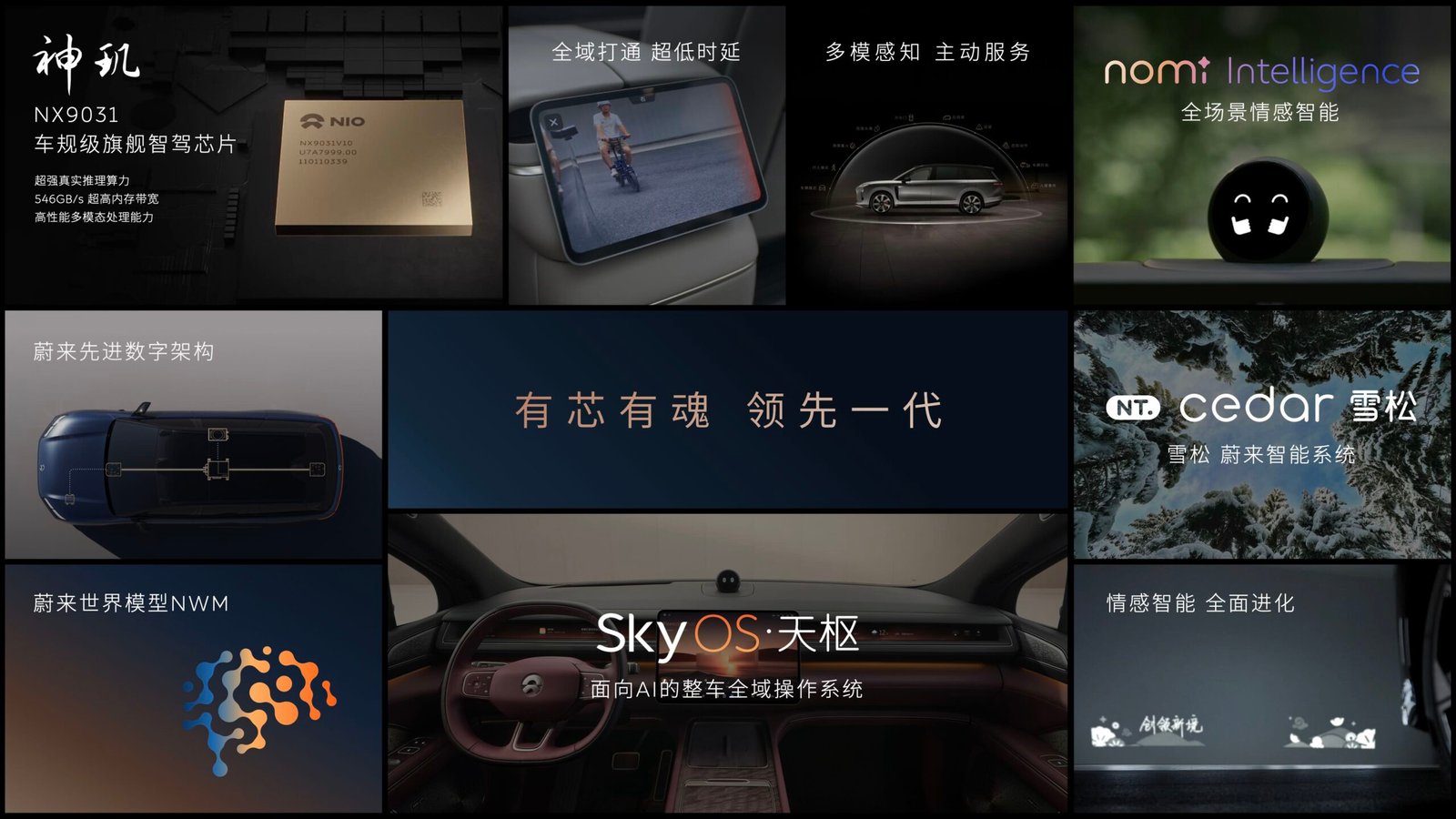
NIO is the clearest example of why brand-wide hardware numbers mislead. Earlier Aquila/Adam vehicles used four Nvidia Orin processors with a published total of 1,016 TOPS. Newer NT.Cedar vehicles use NIO’s own NX9031 chip. A table that labels every NIO “1,016 TOPS” is now historically incomplete.
The new ET5 and ET5T released in May 2025 combine NT.Cedar S, NX9031, a 1,550 nm LiDAR and 4D imaging radar. NIO says its NIO WorldModel supports point-to-point NOP+ across highways, urban roads, toll booths, parking and compatible Power Swap Station routes. The July 2026 ES8 five-seat release provides a later example with NT.Cedar, NX9031, 31 sensing units and NWM-based point-to-point NOP+.
Those are named production configurations, not proof that every NIO has identical sensing. Nor does navigation to a battery-swap station make the car driverless. The service integration is commercially distinctive, while the driver-assistance classification remains. BYDToday’s NIO and William Li owner explains how the software, vehicle and swap network fit the company strategy.
Li Auto: 2025 VLA Driver is not 2026 MindVLA
Li Auto rolled VLA Driver to AD Max vehicles in 2025, then unveiled a new foundation model called MindVLA with a 3D ViT encoder at Nvidia GTC in March 2026. The distinction matters: the two names describe different product generations, and the newer model does not retroactively change the hardware in an older vehicle.
The all-new Li L9 launched in May 2026 is the cleanest current reference. Li Auto’s first-quarter results say the Ultra trim uses one proprietary MAHE M100 chip, while the Livis uses two M100 chips and four LiDAR sensors. Both feature MindVLA and the 3D ViT encoder. Even within one model, therefore, the hardware differs by trim.
Li Auto uses “autonomous driving system” in its investor materials, but a company label is not enough to establish consumer driverless operation. This comparison keeps the production functions in the ADAS layer unless a regulator, operating domain and owner instructions transfer the dynamic-driving responsibility away from the human driver.
BYD God’s Eye: a useful scale comparison, not one system
BYD is included as a supplement because its tier strategy changes the competitive question from “which premium stack is strongest?” to “how much assistance can be distributed across a large lineup?” BYD’s current China technology page lists God’s Eye A, B and C, says A and B use Xuanji 2.0, and introduces the Xuanji A3 4 nm driving chip. The same page reports 3.15 million assisted-driving vehicles and more than 200 million kilometres of daily data as of May 28, 2026; those are company-reported scale figures, not independently normalized safety evidence.
The A/B/C tiers must not be flattened into one sensor or TOPS specification. BYD also shows an “autonomous driving version” for L3/L4 development, which should not be confused with the legal and user-responsibility status of current consumer assistance tiers. Model manuals remain the decisive source for the driver’s duty. BYDToday’s BYD technology owner places God’s Eye alongside the company’s battery, hybrid and charging systems.
Market and access: where the comparison changes
| Check | China evidence | United States evidence | Europe and other markets |
|---|---|---|---|
| Named consumer systems | Huawei ADS, XPeng XNGP, NIO NOP+, Li Auto AD/MindVLA and BYD God’s Eye have named China vehicles. | Tesla publishes the clearest consumer FSD (Supervised) support and manual evidence among these brands. | Vehicle sales do not guarantee China-equivalent assisted-driving functions. |
| Payment | May be bundled, trim-based, optional or subscription-based; verify the current configurator. | Tesla displayed a $99/month FSD (Supervised) subscription for eligible U.S. vehicles on July 16. | Pricing, activation and eligibility must be checked in the local configurator. |
| Software | OTA availability can depend on model, hardware, user cohort and regulatory approval. | Manual and vehicle software date are more reliable than a social-media version label. | Homologation, mapping, data and local traffic rules can change the feature set. |
| Driver duty | GB 47955—2026 defines combination driver assistance around continued driver observation and control. | NHTSA says Level 2 ADAS requires the driver to remain fully engaged. | Read the local owner manual and approval, not a global marketing headline. |
Why TOPS, LiDAR count and “cities covered” do not pick a winner
A processor’s TOPS rating is a peak operations metric, not a test score for the whole vehicle. Model architecture, numerical precision, memory bandwidth, software efficiency, redundancy and workload all affect what the computer can do. Comparing 508 TOPS on one older XPeng with one NX9031 on a newer NIO, for example, does not reveal which system will handle a particular junction better.
LiDAR count is similarly incomplete. Sensor position, wavelength, field of view, resolution, cleaning, calibration, fusion and fallback strategy matter. Cameras, radar and ultrasonic sensors also differ. A vehicle with more sensors can still have a narrower activated software function, while a camera-based system can perform broad assistance but remain sensitive to occlusion or visibility.
“City coverage” is the weakest shortcut unless a company defines it. It can mean mapped cities, one tested road, nationwide map-free activation, an invitation-only OTA or a full consumer release. This owner page therefore uses road scenarios and named vehicles instead of a fixed city leaderboard.
For the market behind these systems, use BYDToday’s ADAS supplier map to separate automakers, Tier 1 suppliers and software companies. The automotive LiDAR guide explains range, field of view and sensor-placement trade-offs. For the wider operating and legal context, read the China autonomous-driving history and status guide alongside the national rules and city-permit guide.
Safety and regulation: no honest crash-rate ranking yet
China’s mandatory GB 47955—2026 standard was approved on June 27, 2026 and is scheduled to take effect on January 1, 2027. It covers basic single-lane, multi-lane and navigation-assisted systems and adds requirements for functions, data recording, manufacturer safety assurance, driver monitoring, instructions and training. Its core wording keeps the driver observing traffic and controlling the vehicle.
In the United States, NHTSA’s Standing General Order separates Level 2 ADAS from SAE Level 3–5 automated driving systems. The public crash data are useful for identifying incidents and possible defects, but NHTSA warns that manufacturer access to telemetry, reporting awareness, fleet size, miles travelled and operating locations differ. The data are not normalized by exposure and should not be turned into a cross-brand “safest ADAS” ranking.
Company claims about avoided collisions, assisted-driving distance or interventions can inform the architecture story only when labelled as company-reported. They are not interchangeable with regulator data, and rivals may use different definitions. A responsible comparison asks whether the exact vehicle monitors the driver, explains limitations, records relevant events and provides an understandable takeover path.
Eight checks before choosing an ADAS-equipped vehicle
- Exact vehicle and trim: do not buy from a brand-level feature table.
- Production month and hardware generation: the same model name can cross an architecture change.
- Current software build: confirm that the promised function is activated, not merely announced.
- Country and road scope: highway, urban, parking and private-road functions can have different approvals.
- Driver-monitoring method: understand camera, steering-wheel and escalation behavior.
- Payment and duration: distinguish standard equipment, option, trial, subscription and launch benefit.
- Bad-weather and contamination limits: read the manual’s camera, radar and LiDAR warnings.
- Test drive the takeover: the safest purchase decision includes how clearly the system asks for human control.
Frequently Asked Questions
Which ADAS is best in 2026?
There is no defensible universal winner. Huawei ADS 5 is strong across Chinese partner vehicles, Tesla offers the clearest current U.S. FSD (Supervised) access, XPeng and NIO integrate their own vehicles and software, Li Auto is introducing MindVLA with M100 hardware, and BYD spans several price tiers. The best choice depends on the exact vehicle, market, software and driver’s use case.
Are Huawei ADS 5, Tesla FSD, XNGP, NOP+ or MindVLA autonomous driving?
Not in the consumer configurations compared here. They are supervised driver-assistance systems: the human driver must monitor the road and be ready to control the vehicle. A product name or future L3/L4 development plan does not transfer legal driving responsibility.
How does Huawei ADS 5 differ from Tesla FSD (Supervised)?
Huawei supplies a multi-sensor-fusion stack to multiple automaker partners, so hardware and activation vary by vehicle. Tesla’s current consumer system is camera-based and tightly integrated with Tesla vehicles. Both require supervision, and their strongest verified product scope is in different markets.
Is XPeng XNGP the same as VLA 2.0?
No. XNGP is the established assisted-driving product name on vehicles such as the documented 2025 G6. XPeng unveiled the VLA 2.0 architecture and deployment plan in March 2026. Buyers must confirm whether a specific vehicle and OTA build actually uses the newer stack.
Why do NIO specifications show both 1,016 TOPS and NX9031?
They describe different generations. Earlier Adam vehicles used four Nvidia Orin processors with a combined published 1,016 TOPS. Newer NT.Cedar vehicles use NIO’s proprietary NX9031. Neither specification applies automatically to every NIO model.
Can sensor count or TOPS identify the safest system?
No. Sensor quality and placement, fusion, compute architecture, software, driver monitoring, operating domain and vehicle controls all matter. Public crash datasets also differ in exposure and reporting. A simple count cannot establish a cross-brand safety ranking.
Sources
- China Ministry of Industry and Information Technology, GB 47955—2026 combination driver-assistance safety standard release, July 2, 2026
- NHTSA, Standing General Order crash reporting, ADAS/ADS definitions and data limits
- NHTSA, PE24031 FSD reduced-visibility preliminary evaluation opening document, October 17, 2024
- Huawei Qiankun, ADS 5 product page and April 2026 technology release
- Huawei Qiankun, GB 47955 and ADS 5 Level 2 assistance explanation, June 27, 2026
- Tesla, Full Self-Driving (Supervised) support and U.S. price
- Tesla, U.S. Model 3 FSD (Supervised) owner-manual instructions
- XPeng, 2025 G6 configuration and XNGP hardware
- XPeng SEC filing, 2025 results and VLA 2.0 deployment-plan disclosure, March 20, 2026
- NIO, new ET5/ET5T Cedar S, NX9031 and NWM-based NOP+, May 25, 2025
- NIO, 2026 ES8 five-seat Cedar and point-to-point NOP+ release, July 9, 2026
- Li Auto, MindVLA and 3D ViT announcement, April 1, 2026
- Li Auto, new Li L9 M100 and MindVLA configurations, May 2026
- BYD, God’s Eye A/B/C, Xuanji 2.0 and A3 technology matrix, data dated May 28, 2026
- BYDToday, Source Methodology and Editorial Policy