Quick Answer
- Yangwang’s next flagship — internally codenamed “HU” and officially named Dingyao (“ALTIOR”) on October 27 — is an ultra-luxury executive sedan confirmed to make its world debut in the UAE; sources point to a Dubai unveiling around November 5, 2026, though no date is official.
- BYD does not expect HU to make money. At the June 9, 2026 shareholder meeting, Chairman Wang Chuanfu said Yangwang is the only brand exempt from profit targets; its core task is landing frontier technologies such as the e⁴ quad-motor system and DiSus active suspension.
- The sales math is brutal: Yangwang delivered 389 vehicles in September 2026 — 2,084 U8s, 1,187 U7s and just 17 U9s year-to-date.
- History says that is normal: Rolls-Royce built 10,327 Phantoms across a 14-year run, and Bentley’s entire Mulsanne production topped just over 7,300 units in 11 years.
- Rule of thumb: BYD’s four volume brands now must pay their own way; Yangwang’s job is to prove the technologies the other four will eventually inherit.
Reading time: about 10 minutes. Facts verified as of October 27, 2026.
What Is the Yangwang Dingyao (ALTIOR)? What Is Officially Confirmed So Far
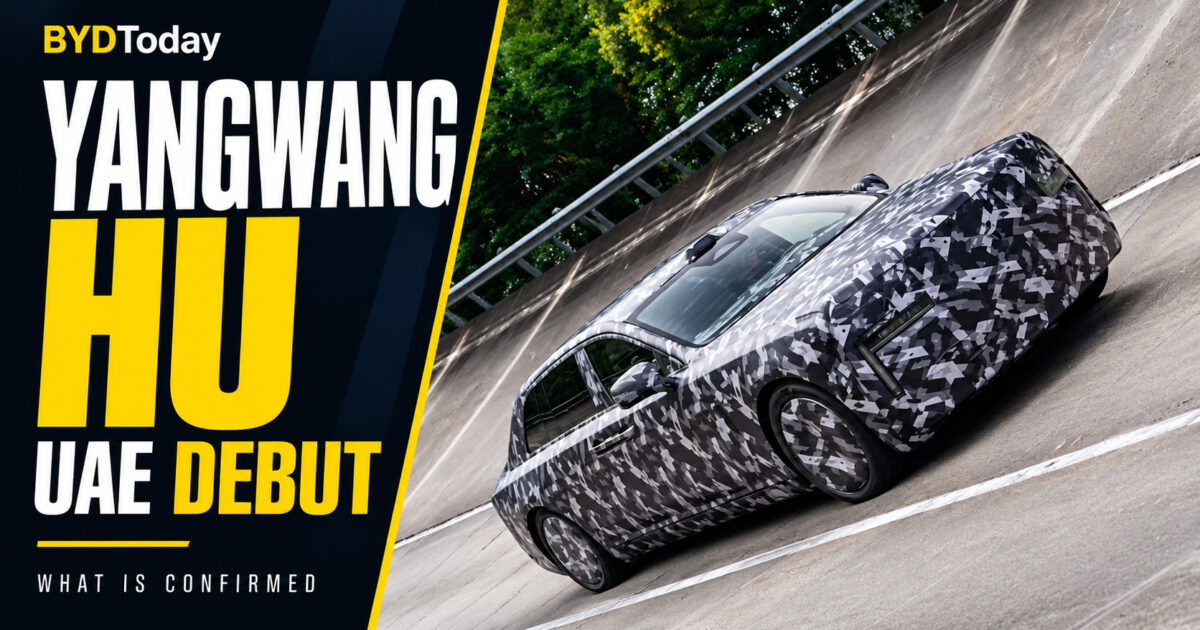
The car Chinese onlookers have nicknamed the “Pingshan Rolls-Royce” — after the Shenzhen district where BYD is headquartered — is real, and it is far along. Yangwang general manager Hu Xiaoqing published official prototype photos on September 23, 2026, and executive general manager Zheng Yu added that the sedan will carry “unprecedented disruptive technology.” In late September, Hu confirmed the internal codename HU, describing a project three years in the making and the brand’s first ultra-luxury executive sedan. On October 21, Yangwang confirmed the car will make its world debut in the United Arab Emirates.
On October 27, Yangwang announced the production name. The sedan will be called Dingyao (“鼎晷”) in Chinese, with the English name YANGWANG ALTIOR — derived from Latin, meaning “higher” — under the campaign slogan “Da Qi Ding Cheng,” roughly “greatness, duly achieved.” The choice is itself a signal: rather than extending the U7/U8/U9 alphanumeric ladder, Yangwang gave its executive flagship a standalone Chinese-character identity, reserving the top rung of the brand for something that reads as a nameplate of its own. As Hu put it in the naming announcement, a separate Chinese and English name gives the car “a more distinctive product identity.”
Reporting by CarNewsChina, citing sources familiar with the project, points to a Dubai unveiling targeted around November 5, 2026, and pre-production cars have since been photographed on transport flatbeds. Yangwang has not confirmed the date, the venue city, or any specifications.
| Item | Status | Detail | Source |
|---|---|---|---|
| Production name: Dingyao / “ALTIOR” | ✅ Confirmed | Announced October 27, 2026; pure-Chinese-character name breaks the U7/U8/U9 alphanumeric scheme; ALTIOR is Latin for “higher” | Yangwang official Weibo, via IT Home / Ifeng |
| Internal codename “HU” | ✅ Confirmed | Ultra-luxury executive sedan; about three years in development | Yangwang GM Hu Xiaoqing (Weibo), via CnEVPost |
| World debut in the UAE | ✅ Confirmed | Announced October 21, 2026; date and venue not set | Yangwang (Weibo), via CarNewsChina |
| Coach doors on the teaser car | ✅ Official teaser | Rear-hinged rear doors visible in the September 23 teaser — a first for BYD | Yangwang teaser, via Electrek |
| “Unprecedented disruptive technology” | ✅ Confirmed claim | No specifics disclosed | Yangwang EVP Zheng Yu (Weibo) |
| Dubai debut around November 5 | ⚠️ Unconfirmed | Sources-based reporting; pre-production cars seen on transporters | CarNewsChina |
| Length near 5.5 m, wheelbase beyond 3.35 m | ⚠️ Rumored | Chinese analysts measuring the prototype tires argue it could be longer still | Media estimates, via CnEVPost |
| Price above RMB 2 million (≈US$296,000) | ⚠️ Rumored | Roughly double the top Maextro S800; above the U8L’s RMB 1.458M | Blogger estimates, via CnEVPost |
| Roof-mounted LiDAR | 👁️ Visible on prototype | Hardware seen; final ADAS capability undisclosed | Autohome spy photos, via CarNewsChina |
| Solid-state battery first fitment | ❌ Not confirmed | BYD targets its first solid-state vehicle in 2027 (Stella Li); the HU link is speculation | Carwow interview via Electrek; CarNewsChina |
The Design Logic: Full-Size Presence and Deliberate Waste
Whatever expectations the codename carried, the prototype’s proportions have already told analysts a lot. Chinese commentators measuring the test car’s 275/45 R21 tires argue the body stretches well beyond the initial 5.5-meter estimates — possibly into the 5.6–5.7-meter range, with a height near 1.7 meters and a width that may exceed 2.1 meters. That would make it physically larger than the U8L, already BYD’s biggest vehicle, and puts HU in the same dimensional territory as a Rolls-Royce Phantom rather than a long-wheelbase S-Class.
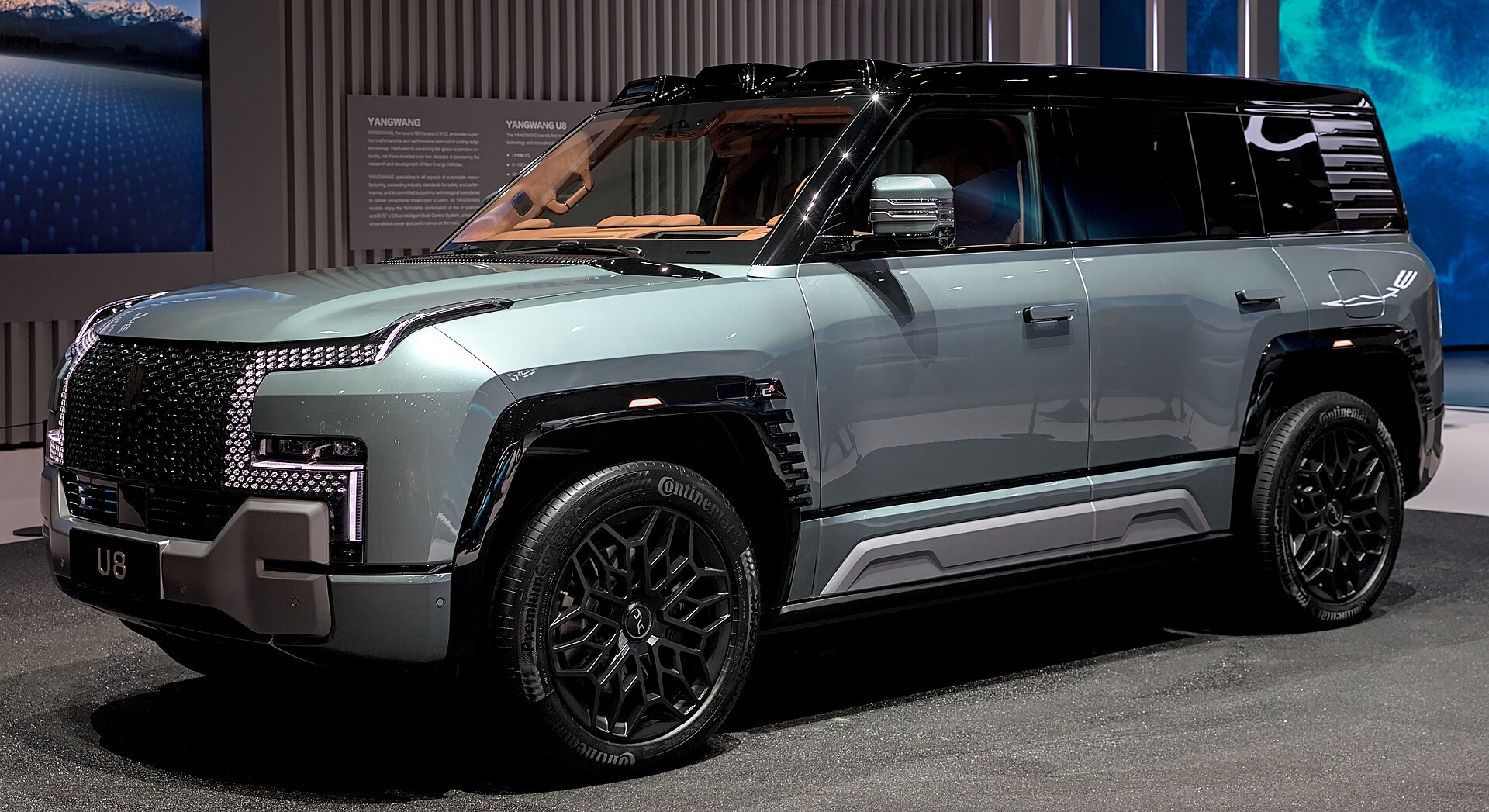
The styling follows the state-limousine playbook rather than the aerodynamic one: an upright front end echoing the U8’s bronze-vessel motif, a long hood, a long tail, and a wide C-pillar with an oversized rear quarter-window that signals — to people outside the car — who is sitting in the back. The rear-hinged coach doors serve the same passenger-first logic, opening wide enough that a chauffeured passenger steps out without folding in half. Every one of those choices costs structure, weight and money for space that passengers never use.
That is the point. Ultra-luxury flagships are designed around deliberate waste: hood volume that no longer needs to hide an enormous engine, overhangs that exist purely for stance, cabins compressed so the silhouette reads correctly at a distance. It is a design language in which efficiency metrics simply do not apply — and the fact that BYD, a company built on engineering pragmatism, has signed off on a car like this is arguably a bigger strategic signal than any single specification.
“The Only Exception”: Why BYD Told Yangwang Not to Worry About Profit
If the rumored price is anywhere near accurate, losing money per unit is close to inevitable — and BYD has, in effect, planned for exactly that. At the company’s June 9, 2026 shareholder meeting in Shenzhen — its largest ever — Wang Chuanfu detailed the biggest organizational restructuring in BYD’s history: the four volume brands (Dynasty, Ocean, Denza, Fangchengbao) now run on independent profit-and-loss accounting, each responsible for its own product planning, pricing and development costs. As Wang put it, the reform’s core is “breaking the iron rice bowl”: brands that previously operated like sales arms must now account for the full chain from product initiation to R&D spending to sales.
Yangwang is the deliberate exception. As reported by Huxiu and widely republished, Wang confirmed that Yangwang is temporarily excluded from profit assessments, and that its core task is to land frontier technologies — the e⁴ quad-motor architecture and the DiSus (YunNian) active-suspension family — into production vehicles. Forcing a luxury brand to chase short-term profit, the reasoning goes, would push it to cut prices for volume and destroy the technology flagship it is meant to be. For more on how these systems work, see our DiSus suspension systems guide.
That framing is the key to reading HU. The sedan is not a mispriced bet; it is the endpoint of the same playbook that produced the U8’s tank-turn and flotation demos, the U9’s Nürburgring campaign and the U7’s 30,000 km endurance run — halo technologies that cascade into Denza, Fangchengbao and volume BYD products over time. The company has even institutionalized the commercial side: the Yangwang Business Institute, opened in Shenzhen with Wang Chuanfu personally as its dean, cultivates entrepreneur-owners rather than chasing sales quotas.
Born to Lose Money? What History Says About Ultra-Luxury Flagships
The video analysis that drew attention to HU’s economics called the car a likely “money loser” in its title — and on pure project accounting, the historical record supports that read. Rolls-Royce’s seventh-generation Phantom, sold from 2003 to 2017, reached a cumulative 10,327 units across every body style in 14 years, according to widely cited production tallies — a fraction of what a mainstream nameplate sells in a month. Bentley’s Mulsanne, the Crewe firm’s true flagship from 2009 to 2020, totaled just over 7,300 handcrafted examples in 11 years, a figure Bentley itself confirmed at the car’s retirement. Neither flagship was ever the profit engine of its company; Rolls-Royce’s accounts have long leaned on the Ghost and Cullinan, Bentley’s on the Continental and Bentayga, models that share far more with group volume hardware.
The economics are structural. At a few hundred cars a year, a dedicated production line and a bespoke body structure cannot amortize their development cost across enough units, which is precisely why ultra-luxury brands market hand-building as romance rather than admitting it as necessity. Imported flagships sold in China also carry a steep tax stack — consumption tax of up to 40% for large engines, 13% VAT, import duty and a 10% ultra-luxury surcharge — which is why a Phantom stickers far above its RMB 2 million Chinese price in real cost terms. A domestically produced HU would compete against sticker prices that are largely tax, a rare structural advantage for a Chinese entrant in this segment.
There is a well-worn precedent for accepting those losses, too. Volkswagen’s Phaeton and Bugatti program, and Toyota’s first-generation Lexus LS, are routinely cited as projects that lost money while declaring a company’s technical arrival. The most credible reading of HU is that BYD is running the same play deliberately — a totem car whose business case lives at the group level, not the model level.
Yangwang by the Numbers: The Sales Reality
The contrast between Yangwang’s mission and its volume is stark. According to BYD’s own September 2026 model-level breakdown, the brand delivered 389 vehicles that month — roughly 0.1% of the group’s 463,561. Cumulative 2026 sales through September total about 3,288 units, with August’s 442 up a modest 9.1% year-on-year.
| Model | Role | Sept 2026 | 2026 YTD | Starting price (China) | Source |
|---|---|---|---|---|---|
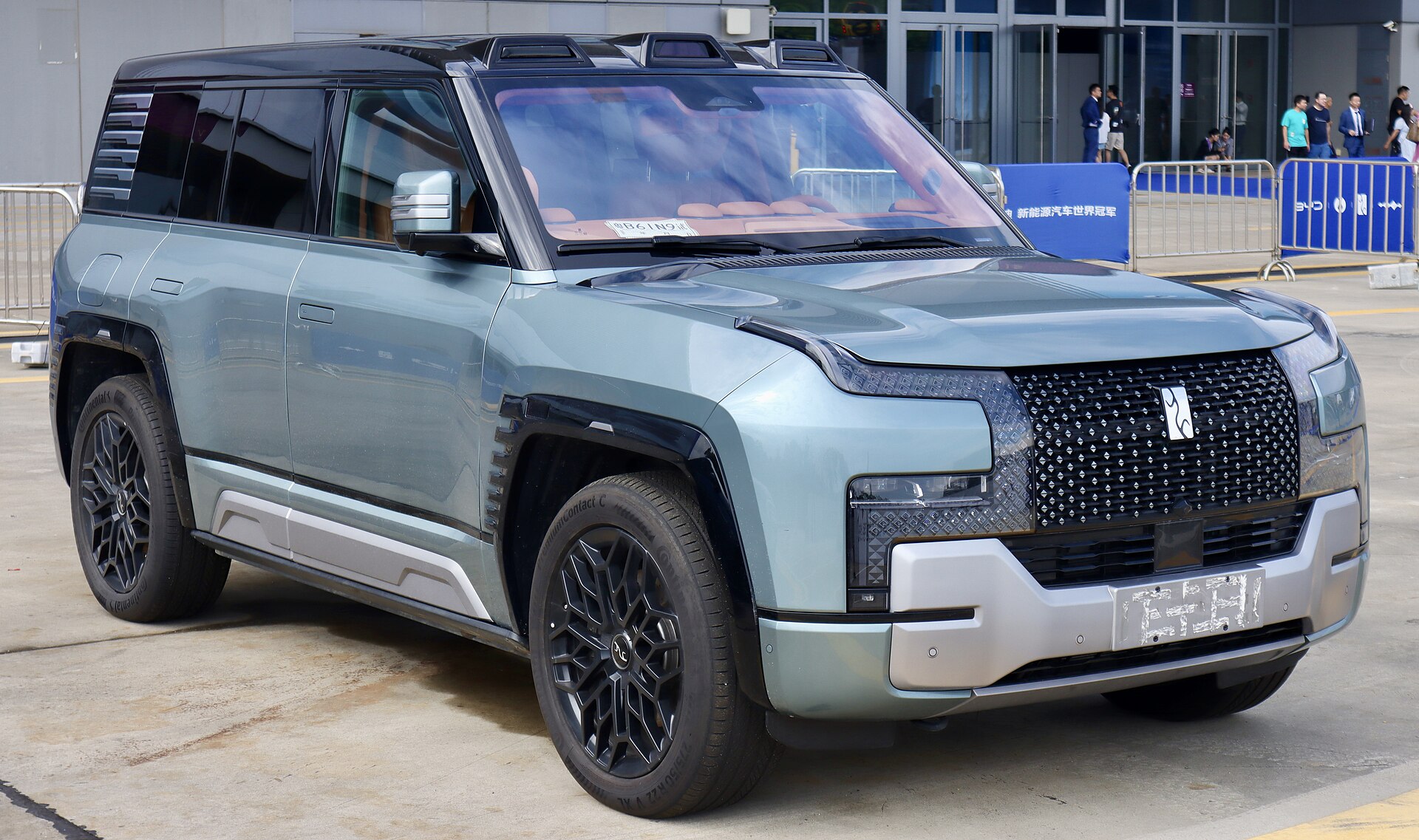
| Yangwang U8 / U8L | Off-road flagship SUV (EREV) | 252 | 2,084 | RMB 1.008M; U8L Dingcang from RMB 1.458M | BYD monthly breakdown via Ifeng; CnEVPost |
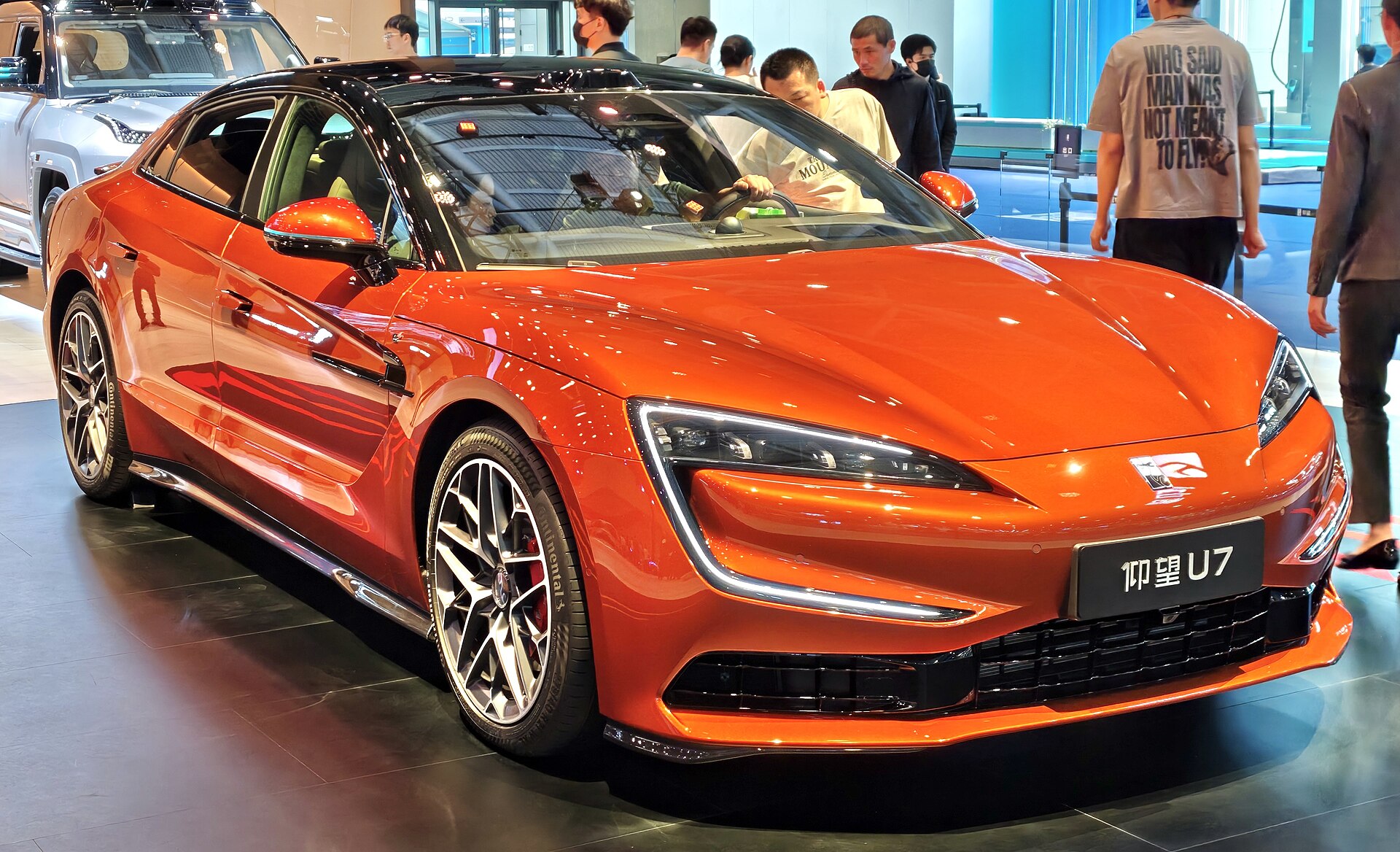
| Yangwang U7 | Performance sedan (BEV/PHEV) | 136 | 1,187 | RMB 658,000 | BYD monthly breakdown via Ifeng; CnEVPost |
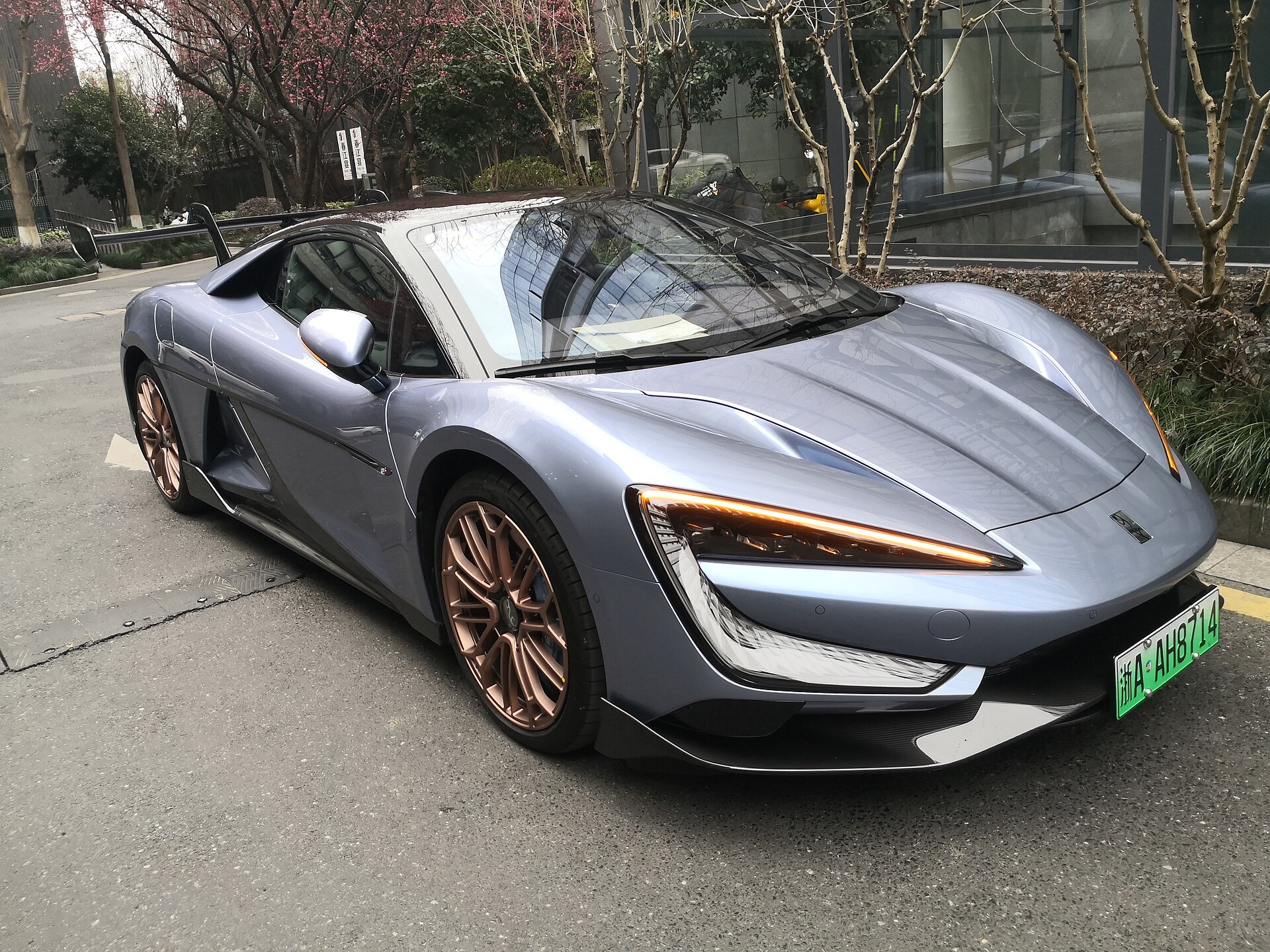
| Yangwang U9 | Electric supercar | 1 | 17 | Approx. RMB 1.68M | BYD monthly breakdown via Ifeng |
| Yangwang Dingyao (codename HU) | Ultra-luxury executive sedan | — | — | Rumored above RMB 2M (unconfirmed) | CnEVPost / CarNewsChina |
The segment HU is entering is even thinner than Yangwang’s own volumes. Huawei-backed Maextro sold 486 S800 sedans in September 2026 per China EV DataTracker — and that already makes the S800, at RMB 728,000–1,018,000, the runaway leader among Chinese ultra-luxury sedans. The Mercedes-Maybach S-Class remains the segment’s import benchmark, while Bentley’s Flying Spur and Rolls-Royce’s Phantom sell in double or low triple digits in China. Nobody launches a RMB 2 million sedan expecting scale; the question is only what the car is for.
Why the Math Works Anyway
Three numbers from BYD’s 2026 interim report explain why the group can afford Yangwang’s experiment — and why it needs it.
First, the group can absorb it. BYD booked RMB 344.8 billion in first-half revenue (down 7.1% year-on-year) and RMB 12.3 billion in net profit (down 20.5%). Yangwang’s annual volume — a few thousand cars — is a rounding error against 1.8 million half-year deliveries. Even generous per-unit assumptions for prototype-heavy development put the brand’s burn well within one percent of group profit, which is precisely what a “no profit KPI” exemption is designed to permit.
Second, the money is increasingly earned abroad. Overseas revenue reached RMB 181.3 billion in H1 2026 — 52.6% of the total, crossing domestic revenue for the first time — on 789,000 overseas deliveries, up 70.7%. Group gross margin rose to 18.85%, driven mainly by the overseas business. A brand that debuts its flagship in Abu Dhabi, rather than Shenzhen, is speaking directly to the market that now funds the company. Yangwang is already retailing there: the U8 Arabian Edition lists at AED 659,900 (about US$180,000) through distributor Al-Futtaim.
Third, the technology has to prove itself somewhere. HU is expected to showcase the latest iterations of e⁴ and DiSus, and possibly — though nothing is confirmed — BYD’s incoming solid-state battery program, which executive vice president Stella Li has said will reach a first vehicle in 2027, with FinDreams battery CTO Sun Huajun outlining small-batch trials of around 1,000 units before larger-scale adoption toward 2030. Flagship sedans have always been where automakers rehearse technologies that later filter into mass-market cars; HU is that rehearsal, subsidized by the volume brands the reform now holds accountable.
There is a brand dimension too. BYD’s persistent global challenge is the perception gap — premium technology carried by a value-brand halo. Our earlier analysis of BYD’s brand perception gap noted that lap records and spec sheets do not, by themselves, make a brand aspirational. HU, parked beside Rolls-Royce and Maybach in Gulf showrooms, is the most literal possible answer to that problem — and a natural continuation of the brand-building sweep BYD staged at the 2026 Goodwood Festival of Speed.
What to Watch at the UAE Debut
- The debut date. The name is now settled — Dingyao/ALTIOR as of October 27. What remains officially unconfirmed is when and where: Yangwang has said the UAE; sources point to Dubai around November 5.
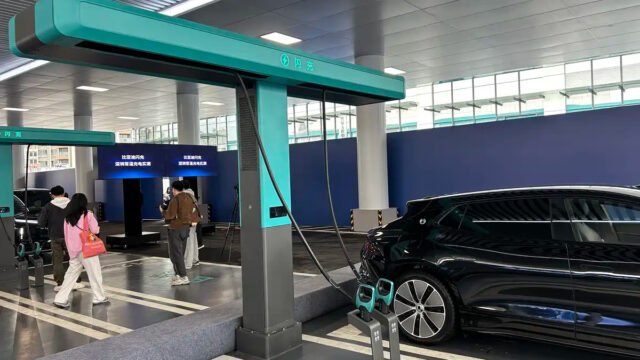
- The “disruptive technology” claim. Zheng Yu’s teaser sets a high bar. Candidates analysts point to — all unconfirmed — include a next-generation DiSus system with a far larger ride-height range, an evolved e⁴ driveline, and first-fitment of BYD’s newest ADAS stack. The prototype was also photographed at a BYD megawatt flash-charging station.
- Price. Anything at or above RMB 2 million would make HU BYD’s most expensive production car ever, roughly triple the U7’s starting price.
- Coach doors in production form. Rear-hinged rear doors are a first for BYD and a mechanical risk; whether they survive to production tells you how serious the ultra-luxury positioning is.
- The venue signal. A Gulf debut ahead of any Chinese homecoming show confirms that Yangwang now treats international markets as its primary brand stage.
Frequently Asked Questions
Is the Yangwang Dingyao (ALTIOR) officially confirmed?
Yes, and increasingly so. Yangwang has confirmed the car is its ultra-luxury executive sedan (internal codename HU), about three years in development, debuting in the UAE. On October 27, 2026, it announced the production name: Dingyao (“鼎晷”) in Chinese and YANGWANG ALTIOR in English. Dimensions, powertrain, battery, price and the launch date remain undisclosed.
How much will the Yangwang HU cost?
Unknown. Chinese media estimates cluster above RMB 2 million (about US$296,000), which would place it above the U8L Dingcang Edition (RMB 1.458 million) and roughly triple the U7’s RMB 658,000 starting price. Treat all figures as estimates until Yangwang announces pricing.
Does BYD expect the Yangwang HU to lose money?
BYD has not commented on HU’s profitability specifically. But at the June 2026 shareholder meeting, chairman Wang Chuanfu confirmed that Yangwang is the only BYD brand exempt from profit targets, with its core task being to land frontier technologies. The brand’s mandate is technology and brand-building, not volume or margin.
How many cars does Yangwang actually sell?
Very few by BYD standards: 389 vehicles in September 2026 and roughly 3,288 in the first nine months of 2026, split between the U8 SUV (2,084 year-to-date), U7 sedan (1,187) and U9 supercar (17), according to BYD’s monthly model breakdown.
Will the HU have a solid-state battery?
Unconfirmed. BYD executive vice president Stella Li has said the company’s first solid-state vehicle will come in 2027, and FinDreams has outlined small-batch trials of about 1,000 units around 2027. Media speculation links solid-state batteries to HU, but Yangwang has not disclosed the sedan’s battery chemistry.
When and where will the Yangwang HU debut?
Yangwang has confirmed a UAE world debut, announced October 21, 2026. CarNewsChina reports a targeted Dubai unveiling around November 5, 2026, based on sources — neither the date nor the venue city is officially confirmed.
Sources
- Yangwang official Weibo, naming announcement and poster for the Dingyao (ALTIOR), October 27, 2026, via IT Home and Ifeng Science & Technology; Hu Xiaoqing naming announcement (Weibo), October 27, 2026.
- Yangwang official announcements via GM Hu Xiaoqing and EVP Zheng Yu (Weibo), September–October 2026, as reported by CnEVPost and Electrek.
- CnEVPost, “Spy shots reveal new BYD Yangwang executive sedan as brand pushes further upmarket,” September 23, 2026.
- CarNewsChina, “BYD Yangwang ‘HU’ limousine targets Dubai debut around November 5, sources say,” October 25, 2026.
- CarNewsChina, “BYD Yangwang’s 5.5-meter flagship limousine spied ahead of UAE debut,” October 23, 2026.
- Electrek, “BYD’s ultra-luxury EV could debut next week with solid-state batteries and much more,” October 23, 2026.
- Huxiu (republished by The Paper and China.com.cn), BYD 2026 organizational reform and June 9, 2026 shareholder meeting coverage, including Wang Chuanfu remarks.
- BYD H1 2026 interim report figures, via CNR Auto and China Securities Journal, September 4, 2026.
- BYD September 2026 model-level sales breakdown, via Ifeng Auto (Wangtongshe), October 2026.
- Rolls-Royce Phantom VII production totals (2003–2017) per widely cited production statistics; Bentley Media, “The Bentley Mulsanne — The End of an Era,” June 25, 2020.
- Deep Shen Bu Lun (深坑爆论), “Liao Liao Yangwang de zhe ge da pei qian huo” — Chinese-language market commentary video (analysis lead only; not used as a factual source), October 24, 2026.
- BYDToday, Source Methodology and Editorial Policy.