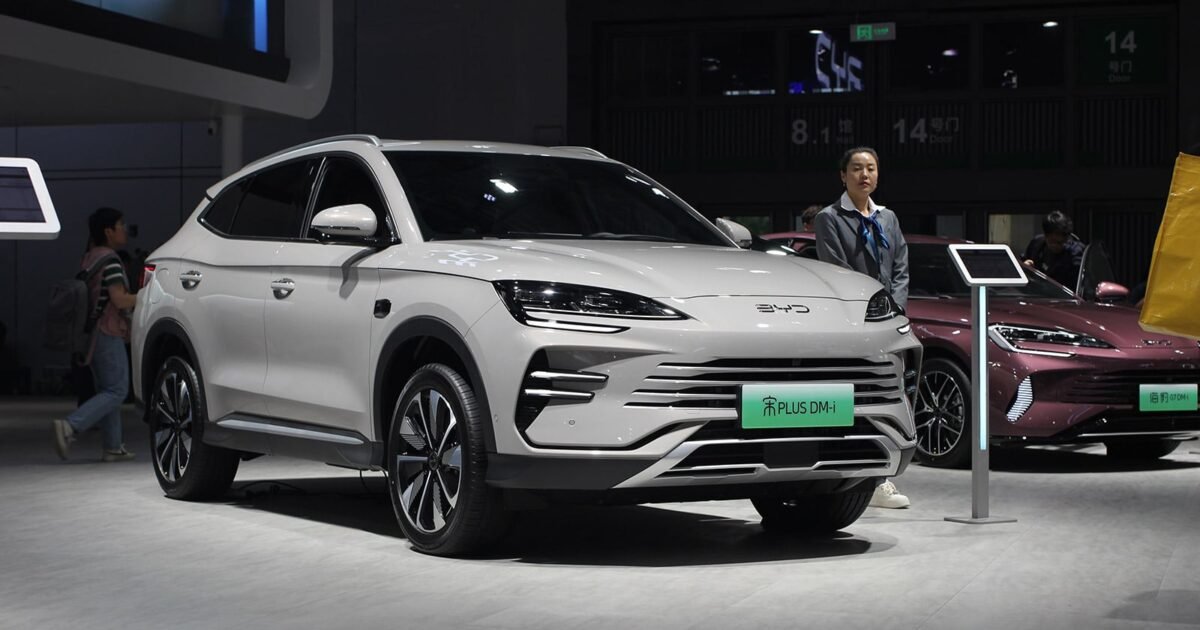
As domestic sales contract by 30%, BYD is increasingly dependent on global markets, with overseas now accounting for nearly half of all deliveries — a dramatic strategic shift with worldwide implications.
Overseas Volume Offsets Domestic Decline
BYD’s first-quarter 2026 results reveal a dramatic geographic rebalancing: while domestic Chinese sales fell 30% year-on-year, overseas deliveries surged 55%, pushing international sales to represent 45.6% of total volume. This is a watershed moment — BYD is no longer primarily a Chinese domestic brand but a genuine global automaker, according to Sina Finance reporting.
The company’s average overseas vehicle price of 176,000 RMB (approximately $24,000) — combined with gross margins more than double those in China — signals that BYD has successfully transcended its “budget brand” positioning in international markets.
Europe and Southeast Asia Lead the Charge
In Europe, BYD’s Han and Seal models are now competing directly with BMW, Mercedes-Benz, and Audi at comparable price points. The company is constructing a production facility in Hungary — a strategic move designed to circumvent the EU’s 27% countervailing tariff on Chinese EVs. Meanwhile, BYD has committed to doubling its European dealership network to 2,000 stores by 2026.
In Southeast Asia, BYD has achieved extraordinary market penetration. In Thailand, the brand captured 41% of the pure-electric vehicle market, meaning one in three EVs sold is a BYD. The company’s local factory in Rayong, Thailand, achieves 65% local content and produces 150,000 vehicles annually, having attracted over 50 domestic supply chain enterprises to the region.
Premium Products and Technical Standards
At the high end of its portfolio, the Yangwang U9 supercar — priced above one million RMB in overseas markets — is challenging perceptions of Chinese automotive engineering. BYD’s Blade Battery has passed the EU’s nail penetration test, and the Han sedan earned a five-star E-NCAP safety rating, credentials that resonate with safety-conscious European consumers.
Perhaps most significantly, BYD is now actively participating in the drafting of UN electric vehicle safety regulations — an indication that China’s EV leader has transitioned from “product exporter” to “technology rule-maker.” This normative power may prove even more strategically valuable than any individual market share gain.
Why It Matters Globally
BYD’s overseas pivot is reshaping global auto trade dynamics. With domestic Chinese NEV penetration exceeding 61% and competition compressing margins, BYD’s ability to sustain 55% overseas growth while maintaining higher margins abroad demonstrates that Chinese automakers can compete as premium exporters — not just low-cost alternatives. This shift has implications for European and Southeast Asian auto workers, dealership networks, and regulatory frameworks.
Updated context, August 11, 2026: This article preserves the Q1 news snapshot. For current H1 figures, sales-definition boundaries and factory status, see the BYD global expansion owner guide.