Quick answer: On August 14, 2026, CPUC staff approved Waymo’s updated Passenger Safety Plan and authorized expanded paid driverless passenger service with the Ojai platform. The DMV had approved the expanded operating domain and Ojai for road deployment on November 21, 2025. The CPUC authorization includes, but is not limited to, Sacramento and San Diego; it does not mean every mapped city, route or rider has immediate service. Waymo’s filing also states directly that the earlier Zeekr vehicle platform was renamed Ojai; Zeekr supplies the vehicle platform, while Waymo integrates and operates its autonomous-driving system.
What changed, verified August 17, 2026
- The California Public Utilities Commission approved Waymo Advice Letters 0004 and 0004-A, effective August 14.
- The approval covers expanded paid driverless passenger service and the Ojai platform within Waymo’s specified California operating domain.
- Waymo’s filing explicitly says the Zeekr vehicle platform was renamed Ojai, replacing the earlier cautious naming interpretation on this page.
- Authorization is not a universal launch: Waymo says new areas still undergo validation and may be limited dynamically by time, weather, route or geography.
The Ojai now has a clearer regulatory and product identity. California’s Department of Motor Vehicles approved Waymo’s expanded operational design domain and the Ojai platform in November 2025. The California Public Utilities Commission then approved the passenger-safety plan needed for Waymo’s paid driverless passenger service in the expanded area on August 14, 2026.
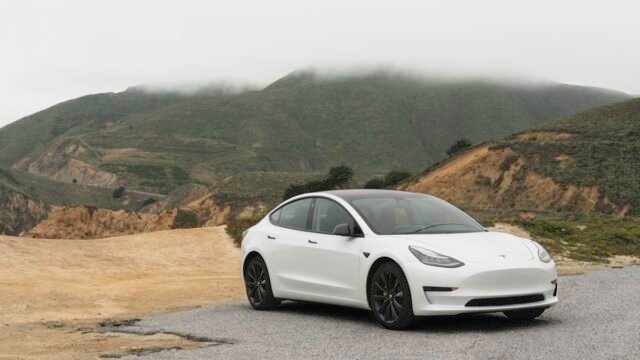
Featured image credit: Waymo Ojai vehicle with three people standing beside it. Source: Waymo. Waymo media resources. The asset is used for press/editorial reporting; Waymo retains its rights.
What did the CPUC approve for Waymo on August 14?
The CPUC’s Consumer Protection and Enforcement Division approved Waymo Advice Letters 0004 and 0004-A with an effective date of August 14, 2026. The disposition letter authorizes Waymo to expand its paid driverless passenger service in the specified areas and to use the Ojai vehicle platform.
Waymo’s Advice Letter 0004 says the expanded territory includes, but is not limited to, Sacramento and San Diego. The filing’s shaded maps define the approved geographic boundary. The documents do not say that all of California, every road in a named city or every route is immediately active.
| Date | Regulatory step | What it established |
|---|---|---|
| November 21, 2025 | California DMV amended Waymo’s deployment authorization. | The DMV approved an expanded operational design domain and the Ojai platform for road deployment. |
| January 28, 2026 | Waymo filed Advice Letter 0004. | Waymo requested CPUC approval of its updated Passenger Safety Plan for the expanded area and Ojai. |
| May 15, 2026 | Waymo filed supplemental Advice Letter 0004-A. | Waymo added procedures for unaccompanied minors and major operational disruptions. |
| August 14, 2026 | CPUC staff approved both advice letters. | Waymo may begin paid driverless passenger service in the specified expanded areas and with Ojai. |
Authorization boundary: The DMV regulates whether an autonomous vehicle can deploy on public roads within its operating domain. The CPUC regulates paid passenger service and reviewed Waymo’s Passenger Safety Plan. The August 14 approval clears the CPUC step for the specified areas; it is not proof that Waymo opened every approved area to every public rider that day.
Is the Waymo Ojai the same vehicle program as the Zeekr RT?
Yes, at the vehicle-program naming level. A footnote in Waymo Advice Letter 0004 states that the Zeekr vehicle platform previously approved for Waymo’s driverless testing and deployment domains “has been renamed the Ojai,” pronounced “oh-hi.” This direct filing resolves the earlier ambiguity between the partner name and Waymo’s current rider-facing name.
The product roles remain separate. In December 2021, Zeekr announced that it would design and develop a purpose-built electric vehicle for Waymo One. Zeekr’s January 2025 material called the jointly developed vehicle the Zeekr RT. Waymo’s regulatory filing now confirms the Ojai rename, but it does not turn Ojai into a retail Zeekr trim for consumers.
| Layer | First-party evidence | What it does not establish |
|---|---|---|
| Vehicle platform | Zeekr designed and developed the purpose-built electric vehicle program. Waymo’s CPUC filing says the Zeekr platform was renamed Ojai. | Ojai is not a retail Zeekr trim offered to US consumers. |
| Autonomous-driving system | Waymo supplies the sixth-generation Waymo Driver, including cameras, lidar, radar, compute and software. | Zeekr is not described as supplying Waymo’s autonomous-driving stack. |
| US integration | Waymo and Magna’s Mesa facility installs, validates and commissions the Waymo Driver on supported vehicle platforms. | The Mesa integration step is not proof that every base-vehicle component is manufactured in the United States. |
| Ride-hail operation | Waymo operates the Ojai in its autonomous ride-hail program under applicable permits. | A permitted operating domain does not guarantee immediate app availability throughout the domain. |
Who builds the vehicle and where is the Waymo Driver installed?
Zeekr’s 2021 announcement says its Gothenburg-based development operation would design the vehicle on a new mobility architecture, and that Waymo would take delivery in the United States before integrating the Waymo Driver. Zeekr’s 2025 CES material later described the RT as a jointly developed, purpose-built autonomous vehicle based on its SEA-M architecture.
Waymo’s Mesa factory announcement supplies the next step: Waymo and Magna opened a 239,000-square-foot integration facility in Arizona, and Waymo identified the Zeekr RT as the first platform for its sixth-generation Driver there. A base vehicle must still be integrated, validated and commissioned before it can carry riders.
Manufacturing boundary: The primary sources establish Zeekr’s vehicle-platform role, delivery to Waymo in the United States, and Waymo/Magna integration in Mesa. They do not provide a complete factory-by-factory origin ledger for the base vehicle. BYDToday therefore does not reduce the supply chain to a single unsupported “made in” label.
What is different about the Ojai interior?
Waymo designed the passenger experience around a vehicle that does not need to function like a conventional owner-driven car. The company lists elevator-style doors, a low step, a completely flat floor and three large LED screens. Accessibility features include embedded braille, screen-reader compatibility and a seat-integrated handle to help with entry and exit.
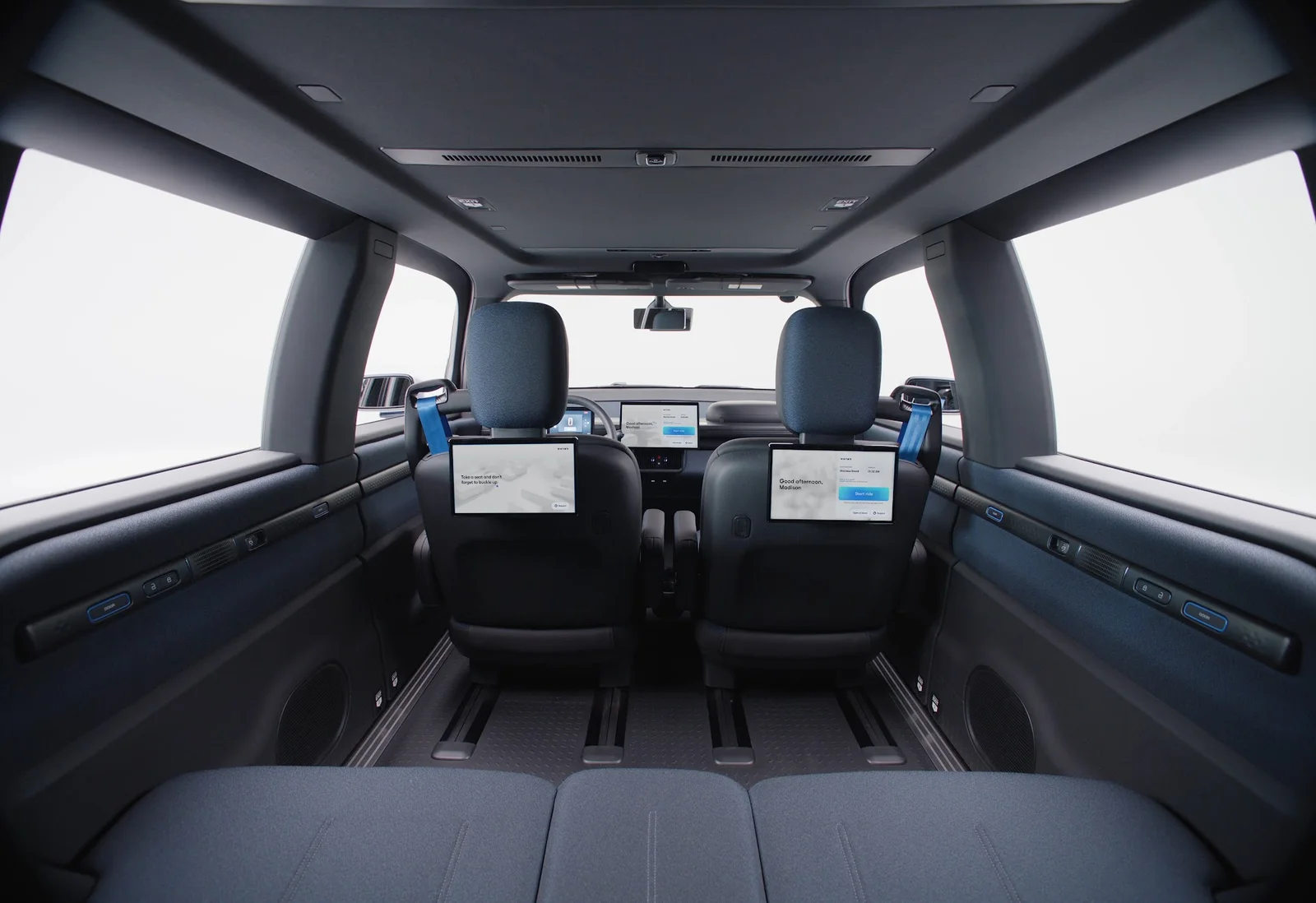
These features describe the Ojai platform, not every vehicle in the broader Waymo fleet. For the wider China-built robotaxi sector, BYDToday’s China robotaxi owner covers operators and commercialization without treating the Ojai as a Chinese public ride-hail service.
What passenger-safety changes did the CPUC review?
Waymo’s updated Passenger Safety Plan adds rider-facing and support procedures. The CPUC disposition describes real-time pickup and drop-off adjustments, a rider-triggered horn to help locate the vehicle, an in-car urgent-support prompt and tooling that lets support agents arrange a replacement Waymo ride when a trip is interrupted.
The supplemental filing also addresses unaccompanied minors and major operational disruptions. Waymo described California account-age requirements, in-vehicle detection and intervention measures, terms-of-service enforcement, incident response teams and rider communications. CPUC approval means the plan met the passenger-service requirements under the cited decisions; it is not an independent test of every feature or a blanket safety guarantee.
What does the sixth-generation Waymo Driver add?
Waymo says the Ojai is the first vehicle to debut its sixth-generation Driver. The system combines high-resolution cameras, imaging radar and lidar with custom compute and software. Waymo’s February 2026 technical note says it uses 17-megapixel imagers, fewer cameras than the fifth-generation system and integrated cleaning intended to keep sensors usable in difficult weather.
Those are Waymo’s system descriptions and performance claims, not an independent safety certification. A lidar, radar or camera specification describes part of the Driver’s perception stack; it does not by itself establish a fully autonomous service outcome. BYDToday’s automotive lidar guide explains the sensor layer, while the autonomous-driving technology owner separates perception, prediction, planning and control.
Where can riders encounter the Waymo Ojai?
The August 14 CPUC approval allows paid driverless passenger service within Waymo’s specified expanded California area, including but not limited to Sacramento and San Diego, and authorizes use of the Ojai platform. That is a permission state, not a city-by-city public launch schedule.
Waymo’s latest first-party city updates reviewed for this article still show a staged rollout. Its July 8 San Diego update said driverless operations would begin with employees before public riders. Its February 5 Sacramento update described manually driven mapping and learning before future public service. Waymo also previously named Phoenix, Los Angeles and San Francisco as initial Ojai rollout markets. Riders should check the current Waymo app and city page rather than treating the full permitted domain as a live service map.
Can consumers buy a Waymo Ojai or Zeekr RT?
The official sources reviewed on August 17, 2026 do not offer the Ojai or Zeekr RT as a consumer vehicle, publish a retail price, or describe a private-sale configuration. It is a fleet platform developed for autonomous ride-hailing. Search questions about “price” therefore need a direct answer: there is no verified retail price because the cited program is not a retail offer.
This intent is distinct from the broader Zeekr company and model owner. Future consumer Zeekr models belong there; future Ojai fleet, integration, authorization and rollout updates belong on this page.
What is confirmed and what remains unknown?
| Confirmed by first-party evidence | Not established by the reviewed sources |
|---|---|
| Waymo’s CPUC filing says the earlier Zeekr vehicle platform was renamed Ojai. | A consumer-sale version or retail price. |
| CPUC approved the updated Passenger Safety Plan, expanded territory and Ojai for paid driverless passenger service effective August 14. | Immediate public availability on every road or in every named city. |
| The approved expansion includes, but is not limited to, Sacramento and San Diego. | A guarantee that every app request will use an Ojai. |
| Waymo integrates and validates its sixth-generation Driver in Mesa with Magna. | A complete country-by-country base-vehicle manufacturing ledger. |
| Waymo described a factory capacity pathway of tens of thousands of vehicles per year. | Actual Ojai production, delivery or fleet counts at that level. |
Frequently asked questions about the Waymo Ojai and Zeekr RT
Is the Waymo Ojai the same as the Zeekr RT?
Waymo Advice Letter 0004 says the Zeekr vehicle platform previously approved for Waymo was renamed Ojai. That confirms the partner-program rename, but it does not make Ojai a retail Zeekr trim.
What did the CPUC approve for the Waymo Ojai?
Effective August 14, 2026, the CPUC approved Waymo’s updated Passenger Safety Plan, expanded paid driverless passenger-service territory and use of the Ojai platform within the specified operating domain.
Does CPUC approval mean Waymo is live everywhere in Sacramento and San Diego?
No. The approval authorizes service in the specified expanded area, including but not limited to Sacramento and San Diego. Waymo says deployment is incremental and operating parameters may be limited by time, weather, route or geography.
Who manufactures the Waymo Ojai robotaxi?
Zeekr designed and developed the purpose-built electric vehicle platform. Waymo receives the vehicle in the United States and integrates, validates and commissions its autonomous-driving system with Magna at the Mesa, Arizona facility.
Can I buy a Waymo Ojai or Zeekr RT?
No consumer-sale program or retail price appears in the official sources reviewed on August 17, 2026. The Ojai is a Waymo ride-hail fleet vehicle, not a retail Zeekr model.
What technology drives the Waymo Ojai?
The Ojai is the first vehicle to use Waymo’s sixth-generation Driver, which Waymo describes as a system combining high-resolution cameras, lidar, imaging radar, custom compute and autonomous-driving software.
Is the Waymo Ojai made in the United States?
The reviewed sources confirm US delivery and Waymo Driver integration in Mesa, Arizona, but do not publish a complete factory-origin ledger for the base vehicle. This article therefore does not assign the entire vehicle to one manufacturing country.
Sources reviewed
- CPUC driverless deployment advice-letter status, updated August 14, 2026.
- CPUC disposition of Waymo Advice Letters 0004 and 0004-A, August 14, 2026.
- Waymo Advice Letter 0004 and attachments, filed January 28, 2026.
- Zeekr and Waymo purpose-built vehicle collaboration announcement, December 2021.
- Zeekr CES 2025 statement identifying the Zeekr RT and SEA-M architecture.
- Waymo Mesa integration and manufacturing announcement, May 2025.
- Waymo sixth-generation Driver technical announcement, February 2026.
- Waymo Ojai first-rider announcement, May 2026.
- Waymo San Diego staged-rollout update, July 2026.
- Waymo Sacramento preparation update, February 2026.
- Waymo press and educational media resources, reviewed August 17, 2026.
Last verified: August 17, 2026. BYDToday Editorial reviewed the CPUC disposition, Waymo’s regulatory filing and first-party Waymo and Zeekr material. Regulatory authorization, planned cities, operating-domain boundaries, factory capacity and system-performance statements are not presented as universal live availability or independent tests.