Why This Matters Globally
In one week in late June 2026, China’s EV industry delivered a concentrated burst of announcements that collectively redefined the competitive landscape for automotive artificial intelligence. Tesla confirmed that Grok-powered FSD voice control could arrive in approximately three months. Li Auto showcased its Mach M100 chip — a 1,280-TOPS, 5 nm automotive-grade AI processor. Huawei disclosed that its ADS platform has surpassed 12 billion kilometers of assisted-driving mileage. Momenta, the Suzhou-based autonomous driving startup, is reportedly preparing a Hong Kong IPO at a $9 billion valuation targeting a $1 billion raise. Simultaneously, 67 listed Chinese auto companies announced M&A deals in the first half of 2026, with parts suppliers leading a consolidation wave driven by software, chips, and system-level integration. Together, these developments signal that China’s EV contest has moved decisively from a product race to a full-stack AI and supply-chain war — and the outcome will shape autonomous driving cost curves, software-defined vehicle architectures, and export competitiveness for the next decade.
What China Brings to the Table
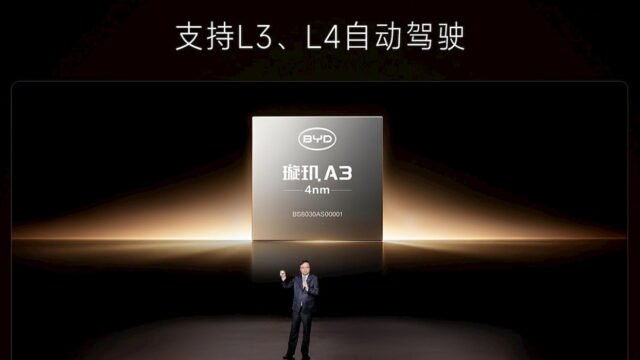
Li Auto’s June 15 software and embodied-intelligence event in Beijing was the most ambitious statement of intent. CEO Li Xiang laid out a decade-long vision to transition from a carmaker to an AI company, anchored by the Mach M100 — described as the world’s first mass-produced dynamic dataflow AI chip for production vehicles. Built on a 5 nm automotive-grade process, the chip delivers 1,280 TOPS with more than 82% real-world operating efficiency. A dual-chip configuration in the Li L9 Livis would deliver 2,560 TOPS, positioning Li Auto’s compute capability ahead of most competitors on paper. The company also open-sourced its Xinghuan OS, launched AI glasses, and committed to a full-year OTA roadmap.
However, compute is not the same as data. Tesla’s FSD stack benefits from millions of vehicles generating real-world driving data daily. Huawei’s ADS platform draws from 11.47 billion kilometers of user driving mileage as of May 31, with assisted-driving mileage exceeding 12 billion kilometers across 35.4 billion total vehicle kilometers. Li Auto, by comparison, is working from a smaller accumulated mileage base. Its strategy — proprietary silicon, aggressive simulation and synthetic data training, and OTA-accelerated capability closure — is credible but capital-intensive and time-sensitive. Whether compute superiority can compensate for weaker real-world data scale remains the central unanswered question.
Huawei, meanwhile, is preparing to deploy ADS 5 with its WEWA 2.0 architecture, which introduces multi-agent game-theory methods in the cloud, online reinforcement learning, and real-time safety risk field assessment. The strategy leverages Huawei’s unique position: as a supplier to multiple automakers through the HIMA alliance (AITO, Luxeed, Stelato, Maextro, Shangjie), it accumulates fleet data across brands while controlling the software stack — a model no Western competitor can currently replicate.
International Context
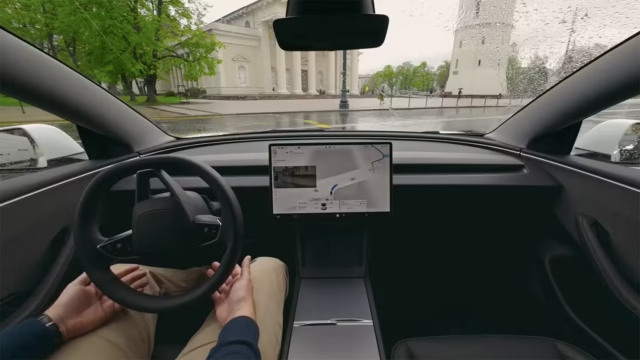
Tesla remains the global benchmark, and its Grok-FSD integration raises the stakes for everyone. Elon Musk confirmed on X that Grok-powered voice control for FSD could arrive in about three months, enabling natural-language driving instructions such as “navigate to the hardware store and back into a parking space near the storefront.” If delivered on schedule, this would represent the industry’s first large-scale integration of a large language model with an autonomous driving decision chain — a milestone that could redefine driver-vehicle interaction.
Tesla’s Cybercab program is also advancing. Production reportedly began at the Texas Gigafactory in late April, with more than 100 vehicles awaiting delivery. Testing has expanded to New Zealand for Southern Hemisphere winter validation, and FSD V14 version 14.3.3 has reached Australia and New Zealand. If Oceania becomes Tesla’s first overseas robotaxi market, it would create a regulatory template for other right-hand-drive markets including the UK and Japan.
The Momenta IPO adds a capital-markets dimension. Backed by General Motors, Toyota, Mercedes-Benz, Bosch, Temasek, and Tencent, Momenta’s $9 billion valuation and $1 billion IPO target signal that investors still see enormous value in autonomous driving technology suppliers. Momenta’s robotaxi collaborations with Uber in Munich, Mercedes-Benz in Abu Dhabi, and Grab in Southeast Asia demonstrate a multi-continent, multi-partner strategy that reduces dependence on any single automaker or market.
XPeng weighed in with a significant regulatory clarification, rejecting claims that China’s proposed autonomous driving standards would mandate dual redundancy for L3 systems or LiDAR for L4 systems. The company’s position — that draft safety requirements are outcome-based rather than sensor-prescriptive — aligns with Tesla’s camera-heavy approach and against the LiDAR-mandatory position that some regulators and competitors have advocated. This sensor-strategy divide will shape hardware costs, software complexity, and scalability for years.
The supplier consolidation wave — 67 M&A deals among listed Chinese auto companies in the first half of 2026 through June 12 — reflects a structural shift. Buyers increasingly seek control, not minority stakes, targeting vertical integration, system-level capability, and global market access. Steering, brake-by-wire, and electronic control assets are becoming particularly strategic as software-defined vehicles demand integrated chassis intelligence.
Buyer Impact
For global EV buyers, the accelerating AI race changes the purchase calculus in three ways. First, autonomous driving capability will improve faster than expected — over-the-air updates mean a vehicle purchased in 2026 will be significantly more capable in 2028, even without a hardware upgrade. This extends the effective lifespan of vehicles and changes depreciation curves. Second, the competition between Li Auto’s in-house silicon, Huawei’s ADS ecosystem, and Tesla’s vertically integrated approach will drive down the cost of advanced driver assistance systems, making L2+/L3 capabilities standard on vehicles priced below $30,000 within 2-3 years. Third, the sensor-strategy debate — LiDAR versus camera-only — will directly affect repair costs, insurance premiums, and long-term maintenance for every ADAS-equipped vehicle on the road.
For investors, the Momenta IPO and the supplier M&A wave suggest that autonomous driving and smart-cockpit technology remain the highest-conviction investment themes in the automotive sector, even as pure EV manufacturing faces margin pressure from price competition. Companies that control the software, chip, and data layers — rather than just the vehicle assembly — are commanding premium valuations.
The most important takeaway from this week’s announcements is not any single product or number. It is that China’s EV industry is no longer just building electric cars — it is building the AI-defined automotive industry that much of the world may soon have to compete with. The companies that win this race will define how cars drive, communicate, and evolve for the next generation.
Quick Answer
China’s EV race has entered its AI phase. In June 2026, Tesla confirmed Grok-powered FSD voice control is roughly three months away, Li Auto unveiled its 1,280-TOPS Mach M100 chip, Huawei’s ADS platform crossed 12 billion kilometers of assisted-driving mileage, and Momenta filed for a $9 billion Hong Kong IPO. These moves collectively shift competition from electric powertrains to full-stack AI — the winner will define how cars drive for the next decade.
Sources
- China EV Pulse — Tesla and Li Auto Reshape China EV AI Race
- CnEVPost — Li Auto Schedules Software and AI Event for June 15
- ChinaBizInsider — Li Auto Bets Full-Stack Silicon on Embodied Intelligence
- TechTimes — Tesla FSD Grok Voice Control Arrives This Fall With Parking Memory