Quick Answer: Huawei Qiankun ADS is Huawei’s vehicle intelligence and driver-assistance family supplied to multiple automakers. ADS 4 introduced SE, Pro, Max and Ultra tiers; ADS 5 is the next generation, not a fifth trim tier. Hardware and activated functions vary by vehicle, market and OTA. Current passenger-car use remains supervised assistance unless a specific vehicle, regulator and operating domain explicitly approve otherwise.
Last verified: July 17, 2026. Version names, current product claims, partner scope and driver-responsibility language use Huawei Qiankun and China’s Ministry of Industry and Information Technology. Planned functions and internal tests are separated from customer availability.
Page role: This is BYDToday’s Huawei Qiankun ADS Technology Owner. It explains Huawei’s version names, ADS 4 tiers, ADS 5 architecture, hardware variability, vehicle availability and legal limits. The ADAS Comparison 2026 owns cross-brand ranking questions, while the Huawei HIMA Owner owns brands, automaker relationships and Yu Chengdong.
What is Huawei Qiankun ADS?
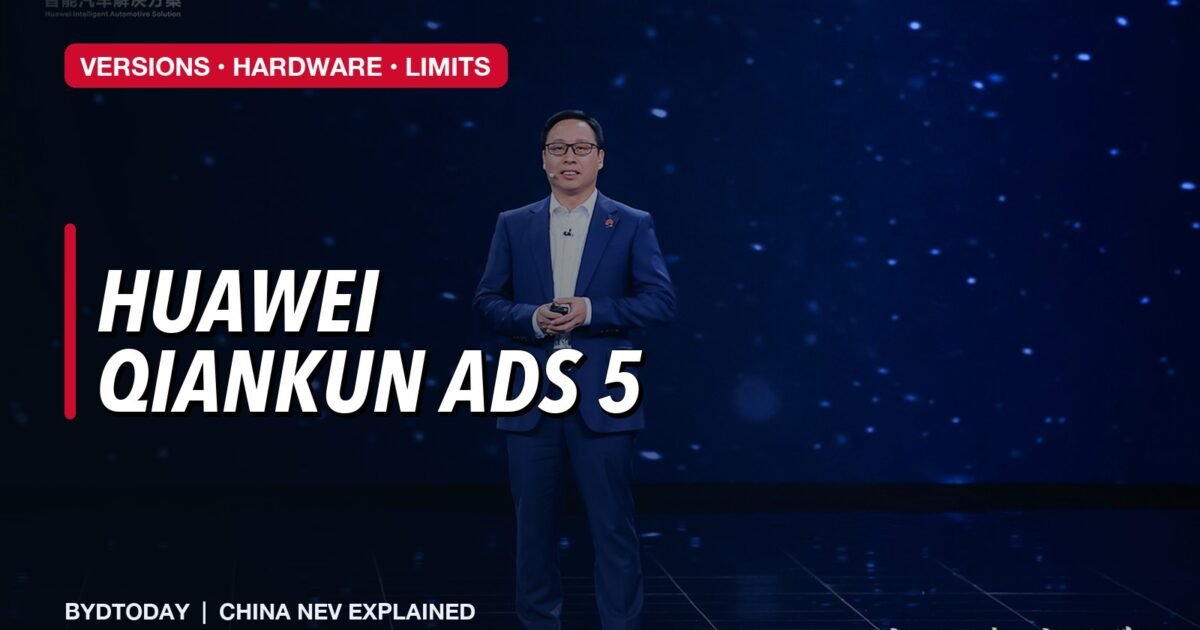
Huawei Qiankun ADS is a family of intelligent-driving hardware and software supplied to automaker partners. Huawei’s English material has used “HUAWEI Advanced Driving System,” while current Chinese product pages style the brand as Huawei Qiankun ADS. Qiankun is the wider smart-vehicle solutions brand; ADS is its driving-assistance product family.
It is not a Huawei car brand and it is not limited to HIMA. HIMA vehicles can use ADS, but so can vehicles from partners outside the five HIMA brands. Conversely, a vehicle appearing in Huawei’s partner ecosystem does not prove that every trim uses the same ADS generation, hardware or paid feature package.
The word “ADS” also does not establish a legal automation level. Huawei’s current passenger-car disclaimer says the system is driver assistance, cannot replace the driver, cannot handle every road, weather or traffic condition, and requires the driver to remain attentive and ready to intervene.
ADS 3, ADS 4 and ADS 5 naming explained
Huawei’s version history and product tiers answer different questions. ADS 3, ADS 4 and ADS 5 identify generations. SE, Pro, Max and Ultra identify product levels introduced with ADS 4. A model may carry a vehicle trim name such as “Ultra” that is unrelated to the installed ADS tier, so buyers must read the automaker’s exact configuration sheet.
Huawei’s current official pages normally write “ADS 4” and “ADS 5,” without the decimal. English-language media often add “4.0” or “5.0.” The names may refer to the same generation, but the official spelling is the safer choice for a current specification.
| Generation | Official timing | Documented milestone | What not to assume |
|---|---|---|---|
| ADS 1 | 2021–2022 commercialization period | Huawei’s 2026 review says ADS 1 commercialized urban driving assistance in 2022. | Current functions, hardware or nationwide availability. |
| ADS 2 | 2023 | Huawei describes nationwide driving-assistance availability as the generation’s main step. | That every road, condition or vehicle was supported. |
| ADS 3 | 2024 | Huawei identifies parking-space-to-parking-space assistance as its headline advance. | That “parking to parking” means unattended operation. |
| ADS 4 | Released April 2025 | WEWA architecture plus SE, Pro, Max and Ultra product tiers. | One sensor count, one feature list or public L3 permission across all cars. |
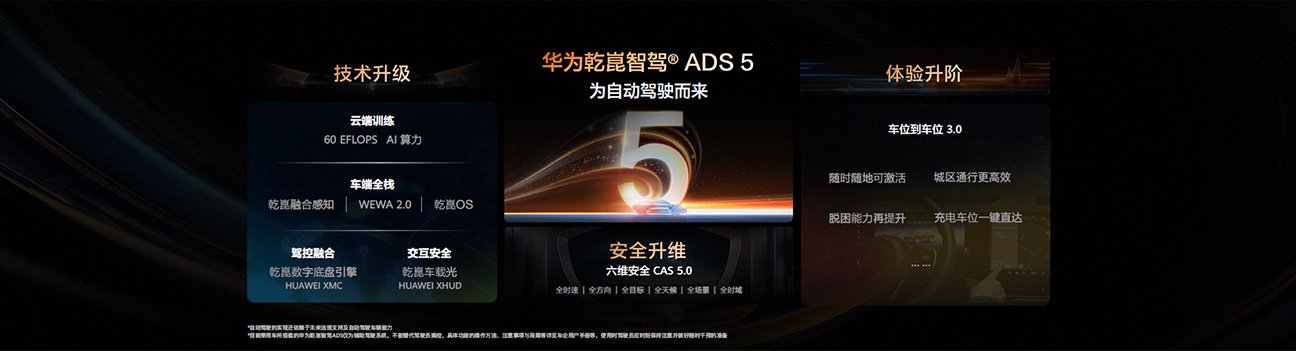
| ADS 5 | Released April 23, 2026 | WEWA 2.0, Qiankun OS, CAS 5.0 and parking-space-to-parking-space 3.0. | That every announced function is already active on every partner vehicle. |
ADS 4 SE, Pro, Max and Ultra are product tiers
Huawei launched four ADS 4 versions to cover different vehicle prices and capability levels. People’s Daily reported the four names and said the Ultra flagship included a dedicated highway L3 solution. Later Huawei material publicly discussed Pro and Max upgrades while describing highway L3 activity as internal testing in selected cities.
That evidence supports a strict distinction: Ultra was the top ADS 4 solution and was designed around highway L3, but a product tier, technical readiness statement or internal test is not the same as a consumer being legally permitted to drive hands-off and eyes-off. Public use requires a specific vehicle approval, software release, operating domain, user instructions and applicable regulation.
| Tier | Huawei positioning | Publicly documented boundary | Buyer verification |
|---|---|---|---|
| ADS SE | Base solution | Entry product in the ADS family; do not infer a universal camera, radar or LiDAR package. | Check highway, urban, parking and active-safety functions on the exact trim. |
| ADS Pro | Enhanced solution | Huawei said Pro would expand NCA from highway to highway plus urban use. | Confirm whether the vehicle has the required cabin and exterior sensing and the applicable OTA. |
| ADS Max | Advanced or “super-tier” solution | Huawei described continuing safety upgrades including defensive driving and animal recognition. | Confirm standard versus optional hardware, paid software and regional activation. |
| ADS Ultra | Flagship solution | Introduced with a dedicated highway L3 solution; later public evidence described multi-city internal testing. | Do not use as L3 until the exact vehicle and operating domain have formal approval and instructions. |
What changed with ADS 5?
Huawei released ADS 5 at its April 23, 2026 Qiankun technology conference. The central architecture is WEWA 2.0: a cloud World Engine for training and an in-vehicle World Action Model for driving decisions. Huawei says the cloud model adds multi-agent interaction and online reinforcement learning, while the vehicle model adds a “safety risk field” for real-time decisions.
Huawei’s release claims ten-times greater training intensity and efficiency and a 50% reduction in collision risk from the risk-field approach. These are company test claims, not independent cross-brand crash-rate results. The release also says more scenarios will open progressively after sufficient testing, which means announced architecture and customer-ready availability are not the same thing.
The named ADS 5 feature families include CAS 5.0 active safety, parking-space-to-parking-space 3.0, driver-incapacitation assistance 2.0 and connections to parking, charging and service ecosystems. Exact functions depend on the car. Huawei’s product page explicitly says some displayed features may be unsupported or require a later OTA.
Hardware: why there is no single Huawei ADS sensor specification
Huawei promotes multi-sensor fusion, but ADS is supplied across many automakers, vehicle types and price points. Sensor count, LiDAR type, radar, cameras, compute, driver monitoring, steering and braking redundancy can therefore differ. A specification taken from AITO M9, Maextro S800 or Dongfeng eπ M8 cannot be copied to every ADS-equipped car.
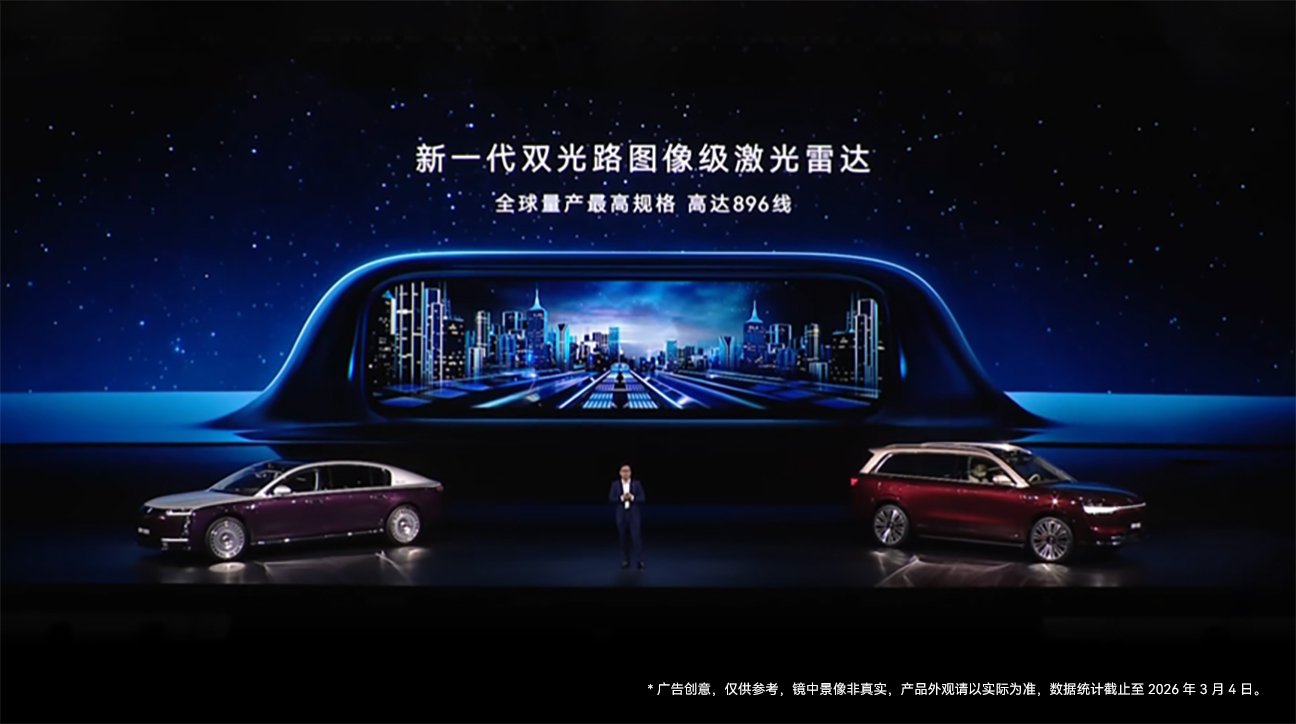
In March 2026, Huawei announced a dual-optical-path image-grade LiDAR described by the company as 896-line and the highest specification then in mass production. That is a hardware product announcement, not proof that 896-line LiDAR is mandatory for ADS 5. Huawei’s own ADS 5 page ties some functions to a forward high-precision solid-state LiDAR, demonstrating why the exact vehicle bill of materials matters.
| Layer | What can vary | Best source | Unsafe shortcut |
|---|---|---|---|
| Exterior sensing | LiDAR number/type, cameras and radar configuration. | Current automaker configurator and owner manual. | “Every ADS 5 car has 896-line LiDAR.” |
| In-cabin sensing | Driver monitoring and Limera-related equipment. | Exact trim equipment list. | “Pro or higher always has identical monitoring hardware.” |
| Compute and controls | Processor generation, redundancy and vehicle-control integration. | OEM homologation/configuration material. | Using one TOPS number for the whole ADS family. |
| Software | ADS generation, feature package, subscription and OTA build. | Vehicle software screen, contract and release notes. | Assuming a new architecture means the feature is already active. |
| Operating domain | Road, speed, weather, parking and regional limits. | User manual and regulatory approval. | Treating a demonstration or internal test as public availability. |
Which cars and markets have Huawei ADS?
Huawei’s current partner page displays a broad China ecosystem including AITO, Avatr, Luxeed, Trumpchi, Deepal, Stelato, Voyah, Fangchengbao, Maextro, Mengshi, Audi, Shangjie, Hyper, Zongheng, Jetour, Qijing, Yijing, Dongfeng eπ and Huajing. The list proves partner breadth, not identical ADS fitment.
HIMA accounts for five of those consumer-brand relationships and has its own product, retail and ownership boundaries. Use the HIMA Owner for that structure. Model news remains supporting evidence: BYDToday’s Dongfeng eπ M8 page covers one ADS 5 Pro vehicle, while the technology Owner keeps the reusable system rules.
Huawei’s official ADS, app, partner and regulation evidence is China-centered. A Chinese vehicle may be exported without the same ADS functions, map/data support, language, subscription, homologation or warranty coverage. No global buyer should infer overseas activation from the presence of Huawei hardware or from a China-market demonstration.
| Context | What is verified | What remains vehicle-specific | Owner boundary |
|---|---|---|---|
| HIMA China | Huawei participates deeply in product, software, retail and user experience. | ADS tier, sensors, OTA, paid package and trim. | Brand/automaker relationships belong to the HIMA Owner. |
| Non-HIMA China | Huawei lists multiple automaker and brand partners. | Whether a named model uses ADS, cockpit-only technology or another Qiankun solution. | This page owns the reusable ADS technology rules. |
| China L2 use | Huawei and MIIT describe current combined driving assistance with driver responsibility. | Exact activation and operating-domain conditions. | Post 186 compares competing systems. |
| L3 development | Ultra was designed with a highway L3 solution; selected vehicles entered internal tests. | Production approval, public activation, roads, speed, weather and liability for a named car. | Never convert a plan or test into customer availability. |
| Outside China | Some partner automakers sell vehicles overseas. | ADS homologation, data/maps, language, service, OTA and warranty in each country. | Use a country/model page when verifiable. |
Why ADS 5 still requires an attentive driver
China published mandatory national standard GB 47955—2026 for Level 2 combined driver-assistance safety on June 27, 2026, with implementation planned for January 1, 2027. The standard addresses functions such as navigation-assisted driving and establishes safety, testing, human-machine interaction and user-information requirements.
Huawei and its affiliate Yinwang publicly framed current ADS passenger-car use inside this L2 boundary. Huawei reported more than 1.9 million equipped vehicles and over 12 billion kilometers of assisted driving by late June, but scale does not transfer the driving task or legal responsibility away from the human driver.
Huawei also publishes internal safety data comparing ADS-assisted and human-driven mileage with an inferred China average. The company explains its methodology, but the figures are not an independent, exposure-adjusted comparison with Tesla, XPeng, NIO or other systems. They should be labeled as Huawei-reported evidence, not used to declare a universal safety winner.

What to check before buying or activating Huawei ADS
- Exact identity: vehicle, model year, trim, production month and destination market.
- Generation and tier: ADS 3, ADS 4 or ADS 5, plus SE, Pro, Max or Ultra where applicable.
- Hardware: all standard and optional sensors, driver monitoring, compute and control redundancy.
- Software: installed build, OTA eligibility, trial versus permanent activation and subscription terms.
- Operating domain: supported roads, speeds, weather, parking conditions and geographic limits.
- Responsibility: the current manual’s supervision, takeover and prohibited-use instructions.
- Evidence date: treat launch slides and future roadmaps as plans until the named vehicle receives the function.
Explore the wider system: Use the China NEV Knowledge Hub to move between technology, company, founder, vehicle and market Owners.
Frequently Asked Questions
What is Huawei Qiankun ADS?
Huawei Qiankun ADS is Huawei’s intelligent-driving and driver-assistance product family supplied to multiple automakers. It combines software, sensing, compute and vehicle integration, but the exact configuration varies by car.
Is Huawei ADS 5 autonomous driving?
Not in current general passenger-car use. Huawei states that ADS remains driver assistance and requires an attentive driver. A future-facing architecture or L3 development program does not authorize unsupervised use.
What is the difference between ADS 3, ADS 4 and ADS 5?
They are generations. ADS 3 emphasized parking-space-to-parking-space assistance, ADS 4 introduced WEWA and four product tiers, and ADS 5 adds WEWA 2.0, Qiankun OS, CAS 5.0 and further progressively released functions.
What do ADS SE, Pro, Max and Ultra mean?
They are ADS 4 product tiers from base through flagship. They describe positioning, not one universal hardware list. Ultra included a dedicated highway L3 solution, but public L3 use still requires vehicle-specific approval and instructions.
Which cars use Huawei ADS?
Huawei lists HIMA and non-HIMA partners including AITO, Avatr, Luxeed, Deepal, Voyah, Fangchengbao, Audi and others. Buyers must verify the exact model, trim, market, hardware and activated ADS package.
Can Huawei ADS be used outside China?
Do not assume China-market functions transfer overseas. Maps, data rules, homologation, software, language, subscriptions, service and warranty differ by country, so availability must be confirmed for the exact local vehicle.
Sources
- Huawei Qiankun, ADS 5 product page and passenger-car disclaimer
- Huawei Qiankun, April 23, 2026 ADS 5 and Qiankun OS release
- Huawei Qiankun, ADS history, scale and L2 standard statement
- China Ministry of Industry and Information Technology, GB 47955—2026 publication notice
- Huawei Qiankun, Pro, Max and highway L3 internal-test update
- Huawei Qiankun, 896-line image-grade LiDAR announcement
- Huawei Qiankun, current partner-vehicle directory and availability disclaimer
- People’s Daily, ADS 4 four-tier launch and Ultra positioning
- BYDToday, Source Methodology and Editorial Policy