Autonomous driving is not simply “legal nationwide” in China. Consumer Level 2 systems remain driver-assistance products; Level 3 and Level 4 vehicles need product approval plus a separate road, test, demonstration or operating permission for a defined place and use. As of July 27, 2026, China had two tightly bounded L3 product-and-road admissions, a 20-city vehicle-road-cloud pilot and separate city permit systems. None created an unrestricted national self-driving licence.
Last verified: July 27, 2026. Status dates below matter: a published standard may not yet be effective, and a pilot selection is not the same as a road permit. This is a source-based explainer, not legal advice.
Six different questions hide behind “Is autonomous driving legal in China?”
China’s autonomous-driving legal system is layered. National ministries define automation levels, vehicle-product admission and the framework for road-access pilots. Public-security authorities govern registration and traffic management. Transport authorities govern passenger and freight service. Local rules then open specific roads, zones and operating scenarios. Calling any one of those permissions “full legalization” collapses distinct legal gates.
| Layer | What it answers | Typical authority | July 2026 position |
|---|---|---|---|
| L2 consumer assistance | May a driver use lane, speed and parking assistance? | Vehicle standards, product approval, traffic and product-safety law | Available The human continuously supervises and remains the driver. |
| L3/L4 road test | May a developer test an unproven automated system? | 2021 national management rules plus local joint authorities | Permit only Designated roads or areas, test qualification, safety measures and reporting. |
| Demonstration application | May the system carry people or goods in a controlled demonstration? | National framework and city permit | Permit only A demonstration may be broader than a test but is not ordinary nationwide use. |
| Vehicle product admission | Is a specific model/configuration admitted as a road-motor-vehicle product? | MIIT and the national product-admission system | Model specific The first two L3 admissions were announced in December 2025. |
| Public-road access | May that admitted vehicle operate on a named public-road scope? | MIIT, MPS and local participants in the 2023 pilot | Route limited Product admission alone does not open every road. |
| Paid passenger/freight operation | May an operator charge for transport? | Transport licensing plus the applicable city pilot | Scenario limited A test plate is not automatically a taxi or freight permit. |
The national classification reference is GB/T 40429-2021, Taxonomy of Driving Automation for Vehicles, published in August 2021 and effective March 1, 2022. Level 2 is combined driver assistance: the driver performs the dynamic driving task while supervising the system. At Level 3, the automated driving system performs the task within its operational design domain, but a fallback-ready user must respond when required. L4 can complete fallback within its design domain. Those technical definitions do not themselves grant road access.
The national rule stack and what changed by July 2026
The 2021 road-test and demonstration rules, jointly issued by MIIT, MPS and MOT, created a nationwide management framework. They require a qualified applicant, designated roads or areas, temporary vehicle plates, safety statements, test records and incident reporting. “Nationwide framework” does not mean “nationwide road permission”: implementation still occurs on approved local roads and within an approved purpose.
The four-ministry 2023 vehicle access and on-road pilot notice added a pathway for L3 and L4 products: a vehicle first passes product-admission review, then eligible vehicles may receive public-road access within a limited pilot area. If the use is commercial passenger or freight transport, the operator must also satisfy transport-sector qualifications. In June 2024, nine vehicle-user consortia were selected to enter the pilot process. The selection notice itself said assessment, testing and safety evaluation still followed; it was not a blanket licence.
| Date | National action | What it did | What it did not do |
|---|---|---|---|
| Sep. 1, 2021 | Road-test and demonstration rules effective | Created common applicant, vehicle, road and safety requirements. | Authorize unrestricted driverless use. |
| Mar. 1, 2022 | GB/T 40429 effective | Standardized L0-L5 terminology. | Issue a vehicle or operating permit. |
| Nov. 2023 | L3/L4 access-and-road pilot launched | Connected product admission to limited road access. | Make every L3 car legal on every road. |
| Jun.-Jul. 2024 | Nine consortia; 20 vehicle-road-cloud cities | Started evaluation and infrastructure/application pilots. | Turn infrastructure selection into road legality. |
| Dec. 15, 2025 | First two L3 product admissions | Approved two bounded vehicle-road-user configurations. | Create general consumer L3 access across China. |
| Jun. 27, 2026 | GB 47955-2026 published | Set mandatory safety requirements for combined driver assistance. | effective January 1, 2027 It was not yet effective on July 27, 2026 and is not an L3 licence. |
The 20-city “vehicle-road-cloud integration” program is especially easy to misread. MIIT describes it as an application pilot joining vehicles, roads, cloud control, maps, communications and city infrastructure. Its official Q&A does not replace product approval, registration, road designation or operating qualifications.
L2 product responsibility is not L3 driving authority
Most “smart driving” functions sold to consumers in China in 2026 are still L2 assistance. The driver must watch the road, observe the system’s boundaries and be ready to control the vehicle. Marketing language such as “urban navigation” or “parking pilot” cannot change the approved automation level. For a product-by-product explanation of how major systems differ, see BYDToday’s comparison of major consumer ADAS systems.
Manufacturers still carry product duties: accurate naming and instructions, driver-monitoring design, safe updates, defect reporting and recall obligations. MIIT published GB 47955-2026 on June 27, 2026, with an effective date of January 1, 2027. It governs combined driver assistance and explicitly assumes a driver who continuously observes and controls the vehicle. A separate mandatory “automated driving system safety requirements” standard was still a draft for comment in February 2026. Treating that draft as already effective would be wrong.
What China’s first L3 admissions actually allow
On December 15, 2025, MIIT announced the first two L3 intelligent-connected vehicle products admitted under the pilot. One Beijing configuration was limited to specified expressway and urban-expressway conditions, a single lane and up to 80 km/h. A Chongqing configuration covered specified congested highway and expressway conditions, a single lane and up to 50 km/h. The official explanation emphasized defined regions, users and operating conditions.
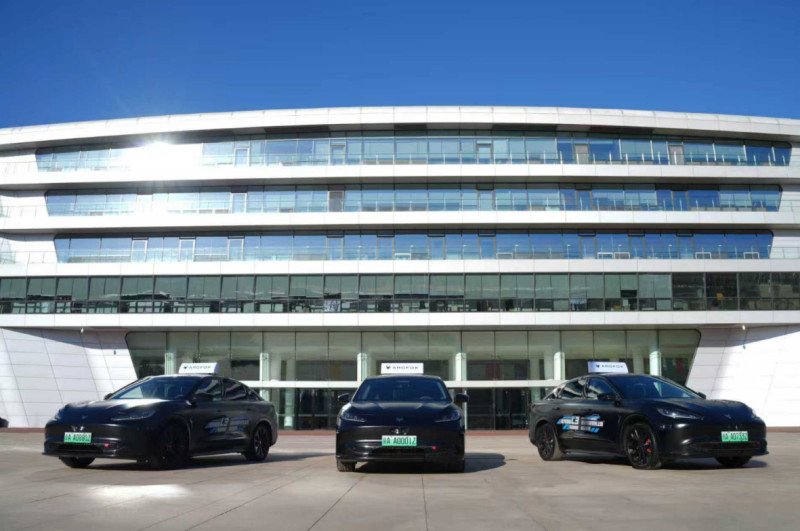
Beijing then issued three L3 special plates to BAIC ARCFOX vehicles on December 23, 2025. The city said they could operate on the approved road sections and that the human must resume control when the system requests it. This is meaningful commercialization progress, but the legal unit remains the approved vehicle configuration, user, road and operational design domain.
Beijing, Shanghai, Shenzhen and Wuhan: four different city systems
City permits answer different questions. Beijing has a citywide regulation and staged road-application process. Shanghai’s strongest specific legal framework is the Pudong New Area driverless regulation. Shenzhen has an economic-zone regulation amended for July 2026 plus registration and test rules. Wuhan has staged testing, demonstration and commercial pilots, with additional rules for unregistered functional driverless equipment in its development zone.
| City | Current rule and scope | What it can allow | Critical boundary |
|---|---|---|---|
| Beijing | Autonomous Vehicle Regulation, effective Apr. 1, 2025; approved and published roads/areas. | Road tests, demonstrations and road-application pilots after staged assessment. | Personal use still depends on national product catalogue/admission and applicable national conditions. |
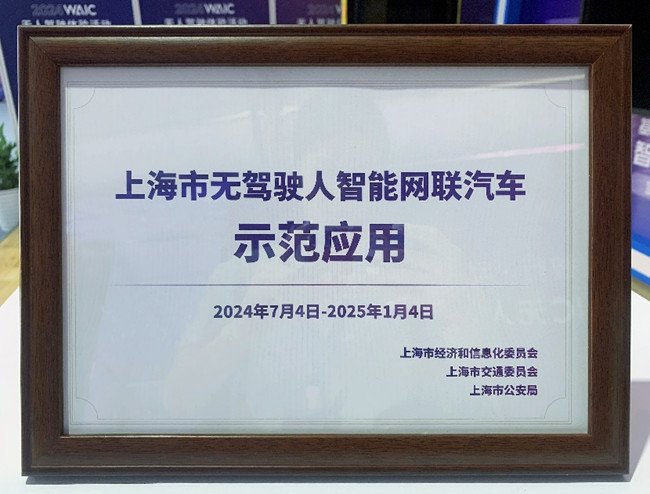
| Shanghai | Pudong New Area driverless regulation, effective Feb. 1, 2023; designated areas in Pudong/Lingang. | Driverless tests and demonstrations; charging in approved demonstration operations; commercial service after product, registration and transport approvals. | A demonstration licence is not automatically a general taxi operating permit. |
| Shenzhen | Economic-zone ICV regulation as amended effective Jul. 1, 2026; separate registration and test rules. | Registered L3/L4 vehicles and driverless L4/L5 operation within designated roads/areas, subject to the applicable approvals. | L3 requires a driver and takeover capability; driverless operation remains geographically designated. |
| Wuhan | Local road-test/demonstration rules and staged commercial pilots; WEDZ functional-equipment measure effective Oct. 20, 2024. | Approved test, demonstration and paid pilot scenarios; separate unregistered equipment uses such as delivery or cleaning. | A functional unmanned-equipment rule is not a blanket passenger-robotaxi law. |
Beijing: staged qualification, not a citywide free pass
Beijing’s Autonomous Vehicle Regulation took effect April 1, 2025. It establishes an advancement path from road test to demonstration, safety assessment and road-application qualification. Authorities must approve and publish usable roads and areas. After an incident, parties must cooperate and provide relevant data; allocation of liability still follows applicable national laws rather than a simple slogan that “the manufacturer always pays.”
Shanghai: demonstration and commercial operation are separate
Shanghai’s Pudong rules allow a qualified enterprise to proceed through a declaration-confirmation system for testing and demonstration on designated roads and areas. Driverless demonstration operations may charge where approved. Commercial operation requires more: vehicle-product admission, registration and the applicable passenger or freight operator and vehicle permits. In a driverless-operation accident, the enterprise generally makes first compensation and may then seek recovery from a responsible developer, manufacturer or component supplier.
Shenzhen: July 2026 amendment changes the liability reading
Shenzhen amended its ICV regulation on May 25, 2026, effective July 1. Under the current text, an L3 vehicle must retain human controls and a driver must monitor operation and take over immediately when required. L4 vehicles generally retain human controls but may operate driverless where permitted; L5 vehicles may be designed without them. Driverless operation is limited to designated roads and areas. Shenzhen’s separate registration measures became effective March 1, 2026, and the city revised its test-and-demonstration rules in June.
This update makes old summaries dangerous. When L3 is activated, Shenzhen assigns traffic-offence handling to the driver and initial civil-damage responsibility to the driver. When L4 or L5 is activated, the owner or manager bears the initial responsibility. If a product defect caused the loss, that party may pursue the producer or seller. The result is not “manufacturer liability for every L3 crash.”
Wuhan: large pilots still have legal boundaries
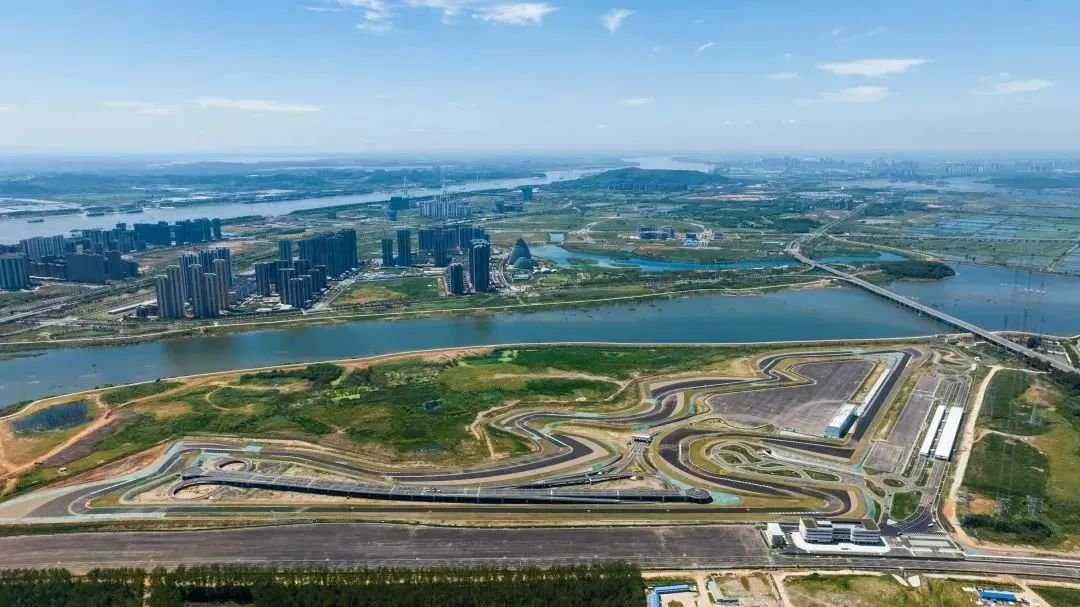
Wuhan has operated broad robotaxi pilots, but its own transport reporting describes a progression from test to demonstration to commercial pilot. Wuhan’s scale informs industry analysis, as detailed in BYDToday’s 2026 China robotaxi scale analysis, but a paid pilot remains a locally approved mode. A 2024 Wuhan Economic & Technological Development Zone measure applies to unregistered functional driverless equipment such as delivery, cleaning and patrol vehicles. It should not be cited as a general passenger-car authorization.
Commercial robotaxis need transport authority, not only technology approval
MOT’s Automated Driving Vehicle Transport Safety Service Guide says an automated vehicle used for road passenger or freight transport must satisfy transport-management rules, insurance requirements and safety-management duties. Conditional and high automation used as taxis generally require an onboard safety operator. A fully automated vehicle may use a remote safety operator in a designated area with local-government consent; the guide sets a minimum remote-operator ratio of one person to three vehicles.
That is why “the car has no one in the driver’s seat” does not answer whether a service is legal. Check the test or demonstration qualification, designated service area, passenger-service permission, fare authority where relevant, insurance, safety-operator arrangement and the precise vehicle list.
Who is responsible after a crash?
China autonomous-driving crash liability has no single answer for every automation level and city. First determine whether a human was legally the driver, whether an automated system was activated, whether the vehicle operated inside its approved domain, and whether a defect or an operator breach contributed.
| Situation | Immediate legal focus | Potential later claim |
|---|---|---|
| L2 assistance in a consumer car | The human driver’s traffic duties and continuous supervision. | Product defect, misleading instructions, unsafe update or recall issue may create producer/seller responsibility. |
| L3 activated in Shenzhen | Driver handles offences and initially bears civil-damage responsibility under the amended local rule. | Recourse against producer or seller where a vehicle defect caused damage. |
| L4/L5 activated in Shenzhen | Owner or manager handles offences and initial civil responsibility. | Defect-based recourse against responsible producer or seller. |
| Driverless operation in Pudong | Operating enterprise makes first compensation under the local rule. | Enterprise may recover from a responsible developer, manufacturer or supplier. |
| National/Beijing pilot | General traffic, insurance, tort and product law plus permit conditions; preserve system data. | Allocation depends on driver/operator conduct, system state, defect evidence and applicable contract/law. |
Do not infer liability from branding. “L3-ready,” “robotaxi” or “driverless” is not enough. Investigators need the approved automation level, whether the system was active, takeover requests, operational-design-domain limits, permit scope, event data and evidence of defects or unauthorized modification.
Data, maps, cybersecurity and OTA updates are separate compliance tracks
Automated and connected vehicles process location, road, video, biometric and user information. China’s Provisions on the Administration of Automobile Data Security, effective October 1, 2021, require data minimization and in-vehicle processing where possible, regulate sensitive personal information, require important data to be stored domestically, and subject necessary exports to security assessment. These obligations can apply even when the driving function is only L2.
An over-the-air update also cannot silently convert an approved L2 product into lawful L3 operation. Software changes remain subject to product, safety, cybersecurity, data and possibly recall or re-admission requirements. International technical work may influence later rules, but a dated story such as BYDToday’s UN automated-driving GTR report is not proof that a domestic rule already changed.
How to read any China autonomous-driving permit
A China autonomous-driving permit is useful only when the reader identifies the permission type, exact vehicle, geography, operating domain, approved user or operator, effective dates and any separate transport authorization.
- Identify the permission: product admission, registration, road test, demonstration, road application, or commercial transport.
- Read the vehicle list: model, VIN range, configuration and software state may be restricted.
- Read the geography: named roads, districts, cities or operational zones—not just “China.”
- Read the operating domain: speed, lane, weather, time, traffic and takeover conditions.
- Read the user rule: approved fleet, trained driver, owner, operator, safety officer or remote supervisor.
- Read the date: issuance, effective date, expiry and whether the document is only a draft.
- Check transport authority: carrying or charging passengers/goods needs more than a test plate.
- Check the current text: Shenzhen’s July 2026 amendment shows how an older liability summary can become wrong.
For related evergreen explainers, use the BYDToday China EV knowledge hub. This guide focuses on national rules and city permits; separate guides cover product comparisons, robotaxi market scale, and the history, technology and verified 2026 status of autonomous driving in China.
Frequently asked questions
Is autonomous driving legal in China?
Yes in defined forms, but not as unrestricted nationwide self-driving. L2 assistance is sold for human-supervised use. L3/L4 testing, demonstration, product admission, public-road access and paid operation are separate permissions. A legal operation depends on the approved vehicle, user, road or area, operating domain and purpose.
Can consumers buy and use an L3 car anywhere in China?
No. China announced its first two L3 product admissions in December 2025, but they are tied to specific pilot configurations, users, road sections, speeds and conditions. A model’s L3 capability or marketing description does not create permission on every Chinese road.
Are robotaxis legal nationwide in China?
No. Robotaxis operate through local tests, demonstrations or commercial pilots, and paid passenger service also engages transport rules. Beijing, Shanghai, Shenzhen and Wuhan have different approval scopes. A large service area or driverless cabin does not turn a city permit into a national taxi licence.
Who is liable in an L3 crash in China?
It depends on the applicable law and facts. For L2, the human remains the driver. Shenzhen’s rule effective July 1, 2026 assigns initial responsibility to the driver when L3 is active, with defect-based recourse possible against the producer or seller. Other pilots may apply general traffic, insurance, tort and product law plus local permit terms.
What changed in Shenzhen in July 2026?
Shenzhen’s amended intelligent-connected-vehicle regulation took effect July 1, 2026. It clarified human-control and takeover duties for L3, allowed approved driverless L4/L5 operation only on designated roads or areas, and distinguished initial responsibility for L3 drivers from L4/L5 owners or managers.
Does the vehicle-road-cloud pilot legalize driverless cars?
No. The 20-city vehicle-road-cloud integration pilot develops infrastructure and coordinated applications. It does not replace vehicle-product admission, registration, local road designation, test or demonstration qualification, transport licensing, insurance, safety-operator rules or data-security obligations.
Primary sources
- MIIT/MPS/MOT: Road Test and Demonstration Application Management Rules (2021)
- Four ministries: ICV Product Access and On-road Pilot Notice (2023)
- MIIT: First L3 vehicle-product admissions (December 2025)
- MIIT: GB 47955-2026 combined driver-assistance safety requirements and January 1, 2027 effective date
- Beijing Municipal Government: first L3 special plates and approved road access
- Beijing Autonomous Vehicle Regulation
- Pudong New Area Driverless ICV Regulation
- Shenzhen ICV Regulation amendment, effective July 1, 2026 (PDF)
- Shenzhen ICV Registration Measures
- Wuhan Economic & Technological Development Zone functional driverless-equipment pilot measure
- MOT Automated Driving Vehicle Transport Safety Service Guide
- CAC Provisions on the Administration of Automobile Data Security
Editorial method: BYDToday checked the cited government texts and dated each status as of July 27, 2026. Where a city or agency uses “pilot,” “demonstration,” “road application” or “commercial pilot,” this article preserves that narrower label.