Quick Answer: Huawei’s automotive business works at three depths: component supply, broader Qiankun or legacy HI solutions, and the consumer-facing HIMA alliance. Huawei does not hold the manufacturing licence for HIMA cars; partner automakers build them. Huawei reported CNY 45.018 billion of Intelligent Automotive Solution revenue in 2025, but it does not disclose HIMA revenue or a standard per-car fee.
Last verified: July 17, 2026. The five-brand map uses the current HIMA site and partner-company disclosures; Huawei’s business scale uses its 2025 annual report, and HIMA delivery totals are company-reported figures dated July 1, 2026.
Page role: This is BYDToday’s single entity owner for Huawei HIMA, Huawei’s automotive cooperation model and Yu Chengdong’s automotive role. It consolidates the overlapping KB003 and KB034 source dossiers instead of creating a second “Huawei HIMA” URL. It does not replace the independent Huawei ADS comparison or model news such as the AITO M6 launch page.
What is Huawei HIMA?
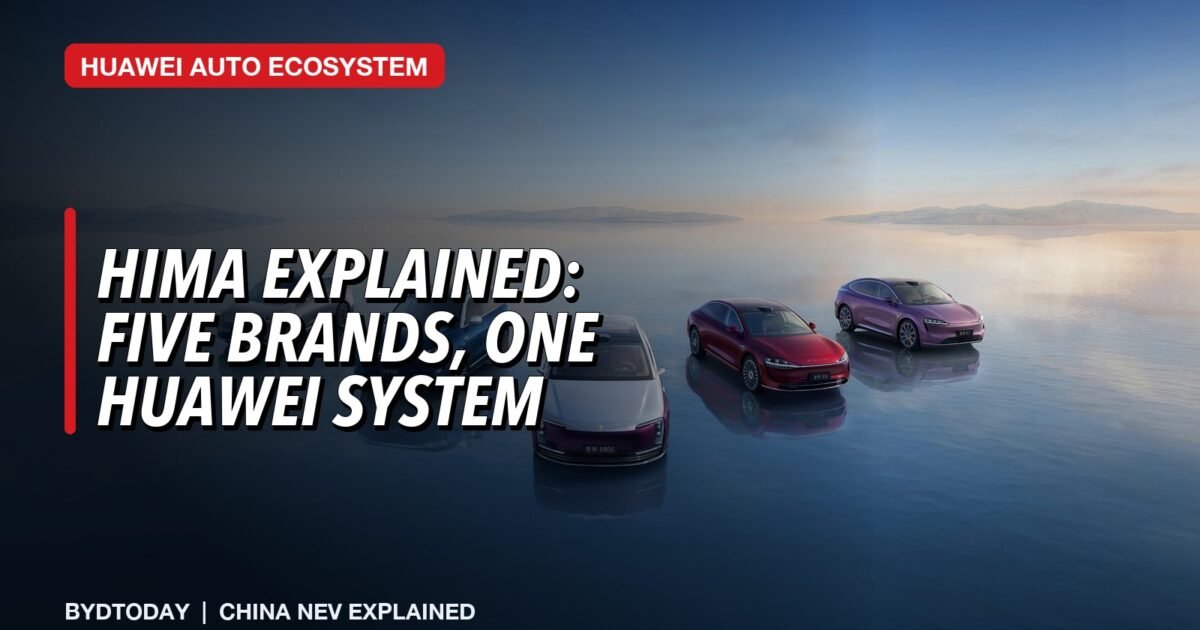
HIMA stands for Harmony Intelligent Mobility Alliance, the English name used for 鸿蒙智行. Its official site describes HIMA as a smart-vehicle technology ecosystem alliance that works with partners to advance vehicle intelligence and provide a unified smart-travel experience.
That definition matters. HIMA is not the legal parent of five automakers, and a HIMA vehicle is not simply a “Huawei car.” The licensed vehicle manufacturer is an automotive partner or its affiliate. Huawei contributes a varying combination of product planning, intelligent cockpit, driver-assistance, vehicle-control and electric-drive technology, marketing, retail systems and customer-facing digital services.
Huawei’s 2025 annual report reinforces the split. It describes HIMA-powered Smart Travel as one of the Consumer Business Group’s five main scenarios, while Intelligent Automotive Solution is reported as a separate business segment focused on automotive components and systems. Huawei reported CNY 45.018 billion of Intelligent Automotive Solution revenue in 2025, up 72.1%, and more than 38 million intelligent automotive components shipped. Those are not HIMA vehicle sales or HIMA revenue.
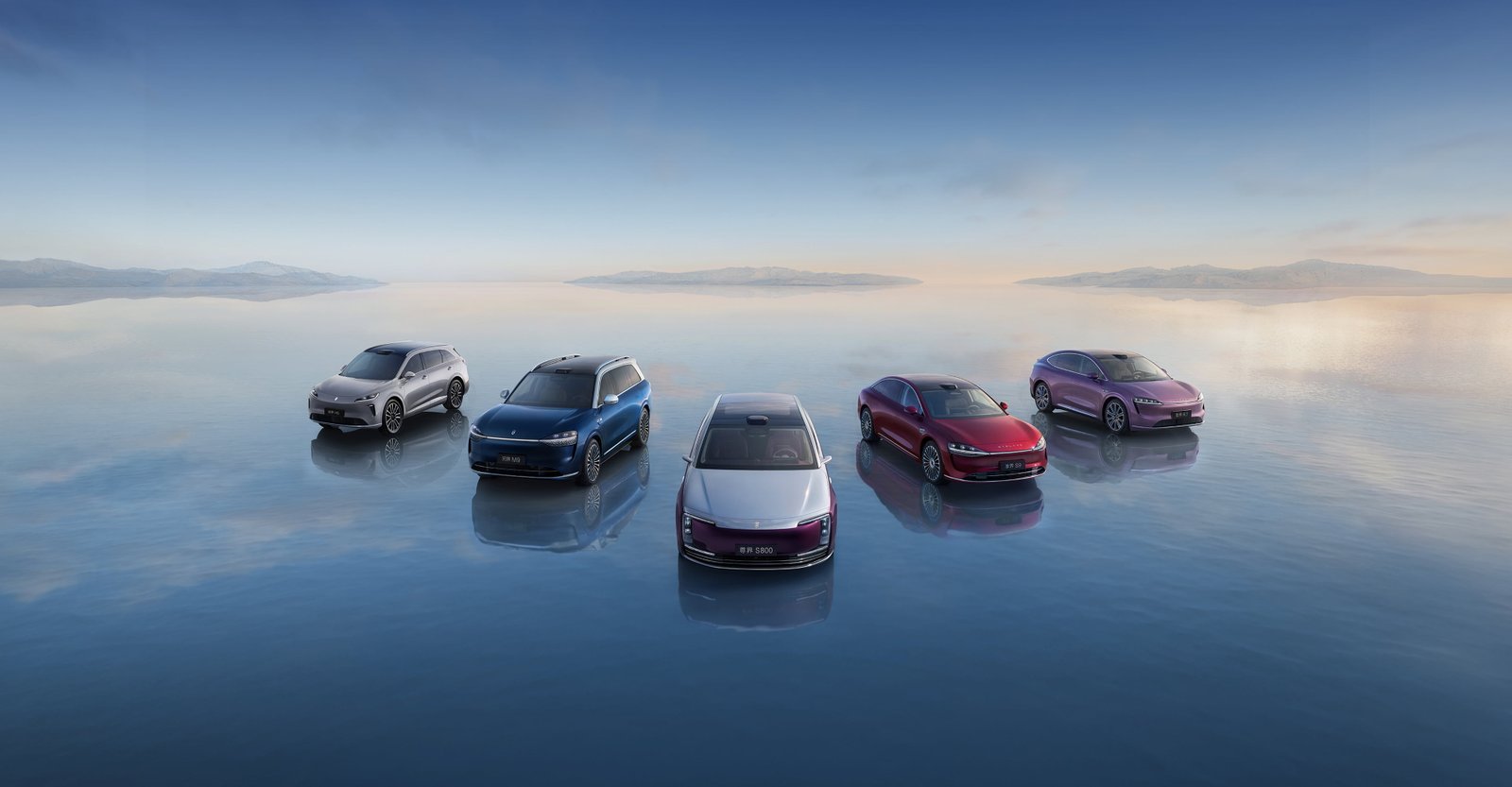
The five HIMA brands and who builds them
| HIMA brand | Chinese name | Automaker partner | Current official example |
|---|---|---|---|
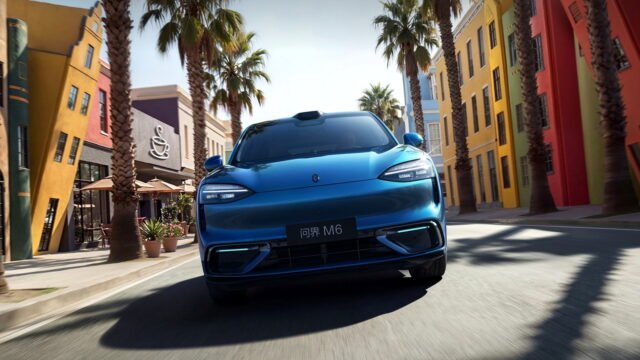
| AITO | 问界 | Seres | M9 |
| Luxeed | 智界 | Chery | V9 |
| Stelato | 享界 | BAIC / BAIC BluePark | S9 |
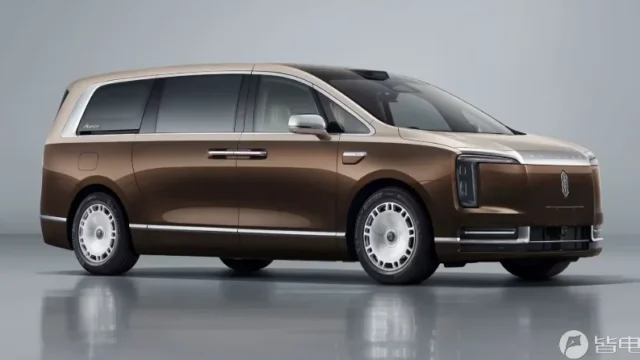
| Maextro | 尊界 | JAC Group | S800 |
| Shangjie | 尚界 | SAIC Motor | Z7 / Z7T |
The old dossier incorrectly described Shangjie as an SAIC-and-JAC manufacturing project. SAIC’s official April 2025 release says SAIC and Huawei jointly launched the brand and would work across product definition, design, cockpit and assisted driving, production, sales and service. JAC is the partner for Maextro, not Shangjie.
Brand ownership also cannot be generalized. Seres disclosed that it agreed to buy 919 registered or pending AITO-related trademarks and 44 design patents from Huawei for CNY 2.5 billion in 2024. That transaction demonstrates why “Huawei owns all five brands” is inaccurate. Trademark, vehicle-manufacturer, technology-license, channel and customer-service relationships must be checked brand by brand.
Who is Yu Chengdong, and what is his actual HIMA role?
Yu Chengdong, also known in English as Richard Yu, is a Huawei executive—not Huawei’s founder and not the founder of Seres, Chery, BAIC, JAC or SAIC. Huawei’s current management page lists him as Executive Director, Chairman of the Investment Review Board and Chairman of the Board of Directors of the Consumer Business Group.
Yu joined Huawei in 1993 and previously served in wireless, European regional, strategy and marketing, Consumer BG and Intelligent Automotive Solution BU roles. He became the most visible product presenter and strategist connecting Huawei’s consumer ecosystem to HIMA vehicles. The accurate entity relationship is therefore: Huawei executive and HIMA public leader, not “founder of HIMA’s car brands.”
How Huawei makes cars without building them
Huawei participates in cars at different depths. “Parts, HI and HIMA” is a useful industry shorthand, but it is not a permanent legal classification. Huawei’s current supplier-facing brand is Huawei Qiankun Intelligent Automotive Solution; “HI” describes the earlier Huawei Inside full-stack cooperation label. HIMA is the deeper consumer-facing alliance. Treating every Huawei-equipped vehicle as HIMA obscures ownership, economics and responsibility.
| Cooperation depth | Huawei-side contribution | Automaker responsibility | Brand and channel result |
|---|---|---|---|
| Selected components | Products such as electric drive, cockpit, optics, vehicle cloud, connectivity or assisted-driving hardware and software. | Defines the product, owns the vehicle brand, integrates the systems, manufactures, sells and services the car. | The vehicle remains under the automaker’s brand and normal channel. Huawei may be invisible to the buyer. |
| Qiankun / legacy HI | A wider integrated intelligent-vehicle solution, potentially combining ADS, HarmonySpace, vehicle control, optics and cloud. | Keeps the vehicle brand, manufacturing qualification, product leadership, homologation and retail responsibility. | Huawei technology can be prominent, but the vehicle is not automatically a HIMA model. |
| HIMA / Smart Selection | Deep joint work can include product definition, design, technology, marketing, retail systems and customer-facing digital services. | Holds the manufacturing qualification, engineers and produces the vehicle, and carries the obligations assigned by its contracts and regulation. | The model joins the HIMA portfolio, unified consumer entry point and shared sales ecosystem. |
The exact allocation still varies by partner agreement. “Deep collaboration” does not mean the automaker is merely a contract factory, nor does it mean Huawei legally owns the finished vehicle. Manufacturing quality, homologation, recalls, warranty, software and sales responsibilities can involve different parties.
Huawei’s November 2025 Qiankun ecosystem release said 14 automakers and 33 production models were using Qiankun ADS or HarmonySpace solutions as of the end of October 2025. That footprint was much wider than HIMA’s five partner brands. The same release introduced Yijing with Dongfeng and Qijing with GAC as separate Qiankun collaborations expected to launch vehicles in 2026; neither name should be silently counted as a sixth or seventh HIMA brand.
HIMA, Yinwang and Huawei ADS are not the same entity
Shenzhen Yinwang Intelligent Technology is an intelligent connected-vehicle component and solution supplier. Its official site lists HUAWEI ADS, vehicle control, automotive optics, vehicle cloud and HarmonySpace solutions. Seres and Avatr each acquired a 10% Yinwang stake in transactions priced at CNY 11.5 billion; Huawei retained 80%. Yinwang remained a separate legal entity rather than the parent company of the HIMA brands.
HIMA is the customer-facing alliance and sales ecosystem. Yinwang is a technology supplier. HUAWEI ADS is an assisted-driving product family. One can support the others, but the names are not interchangeable. A vehicle can use Huawei or Yinwang components without joining HIMA, and a HIMA vehicle remains subject to model-specific hardware, software and regulatory limits.
For that reason, this owner page does not repeat sensor counts or autonomy claims. The current Smart Driving Comparison 2026 maintains Huawei ADS against Tesla and BYD while separating manufacturer claims, driver-assistance capability and legal approval.
How large is HIMA in 2026?
HIMA’s official social account reported 50,624 deliveries in June 2026, 240,000 in the first half and more than 1.43 million cumulative deliveries. Sina and other financial outlets carried the July 1 statement. These are useful scale indicators, but they are company-reported portfolio deliveries rather than audited consolidated sales of one legal company.
| Metric | Reported figure | Period | Evidence label |
|---|---|---|---|
| Monthly deliveries | 50,624 | June 2026 | Company-reported |
| Half-year deliveries | About 240,000 | Jan.–Jun. 2026 | Company-reported |
| Cumulative deliveries | More than 1.43 million | Through June 2026 | Company-reported |
BYDToday already has two near-duplicate May-delivery articles. This owner does not create another monthly-news URL. Post 1008 remains the preferred dated May support, while the owner carries only the latest high-level scale. The distinction also prevents an aggregate HIMA number from being attributed solely to Huawei or AITO.
What Huawei contributes to the HIMA system
- Consumer product definition: Huawei and the automaker jointly identify target users, features and experience, with the depth set by their agreement.
- Digital cockpit and device ecosystem: HarmonySpace and the broader HarmonyOS environment connect the car with Huawei’s consumer services.
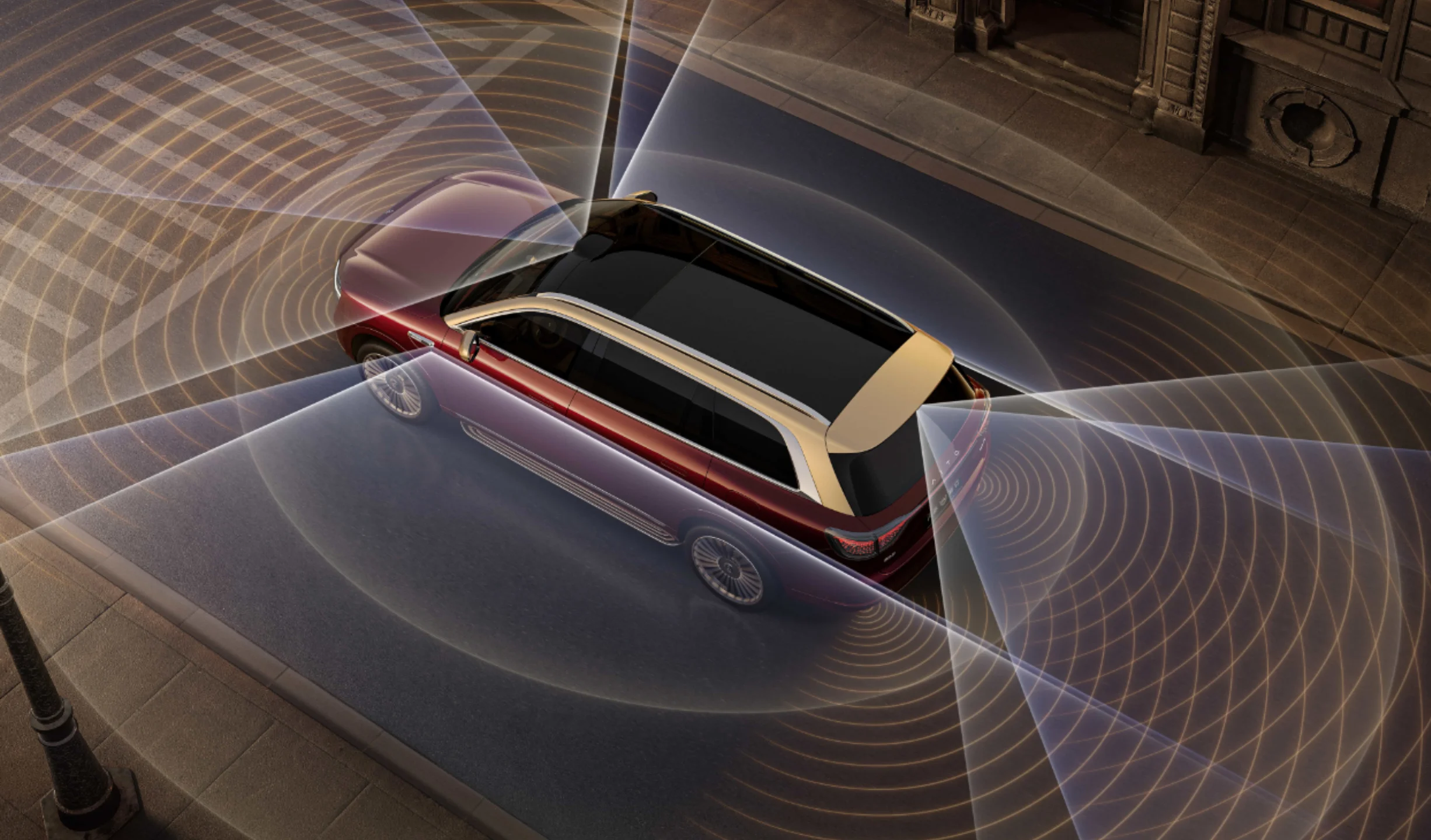
- Assisted driving and vehicle systems: ADS, vehicle control, optics, cloud and electric-drive solutions can be integrated by model.
- Marketing and retail reach: HIMA’s site, app and store system give new partner brands a unified customer entry point.
- Software lifecycle: OTA and cloud services let features evolve, but also create long-term security, compatibility and support obligations.
The partner automaker contributes what technology marketing often hides: vehicle engineering, manufacturing qualification, body and chassis capability, supplier management, production quality, homologation, delivery and aftersales obligations. The Maextro V800 support page and AITO coverage should be read through this joint-responsibility lens.
How Huawei makes money from automotive work
Huawei discloses the scale of its Intelligent Automotive Solution segment, but not a standard price list for the three cooperation depths. That distinction is essential: a component sale, software licence, engineering service, equity transaction and HIMA-enabled vehicle delivery are different economic events.
| Economic item | Verified disclosure | What it does not prove |
|---|---|---|
| Automotive segment revenue | CNY 45.018 billion in 2025, up 72.1% year on year. | It is not HIMA vehicle revenue and is not attributable to one brand or model. |
| Component scale | More than 38 million intelligent automotive components shipped in 2025. | “Components” are not vehicles; the figure does not disclose average selling price or margin. |
| Yinwang equity | Seres and Avatr each agreed to pay CNY 11.5 billion for 10% stakes. | Equity-sale proceeds are not a recurring per-car fee or channel commission. |
| HIMA economics | Huawei describes HIMA-powered Smart Travel within Consumer BG and reports portfolio deliveries separately. | No audited public split establishes a universal software fee, store commission, profit share or Huawei take rate per HIMA car. |
The source dossier’s estimates of a 2%–3% retail commission, CNY 500–1,000 HarmonyOS fee, 15% Huawei share and more than CNY 10 billion of annual Seres payments are therefore excluded. They were not supported by a current primary-source contract or audited disclosure. Public data supports the existence and growth of several revenue paths, not those precise rates.
Why the model is commercially powerful—and difficult
HIMA lets Huawei reuse software, components, retail systems and a consumer brand signal across several vehicle manufacturers and price segments. Partners gain faster access to Huawei’s technology and customer reach without building every layer alone. Huawei gains vehicle scale without becoming the licensed manufacturer of every model.
The model also separates two businesses that are often conflated. Huawei can earn component and solution revenue through Intelligent Automotive Solution and Yinwang, while HIMA supports the consumer journey through the Consumer BG ecosystem. The annual report’s 2025 revenue and component-shipment data show the supplier business scaling, but do not disclose how much revenue came from any one HIMA vehicle.
The incentives are not perfectly aligned. Huawei benefits when common technology, software services and retail touchpoints scale across more vehicles. An automaker also needs factory utilisation, gross margin, customer ownership and durable equity in its own brand. Deeper HIMA cooperation can shorten product-development and market-entry cycles, but it can make responsibility and brand identity harder for buyers to understand. The correct analysis is contractual and brand-specific—not “Huawei controls everything” or “the automaker only assembles.”
Risks and limits buyers should understand
- Responsibility can look fragmented. Before buying, identify the registered manufacturer, seller, warranty issuer, service provider and software provider.
- Partner incentives may diverge. Huawei wants technology and ecosystem scale; each automaker also needs brand equity, margin and manufacturing utilization.
- Shared systems create concentration. A software, cloud or component issue can affect multiple brands, while different hardware versions complicate support.
- Assisted driving is not autonomy. ADS branding does not remove the driver’s duty or replace model- and jurisdiction-specific approval.
- International availability is limited. HIMA’s Chinese retail and service model should not be assumed to exist in the US, UK or other markets.
- Monthly delivery headlines are volatile. Brand mix, new-model ramps and production timing can change portfolio totals sharply.
Explore the wider system: Use the China NEV Knowledge Hub to move between company and founder Owners, assisted-driving technologies, business models, vehicles and markets.
Frequently Asked Questions
What does HIMA stand for?
HIMA stands for Harmony Intelligent Mobility Alliance, the English name used for Huawei’s 鸿蒙智行 smart-vehicle technology and consumer ecosystem.
Does Huawei manufacture HIMA cars?
No single Huawei factory manufactures all HIMA vehicles. Seres, Chery, BAIC, JAC and SAIC or their affiliates provide the vehicle-manufacturing qualifications and production for their respective brands.
Does Huawei own AITO, Luxeed, Stelato, Maextro and Shangjie?
Do not treat all five as wholly owned Huawei brands. Ownership and trademark arrangements vary. Seres, for example, agreed to buy 919 AITO-related trademarks and 44 design patents from Huawei for CNY 2.5 billion.
What is Yu Chengdong’s role?
Yu Chengdong, or Richard Yu, is a Huawei Executive Director, Investment Review Board chairman and Consumer BG board chairman. He is HIMA’s most visible product strategist and presenter, not an automaker founder.
Is every car with Huawei ADS part of HIMA?
No. Huawei supplies components and full-stack solutions under different cooperation modes. A vehicle can use Huawei ADS or other Huawei systems without joining the HIMA portfolio.
How does Huawei make money from cars?
Huawei earns automotive revenue from components and integrated intelligent-vehicle solutions, while HIMA supports a deeper consumer and retail ecosystem. Huawei reported CNY 45.018 billion of Intelligent Automotive Solution revenue in 2025, but it does not publish a universal per-car software fee, store commission or HIMA profit-share rate.
Sources
- HIMA, official website, five-brand portfolio and alliance definition
- Huawei, 2025 annual report
- Huawei, “Huawei does not build cars” automotive strategy statement, April 17, 2019
- Huawei Qiankun, 2025 ecosystem scale, partner-model count and Yijing/Qijing announcement, November 20, 2025
- Huawei, Yu Chengdong official executive biography
- Yinwang, company and intelligent-vehicle solutions overview
- Huawei, Huawei–Changan agreement to create an open intelligent-vehicle solutions platform, November 25, 2023
- Seres / Shanghai Stock Exchange, AITO trademark and design-patent acquisition announcement
- Seres / CNINFO, Yinwang 10% equity-registration implementation report
- Changan / CNINFO, Avatr agreement to acquire 10% of Yinwang for CNY 11.5 billion
- SAIC Motor, SAIC and Huawei launch Shangjie, April 16, 2025
- BAIC BluePark, BAIC and Huawei launch Stelato S9
- JAC Group, JAC and Huawei Maextro cooperation
- Sina Finance, HIMA’s official June and H1 delivery statement, July 1, 2026
- BYDToday, Source Methodology and Editorial Policy