The award gives BYD a useful European trust signal at a time when the company is introducing its fastest charging technology outside China. It also creates a clean distinction between three kinds of evidence: BYD’s performance claims, a German publication’s innovation award, and real-world charging results.
What exactly did BYD win?
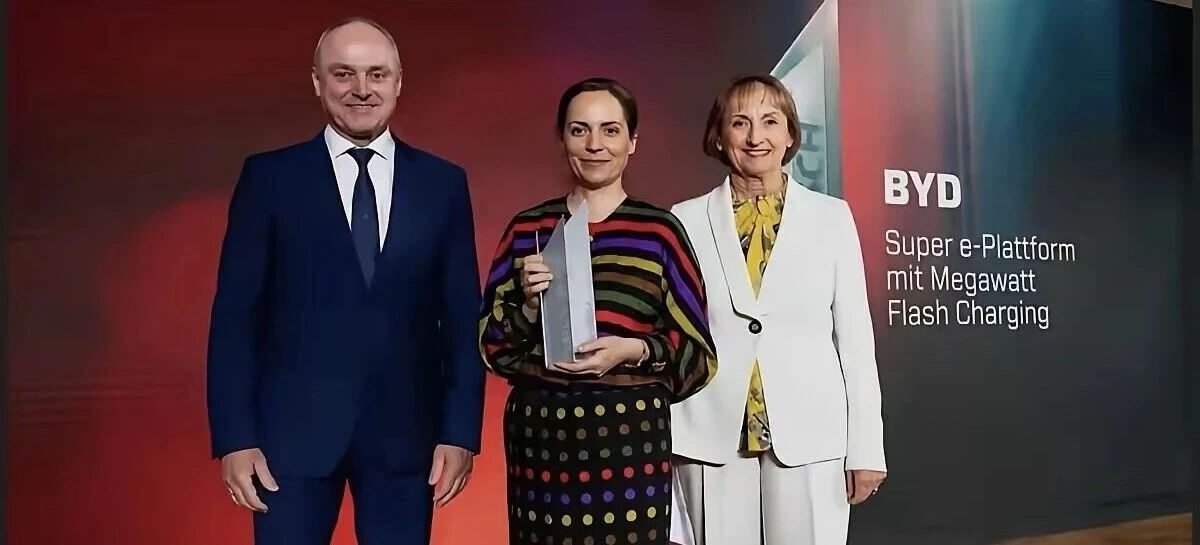
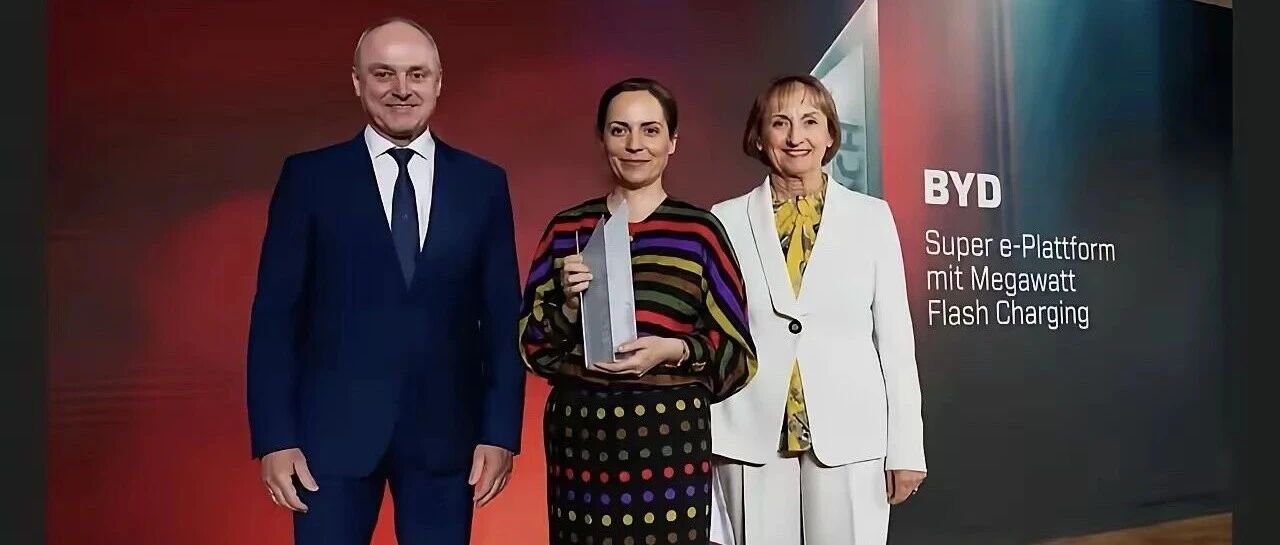
The official award report from auto motor und sport, published June 11, 2026, says BYD received the International Paul Pietsch Award for its Super e-Platform and megawatt Flash Charging concept. The publication says its own editorial team chooses the winner each year for an outstanding automotive innovation or technical concept.
The same report identifies BYD as the first Chinese company to receive the award since it was introduced in 1989. Maria Grazia Davino, BYD’s regional managing director for Europe, accepted it from representatives of Motor Presse Stuttgart.
Why Flash Charging was selected
BYD says its current system can raise a compatible vehicle from 10% to 70% state of charge in five minutes and from 10% to 97% in nine minutes under specified conditions. The award report repeats those manufacturer figures and highlights the potential to add roughly 400 km of range in five minutes.
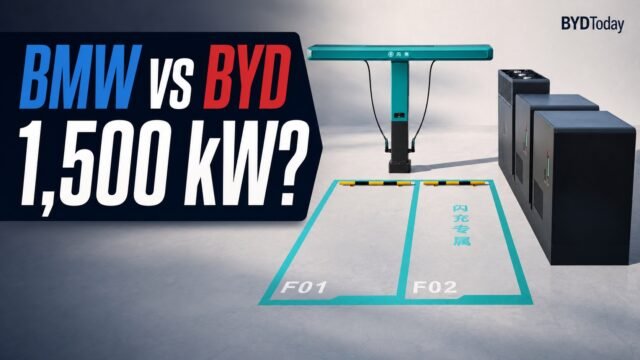
The underlying system combines a high-voltage vehicle platform, a battery designed for very high charge power, thermal management and megawatt-class charging hardware. A fast battery alone is not enough: the vehicle, cable, charger and local grid connection must all support the requested power.
| Evidence | What it supports | What it does not prove |
|---|---|---|
| Paul Pietsch Award | A German automotive editorial team judged the concept an important innovation. | Long-term battery degradation or universal charger access. |
| BYD technical announcement | The specified 10-70% and 10-97% targets and system architecture. | That every public session will match laboratory or launch conditions. |
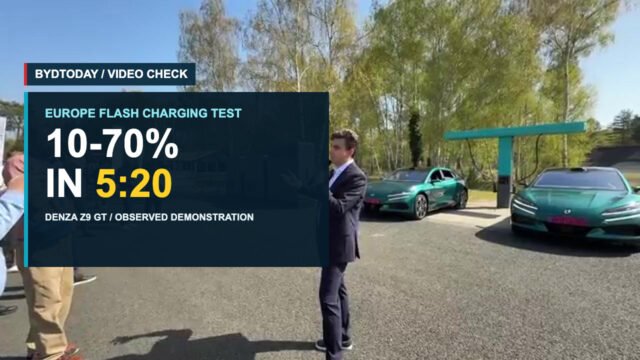
| European Denza demonstration | An observed session came close to BYD’s headline timing. | A controlled multi-vehicle test across temperatures and battery ages. |
| MIIT statement | China’s industry ministry publicly cited the system as an innovation example. | Independent certification of every performance or lifespan claim. |
BYDToday previously traced a European Denza Z9 GT demonstration that showed roughly 10% to 70% in 5 minutes 20 seconds and 97% in 9 minutes 22 seconds. That is a useful real-world data point, though not a full independent durability program.
How the National Museum and MIIT fit into the story
The Paul Pietsch Award is not the technology’s only institutional recognition. China’s Ministry of Industry and Information Technology cited the second-generation Blade Battery and megawatt Flash Charging system during its July 20 briefing on industrial development. The official transcript says the system addresses the engineering conflict among fast charging, range, service life and low-temperature performance.
Photographs from China’s National Museum also show a “Flash Charging Battery” label and an information panel for the technology. The museum’s official exhibition page confirms that its “14th Five-Year Plan Achievements Exhibition” included a “New Three” area for new-energy vehicles, lithium batteries and photovoltaics.
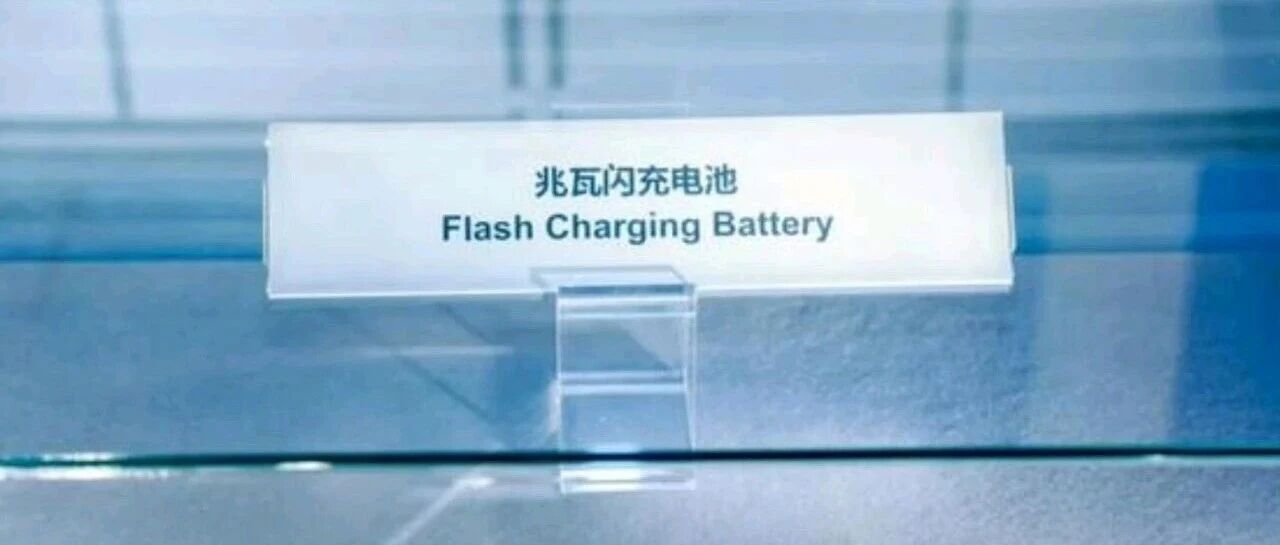
Timing matters: the museum lists the exhibition as running from December 30, 2025 through May 31, 2026. It is therefore inaccurate to say in August that the battery is “now on display” without evidence of an extension. The museum evidence is used here as historical context, not as a current visitor notice.
What the award means for BYD in Europe
The prize is valuable because it comes from a long-running German automotive publication rather than from BYD itself. It gives European dealers and customers a recognizable third-party reference when evaluating a technology that can otherwise sound like a marketing headline.
It also arrives as BYD starts deploying Flash Chargers in Europe. The award report says the company had opened a two-bay site in the UK and planned initial installations in Germany. Deployment scale will determine whether the technology becomes a practical ownership advantage or remains limited to selected routes and flagship vehicles.
Confirmed
- BYD won the 2026 Paul Pietsch Award.
- It is the award’s first Chinese-company winner since 1989.
- The awarded concept is the Super e-Platform with megawatt Flash Charging.
- The official museum exhibition ended May 31, 2026.
Still open
- Long-term degradation under repeated megawatt charging.
- Charging speed across weather, battery age and station conditions.
- How quickly compatible chargers become broadly available.
- How many vehicles receive the system outside China.
Frequently asked questions
What is the International Paul Pietsch Award?
It is an annual automotive innovation award selected by the editorial team of Germany’s auto motor und sport and named after publisher and racing driver Paul Pietsch.
Is BYD the first Chinese company to win it?
Yes. The official 2026 award report says BYD is the first Chinese company to receive the prize since it began in 1989.
What BYD technology won the award?
BYD’s Super e-Platform with megawatt Flash Charging, designed to deliver very high charging power to compatible vehicles.
Who accepted the award for BYD?
Maria Grazia Davino, BYD’s regional managing director for Europe, accepted it at the BEST CARS event.
Does the award prove Flash Charging is safe and durable?
No. It validates the innovation concept, but long-term durability and everyday performance still require broader independent and fleet-scale evidence.
Is the BYD battery still on display at China’s National Museum?
The museum’s official page lists the relevant exhibition as ending May 31, 2026. BYDToday found no official extension, so this article does not claim that it remains open in August.
Sources
- auto motor und sport: Paul Pietsch Award 2026 goes to BYD, June 11, 2026
- MIIT: H1 2026 industrial and information technology briefing transcript, July 20, 2026
- National Museum of China: 14th Five-Year Plan manufacturing achievements exhibition
- BYD: Blade Battery 2.0 and Flash Charging technical announcement
- BYDToday’s full Flash Charging technology explainer