BYD and Tesla are both funding a capital-intensive transition. BYD’s overseas expansion is tying up more cash in inventory and receivables. Tesla’s spending on property and equipment has more than doubled as it pursues AI and manufacturing projects. The useful comparison is how each company turns those commitments into repeatable cash generation.
Checked November 9, 2026. Financial figures below cover January–September 2026, using BYD’s October 29 quarterly report and Tesla’s October 21 filing. Both are unaudited group accounts. Amounts retain their original currencies. BYD third-quarter report · Tesla third-quarter 10-Q
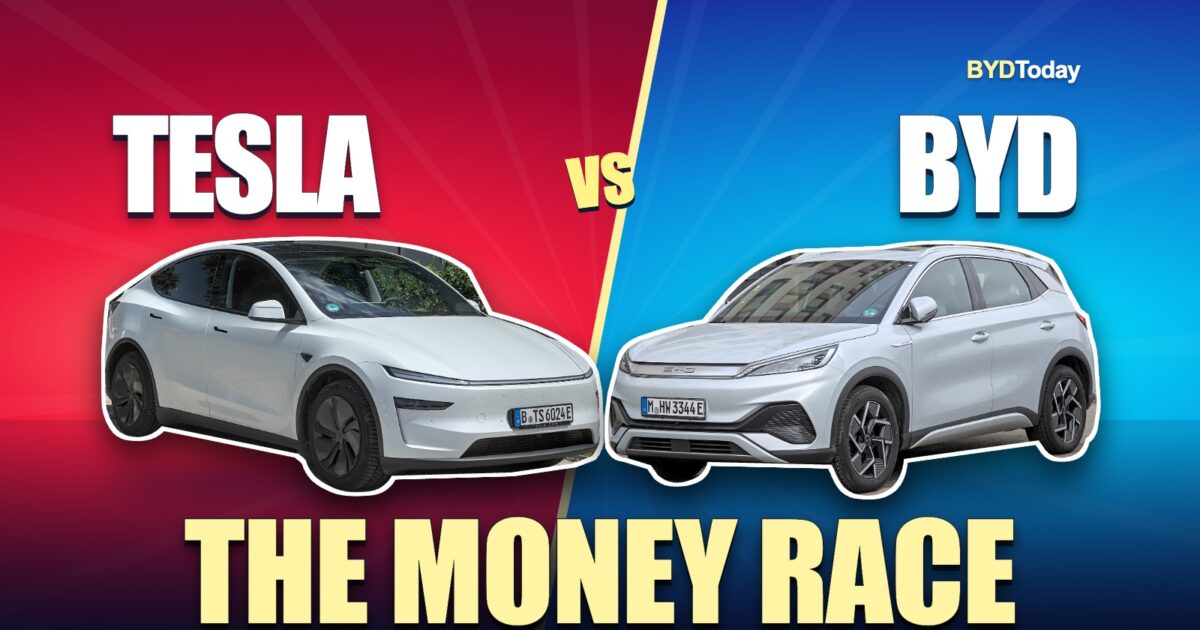
Cover photographs of the BYD Atto 3 (2023) and Tesla Model Y (2025) by Alexander Migl. BYD photo · Tesla photo. Cropped and composed by BYDToday under CC BY-SA 4.0.
What do the cash-flow statements show?
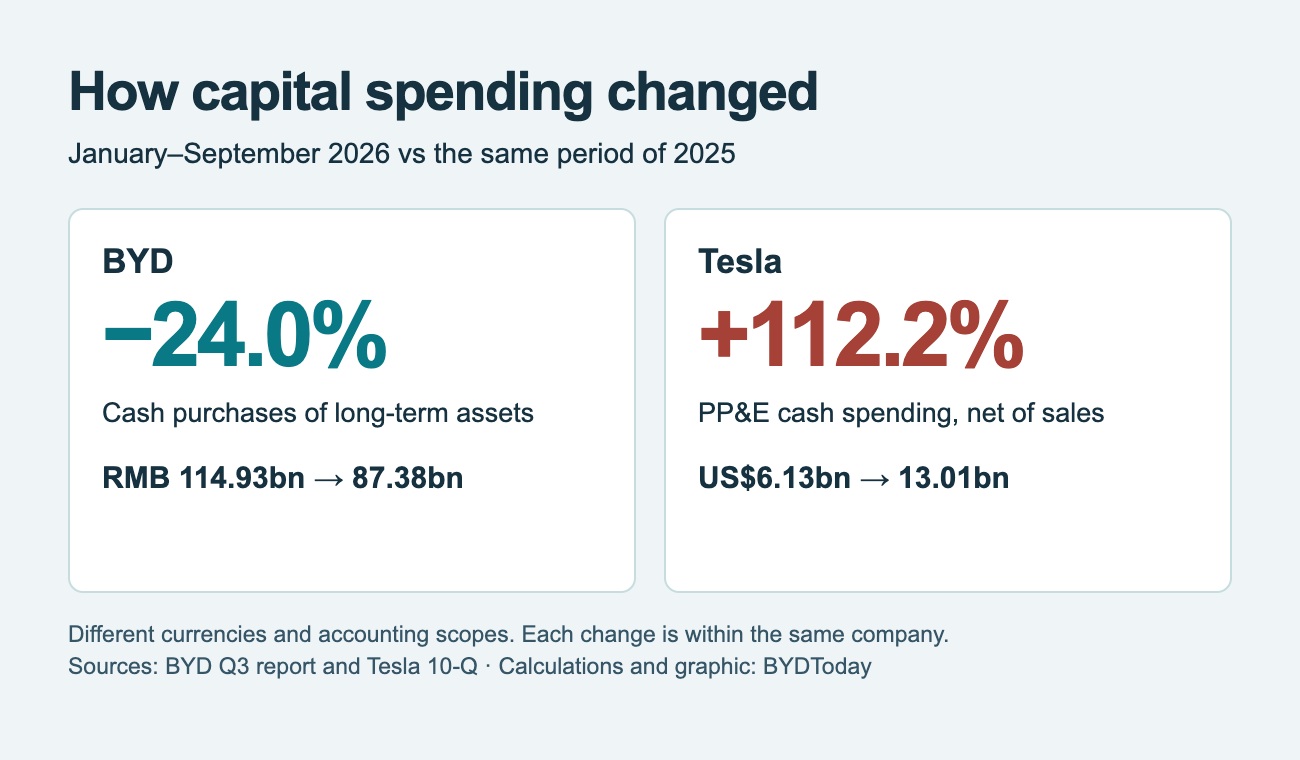
BYD spent RMB 87.38 billion on cash purchases of fixed, intangible and other long-term assets in the first nine months of 2026, down from RMB 114.93 billion a year earlier. Tesla’s property-and-equipment spending rose from US$6.13 billion to US$13.01 billion. Calculated from the unrounded filing figures, those changes were −24.0% and +112.2%. BYD cash-flow statement, report pages 18–19 · Tesla consolidated cash-flow statement
| Company and unit | Operating cash inflow | Disclosed spending line | Cash flow minus that line |
|---|---|---|---|
| BYD · RMB bn | 54.47 | 87.38 | −32.91 |
| Tesla · US$ bn | 14.90 | 13.01 | +1.88 |
How to read the table. BYD’s purchase line includes intangible and other long-term assets. Tesla’s line covers property and equipment, excludes finance leases and is net of sales. The final column is our subtraction of those specific lines from operating cash flow. It omits other investing and financing transactions. BYD’s group also includes electronics operations, while Tesla reports energy and service activities alongside its vehicle business. BYD group statements · Tesla group statements
The question raised by the BYD figures is how quickly the investment starts returning cash. For Tesla, the positive difference shows some room to fund investment from operations during this period. Both companies still have obligations elsewhere in the cash-flow statement, so this single subtraction cannot establish their total funding needs.
What does overseas expansion require from BYD?
BYD’s September balance sheet shows RMB 221.58 billion of inventory, up 60.08% from the end of 2025, and RMB 56.47 billion of trade receivables, up 52.61%. The company attributes both changes mainly to growth in its overseas automobile business. Construction in progress reached RMB 79.18 billion, up 63.96%. BYD balance-sheet explanations, report page 4
Those balances make the expansion’s cash cycle important. Inventory needs to pass through logistics and distribution before a customer buys it. Receivables need to be collected, and new capacity needs sufficient use to recover its cost. Higher overseas sales can therefore coexist with more cash committed to the business.
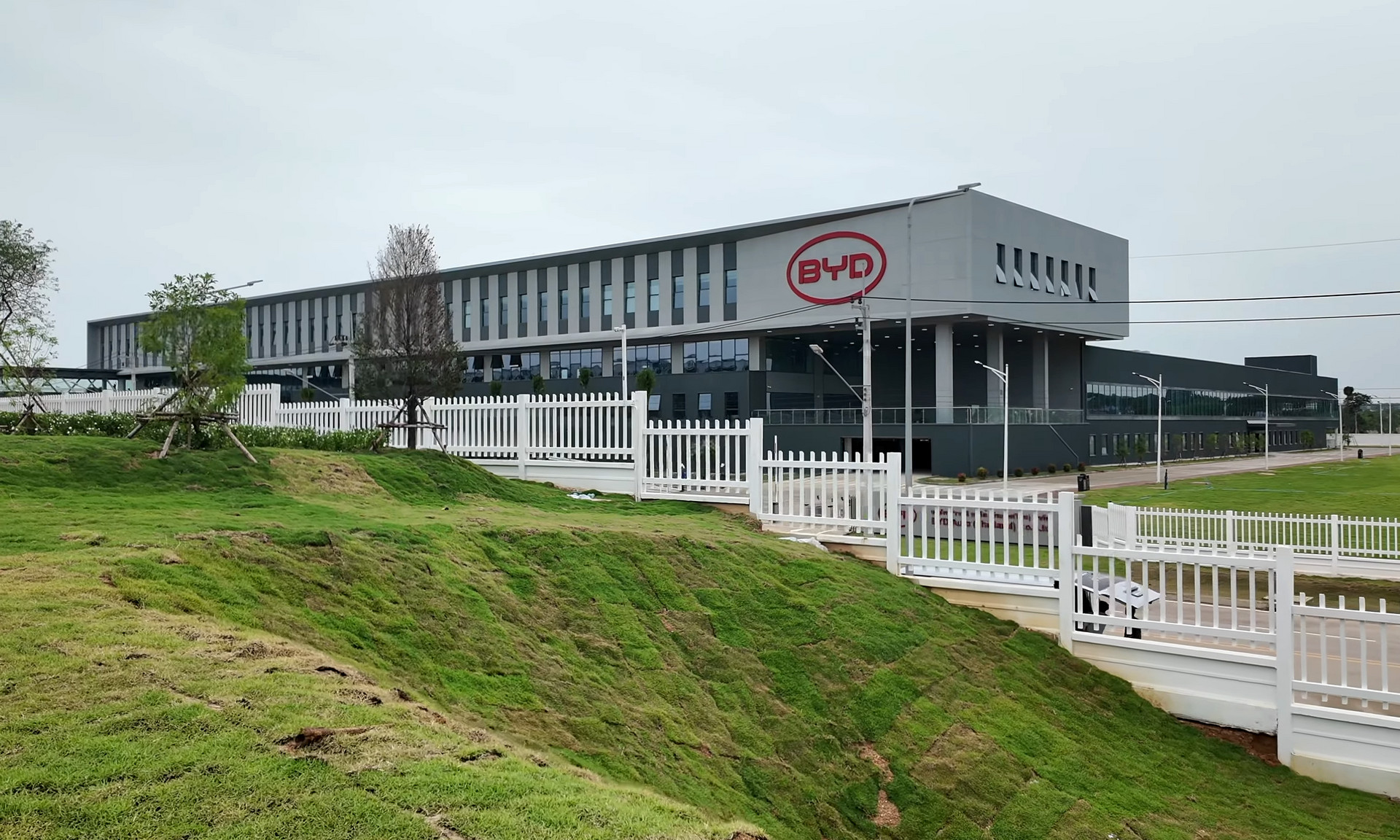
Our assessment. BYD’s lower cash spending on long-term assets gives it a smaller investment outflow than a year earlier. The rising stock of unfinished projects and working capital makes collection and utilisation the next tests. The quarterly report provides group totals, so these figures cannot establish the return from an individual overseas plant. Our BYD global expansion guide covers the country-by-country footprint.
What does Tesla’s AI push require?
Tesla’s first-nine-month capital outlay of US$13.01 billion sits alongside US$7.08 billion of expensed R&D, up from US$4.63 billion. The filing associates investment with AI infrastructure and data centres, manufacturing and R&D facilities, and its retail, service and charging network. It also describes work on semiconductors, Optimus and solar operations. Tesla 10-Q investment outlook and R&D discussion
The returns come through different routes. Vehicle production and energy products can generate revenue as units are delivered. Subscriptions depend on customer adoption and retention. Robotaxi and robotics depend on deployment, regulatory permissions and operating performance. These projects have different schedules, so a single vehicle-delivery number gives limited information about how well the combined investment is progressing.
There is also an accounting limit to the software story. Tesla reports US$4.08 billion of deferred automotive revenue covering several obligations, including connectivity, FSD (Supervised), updates and free Supercharging. Revenue is recognised as the obligations are fulfilled. The balance provides no stand-alone measure of FSD profit. Tesla 10-Q, Note 2
FSD (Supervised) requires active driver supervision. Tesla discusses the Robotaxi service separately in its quarterly update. Readers comparing their commercial progress should track the product, location and operating conditions attached to each announcement. Tesla Q3 update and supervision notice
Which measures will test the strategies next?
- BYD cash collection. Compare inventory and receivable growth with revenue growth, and inspect the explanation for movements in operating cash flow.
- BYD factory utilisation. Look for disclosed production, local sourcing and operating progress at each overseas site. Planned capacity alone cannot show the return on investment.
- Tesla investment conversion. Track delivered products, paying software customers and permitted service deployments against the spending needed to support them.
- Both companies’ funding. Read capital purchases alongside borrowing, debt repayments, leases and other investments, using the same reporting period each time.
Our assessment. BYD’s next challenge is converting a larger overseas operation into collected cash and productive assets. Tesla’s is converting a much larger investment programme into earnings across several businesses. Either outcome will require more evidence than a monthly sales lead. For a buyer-focused comparison, see Tesla vs BYD sales, technology and buying checks. For the separate question of market expectations, see BYD’s valuation comparison with Toyota and Tesla.
Frequently asked questions
How do BYD and Tesla’s strategies differ in 2026?
BYD’s overseas expansion puts working capital, local production and distribution at the centre of the analysis. Tesla is investing in AI infrastructure, manufacturing and its service footprint. Both strategies require substantial physical investment and cash generation.
How much did BYD spend on long-term assets in the first nine months of 2026?
BYD reported RMB 87.38 billion of cash purchases of fixed, intangible and other long-term assets, down about 24.0% from RMB 114.93 billion a year earlier. These are group-level figures.
How much was Tesla’s capital expenditure in the first nine months of 2026?
Tesla reported US$13.01 billion of cash purchases of property and equipment, excluding finance leases and net of sales, compared with US$6.13 billion in the same period of 2025. The increase was about 112.2%.
Did operating cash flow cover the disclosed spending lines?
BYD’s RMB 54.47 billion operating cash inflow was below its RMB 87.38 billion long-term asset purchase line. Tesla’s US$14.90 billion operating cash inflow exceeded its US$13.01 billion property-and-equipment line. The periods match, while the currencies and accounting scopes differ.
Does Tesla’s deferred revenue measure FSD profit?
Tesla’s deferred automotive revenue includes several obligations, such as connectivity, FSD (Supervised), software updates and free Supercharging. It represents obligations awaiting delivery or fulfilment and does not establish the profit from FSD.
Does FSD (Supervised) make a Tesla autonomous?
FSD (Supervised) requires an attentive driver and active supervision. Tesla describes Robotaxi separately, with a different operating model and regulatory requirements.
By BYDToday Editorial. This analysis uses unaudited company filings available on November 9, 2026. Calculations use unrounded cash-flow figures and are displayed rounded. Assessments are identified in the text.