Quick Answer
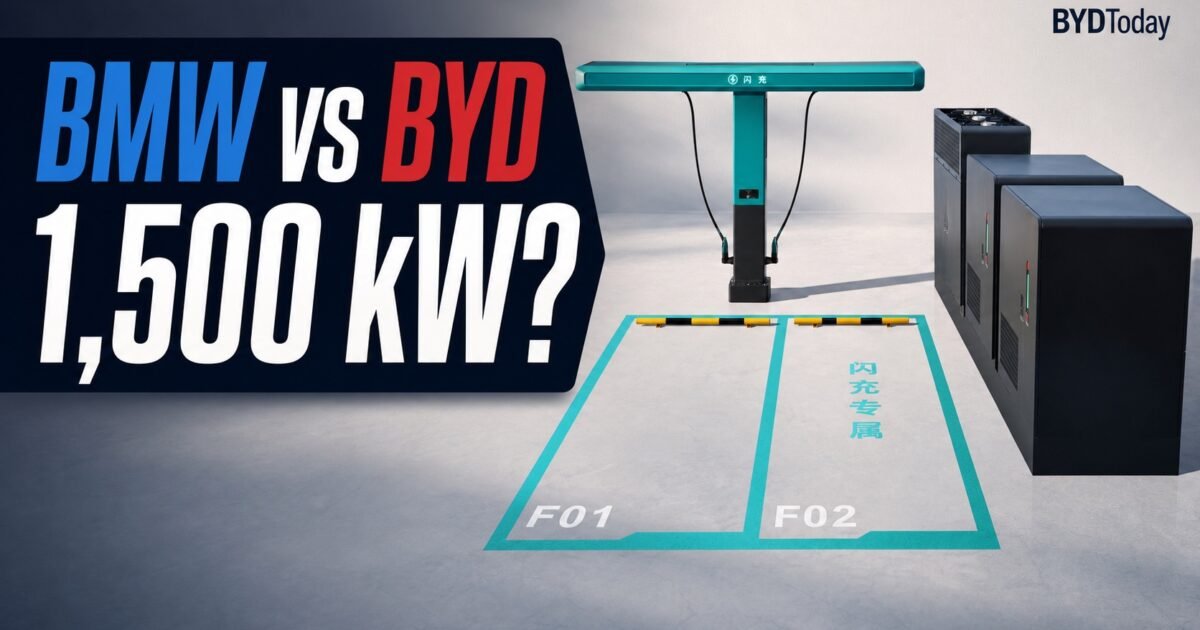
BMW raised a legitimate engineering question about BYD’s 1,500 kW Flash Charging, but the public evidence does not establish that the system is unsafe or that every durability trade-off has been eliminated. BMW says maximizing one battery metric can require compromises elsewhere. BYD says Blade Battery 2.0 completed safety testing after 500 Flash Charging cycles without thermal runaway, smoke or fire, and that overall capacity degradation is 2.5 percentage points better than the first-generation battery. BYD’s China warranty communication also raises the six-year/150,000 km capacity-retention replacement threshold from 75% to 77.5%, subject to the applicable vehicle and warranty terms. These are meaningful manufacturer commitments, not a substitute for independent long-term fleet data.
Last verified: July 20, 2026. Charging figures, installed-station counts and warranty terms below are attributed to BYD unless an independent source is explicitly named.
What BMW actually said
In an April 2026 interview with Carsales, BMW battery-production chief Markus Fallböhmer cautioned readers to look beyond a single peak-charging number. His comparison was that battery development is like a blanket: pulling hard on one side can affect the others. BMW executives identified range, durability, reliability, affordability and thermal management as connected design variables.
BMW did not publish a test showing that BYD’s battery had failed, nor did it accuse BYD of fabricating a specific safety result. Its argument was about engineering optimization: a higher peak number does not, on its own, prove that the complete battery and charging system is better for every use case.
BMW’s Neue Klasse products take a different route. The cited models peak at about 400 kW and are designed around the charging infrastructure already common in Europe and other export markets. That is a product and ecosystem choice, not direct evidence that 1,500 kW is inherently unsafe.
What BYD has officially demonstrated
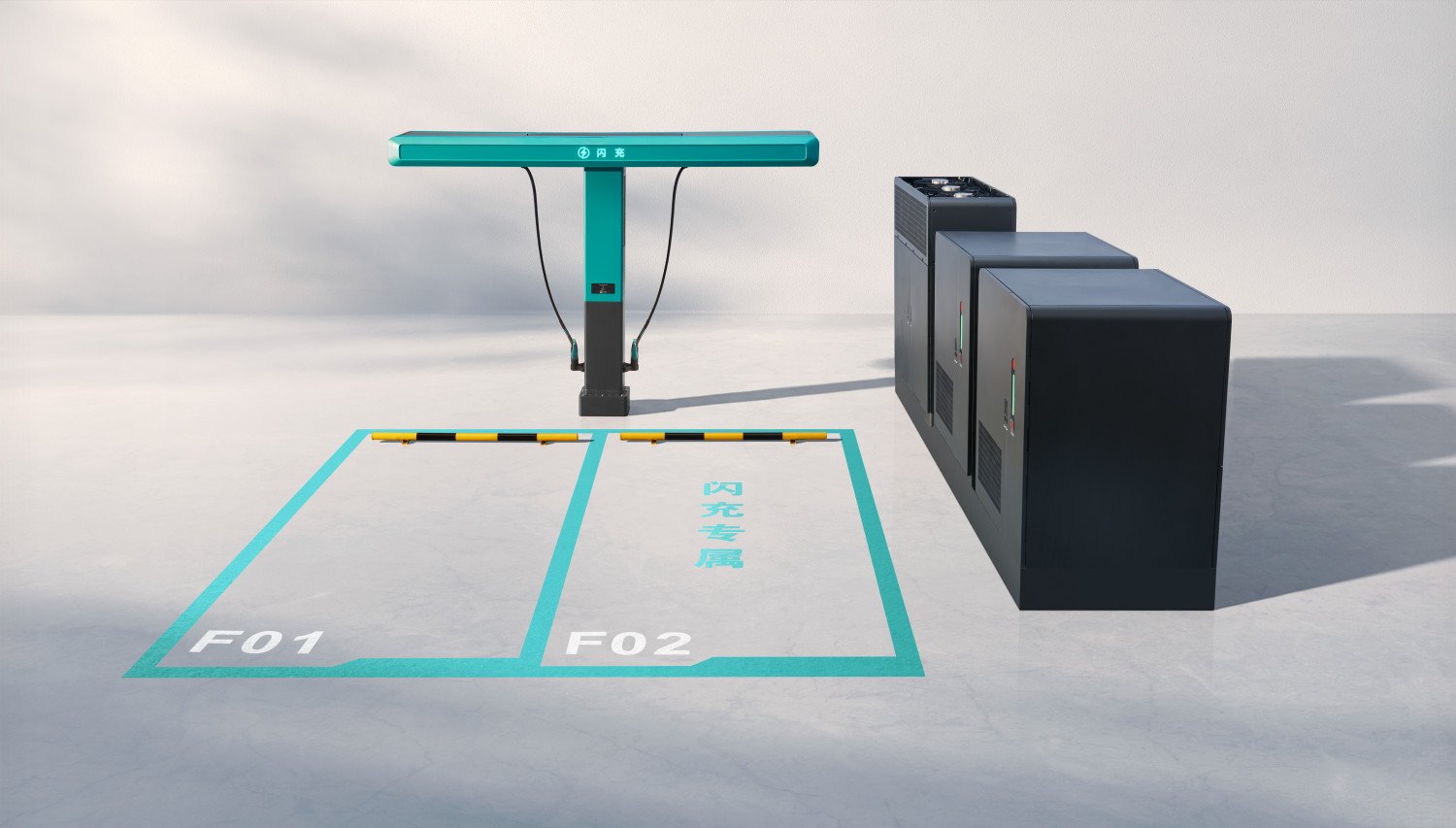
BYD introduced its second-generation Blade Battery and Flash Charging system on March 5, 2026. The company states that the Chinese-market system can deliver up to 1,500 kW through one connector, charge from 10% to 70% in as little as five minutes, and reach 97% in nine minutes under its specified test conditions.
The strongest durability-related statement in BYD’s public release is narrower than the claim previously carried in this article: after 500 Flash Charging cycles, the battery completed a simultaneous Flash Charging and nail-penetration safety evaluation without thermal runaway, smoke or fire. BYD also says overall capacity degradation is reduced by 2.5 percentage points compared with the first-generation Blade Battery.
| Question | What is documented | Evidence boundary |
|---|---|---|
| Can the system reach 1,500 kW? | BYD specifies a 1,500 kW Chinese-market peak through one connector. | Manufacturer peak; it is not the average power of every session. |
| Can it charge in five minutes? | BYD specifies 10%-70% in five minutes and 10%-97% in nine minutes under stated conditions. | Vehicle, battery temperature, starting charge and station capability matter. |
| Was safety tested after repeated Flash Charging? | BYD says the battery passed its safety evaluation after 500 Flash Charging cycles without thermal runaway, smoke or fire. | This is a manufacturer-reported safety result, not independent multi-year field data. |
| What capacity protection does the warranty provide? | For applicable second-generation Blade Battery vehicles in China, BYD’s warranty communication raises the six-year/150,000 km capacity threshold from 75% to 77.5%, with cell coverage continuing under its stated lifetime-warranty terms. | Eligibility, measurement, ownership, use and regional terms must be checked in the vehicle’s warranty documents. |
| Did BMW prove a durability problem? | No. BMW described likely engineering trade-offs but did not publish a BYD battery failure test. | Its comments remain a technical caution, not a test verdict. |
Why the 77.5% warranty threshold matters
A warranty threshold and a laboratory cycle-retention result answer different questions. The 77.5% figure is a customer-protection trigger: for covered second-generation Blade Battery vehicles in China, a battery measured below that maximum usable-capacity threshold within six years or 150,000 km can qualify for replacement under BYD’s terms. The earlier threshold was 75%.
The change is useful evidence of manufacturer confidence because BYD is accepting a stricter replacement trigger. It still does not prove that every battery will retain a particular percentage after 500 maximum-rate sessions. Owners should rely on the warranty booklet for their exact model and market, because overseas warranties may use different terms.
Charging infrastructure is part of the engineering
Peak charging power is only useful where the matching infrastructure exists. BYD said it had installed 4,239 Flash Charging stations in China as of March 5, 2026 and was targeting 20,000 by year-end. It subsequently announced plans for 6,000 stations outside China over the following 12 months, including 3,000 in Europe.
Those figures must not be combined into a claim that BYD built more than 6,000 stations in two months. One figure is an installed domestic count at a dated checkpoint; the other is an overseas deployment plan.
BYD pairs the charger with on-site energy storage so the station can accumulate electricity at lower power and then support a much higher charging burst. That reduces, but does not erase, site-specific grid, permitting, cooling and cost constraints.
Does vertical integration give BYD an advantage?
BYD develops battery cells, vehicle platforms, power electronics, charging hardware and energy storage within the same group. That can shorten the feedback loop between cell chemistry, thermal control, vehicle software and station design. It is a real structural capability.
However, vertical integration is not proof that one company has solved every trade-off, and buying cells from specialist suppliers is not automatically a weakness. BMW can draw on large cell manufacturers while concentrating on pack integration, vehicle validation and service life. The useful comparison is measured system performance, warranty exposure, charging availability and independent durability data, not a simple Europe-versus-China verdict.
What remains unproven
- Independent long-term capacity retention across a large fleet using frequent maximum-rate charging.
- How often production vehicles sustain the advertised peak and average power in normal weather and traffic conditions.
- The effect of repeated high-rate charging on resale value, repair cost and out-of-warranty battery health.
- The utilization, uptime and economics of the planned overseas Flash Charging network.
- A like-for-like lifecycle comparison with BMW Neue Klasse batteries under the same temperature, charge window and mileage.
Bottom line
BMW’s warning is technically reasonable: battery design is a system problem, and peak charging power cannot be judged in isolation. BYD’s response is also substantive: it has published safety-test results, improved its capacity-retention warranty threshold and built a battery-plus-charger-plus-storage system around the higher charging rate.
The evidence supports describing BYD Flash Charging as an important engineering advance with unusually strong manufacturer commitments. It does not support saying that BMW was proven wrong, that 89.2% capacity retention is an independently verified fact, or that the durability debate is finished.
FAQ
Does BYD Flash Charging damage the battery?
No independent long-term fleet study currently answers that question conclusively. BYD says Blade Battery 2.0 passed a safety evaluation after 500 Flash Charging cycles and has lower overall degradation than the first generation, but safety-test completion and long-term capacity retention are not identical metrics.
What did BMW say about BYD Flash Charging?
BMW executives said optimizing one performance indicator can require compromises in range, durability, reliability, affordability or thermal management. BMW did not publish a test showing that BYD’s battery had failed.
What is BYD’s 77.5% battery warranty threshold?
For applicable second-generation Blade Battery vehicles in China, BYD raised the six-year/150,000 km maximum usable-capacity replacement threshold from 75% to 77.5%. Replacement remains subject to the model’s warranty conditions and measurement process.
How fast is BYD Flash Charging?
BYD specifies up to 1,500 kW in China, with 10%-70% in five minutes and 10%-97% in nine minutes under its stated conditions.
How many BYD Flash Charging stations exist?
BYD reported 4,239 installed stations in China as of March 5, 2026 and targeted 20,000 by the end of 2026. A separate plan covers 6,000 overseas stations over 12 months; it is a target, not an already completed network.
Sources
- Carsales: BMW questions BYD’s Flash Charging claims, April 1, 2026.
- BYD: Blade Battery 2.0 and Flash Charging official release, March 5, 2026.
- BYD China: second-generation Blade Battery launch and warranty statement, March 6, 2026.
- BYD: Denza global launch and overseas Flash Charging plan, April 8, 2026.
Updated July 20, 2026 to separate manufacturer claims, warranty terms and independent evidence.