Quick Answer: NIO is the Chinese smart-EV company William Li founded in November 2014 after building Bitauto. Its defining model combines premium vehicles, a user community, Battery-as-a-Service and a large swap network. By September 30, 2026, NIO Inc.’s three brands had delivered 1,297,893 vehicles cumulatively. The strategy reduces charging friction, but remains capital-intensive and must prove durable profitability.
Updated October 7, 2026: The delivery scale, brand table and delivery FAQ now reflect NIO’s October 1 release. Historical milestones retain their reporting dates; this is not a fresh verification of every older claim.
What changed: Replaced the June brand snapshot with September figures, calculated each brand’s share of group deliveries, and compared the quarter with prior guidance. Clarified overlapping reporting periods and refreshed the imagery.
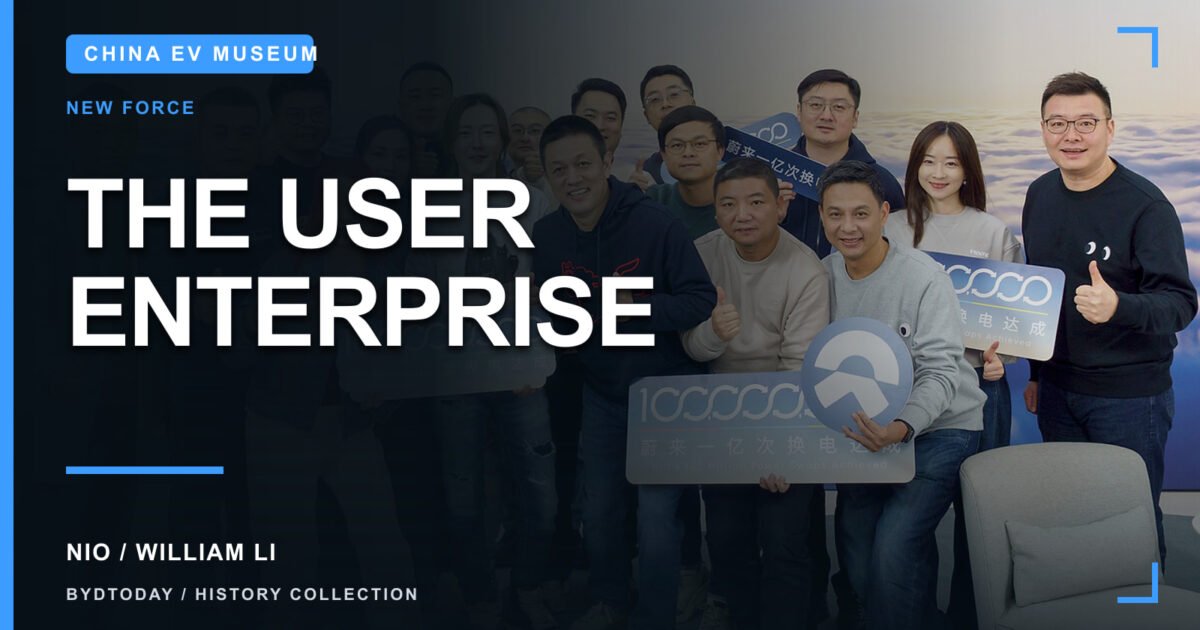
Cover: William Li with participants at NIO’s February 6, 2026 battery-swap celebration. Source: NIO. BYDToday added the title design to the real event photograph; this is historical context, not September delivery imagery.
Page role: This is BYDToday’s single company-and-founder owner for NIO and William Li. Detailed battery-swap economics belong to the NIO Battery Swap and BaaS guide; model specifications belong to the relevant vehicle page, beginning with the NIO ES9 guide.
Who is William Li?
William Li is the English name used by NIO founder Bin Li. NIO’s investor-relations biography says he has chaired the company since its inception and has served as chief executive since March 2018. He received a bachelor’s degree in sociology from Peking University.
Before NIO, Li co-founded Beijing Bitauto E-Commerce in 2000 and later chaired the formerly NYSE-listed Bitauto Holdings. That career explains an important difference between NIO and many engineering-led automakers: Li approached the car as a service, data and community relationship as well as a manufactured product.
NIO history: the milestones that shaped the company
| Date | Milestone | Why it mattered |
|---|---|---|
| Nov. 2014 | NIO was founded. | Li moved from automotive internet services into premium smart EVs. |
| 2016 | NIO and JAC began a manufacturing partnership. | The arrangement shortened the route from startup to regulated vehicle production. |
| 2018 | ES8 deliveries began; NIO listed on the NYSE; the first swap stations entered service. | Vehicle, capital-market and charging strategies started to operate together. |
| 2019 | NIO recalled 4,803 ES8s and replaced affected packs. | The crisis tested battery governance, cash resources and user trust. |
| 2022 | NIO added Hong Kong and Singapore listings. | It broadened access to capital beyond the United States. |
| 2024 | ONVO launched; FIREFLY was introduced in December. | NIO expanded beyond one premium marque into three distinct market positions. |
| Feb. 2026 | The network completed its 100 millionth battery swap. | Battery swapping moved from an early differentiator to infrastructure used at scale. |
| Jun. 2026 | Cumulative deliveries reached 1,188,715 vehicles. | The three-brand structure produced its strongest first-half delivery total to date. |
The 2019 crisis: what the old dossier got wrong
NIO’s 2019 battery recall is central to its history, but the amount must be reported correctly. The company and China’s State Administration for Market Regulation confirmed that 4,803 ES8s using NEV-P50 battery modules were recalled. NIO replaced the affected vehicle packs and the matching packs inside its swap network.
NIO’s annual-report disclosure accrued RMB 339.1 million of recall costs in the second quarter of 2019. The earlier Chinese dossier said RMB 3.2 billion, which is more than nine times the filed amount and has been removed. The broader lesson is not a heroic near-death anecdote: battery traceability and swappable packs gave NIO a way to identify and replace affected inventory across both cars and infrastructure.
Why battery swapping became NIO’s defining system
NIO separates the vehicle from the battery in both hardware and, for customers choosing BaaS, the purchase contract. A compatible vehicle can enter a Power Swap Station, exchange its pack and leave with a charged one. NIO says the swap itself averages about three minutes and includes battery and electric-drive checks.
On February 6, 2026, NIO reported 100 million cumulative swaps, 3,790 Power Swap Stations worldwide and 1,020 stations along major highways in China. It planned 1,000 additional stations during 2026 and a large-scale rollout of fifth-generation stations. Those are dated company figures and plans, not an undated promise that every NIO buyer lives close to a station.
For a buyer, the system can shorten replenishment time and make battery upgrades possible where offered. For NIO, it creates recurring service relationships and a network competitors cannot reproduce quickly. The trade-off is capital intensity: sites, standardized packs, station hardware, inventory and maintenance must all be financed and utilized. The full buyer and business-model analysis is maintained in How NIO Battery Swap and BaaS Work.
NIO House and the “user enterprise”
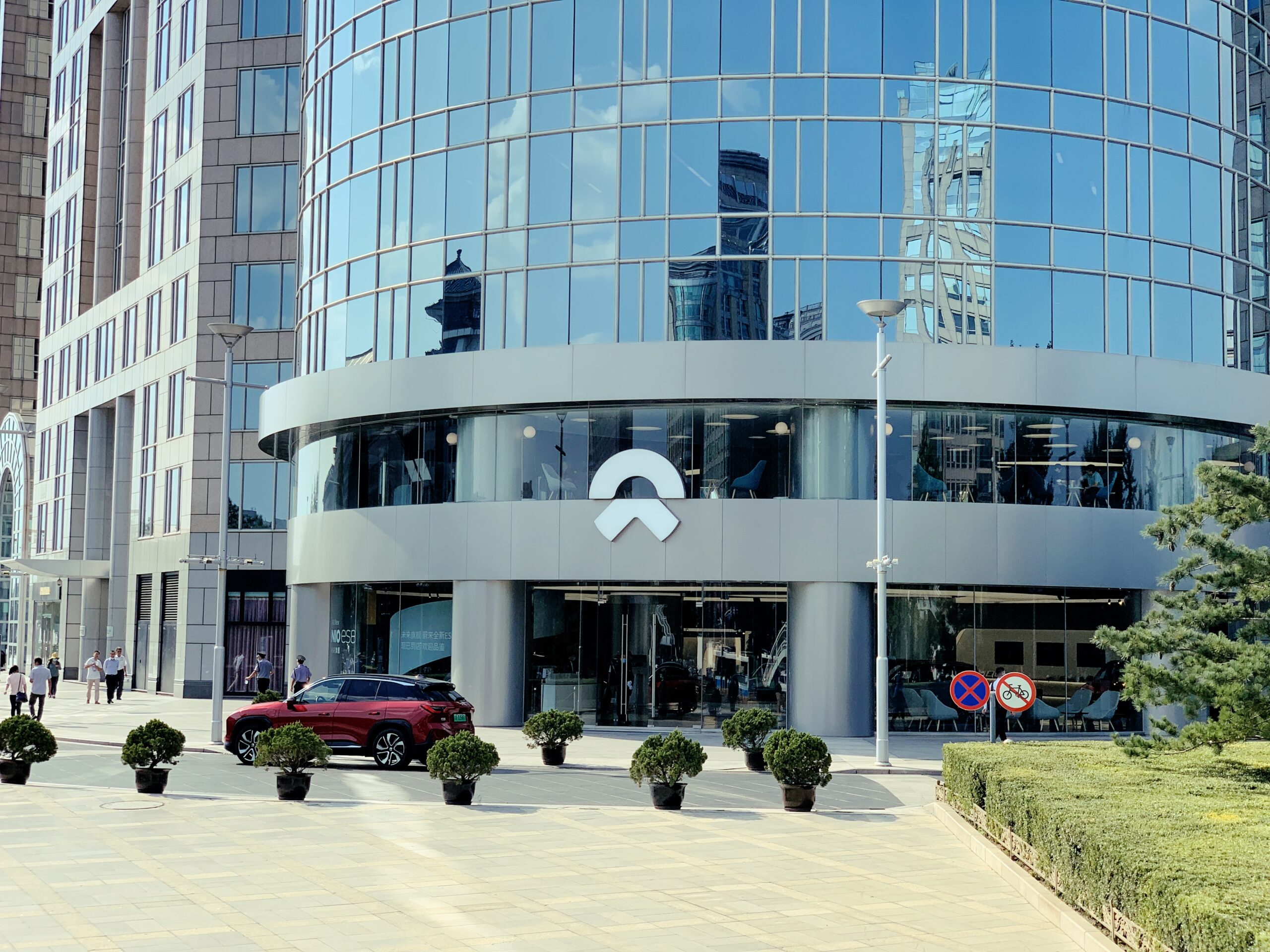
NIO describes itself as a user enterprise, not only a vehicle manufacturer. NIO Houses combine showrooms with meeting, event and community space. The company’s current About page reports nearly 600,000 users participating across more than 2,400 NIO communities. NIO Users Trust was established using 50 million shares personally held by Li, with car owners participating as board directors.
This model can improve retention and turn owners into advocates. It can also raise customer-service and real-estate costs. Claims that a particular number of NIO Houses or app users automatically caused later sales are therefore not treated as proven. Community is a strategic asset; its economic return must still be measured against the cost of providing it.
How the three NIO brands divide the market
| Brand | Positioning | Deliveries | Group mix |
|---|---|---|---|
| NIO | Premium EVs | 21,318 | 57.0% |
| ONVO | Family EVs | 8,763 | 23.4% |
| FIREFLY | Premium compact EVs | 7,327 | 19.6% |
| Group | All three brands | 37,408 | 100.0% |
Source: NIO’s October 1 delivery release. BYDToday calculated group mix as each brand’s deliveries divided by 37,408, rounded to one decimal. This is an internal brand mix, not market share.
How should readers compare the reporting periods?
NIO Inc. reported 109,178 deliveries in Q3 and 300,301 in January–September. September is inside Q3, and Q3 is inside the year-to-date period: do not add overlapping totals. These are company-reported deliveries, not an independently verified retail-registration count.
Q3 deliveries were within the 108,000–111,000 range in NIO’s September 1 guidance. Meeting a volume range does not establish revenue, margins or profit. Financial performance needs its own results disclosure.
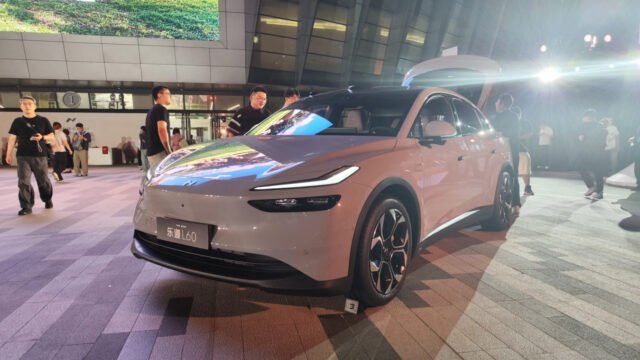
The three brands share parts of NIO’s research, digital architecture, manufacturing and energy infrastructure, but they address different buyers. That makes the matrix more than three badges. It is an attempt to spread a high fixed-cost technology and swap network across more price bands. The current ONVO L60 delivery page provides a model-level example, while FIREFLY remains the smaller-car and internationalization test.
What is verified about NIO and ClearMotion?
Updated August 11, 2026: ClearMotion says it began working with NIO in 2021. NIO Capital later led a $39 million ClearMotion financing round in 2022 and participated in a separate $32 million round in 2023. Those figures are total round sizes, not proof that NIO Capital itself invested $71 million.
NIO’s 2023 ESG report describes ET9 SkyRide full active suspension as a joint innovation with ClearMotion. ClearMotion opened its Changshu CM1 plant in early 2024, says the site can produce up to 1.5 million CM1 units, and records ET9 deliveries beginning in 2025. NIO attributes a 1 ms processing-and-response capability to ET9’s integrated hydraulic full active suspension; this is a manufacturer claim, not an independent comparison with every rival system.
Porsche’s April 2024 agreement with ClearMotion covered technical collaboration and licensing. Porsche did not confirm a production-car fitment or validate a specific 48-volt architecture. The primary record supports a supplier, financing and production timeline; it does not support the claim that “NIO saved ClearMotion.”
Technology: what belongs on the owner page
NIO’s technology story includes its NX9031 intelligent-driving chip, a 900V electrical architecture, steer-by-wire, active suspension, battery swapping and the NIO WorldModel software stack. This owner page records the strategic relationship: NIO uses in-house development to differentiate premium vehicles and reuse capabilities across models and brands.
Model claims should not be generalized across every NIO. The ES9, for example, officially combines an NX9031 chip, 900V architecture, 5C charging, three-minute swapping and up to 620 km CLTC range. Those specifications and their buyer limits are maintained on the dedicated NIO ES9 price and specifications guide.
International strategy and current limits
NIO has research and engineering operations outside China and sells through a mixture of direct and partnership-led approaches. Its UK engineering hub and asset-light Europe strategy show why international presence should not be measured only by retail stores. Engineering, software, homologation and distribution partnerships can be valuable even before sales scale.
The constraints are equally important. European tariffs and regulation, service coverage, brand recognition and the cost of a proprietary energy network can limit expansion. FIREFLY’s smaller vehicles and partnership-led distribution reduce some barriers, but they do not prove that NIO can reproduce its China user ecosystem abroad.
What readers should watch next
- Swap utilization, not station count alone. More sites create convenience only if locations, compatible vehicles and demand line up.
- Three-brand economics. Shared technology can spread fixed costs, but additional products and retail channels add complexity.
- Vehicle margin and cash flow. Delivery growth does not automatically create sustainable profit.
- International service depth. Sales announcements matter less than parts, repairs, charging access and residual-value support.
- Assisted-driving evidence. Hardware and model updates are not the same as approved autonomous operation.
Frequently Asked Questions
Who founded NIO?
Bin Li, widely known internationally as William Li, founded NIO in November 2014. NIO’s investor-relations biography lists him as founder, chairman and chief executive officer.
What did William Li do before NIO?
Li co-founded Beijing Bitauto E-Commerce in 2000 and later chaired Bitauto Holdings. He earned a bachelor’s degree in sociology from Peking University.
What is NIO’s main business-model difference?
NIO combines premium EVs with Battery-as-a-Service, automated pack swapping, charging services and a user-community model. Buyers can choose outright battery ownership or BaaS where the plan is offered.
Which brands belong to NIO Inc.?
NIO Inc. operates NIO for premium smart EVs, ONVO for family-oriented smart EVs and FIREFLY for small smart high-end electric cars.
How many vehicles has NIO delivered?
NIO Inc. reported 1,297,893 cumulative deliveries through September 30, 2026, covering NIO, ONVO and FIREFLY.
Is NIO Inc.’s total the same as NIO-brand deliveries?
No. The group total combines three brands; the NIO-brand row is only one part.
Sources
- NIO Investor Relations, September and third-quarter 2026 deliveries, October 1, 2026
- NIO, Second-quarter results and third-quarter delivery guidance, September 1, 2026
- NIO Investor Relations, Bin Li official biography
- NIO, About NIO, brand matrix, user enterprise and NIO Power
- NIO Investor Relations, June and second-quarter 2026 delivery update, July 1, 2026
- NIO, NIO achieves 100 million battery swaps, February 6, 2026
- NIO, 2019 voluntary recall of 4,803 ES8s
- HKEX, NIO annual report disclosure of RMB 339.1 million recall cost
- NIO, NIO ES9 official launch, May 27, 2026
- BYDToday, Source Methodology and Editorial Policy
- ClearMotion, company history and NIO programme timeline
- NIO Capital, 2022 $39 million financing round and 2023 $32 million financing round
- NIO, ET9 SkyRide system and 2023 ESG report
- Porsche Newsroom, ClearMotion cooperation and licence agreement