Quick Answer
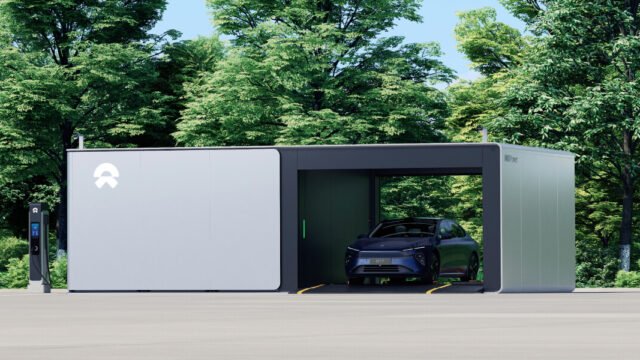
NIO has built the world’s largest EV battery swap and charging network. As of June 23, 2026, the company operates 9,003 stations — 3,927 swap stations and 5,076 charging stations with 29,255 charging piles. NIO has completed over 110 million battery swaps and 200 million total charging services. Fifth-generation swap stations begin deployment in Q3 2026, promising faster swaps, higher throughput, and multi-brand compatibility including Onvo and Firefly sub-brands.
Why This Matters Globally
NIO’s 9,000-station milestone, achieved on June 23, 2026, is more than a round number — it is proof that battery swapping works at industrial scale. With 3,927 swap stations, 5,076 charging stations, and 29,255 charging piles, NIO has built the world’s largest integrated EV energy replenishment network. The company has now provided more than 200 million charging and swapping services, including over 110 million battery swaps. For a global auto industry still debating whether battery swapping is viable, NIO has settled the argument: 110 million successful swaps, growing at an accelerating rate, mean the technology is not only viable but is becoming the preferred energy replenishment method for a large and loyal customer base. This matters for every market — from Europe to Southeast Asia — where fast, convenient EV charging infrastructure remains the biggest adoption barrier.
What China Brings to the Table
The numbers behind NIO’s network tell a story of sustained, capital-intensive commitment. The company has invested more than 68.8 billion yuan ($10.2 billion) in research and development over the past eleven years, with over 20 billion yuan ($2.96 billion) dedicated specifically to its battery charging and swapping infrastructure. This is not a pilot program or a marketing stunt — it is one of the largest single-company infrastructure investments in automotive history outside of Tesla’s Supercharger network.
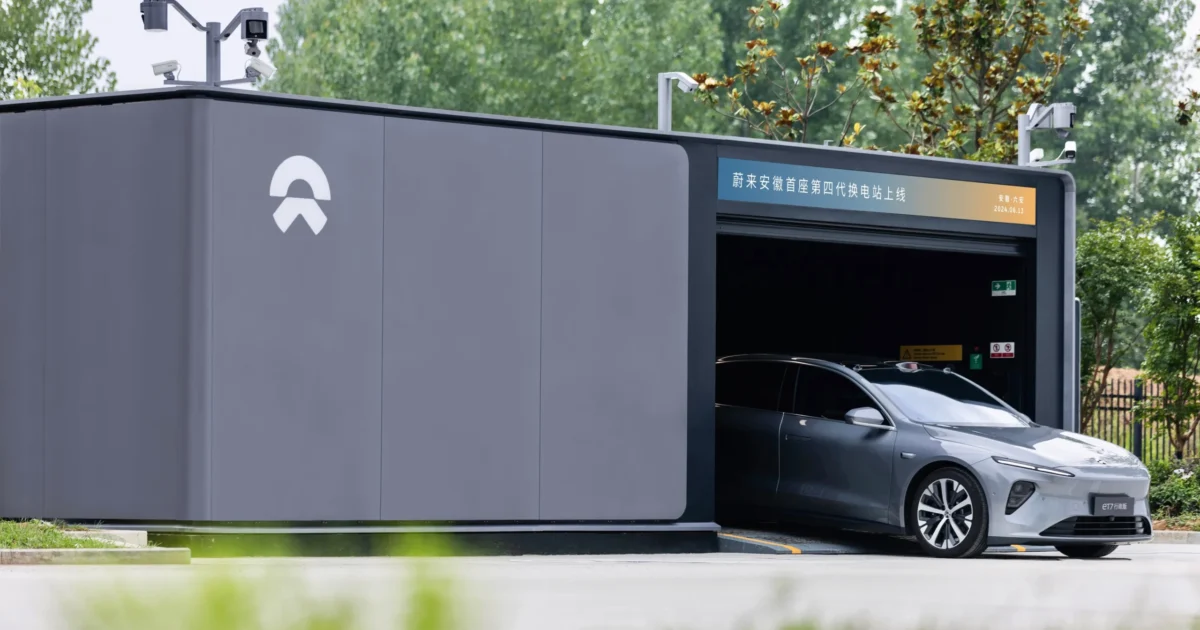
NIO’s network density is what makes it truly useful. The 9,003 combined stations are distributed across China’s major urban corridors and highway networks, with the latest — the 9,000th station — entering operation in Ankang, Shaanxi Province. The company has been adding stations at a pace that demonstrates accelerating deployment capability, with fifth-generation battery swap stations scheduled to begin deployment in the third quarter of 2026. Gen 5 stations are expected to offer faster swap times, higher throughput, and compatibility with a broader range of vehicle models including NIO’s mass-market Onvo and Firefly sub-brands.
The business model is also evolving. NIO’s swap stations increasingly serve as grid-balancing assets, participating in China’s vehicle-to-grid (V2G) pilot programs. Each station houses multiple battery packs that can charge during off-peak hours and discharge during peak demand, turning NIO’s network into a distributed energy storage asset. The March 2025 strategic cooperation agreement with CATL to build a unified passenger vehicle swap network suggests NIO is open to opening its platform to non-NIO vehicles — a move that would transform the network from a brand-specific moat into an industry-wide utility.
The delivery numbers provide the demand-side context. In the first five months of 2026, NIO delivered 150,526 vehicles, an increase of 68.7% year-on-year. Cumulative deliveries have reached 1,148,118 vehicles. With an expanding vehicle fleet and rising swap utilization, the per-swap economics continue to improve — a virtuous cycle that makes the network increasingly defensible against competitors.
International Context
NIO’s battery swap network stands in contrast to the approaches taken by its global competitors. Tesla abandoned battery swapping years ago, focusing entirely on its Supercharger network. European automakers have shown little interest in swapping, preferring to invest in high-power DC fast charging through joint ventures like IONITY. Only CATL, through its Chocolate Swap platform (now at 1,650 stations, targeting 3,000 by year-end), is building a comparable Chinese swap network — but CATL’s open-platform approach serves multiple brands while NIO’s is currently vehicle-specific.
The contrast is particularly relevant for markets outside China. In Southeast Asia, where home charging penetration is low and public fast-charging infrastructure is sparse, battery swapping could be the fastest path to EV adoption. NIO has expressed interest in European expansion of its swap network, but faces regulatory and real-estate challenges that do not exist in China. CATL’s multi-brand approach may prove more exportable, but NIO’s decade of operational experience — 110 million swaps without major safety incidents — gives it a reliability advantage that competitors cannot quickly replicate.
The broader industry trend toward battery-as-a-service (BaaS) models — where customers lease batteries rather than buying them, reducing upfront vehicle cost by typically $8,000 to $12,000 — is validated by NIO’s swap network. BaaS only works if swapping is fast, reliable, and geographically convenient. NIO has proven all three.
Buyer Impact
For NIO owners, the 9,000-station milestone brings concrete benefits. Network density continues to improve, reducing the average distance to the nearest swap station. The upcoming Gen 5 stations promise faster swaps — NIO’s current gen stations complete swaps in approximately 3 to 5 minutes, and Gen 5 is expected to reduce this further. The integration of V2G capabilities means owners may eventually earn revenue from their batteries while parked, offsetting ownership costs.
For EV buyers considering NIO versus competitors, the swap network is the decisive differentiator. No other premium EV brand offers 3-to-5-minute full energy replenishment — not Tesla, not BMW, not Mercedes. In a market where charging speed is the top concern for EV fence-sitters, NIO’s swap network eliminates the question entirely. The BaaS model also reduces entry price, making NIO vehicles price-competitive with traditional luxury brands despite superior energy replenishment technology.
For the broader industry, NIO’s 110 million swaps provide a data set that no one else can match. Battery degradation patterns, thermal management under rapid cycling, cell-level failure modes — NIO sees all of this at a scale that laboratory testing cannot replicate. This operational data feeds back into battery design, swap station engineering, and fleet management software, creating a compounding competitive advantage that grows with every million swaps.
Sources
- Internet Info Agency — NIO Hits 9,003 Battery Swap and Charging Stations, Surpasses 200 Million Total Services
- 163.com — NIO Charging and Battery-Swap Network Surpasses 9,000 Stations
- NIO IR — May 2026 Delivery Update
- China Daily — NIO, CATL Vow to Build World’s Largest Battery Swap Network