After eleven years of heavy investment and over 690 billion yuan in cumulative R&D spending, NIO’s three-brand strategy finally delivers sustained profitability.
Key figures are sourced from NIO’s Q1 2026 financial results.
A Historic Profit Milestone
On May 21, 2026, NIO (NYSE: NIO; HKEX: 9866; SGX: NIO) released its first-quarter 2026 financial results, and the numbers tell a transformational story. Total revenue reached 25.53 billion yuan (approximately $3.5 billion), representing a 112.2% increase year-on-year. More importantly, the company achieved an operating profit of 66.8 million yuan, marking the second consecutive quarter of positive operating income, a first in NIO’s eleven-year history.
The gross margin story is equally compelling. NIO’s consolidated gross margin reached 19.0%, with vehicle margins at 18.8%, both four-year highs. The vehicle margin has improved for four consecutive quarters, reflecting the positive impact of NIO’s cost reduction programmes, improved manufacturing efficiency, and the growing contribution from its more affordable brands, Ledao (Onvo) and Firefly. Cash reserves stood at 48.2 billion yuan at quarter-end, with operating cash flow positive for the third consecutive quarter.
What makes this profitability particularly significant is the challenging market environment. China’s overall auto market contracted in Q1 2026, with production and sales falling 6.9% and 5.6% respectively. Raw material prices surged, adding over 10,000 yuan per vehicle in costs across the industry. For NIO to achieve profitability under these conditions suggests a fundamental structural improvement rather than a temporary favourable wind.
Three-Brand Strategy Delivers Results
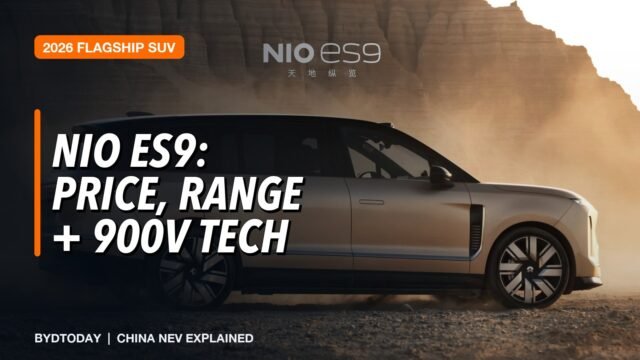
NIO’s turnaround is built on its multi-brand architecture. The flagship NIO brand continues to command the premium segment: the all-new ES8 reached 100,000 deliveries in just 215 days and has been the best-selling large SUV and the top-selling vehicle above 400,000 yuan for five consecutive months. Nearly half of ES8 buyers are switching from traditional luxury brands including BMW, Mercedes-Benz, and Audi, validating NIO’s premium positioning.
The Ledao (Onvo) brand, targeting the 200,000-300,000 yuan family market, has become a significant volume contributor. The Ledao L90 leads its segment in sales, while the newly launched L80 has exceeded pre-order expectations. A refreshed L60 is also forthcoming. The Firefly brand, positioned at the more accessible end of the market, is building its presence steadily. Together, the three brands now cover the 150,000 to 650,000 yuan price range with five flagship models simultaneously on sale.
NIO’s energy infrastructure, long viewed as a cost centre, is increasingly becoming a competitive advantage. The company has invested over 180 billion yuan in its charging and battery-swap network, which now comprises 3,847 swap stations. Cumulative swap services have exceeded 100 million. This infrastructure not only supports NIO’s own customers but is increasingly being opened to other brands through partnerships, creating a potential new revenue stream.
Q2 Guidance and Strategic Outlook
NIO’s Q2 2026 guidance projects deliveries of 110,000 to 115,000 vehicles, representing year-on-year growth of 52.7% to 59.6%, and revenue of 32.78 to 34.44 billion yuan, a 72.4% to 81.2% increase. CEO William Li stated on the earnings call that 2026 is the pivotal year when NIO transitions from a strategic investment phase to a profitable growth phase.
Looking ahead, Li announced that starting next year, NIO will enter a new product cycle with refreshed versions of the ET5, ET5T, EC6, and ES6. The company plans to launch three to five new or significantly updated models annually going forward, though Li emphasised quality over quantity, insisting each model must achieve segment-leading market share. NIO remains committed to the pure electric route and will not pursue range extenders or hybrids.
For international investors, NIO’s Q1 results suggest the company may finally be approaching the inflection point that has eluded it for years. With 48.2 billion yuan in cash, consecutive quarterly profits, and a diversified three-brand portfolio, NIO is better positioned than at any point in its history. The critical question is whether it can sustain this momentum as competition intensifies and new models from XPeng, Li Auto, and Xiaomi put pressure on every price segment.