Why It Matters Globally
Two events this week signal China’s push to bring order to the EV industry’s fastest-growing but least-regulated corners: charging safety and solid-state battery definitions. The Charging Alliance’s new operations white paper and the July 1 solid-state battery national standard together form a regulatory framework that could become a global reference — especially after the Donut Lab fraud exposed how loosely defined terms enable deception.
Charging Alliance: First-Ever Operations White Paper
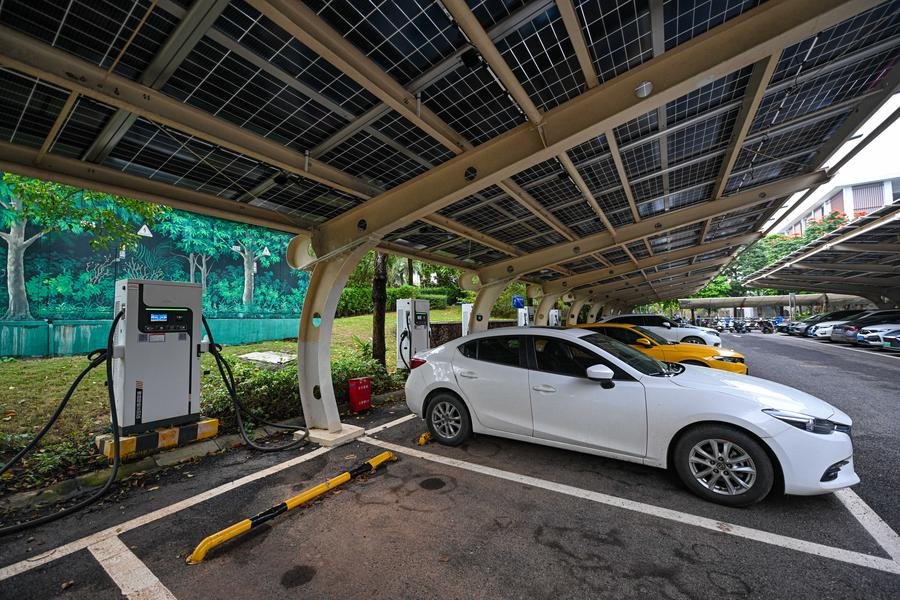
On June 11, the China Electric Vehicle Charging Infrastructure Promotion Alliance held a closed-door meeting in Hangzhou, organized by its vehicle-committee operations group and led by inaugural rotating chair Li Auto, according to Sina Finance.
Attendees included NIO Energy, XPeng, AITO, GAC Energy, and six other major operators. The meeting produced the “Vehicle Enterprise Charging Station Operations White Paper” — the industry’s first comprehensive operations guide — built on three consensus principles:
- User and quality orientation: Shift focus from device status alone to service availability, stability, and issue-resolution closure rates
- Coordination and innovation: Multi-stakeholder collaboration, embracing remote diagnostics and AI-driven risk prediction
- Accountability and transparency: Standardized service quality metrics and open reporting to rebuild consumer trust
Li Auto presented its intelligent operations system that uses real-time visual monitoring and second-level alerting across all self-operated stations, shifting maintenance from reactive to predictive. NIO shared its nationwide maintenance network covering remote areas with tiered staffing. HaoHan Energy detailed its “intrinsic safety” approach from component selection through emergency response.
July 1: Solid-State Battery Standard Takes Effect
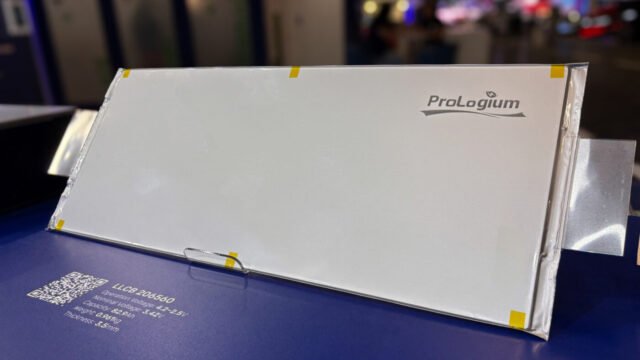
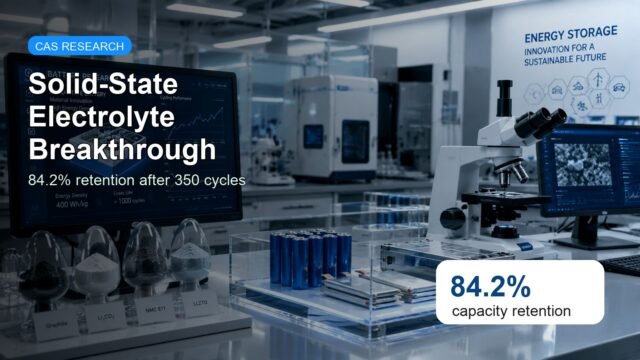
China’s “Electric Vehicle Solid-State Battery Part 1: Terminology and Classification” national standard — the first of its kind globally — takes effect on July 1, 2026, per Sina Finance. The standard does three critical things:
- Eliminates marketing ambiguity: Terms like “semi-solid,” “quasi-solid,” and “near-solid” are banned from official classification
- Three-tier taxonomy: Batteries are classified as liquid, hybrid solid-liquid, or all-solid-state — nothing in between
- Hard quantitative threshold: A battery can only be classified as all-solid-state if its weight loss is ≤0.5% after 6 hours at 120°C under vacuum. Liquid electrolyte evaporation will push any “fake solid” well above this limit
This standard directly addresses the kind of fraud exposed in the Donut Lab case, where a Finnish startup claimed to have a solid-state battery that was actually a repackaged liquid lithium cell. The 0.5% threshold provides a simple, reproducible test that eliminates ambiguity.
Industry Context: Where Solid-State Really Stands
CATL chairman Zeng Yuqun has repeatedly called for industry rationality around solid-state technology. Current reality:
- Global leaders (Toyota, CATL, Qingtao) are in sample/road-test phases
- Industry consensus places true all-solid-state mass production at 2028 or later
- No company currently operates a gigawatt-hour-scale all-solid-state production line
- Hybrid solid-liquid batteries are in small-scale vehicle deployment
China is also advancing 12 additional standards including megawatt-class ultra-fast charging safety requirements, jointly developed by the Charging Alliance and CAAM.
FAQ
Why does the 0.5% weight-loss threshold matter?
It’s a scientifically rigorous, easily testable boundary between batteries that contain liquid electrolyte and those that don’t — closing the loophole that allowed Donut Lab to claim solid-state status.
Who enforces the charging white paper?
It’s a voluntary industry standard, not a regulation. But with major operators like Li Auto, NIO, and XPeng as signatories, non-compliance risks market exclusion.
Will other countries adopt the solid-state classification?
As the world’s largest EV market, China’s standards often become de facto international benchmarks. The EU and U.S. lack equivalent standards today.