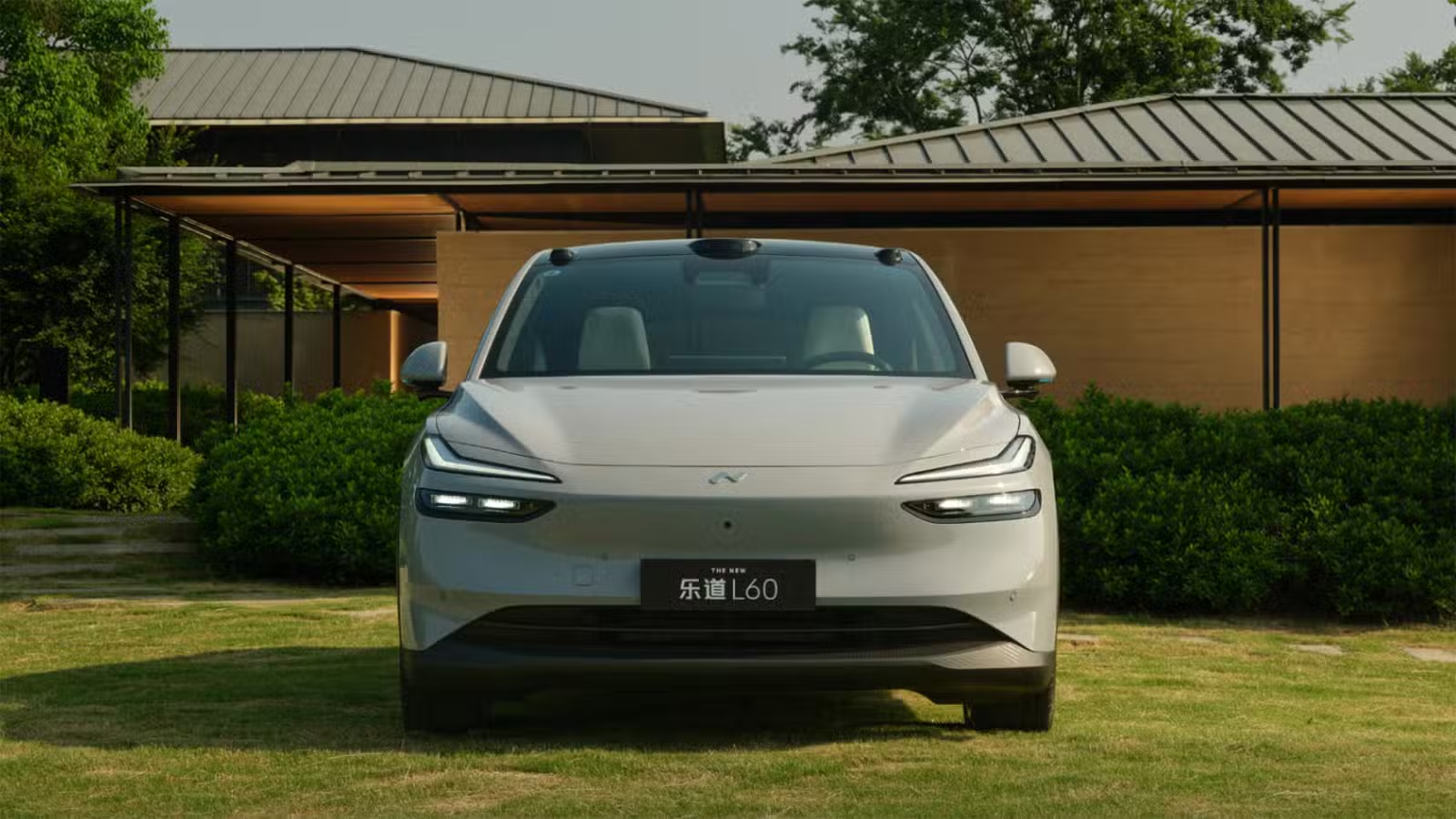
NIO’s sub-brand Onvo officially launched the updated L60 electric SUV on June 11, 2026, bringing 106 upgrades including the debut of NIO’s in-house 5-nanometer Shenji NX9031 autonomous driving chip and a 6.8% price reduction despite higher manufacturing costs. The launch is a critical move for Onvo as it seeks to regain sales momentum in China’s competitive mid-size electric SUV market.
The updated L60 starts at 192,800 yuan (approximately $28,440) with battery included, down from the previous 206,900 yuan starting price. With NIO’s BaaS (Battery-as-a-Service) subscription, the entry price drops further to 135,800 yuan ($20,030), according to CnEVPost’s launch day coverage. Deliveries commence on June 12, just one day after the launch announcement.
The Shenji NX9031: NIO’s Silicon Advantage
The headline upgrade is NIO’s self-developed Shenji NX9031 chip, manufactured on a 5nm process — making it one of the most advanced automotive-grade chips in any production vehicle. Available on the Max+ (202,800 yuan) and Ultra+ (222,800 yuan) trims, the Shenji chip pairs with NIO’s World Model (NWM) architecture to enable full-scenario point-to-point navigation-assisted driving, including automatic entry and exit from battery swap stations. The entry-level Pro trim retains the Nvidia Orin-X chip with 254 TOPS of computing power and a camera-only perception system.
The Max+ and Ultra+ variants also add a LiDAR sensor, upgrading the perception hardware from the previous camera-only setup. This marks a significant capability leap for the L60, which originally launched with a vision-only ADAS system when it debuted as Onvo’s first model in September 2024.
Specifications and Pricing
Built on NIO’s 900V high-voltage platform, the updated L60 supports 3-minute battery swaps and 10%-80% fast charging in 25 minutes. The standard 60 kWh battery pack delivers up to 560 km of CLTC range, while an optional 85 kWh pack extends range to 740 km. The range-topping Ultra+ trim adds a 17.3-inch 3K fold-down rear screen, roof sunshade, and a 6-liter heated/cooled smart refrigerator.
Early adopters who lock in orders by June 30 receive benefits worth over 53,000 yuan ($7,820), including a 40% discount on optional equipment, a 5,000 yuan accessory fund, zero-down-payment 3-year interest-free financing, and 5 years of free smart driving assistance, per the official launch announcement.
Market Position and Sales Momentum
The L60 update is critical for Onvo, which competes directly with the Tesla Model Y in China’s midsize electric SUV segment. Onvo delivered 12,029 units in May 2026, a 91.5% year-on-year increase, driven by new model launches including the larger L80 and L90 SUVs. NIO’s total May deliveries reached 37,705 units, the highest monthly figure in 2026.
Onvo’s battery swap network has expanded to 2,553 stations accessible to Onvo vehicles, with plans to reach 3,300 by year-end. The brand also announced that its Coconut operating system will receive a major over-the-air update in July, bringing end-to-end autonomous driving model iterations and AI cabin enhancements across all Onvo models.
Why It Matters Globally
The Onvo L60 refresh demonstrates NIO’s accelerating vertical integration strategy. By deploying its own 5nm chip in a sub-$30,000 vehicle, NIO is bringing premium autonomous driving capabilities to the mass market — a move that pressures competitors like Tesla, which uses its own FSD chip but charges a significant premium for the software. If NIO can deliver competitive autonomous driving at this price point, it could reshape consumer expectations globally.
The price cut despite rising costs also signals NIO’s determination to prioritize volume over margins in the near term. With the company forecasting Q2 2026 deliveries of 110,000-115,000 units, the updated L60 will need to contribute meaningfully to hit that target.
What’s Next
Onvo will begin L60 deliveries on June 12, with the first customer feedback expected within days. The July Coconut OS update will be the next major milestone. Longer term, Onvo’s success with the L60 will determine whether NIO can achieve its stated goal of company-wide profitability — a target that has eluded the company since its founding.
FAQ
How does the Onvo L60 compare to Tesla Model Y?
The updated L60 undercuts the Model Y on starting price ($28,440 vs approximately $34,500 for Model Y in China), offers battery swapping (which Tesla does not), and now matches or exceeds Model Y’s ADAS capabilities with the Shenji NX9031 chip and LiDAR. However, Model Y maintains advantages in brand recognition, global charging infrastructure, and production scale.
What is NIO’s BaaS (Battery-as-a-Service)?
BaaS allows buyers to purchase the vehicle without the battery, paying a monthly subscription fee instead. This reduces the upfront purchase price significantly — in the L60’s case, from 192,800 yuan to 135,800 yuan. BaaS subscribers can also upgrade to larger batteries as needed and benefit from NIO’s battery swap network.
What is the Shenji NX9031 chip?
The Shenji NX9031 is NIO’s first in-house autonomous driving chip, manufactured on a 5nm process. It powers the company’s World Model (NWM) architecture for advanced driver assistance, enabling features like point-to-point navigation, automatic lane changes, and autonomous battery swap station entry/exit.