Quick answer
LFP and nickel-based lithium-ion remain mainstream in the IEA’s 2026 assessment. Sodium-ion is entering limited vehicle and storage deployment, while all-solid-state batteries remain prototype or early-roadmap technology. Battery swapping and flash charging change replenishment time but do not replace battery chemistry. Buyers should compare the pack actually installed in a specific model, its warranty, charging curve and local infrastructure—not a laboratory headline.
Evidence update — November 13, 2026: added the buying-evidence ladder and like-for-like comparison checks. The table identifies each source’s period; historical counts and manufacturer targets are not November delivery or network totals.
Cover: CATL sodium-ion battery pack in the company’s February 5, 2026 Changan announcement. Historical photograph: CATL; uncropped layout and type: BYDToday. The pictured pack is not solid-state or proof of later customer deliveries.
EV battery technologies: status, evidence and timing
On mobile, swipe horizontally to compare technologies.
| Technology | Dated evidence | Status | Source / date |
|---|---|---|---|
| LFP lithium-ion | More than 55% of EV battery capacity deployed globally in 2025 was LFP | OBSERVED 2025 market share | IEA Global EV Outlook 2026 |
| NMC lithium-ion | Higher energy density is a key advantage over sodium-ion in the IEA’s comparison | CONFIRMED benchmark | IEA Global EV Outlook 2026 |
| Sodium-ion vehicles | CATL’s April update targeted full-scale Naxtra production by end-2026 | PENDING scale-up | CATL, April 21, 2026 |
| Sodium-ion storage | TENER Sodium is stationary storage: more than 30 MWh per modular system; global deliveries targeted for June 2027 | ANNOUNCED storage product; company specifications | CATL, June 22, 2026 |
| All-solid-state | Small-scale test cells exist, but pack integration, cost and manufacturing remain barriers | PENDING commercialization | IEA Global EV Outlook 2026 |
| Battery swapping | CATL reported 1,470 Choco-Swap stations in 99 cities and targeted 4,000 by end-2026 | CONFIRMED April count; PENDING target | CATL, April 21, 2026 |
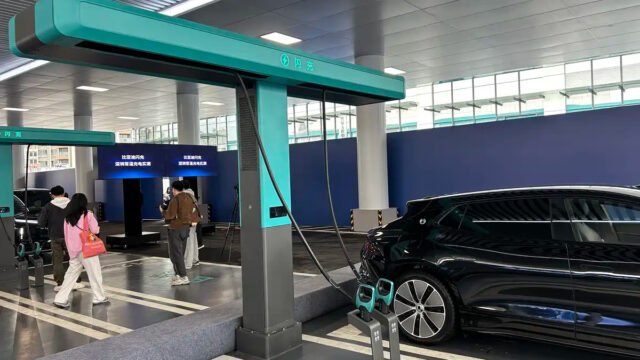
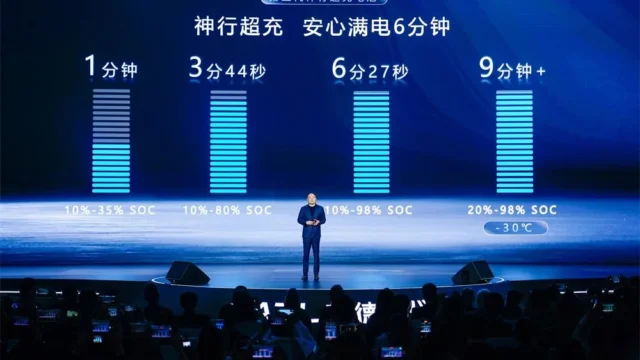
| BYD Flash Charging | Second-generation Blade Battery claim: 10–70% in 5 minutes on compatible hardware | CONFIRMED as manufacturer claim | BYD, March 5, 2026 |
How to check a battery breakthrough before buying
A chemistry name is not a purchase specification. Use this evidence ladder to separate a promising technology from the pack and service you can actually buy. It is a comparison method, not a claim that every announced product has reached the same stage.
On mobile, swipe horizontally to read all four evidence stages.
| Evidence stage | What to record | What remains unproven |
|---|---|---|
| Cell or laboratory result | Chemistry, test temperature, energy-density basis and conditions | A road-ready pack, vehicle range, durability in normal use or a delivery date |
| Pack or vehicle announcement | Named model, trim, market, pack specification and whether the date is a target | Customer handovers, production volume or availability in another market |
| Dated customer deliveries | Delivery evidence tied to the exact model and battery version | Fleet-wide durability or availability for every trim under the same brand |
| Ownership evidence | Applicable warranty, measured charging conditions, service access and longer-term operating data | Identical results in another climate, model, charger or usage pattern |
One sodium-ion announcement, two different milestones
CATL’s February 5 Changan announcement unveiled a passenger vehicle and targeted market entry by mid-2026. Its April 21 update separately targeted full-scale Naxtra production by end-2026. Neither sentence supplies a dated customer-delivery total. They are different milestones, not interchangeable proof of mass-market availability. This guide does not establish a later delivery total.
Compare the same unit and system boundary
- Cell versus pack: a cell-level Wh/kg figure is not the energy density of the complete pack. Record which mass is included.
- Capacity versus range: record usable or nominal kWh separately from vehicle range and its test cycle. The battery alone does not specify consumption.
- Peak power versus charging time: compare a defined state-of-charge window, temperature and compatible charger—not peak kW alone. BYD’s March 2026 announcement states a 10–70% window, not a complete zero-to-100% charge.
- Storage versus vehicles: stationary-system MWh and cycle-life claims do not establish passenger-car range or warranty. Keep application and conditions attached to every number.
Your comparison sheet: record market, model year, trim, installed chemistry, usable capacity, range cycle, charging conditions, warranty, service access and dated delivery evidence. Mark absent fields “not established”; do not borrow them from another model’s presentation. See the BYD battery-roadmap guide for brand-specific context.
What each technology is actually for
| Use case | Relevant technology | Why | Decision limit |
|---|---|---|---|
| Mainstream affordable EV | LFP | Low material cost, long cycle life and no nickel or cobalt in the cathode | Lower energy density can require a larger pack |
| Long-range or performance EV | NMC or other nickel-rich lithium-ion | Higher energy density | Cost, thermal management and supply-chain trade-offs |
| Cold-climate, short-range vehicle | Sodium-ion, where sold | Strong low-temperature performance and no lithium dependence | Lower energy density; availability remains limited |
| Stationary energy storage | LFP or sodium-ion | Cycle life and cost matter more than vehicle range | Do not use a BESS specification as an EV-pack specification |
| Future premium EV | All-solid-state roadmap | Potential energy-density and safety benefits | Benefits are not demonstrated at mass-market pack scale |
What changed in 2026
Sodium-ion moved toward scale-up
CATL’s April roadmap targeted full-scale Naxtra production by the end of 2026. A February CATL/Changan release targeted a sodium-ion passenger vehicle for mid-2026, but this review did not find a later primary-source delivery count. The correct status is pending rollout, not “already mainstream.” CATL’s TENER Sodium announcement concerns stationary storage, with global deliveries targeted for June 2027; it is not an EV pack or proof that those deliveries have occurred.
Solid-state timelines became clearer, not immediate
The IEA’s 2026 assessment says all-solid-state technology still needs real-world proof at scale. It cites company roadmaps for first vehicles later in the decade and expects early products to remain premium. A prototype, pilot line or announced vehicle date is not the same as high-volume availability.
Charging and swapping became system-level differentiators
Fast charging depends on the cell, pack, thermal system, vehicle voltage and station. Swapping depends on standardized packs and network density. Neither headline should be used without a model and market. China’s updated mandatory traction-battery safety standard took effect on July 1, 2026.
FAQ
Which EV battery technology is most widely available in 2026?
LFP and nickel-based lithium-ion batteries remain the mainstream production choices. LFP prioritizes cost, cycle life and thermal stability; nickel-based packs retain an energy-density advantage for some long-range and performance vehicles.
Are sodium-ion batteries in production cars?
CATL and Changan unveiled a sodium-ion passenger vehicle in February 2026 and targeted mid-year market entry. CATL’s April update targeted full-scale Naxtra production by year-end. Neither announcement is a customer-delivery total; check availability for the exact model and market.
Are solid-state EV batteries commercially available in 2026?
Semi-solid-state and all-solid-state are not interchangeable. The IEA’s 2026 assessment describes almost- and all-solid-state designs as prototypes and says scale-up still needs demonstration. That assessment is not delivery confirmation for a named model.
Is battery swapping a battery chemistry?
No. Battery swapping is an energy-replenishment method. A swappable pack can use LFP, NMC or another chemistry; its usefulness depends on pack standardization, vehicle compatibility and station coverage.
Should buyers wait for the next battery breakthrough?
Usually not if a current vehicle meets the buyer’s range, charging, warranty and safety needs. Announced timelines can slip, and a new chemistry is not automatically better for every climate, price or use case.
Can cell energy density predict a car’s real-world range?
No. A cell-level Wh/kg figure does not describe the complete pack or vehicle consumption. Compare the installed pack, usable capacity, vehicle specification, range test cycle and operating conditions before drawing a range conclusion.
Related BYDToday evidence pages
- BYD Flash Charging: platform, battery and station requirements
- CATL sodium-ion vehicle rollout tracker
- Solid-state commercialization reality check
- CATL Choco-Swap deployment tracker
- Solid-State Batteries 2026: status, timeline and reality
- EV battery recycling: process, rules and economics
Primary and institutional sources
- IEA — Global EV Outlook 2026: batteries
- CATL — chemistry roadmap and charge-swap network, April 21, 2026
- CATL and Changan — sodium-ion passenger-vehicle announcement
- CATL — TENER Sodium storage system, June 22, 2026
- State Council — battery safety standard effective July 1, 2026
- BYD — second-generation Blade Battery
Updated November 13, 2026: added an evidence ladder, dated sodium-ion milestones and practical specification checks; clarified storage delivery targets and solid-state terminology. The July 15 revision introduced the chemistry/use-case matrices. Manufacturer claims, observations and future targets remain distinct.