Two of China’s most prominent electric vehicle makers have drawn battle lines in a public debate over the future of extended-range electric vehicles (EREVs), exposing a strategic fissure that could reshape product planning across the global auto industry. The exchange, which played out on China’s Twitter-like Weibo platform between June 17 and 18, pits Li Auto — the pioneer and most successful proponent of EREV technology — against NIO, one of the few automakers betting exclusively on pure battery electric vehicles.
Why It Matters Globally
The EREV vs BEV debate is not an academic exercise confined to China. As Chinese automakers push aggressively into Europe, Southeast Asia, Latin America and the Middle East, the technology choices they make today will define the vehicles available in those markets tomorrow. Li Auto’s founder Li Xiang argued on Weibo that EREVs and BEVs serve fundamentally different user needs, calling for an end to “putting one down to lift another up.” He noted that over 40% of Chinese buyers still choose gasoline cars, and in the flagship five-seat SUV segment, established combustion models like the BMW X5 and Mercedes-Benz GLE continue to attract customers.
For global automakers watching China, the direction of this debate carries enormous strategic weight. If BEVs are indeed becoming the dominant force — as NIO argues — it validates the pure-electric strategies of Tesla, Volkswagen, and many legacy automakers. If EREVs retain a durable niche, as Li Auto insists, it supports the hybrid-centric approaches of Toyota, Stellantis, and Ford. The outcome will shape billions of dollars in future R&D investment decisions.
What Chinese Data Shows
The numbers lend strong support to the BEV camp. According to CPCA data cited by CnEVPost, China’s new energy vehicle (NEV) retail penetration rate hit a record 62.9% in May 2026. Within that, BEV retail sales reached 637,000 units — up 3.9% year-on-year — while EREV sales slumped to just 85,000 units, a 28% year-on-year decline. EREVs’ share of the NEV market has now fallen to just 7%, down from higher levels in 2024.
Shen Fei, president of NIO’s sub-brand Onvo, seized on these figures in his Weibo response. “BEV models have become the dominant force, unstoppable in momentum,” he posted, according to CnEVPost. He noted that in the large SUV segment specifically, a battery electric model has been the sales champion for six consecutive months — a direct challenge to Li Auto’s core market. Shen also launched a Weibo poll asking followers to vote on whether large five-seat SUV buyers should choose BEV or EREV, a pointed question aimed at Li Auto’s L-series customer base.
What Western Analysts Should Consider
Behind the public spat lie two diverging business realities. NIO is riding strong momentum: its ES8 large SUV delivered 11,475 units in May, exceeding 10,000 for the seventh consecutive month. The newly launched full-size ES9, starting at 498,000 yuan ($73,678), has wait times of 16-17 weeks for high-end versions. NIO’s exclusive bet on battery-swappable BEVs appears to be paying off.
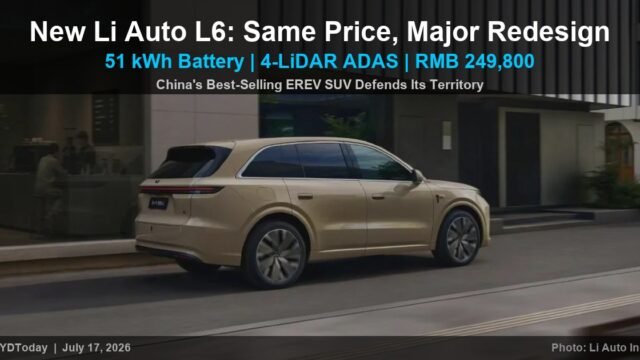
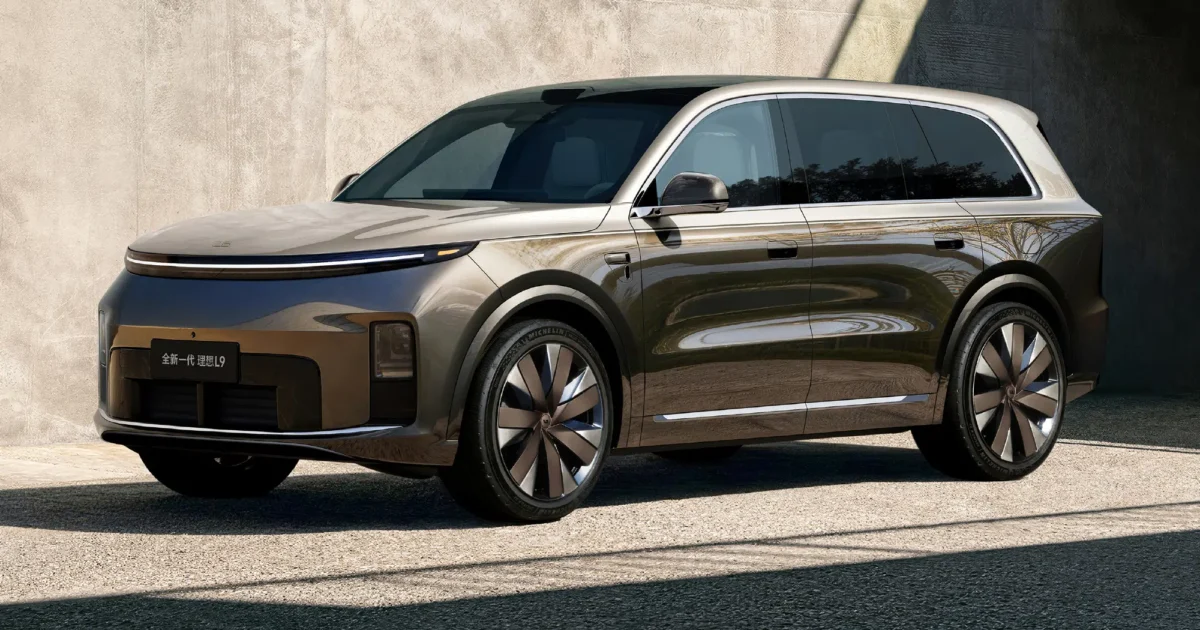
Li Auto, by contrast, is under pressure. The company delivered 33,350 vehicles in May — an 18.37% year-on-year decline — with all four of its EREV L-series models posting sustained drops. To reverse the slide, Li Auto is overhauling its entire L-series lineup, releasing an updated Li L9 on May 15, a new five-seat Li L8 on June 23, and a refreshed Li L6 in July. Crucially, the company itself is hedging toward BEVs — its Li i6 battery electric model is now its sales mainstay — suggesting even the EREV pioneer sees the writing on the wall.
This debate echoes earlier remarks by NIO founder William Li, who declared earlier in 2026 that “the golden era of three-row extended-range SUVs has passed.” With EREV sales declining sharply even as overall BEV adoption accelerates, that prediction is looking increasingly prescient.
What This Means for EV Buyers
For consumers, the BEV vs EREV debate has practical implications. In markets with developing charging infrastructure — much of Southeast Asia, Latin America, and the Middle East — EREVs offer genuine peace of mind through their gasoline range-extenders. But as fast-charging networks expand and battery ranges improve, the EREV’s core advantage erodes. NIO’s battery swap network, which has now surpassed 100 million swaps globally, provides an alternative to both fast-charging and range-extenders.
Buyers considering Chinese EVs should weigh their usage patterns carefully: if most driving is urban with access to charging, a BEV offers lower operating costs and zero tailpipe emissions. If long-distance rural travel is frequent and charging infrastructure is sparse, an EREV remains a practical bridge. But the data trend strongly suggests that this bridge period is shortening — and Chinese automakers are already adjusting their product plans accordingly.
Related Coverage
For more on Chinese EV technology strategy: Huawei HIMA Breaks CATL Monopoly: Gotion & CALB Enter AITO Supply Chain
For more on BEV market momentum: CATL Chairman Says Solid-State Batteries Years From Mass Market