Quick Answer
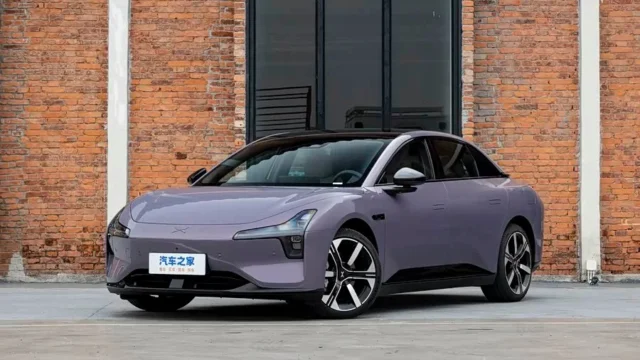
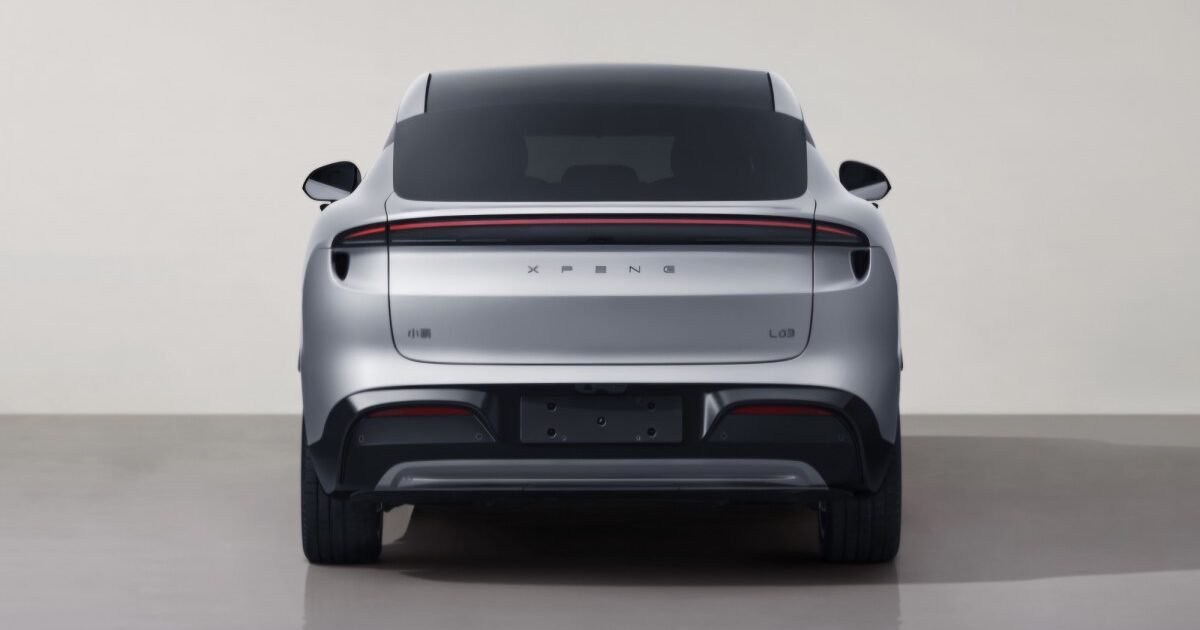
XPeng will officially debut the MONA L03 — the first SUV in its mass-market MONA lineup — in July 2026, kicking off what CEO He Xiaopeng calls “young people’s first smart and stylish SUV.” The fastback SUV offers both battery-electric (BEV) and extended-range (EREV) powertrains, a 183 kW motor, 2,850mm wheelbase, and XPeng’s Turing AI chip for camera-based smart driving. Priced around 150,000 yuan ($22,140) — well below the 300,000 yuan ceiling He set — the L03 targets both China’s fiercely competitive 100,000–200,000 yuan mass market and European buyers, with overseas MONA launches beginning later in 2026.
Why This Matters Globally
XPeng’s MONA L03 is more than a new SUV. It’s the clearest signal yet that Chinese EV makers are systematically targeting the mass-market price band where legacy automakers have been slowest to electrify.
The L03 enters a segment — compact-to-midsize SUVs priced between $20,000 and $30,000 — that accounts for the largest slice of global vehicle sales. In China alone, the 100,000–200,000 yuan price band is where urban NOA penetration is forecast to surge from 3.8% in 2025 to 62.7% by 2030. The L03 is designed specifically for that transition: an affordable SUV that ships with advanced driver assistance as standard, not as a premium option.
For European buyers, the L03 will be one of the first Chinese mass-market EVs to arrive with a dual-powertrain strategy. The BEV version serves emission-regulated urban markets, while the EREV variant offers anxiety-free range for countries where charging infrastructure remains patchy. XPeng’s UK managing director has already confirmed European MONA launches beginning in July 2026.
What This Says About China’s EV Strategy
XPeng’s dual-powertrain strategy for the MONA L03 reflects a broader industry realization: pure-electric-only lineups leave money on the table. The M03 sedan — MONA’s first model — sold 175,689 units in 2025 (40.9% of XPeng’s total) as a pure BEV. Adding an EREV option to the SUV expands the addressable market to buyers who want electric driving for daily commutes but won’t give up the security of a fuel tank for long trips.
He Xiaopeng said the L03 “won’t be priced above 300,000 yuan, but its development was fully aligned with the standards of 300,000-yuan-class vehicles.” The message is deliberate: mass-market price, premium engineering standards. The L03 uses a single electric motor from Luxshare Precision Technology producing 183 kW — more power than the M03 sedan — and LFP batteries supplied by CALB, avoiding BYD’s Blade battery used in the sedan version to diversify the supply chain.
Tech features include XPeng’s Turing AI chip and a camera-based smart driving system (no LiDAR in the base configuration, keeping costs down). The cabin offers a panoramic glass roof, and MIIT filings show the vehicle measures 4,650mm or 4,672mm in length depending on bumper design, with a 2,850mm wheelbase — dimensions that place it squarely in Toyota RAV4 and Honda CR-V territory, the global bestseller sweet spot.
International Context
The MONA L03 launch comes at a pivotal moment for both XPeng and the broader Chinese EV export push. XPeng’s March 2026 deliveries fell 17% year-on-year to 27,415 units — a drop the company urgently needs the L03 to reverse. The M03 sedan, while still XPeng’s bestseller at 14,160 units in May, has seen its momentum slow: cumulative deliveries in the first five months of 2026 dropped 33.15% year-on-year to 48,291 units.
XPeng is not alone in targeting the mass-market SUV segment. BYD’s Atto 3 and Dolphin already dominate the sub-$30,000 EV space globally. The MONA L03 will compete directly with these established players, as well as with upcoming budget EVs from Tesla (the rumored Model 2) and European brands racing to develop affordable electric crossovers.
What differentiates XPeng’s approach is the smart-driving-at-mass-market-price proposition. Most rivals in the same class “still follow an old, cookie-cutter design path, with crude interior quality and a general lack of intelligent features,” He said on Weibo — a direct jab at competitors who reserve advanced ADAS for premium trims.
What It Means for Buyers
For car buyers, the MONA L03 represents something that has been conspicuously absent from the EV market: a genuinely smart, well-designed SUV at a price comparable to a mid-range gasoline crossover.
The BEV version offers the lowest running costs for urban and suburban drivers with home charging. The EREV version adds a gasoline range-extender for buyers who regularly drive long distances or live in areas with unreliable charging infrastructure — the same formula that made Li Auto’s L-series the best-selling EREVs in China.
For European buyers, XPeng’s confirmed MONA launch later in 2026 means access to a Chinese EV that was designed from the ground up for both domestic and export markets, not a China-only model hastily adapted for overseas sale. The L03’s MIIT certification — China’s rigorous vehicle homologation process — provides a baseline quality signal, even though European type-approval will be a separate step.
The risk for buyers: XPeng’s European service network is still developing, and parts availability for a brand-new model series will be constrained in the first year of sales. But for anyone comparing the L03’s spec sheet — 183 kW motor, smart driving, panoramic roof, sub-$23,000 starting price — against a similarly priced ICE crossover, the value proposition is difficult to ignore.
Sources
- Xpeng to debut Mona L03 SUV in July, targeting young buyers — CnEVPost
- Xpeng unveils MONA L03, first SUV in MONA lineup — TechNode
- Chinese MIIT reveals the new XPeng Mona L03 ahead of its debut — ArenaEV
- Xpeng Mona L03 revealed ahead of debut scheduled for July — CarNewsChina
- XPeng to Launch Mona L03 and Flagship SUV GX in Europe From July — EV