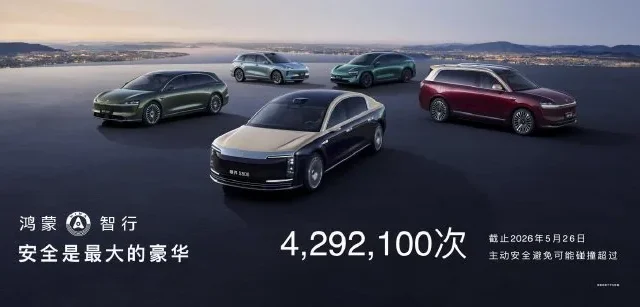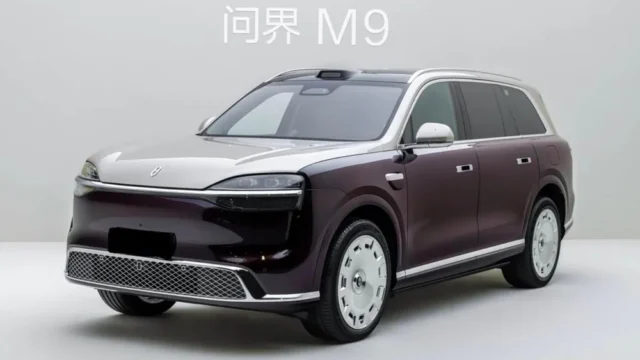
Huawei’s Harmony Intelligent Mobility Alliance (HIMA) is breaking its exclusive battery partnership with CATL by bringing in second-tier suppliers Gotion High-Tech and CALB — a strategic shift driven by cost pressures as the alliance pursues aggressive mass-market expansion and a 1-million-unit annual delivery target for 2026.
The End of CATL’s Sole-Supplier Era at AITO
Seres (HKEX: 9927), the owner of the AITO brand, signed a five-year strategic cooperation agreement with CATL in August 2022, under which all AITO models would be equipped exclusively with CATL batteries. The partnership ran so deep that CATL even started a production line inside AITO’s factory last year — its first “factory-within-a-factory” model deployment anywhere in the industry.
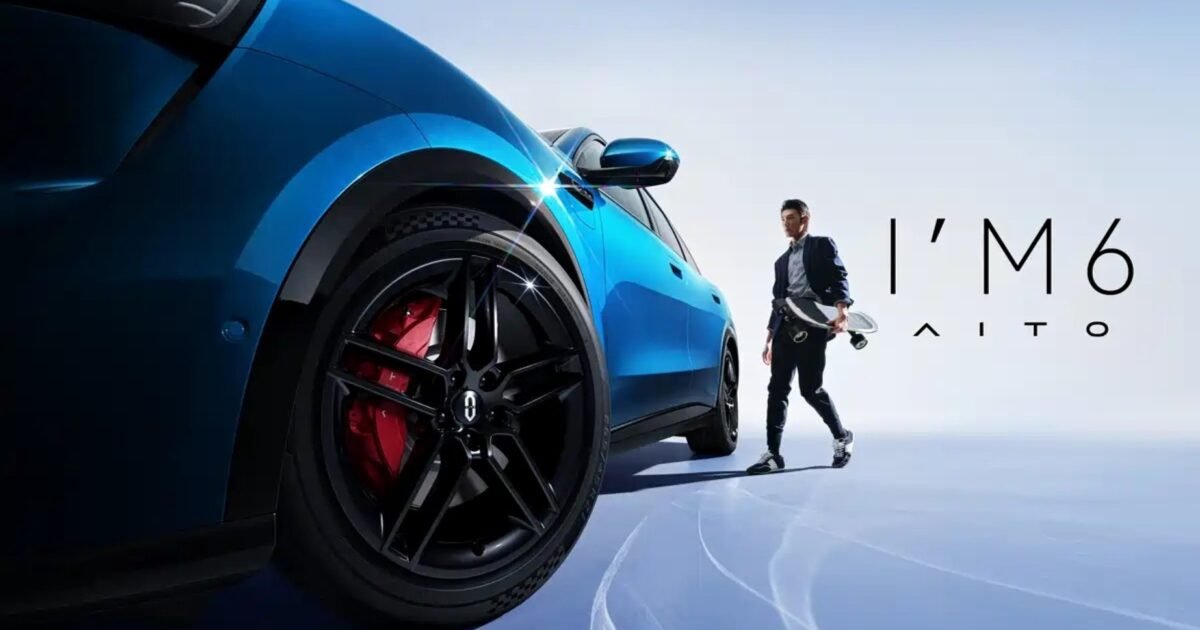
That exclusivity is now over. According to reports citing industry sources, Gotion High-Tech (SZSE: 002074) received an HIMA sourcing letter last year and will supply 81-kWh LFP battery packs for the new AITO M6 pure-electric variant. CALB (HKEX: 3931) will also enter AITO’s supply system. The move extends beyond AITO: Luxeed may add Gotion and Sunwoda as additional suppliers, while other Huawei-backed models could follow.
The Math: Why ~10% Cost Savings Matter
Cost reduction is the primary driver. For LFP battery packs of equivalent capacity, quotes from Gotion and Sunwoda reportedly run approximately 10% below CATL’s pricing. On an 81-kWh pack, that translates to nearly ¥2,000 ($296) per vehicle in savings. At scale across HIMA’s projected million-unit volume, the cumulative impact reaches hundreds of millions of dollars annually.
The urgency is real. At the 2026 China Auto Chongqing Summit, Seres Chairman Zhang Xinghai said average per-vehicle costs for the AITO brand had risen by ¥15,000–20,000. Memory chips and lithium carbonate prices have added further margin pressure. Huawei executive director Richard Yu has publicly set a 2026 HIMA delivery target of 1 million to 1.3 million units, but the alliance still needs stronger mass-market cost discipline to reach that level.
The “Giant Whale Battery” Standard: Quality Control Without Manufacturing
Huawei does not purchase batteries directly. Instead, it has established a technical benchmark called the “Giant Whale Battery” platform. Battery makers can only enter HIMA’s supply chain after passing this standard, meaning Huawei sets the specs while multiple suppliers compete on price and delivery. CALB and Gotion have displayed the Giant Whale Battery label at industry events, signaling qualification progress.
CATL Won’t Give Up Easily
Industry sources report that CATL is actively evaluating its pricing strategy to compete for continued HIMA orders. CATL remains the dominant global EV battery maker and will not cede one of its most prestigious customers without a fight. The dynamic mirrors a broader pattern in EV supply chains: automakers and platform operators want supplier diversification, while leading battery makers defend scale, quality and reliability advantages.
AITO M6: First Vehicle with Non-CATL Batteries
The AITO M6, which hit 30,000 deliveries in 54 days, serves as the test case for HIMA’s multi-supplier strategy. Huawei added new pure-electric M6 variants starting at ¥229,800, targeting the mass-market segment where competition with BYD, XPeng and Xiaomi is fiercest.
Why Global Readers Should Care
Huawei’s HIMA alliance is rapidly becoming one of the world’s most significant EV manufacturing ecosystems. Supply-chain diversification from CATL dominance has implications for global battery markets, lithium demand patterns, and the economics of future Huawei-backed vehicles entering Europe, the Middle East and Southeast Asia. When one of China’s strongest technology platform companies applies its supplier-management discipline to automotive batteries, it accelerates a trend every global automaker must consider: reducing dependence on a single dominant battery supplier.
What Chinese Sources Say
Chinese analysts frame this within broader industry narratives: first, it is a milestone for Tier-2 battery makers proving they can meet top OEM quality standards; second, the 10% cost gap reflects structural advantages in newer factories and more automated production; third, the Giant Whale Battery platform reflects Huawei’s familiar playbook of defining standards and letting suppliers compete on execution; and fourth, sources caution that arrangements are not final until regulatory filings and production deliveries confirm the supplier mix.
What Western Coverage May Miss
Western reporting tends to focus on geopolitics while missing the operational dynamics driving sourcing decisions. This is not geopolitical decoupling; all parties are Chinese companies. It is primarily about cost, scale and negotiation leverage. The shift also shows how fast EV supply-chain relationships can change: a partnership celebrated as innovative one year can be rebalanced the next when margins compress and volume targets rise.
Buyer / Investor / Competitor Impact
Buyers: Expect more competitively priced HIMA models in the ¥200,000–300,000 range. The M6’s new ¥229,800 BEV entry price demonstrates this effect. However, different suppliers may produce varying real-world range, charging behavior and degradation characteristics even when meeting the same platform standard.
Investors: Gotion stands to gain most from HIMA certification, while CALB benefits from another high-profile supply-chain win. CATL faces incremental share-loss risk in China’s passenger-EV segment, offset by its global and energy-storage expansion. For Seres, cost reduction improves unit economics, but the 1-million-unit HIMA target remains extremely ambitious.
Competitors: If HIMA achieves meaningful battery savings while maintaining quality through the Giant Whale standard, it creates a template other OEMs may follow. BYD is less exposed because of its vertical battery integration, but XPeng, Xiaomi, NIO and global automakers may accelerate multi-source battery strategies.
Frequently Asked Questions
Why is Huawei HIMA breaking its exclusive CATL battery deal?
Cost pressure is the primary driver. Gotion and other second-tier suppliers offer ~10% lower pricing on equivalent LFP battery packs. With HIMA targeting 1 million annual deliveries and per-vehicle costs having risen ¥15,000–20,000, multi-supplier sourcing is essential for margin discipline and mass-market competitiveness.
Does this mean CATL batteries are no longer in AITO vehicles?
No. CATL remains a major supplier and is actively evaluating pricing to retain HIMA orders. The shift is from exclusive single-supplier to multi-supplier — Gotion will supply the AITO M6 BEV variant’s 81-kWh pack, while CATL continues supplying other models. CALB’s entry further diversifies the chain.
What is the Giant Whale Battery standard?
It is Huawei’s proprietary technical certification benchmark that battery suppliers must pass before entering the HIMA supply chain. Huawei sets the specifications and quality standards, while multiple battery makers compete on price and delivery. This mirrors Huawei’s telecom industry approach of defining standards and letting suppliers compete on execution.
Which other automakers might follow this multi-supplier model?
XPeng, Xiaomi, NIO, and global automakers like Volkswagen and Stellantis may accelerate multi-source battery strategies. BYD is less affected due to its vertically integrated battery production. The template is particularly relevant for automakers targeting mass-market price points where battery cost is the single largest component.
Related Coverage
- Huawei HIMA’s May rebound explains why battery supply is becoming strategically important
- China EV Battery Installations Hit Record 71.9 GWh in May, LFP Dominance Grows to 81.2% — Latest market data showing battery supply dynamics