Why It Matters Globally
The collapse of Donut Lab — a Finnish startup that claimed to have built the world’s first mass-produced solid-state battery — is the biggest fraud scandal to hit the EV battery industry. With a $1.25 billion valuation and $25 million raised from retail investors, the exposé exposes how hype-driven capital can outpace scientific verification, and why China’s upcoming solid-state battery standard could become a global model.
The Claim That Shook CES
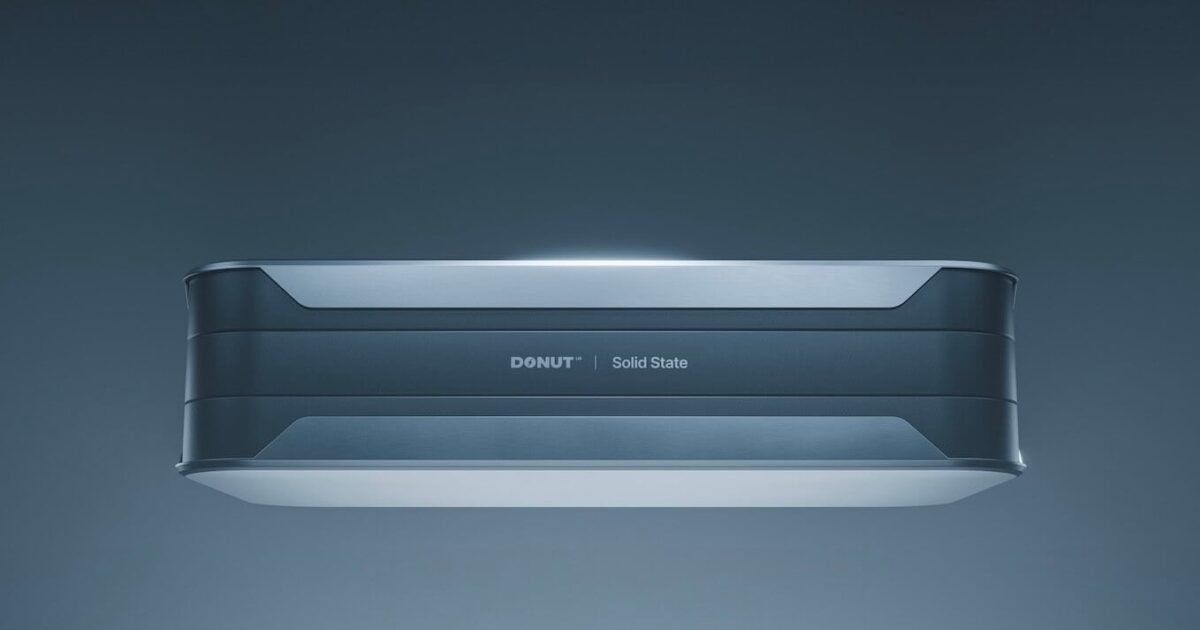
At CES 2026 in January, Finland’s Donut Lab unveiled what it called the world’s first mass-produced all-solid-state battery, claiming 400 Wh/kg energy density, 5-minute full charge, 100,000-cycle lifespan, and -30°C cold performance without degradation — all without lithium or rare earths, at costs comparable to LFP. The announcement sent valuations soaring to $1.25 billion, and the company raised $25 million from over 1,300 retail investors, according to Sohu.
The Takedown: Two Smoking Guns
On June 9, a consortium of 20-plus top battery experts published a damning investigation with two irrefutable pieces of evidence:
Evidence 1 — Voltage Curve: At 50% state of charge, the voltage held steady at 3.7–3.8V — a signature of commercial high-nickel liquid lithium-ion cells, not solid-state chemistry.
Evidence 2 — Charge Swelling: The expansion curve showed a graphite-anode inflection point, a physical change unique to traditional liquid lithium batteries. True solid-state cells lack liquid electrolyte and do not exhibit this behavior.
Actual measured energy density: just 298 Wh/kg — mainstream ternary lithium territory — far from the claimed 400 Wh/kg. The “solid-state” cells were simply off-the-shelf soft-pack lithium batteries with new packaging.
Who Called It First
Yang Hongxin, chairman of SVOLT (蜂巢能源), publicly labeled Donut Lab a “fraud” immediately after the CES announcement, citing fundamental electrochemical contradictions. Finnish national research center VTT ran five independent rounds of testing — none could replicate the claimed 400 Wh/kg or 100,000-cycle figures.
In April 2026, Nordic Nano — a founding shareholder — filed a criminal complaint with Finnish police alleging false advertising and investment fraud, as reported by QQ News.
China’s Solid-State Standard: The Global Fix
On July 1, 2026, China’s national standard “Electric Vehicle Solid-State Battery Part 1: Terminology and Classification” takes effect, according to Sina Finance. Key provisions:
- Eliminates vague marketing terms like “semi-solid” and “quasi-solid”
- Classifies batteries into three clear categories: liquid, hybrid solid-liquid, and all-solid-state
- Sets a hard threshold: ≤0.5% weight loss at 120°C vacuum for 6 hours — liquid electrolyte evaporation will push fake products well above this limit
Industry consensus places true all-solid-state mass production no earlier than 2028, with global leaders like Toyota, CATL, and Qingtao still in sample/road-test phases.
FAQ
What is a solid-state battery?
A battery that replaces liquid electrolyte with solid electrolyte, offering higher energy density and better safety in theory.
Why does the voltage curve matter?
Different battery chemistries have distinct voltage profiles. Solid-state and liquid lithium cells operate at different voltage ranges, making the curve a reliable fingerprint.
Will the Chinese standard apply globally?
Not directly, but as the world’s largest EV market, China’s classification framework is likely to influence international standardization efforts.