Quick Answer
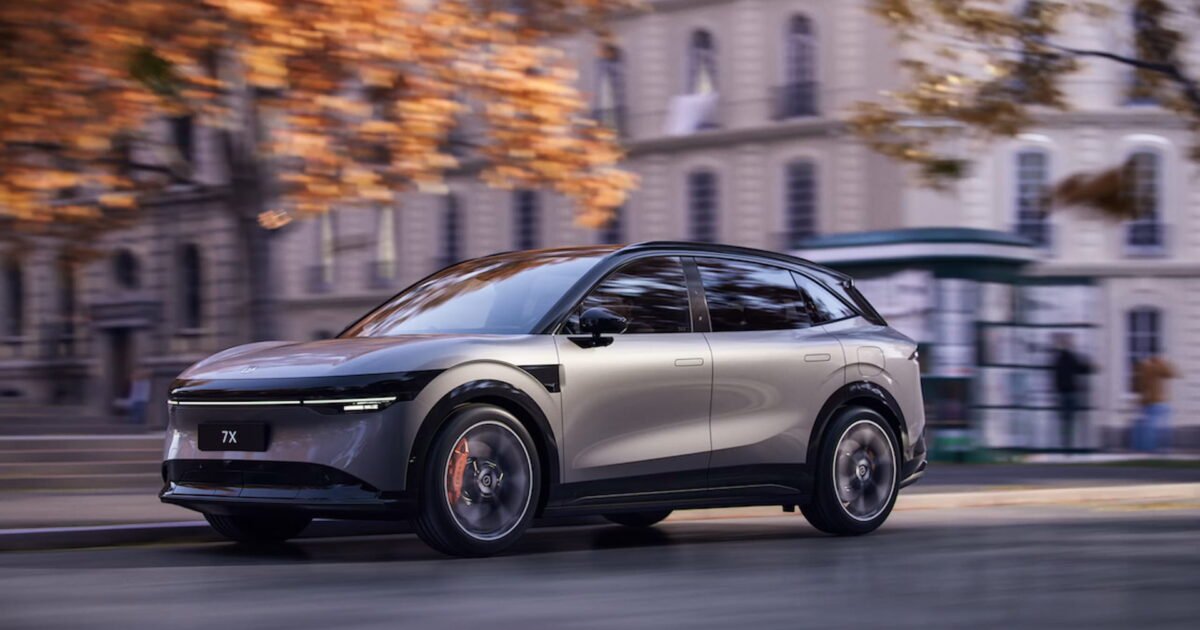
Geely Automobile Group is going all-in on exports. The Chinese auto giant aims to more than double the combined overseas sales of its premium EV brands — Zeekr and Lynk & Co — to over 100,000 units in 2026. The centerpiece of this strategy: converting an existing Proton factory line in Malaysia to produce the Zeekr 7X electric SUV starting in early 2027, marking Zeekr’s first overseas production base. Zeekr VP Mars Chen confirmed the company has no plans to build new factories, instead leveraging underutilized capacity worldwide — a capital-light approach that could become the template for Chinese EV globalization in an era of rising trade barriers.
Why It Matters Globally
This is not just another export target. Geely’s strategy — repurposing existing factories rather than building new ones — directly addresses the two biggest obstacles to Chinese EV globalization: trade protectionism and capital efficiency. By manufacturing the Zeekr 7X at Proton’s Tanjung Malim plant in Malaysia (where Geely’s parent owns 49.9%), the company sidesteps tariffs that increasingly target Chinese-made EVs while gaining access to ASEAN markets with preferential trade terms. The Malaysia plant can scale from its current 20,000-unit annual capacity (running at 60%) to 45,000 units, giving Zeekr room to grow without writing billion-dollar checks for greenfield factories.
The timing is also driven by market necessity. China’s auto market has contracted for eight consecutive months following the rollback of EV subsidies. Geely’s domestic sales grew just 1% in the first five months of 2026 — while exports surged 158%. Investment bank Jefferies estimates Geely’s export volume will top 100,000 cars per month from June onward, with export gross profit margins running 10 percentage points higher than domestic. For Geely, overseas isn’t a nice-to-have — it’s the profit engine, according to Nikkei Asia’s exclusive interview with Zeekr VP Mars Chen.
What Chinese Sources Are Saying
The strategy details come directly from Mars Chen, Zeekr’s vice president for overseas operations covering both Zeekr and Lynk & Co. Chen told Nikkei Asia that the company plans to begin production of the fully electric Zeekr 7X midsize SUV at Proton’s existing line in Malaysia as early as H1 2027, with potential exports to neighboring countries depending on trade positioning. The decision is partly preemptive: Malaysia will raise EV import taxes starting July 1 after its EV subsidy program ended last year.
Geely’s broader export target is ambitious. In April, the group raised its annual overseas sales goal to 750,000 vehicles, up 17% from the previous target of 640,000, after Q1 exports jumped 126% year-on-year. The company is also exploring whether to convert an existing Renault plant in Brazil for Geely-brand manufacturing. “Rather than building new overseas capacity, Geely partners with local manufacturers, including Proton and Renault, to achieve localization while limiting capex and navigating regulatory constraints,” Jefferies wrote in a research note, as covered by CleanTechnica.
What Western Sources Say
Western analysts see Geely’s factory-repurposing strategy as potentially transformative for the global auto industry’s restructuring. The world is littered with underutilized auto plants — many owned by Western legacy automakers scaling back combustion-engine production — and Chinese EV makers are increasingly the only buyers willing to invest in retooling them. Chen explicitly said Zeekr has “no plans to build new factories abroad, citing excess production capacity in many places.”
The Middle East energy disruption has provided an unexpected demand tailwind. Chen noted that “any country reliant on imported oil will experience the change in favor of EVs and hybrids,” singling out Australia and South Korea as markets where demand has risen at least 10%. Zeekr currently operates in more than 50 countries and plans to enter four more by year-end: South Korea, New Zealand, South Africa, and the UK. The brand’s expansion is now genuinely global — from Southeast Asian production to Middle Eastern demand to European market entry, per Nikkei Asia’s original reporting.
What This Means for Buyers
For international EV buyers, Geely’s manufacturing strategy has concrete implications. Local production means lower prices — the Zeekr 7X built in Malaysia for ASEAN markets will avoid the import duties that currently inflate Chinese-made EV prices across Southeast Asia. For European buyers, Geely’s exploration of the Renault Brazil plant is another signal that the company is serious about establishing manufacturing footprints in every major auto market, which should translate to more competitive pricing and better after-sales support.
For the broader EV market, Geely’s capital-light expansion model — leveraging existing factories, dealer partnerships, and government incentives — offers a template that other Chinese automakers are likely to follow. BYD has already committed to factories in Hungary, Brazil, Thailand, and Indonesia. Geely’s approach is different: instead of building, it acquires and converts. That’s faster, cheaper, and politically smarter in an era of industrial policy competition, as analyzed by multiple industry sources.
FAQ
Q: How many overseas sales does Geely target for Zeekr and Lynk in 2026?
A: Over 100,000 combined sales for Zeekr and Lynk & Co in 2026 — more than double the current overseas volume. Geely’s total group export target is 750,000 vehicles for 2026, up from 640,000 originally.
Q: When and where will Zeekr start overseas production?
A: Zeekr’s first overseas production base will be at Proton’s Tanjung Malim plant in Malaysia, with the Zeekr 7X SUV expected to begin production in H1 2027. The plant currently operates at 60% of its 20,000-unit annual capacity, expandable to 45,000 units.
Q: Will Geely build new factories overseas?
A: No. Zeekr VP Mars Chen explicitly stated the company has no plans to build new factories abroad, citing excess production capacity globally. Instead, Geely partners with local manufacturers (Proton, potentially Renault) to repurpose existing production lines.
Sources
- KrASIA / Nikkei Asia — Geely seeks to double Zeekr sales abroad, eyeing Malaysia output
- CleanTechnica — Geely Aims to Double Zeekr’s and Lynk & Co’s Sales Outside of China
- Nikkei Asia — Geely seeks to double Zeekr sales abroad, eyeing Malaysia output
- MMPI — Geely Aims to Double Zeekr’s and Lynk & Co’s Sales Outside of China