Quick Answer
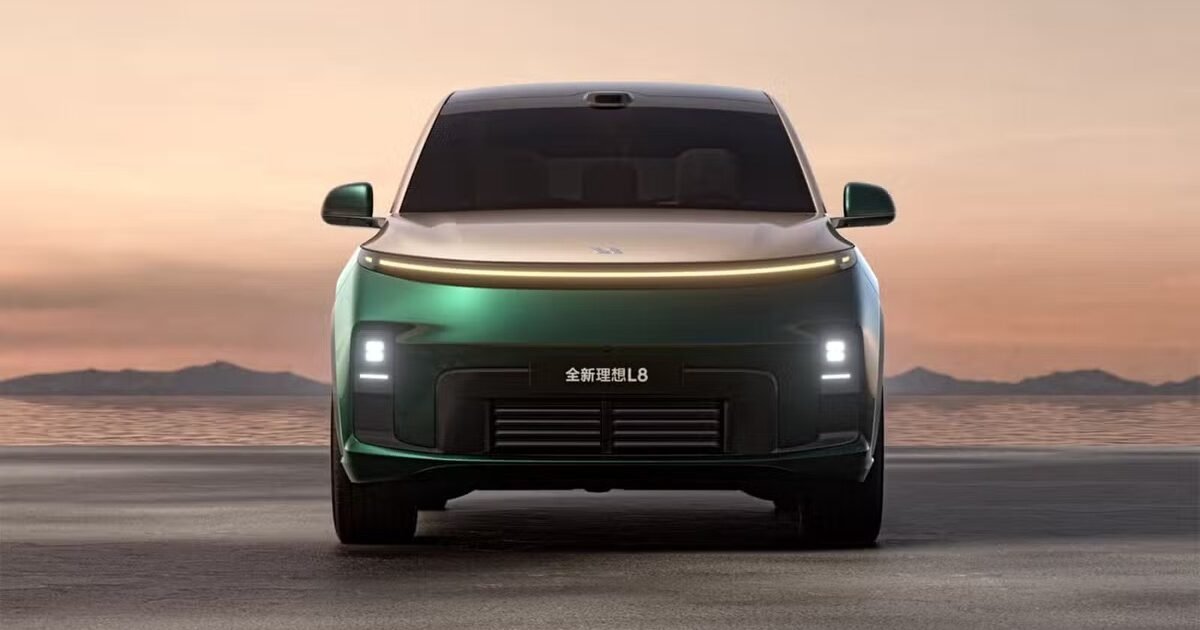
Li Auto launched the all-new L8 five-seat flagship SUV on June 23, ditching its predecessor’s six-seat layout and packing the company’s in-house Mach M100 AI chip — with up to 2,560 TOPS of computing power — into a vehicle priced from 369,800 yuan ($54,590). The revamped L8 shares its 72.7 kWh battery and 800V platform with the flagship L9, delivering a class-leading 430 km of CLTC all-electric range and 1,670 km combined. Analysts at Deutsche Bank called the pricing “lower than market expectations” and project average monthly sales of 5,000 units. The switch from six seats to five is a deliberate move to avoid cannibalizing the larger Li L9.
Why This Matters Globally
Li Auto’s L8 relaunch is a case study in how Chinese automakers are iterating faster than any Western competitor can match. The original L8 was launched in September 2022. Less than four years later, it has been fundamentally re-engineered: new seating layout, new in-house chip architecture, new battery chemistry, new suspension, new steer-by-wire. No European or American automaker refreshes a model this thoroughly in under four model years.
The strategic pivot — from six seats to five — is equally significant. Li Auto built its reputation on six-seat family SUVs. By voluntarily ceding that space to the larger L9 and repositioning the L8 as a “no-compromise five-seat flagship,” the company is acknowledging that Chinese premium buyers no longer default to larger-is-better. They want the latest technology in a package that fits their lifestyle — and Li Auto is betting they’ll pay a premium for an L8 that packs flagship features into a slightly smaller body.
For global automakers, the L8’s spec sheet is a warning. A five-seat SUV with 420 kW combined power, 0-100 km/h in 4.8 seconds, standard four zero-gravity seats, dual-chamber air suspension, steer-by-wire, rear-wheel steering, and a 1,670 km combined range — at a starting price of $54,590 — outperforms similarly sized ICE competitors like the BMW X5 and Mercedes-Benz GLE on nearly every metric except brand heritage.
What This Says About China’s EV Technology
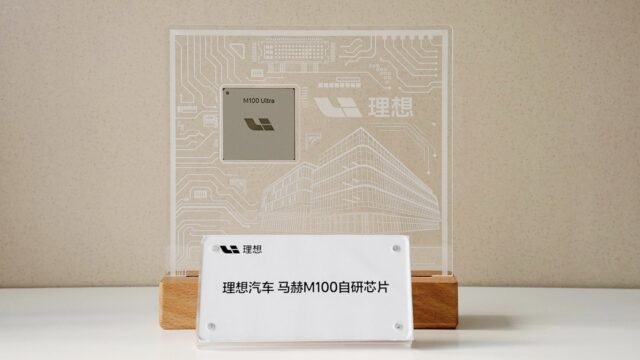
The revamped L8’s most consequential feature is under the hood of the Livis trim: dual Mach M100 chips delivering 2,560 TOPS of combined computing power. This is the same in-house AI chip Li Auto unveiled in May 2026 — the world’s first dynamic data-flow architecture chip designed specifically for embodied intelligence in vehicles.
The Ultra version uses a single M100 (1,280 TOPS) paired with one Hesai ATL-P LiDAR. The Livis doubles that to two M100 chips and adds three solid-state variable-focus LiDAR units. Both configurations far exceed the computing power of most current-generation ADAS platforms from Western suppliers like Mobileye (typically 24-64 TOPS).
Li Auto’s third-generation 5C extended-range system includes an in-house 1.5T range extender, front and rear motors (145 kW + 275 kW), and a 72.7 kWh ternary lithium fast-charging battery. The 430 km CLTC all-electric range is class-leading for an EREV, meaning most owners will rarely need the gasoline engine for daily driving. The 1,670 km combined range eliminates any practical range anxiety.
The chassis technology is equally ambitious. The Ultra gets dual-chamber air springs, steer-by-wire, and rear-wheel steering with a 5.1-meter turning radius. The Livis upgrades to 800V active suspension and brake-by-wire electro-mechanical braking (EMB) with chassis response times under 100 milliseconds. These are technologies typically found on vehicles costing twice as much.
International Context
The L8 launch sits within Li Auto’s most aggressive product offensive ever. The company plans to refresh all four EREV models in 2026: the L9 launched May 15, the L8 on June 23, the L6 in July, and the L7 at an unannounced date. In the pure-electric segment, the i9 flagship SUV arrives in Q4 2026, with a six-seat i7 and a large electric MPV following in 2027.
The urgency behind this schedule is financial. Li Auto posted an unexpected Q1 2026 net loss of 2.3 billion yuan, with gross margin plunging to 7.9% from 20.5% a year earlier. May deliveries fell 18.37% year-on-year to 33,350 units. The L8 itself cratered to just 421 units in May — a 92% year-on-year collapse — as buyers held off waiting for the update.
Deutsche Bank analysts noted that the L8’s aggressive pricing “is linked to weaker-than-expected new orders for the Li L9 in June.” The flagship L9, which launched to 10,000+ firm orders for its Livis version, saw order momentum drop sharply — dealers estimate only about 3,000 orders in June versus a monthly delivery target of 6,000–8,000 units.
The competitive landscape is intensifying. The L8 will compete directly with the AITO M7, Changan Avatr 11, and an upcoming five-seat NIO ES8 — all from Chinese rivals matching or exceeding Li Auto’s technology roadmap.
What It Means for Buyers
For anyone shopping in the $50,000–$65,000 premium SUV segment, the revamped L8 resets expectations across the board.
The most noticeable change for passengers is the cabin. Four zero-gravity seats — a first for any five-seat SUV — offer a 55-degree recline angle in the rear with “zero-pressure” leg rests. Combined with the Qualcomm 8797 intelligent cockpit platform and the panoramic cabin experience, the interior competes with vehicles from Genesis, Lexus, and the lower end of the German luxury lineup.
Range anxiety is effectively eliminated. 430 km of electric-only driving covers the vast majority of use cases, and the gasoline range extender provides unlimited long-distance capability. The 5C fast-charging capability means the battery can replenish quickly on road trips when charging stops are needed.
The risk: Li Auto’s recent financial performance introduces uncertainty about long-term service and software support. The company is burning cash at an accelerated rate, and the aggressive product cadence — four model refreshes in one year — raises questions about whether quality control can keep pace. The limited-time launch pricing (359,800 and 419,800 yuan) signals that Li Auto is discounting to move volume, which could pressure resale values for early adopters.
Sources
- Li Auto launches revamped L8 SUV with in-house chip, 430-km battery range — CnEVPost
- Analysts see upgraded Li L8 averaging 5,000 units in monthly sales — CnEVPost
- Li Auto launches all-new L8 five-seat flagship SUV — Automotive World
- 2026 Li Auto L8 Livis: All-New 5-Seat Flagship With 430 km EV Range — FreshMotors