Documents checked 3 November 2026 · Examples retain their market, model and publication dates.
CLTC, WLTP and NEDC are test labels, not interchangeable promises of distance. Keep the exact vehicle version and the combined-or-city label attached to every range figure. There is no defensible universal percentage that converts one rating into another vehicle’s real-world range. For a journey, estimate available battery energy and expected consumption, then keep a reserve.
What CLTC, WLTP and NEDC tell a buyer
Compare each item using its labelled values.
| Label | Meaning and evidence | How to use it |
|---|---|---|
| CLTC | China light-duty vehicle test cycle; the official Chinese catalogue lists GB/T 38146.1-2019, China automotive test cycle — Part 1: Light-duty vehicles. | Keep the vehicle’s stated Chinese test basis attached to its figure. A CLTC label is not a result from your route. |
| WLTP | Worldwide Harmonised Light Vehicle Test Procedure. ACEA explains its laboratory procedure and driving phases. | Check whether the number is combined or city, and which local trim, wheels and battery it describes. |
| NEDC | New European Driving Cycle, the older test procedure discussed in ACEA’s comparison with WLTP. It still appears in the Mexican model document used below. | Do not relabel a published NEDC figure as WLTP, or assume an older test label is a real-road measurement. |
Sources: China’s official standard catalogue; ACEA’s explanation of WLTP and NEDC. The Chinese catalogue marked the cited standard current when checked. This guide does not reproduce the full test protocols or certify a vehicle’s homologation.
Laboratory procedures make controlled comparisons possible. Traffic, speed, weather, cabin heating or cooling, load and driving style can differ from those conditions. ACEA explains the remaining gap between laboratory and road performance; the U.S. Department of Energy and EPA electric-vehicle guide also describes conditions that affect range. A more detailed test procedure still does not guarantee an individual trip.
Why 380 km NEDC versus 322 km WLTP is not a conversion
BYD identifies Seagull, Dolphin Mini and Dolphin Surf as related names across markets. That relationship makes overseas reviews useful, but it does not make their specifications identical. Consider these two official documents:
Compare each item using its labelled values.
| Item | Dolphin Mini Plus, Mexico model 2026 | Dolphin Surf Boost, European specification published June 2025 |
|---|---|---|
| Declared battery capacity | 38.8 kWh | 43.2 kWh |
| Motor output | 55 kW | 65 kW |
| Published range | 380 km NEDC | 322 km combined WLTP |
| Separate city figure in the cited European release | Not used for this comparison | 502 km city WLTP |
| Document | Mexican September 2026 technical sheet | BYD June 2025 family and European specification announcement |
Sources: Mexican Dolphin Mini sheet, page 2 and BYD’s Dolphin Surf announcement. These are documented configurations, not confirmation that every country offers these exact versions today.
Dividing 322 by 380 produces a number, but it does not isolate the test-cycle effect: battery capacity, motor specification and market configuration also differ. Likewise, comparing 502 km city WLTP with 322 km combined WLTP without the labels mixes two driving scopes. Neither calculation predicts motorway range.
A fair comparison needs five matching fields
- Vehicle identity: country, year, generation, trim and powertrain.
- Battery definition: declared total capacity or usable energy; do not silently treat them as equivalent.
- Test basis: CLTC, WLTP, NEDC or another named local programme.
- Driving scope: combined or city; electric-only or fuel-plus-electric.
- Purpose: a controlled rating comparison, a documented road test or a planning estimate.
For choosing a locally sold version, use the global BYD buying guide and the Mexican Dolphin Mini guide (Spanish).
Estimate a trip with energy and an explicit reserve
The following example is arithmetic, not a test of a BYD model. Assume a vehicle has 50 kWh of usable battery energy, leaves at 80% and should arrive with at least 15%. The usable window for this trip is 65 percentage points:
50 kWh × (0.80 − 0.15) = 32.5 kWh available for travel.
If expected battery-side consumption is 18 kWh/100 km, the estimate is 32.5 ÷ 18 × 100 = about 181 km. The 15% arrival reserve has already been excluded. Do not subtract it twice.
Compare each item using its labelled values.
| Assumed battery-side consumption | Calculated distance | Interpretation |
|---|---|---|
| 15 kWh/100 km | About 217 km | A lower-consumption scenario, not a rated city range. |
| 18 kWh/100 km | About 181 km | The worked example above. |
| 22 kWh/100 km | About 148 km | A higher-consumption scenario, not a measured winter or motorway result. |
Replace these assumptions with observations from the same vehicle on a similar route and in similar weather. Battery age, temperature and the accuracy of the usable-capacity estimate can also affect the result. For an unfamiliar journey, choose a reliable charging stop and an alternative before the reserve is needed.
Keep energy boundaries consistent. The calculation above uses energy available from the battery. A household meter or charging bill includes energy purchased at a different boundary and can include charging losses. That figure is useful for cost, but should not be inserted unchanged into a battery-range calculation without understanding what it measures.
Electric range is not a PHEV’s fuel-plus-electric range
A plug-in hybrid can publish an electric-driving figure and a separate combined fuel-and-electric figure. Those answer different questions. In the Brazilian Song Pro Flex sheet cited here, GL and GS list 57 and 72 km under PBEV for electric range. Keep the Brazilian label and exact version attached; do not present the numbers as WLTP, NEDC or a guaranteed commute.
The Brazilian Song Pro Flex sheet is the source for these two figures. The Song Pro Brazil guide (Portuguese) compares them with daily charging access. A fuel-plus-electric headline cannot tell you how many days you will drive without using fuel, especially when the car is seldom plugged in.
Why “kilometres added in five minutes” needs another label
A charging demonstration may convert delivered energy into added kilometres using a specified consumption or test-cycle basis. Without that basis, its distance cannot be compared fairly with a different brand’s claim or your own motorway trip. Keep the charge window, vehicle, temperature, charging equipment and range basis together. The BYD Flash Charging explainer separates peak power, average power and stop time.
FAQ
Can I multiply CLTC range by a fixed percentage to get WLTP?
No universal percentage is established here. A ratio from two different vehicles or market variants combines specification differences with test differences, so it is not a valid general conversion.
Is WLTP range the same as motorway range?
No. Keep combined and city WLTP labels distinct, and use a documented motorway test or an explicit route-specific estimate for a motorway journey.
Why can a larger-battery Dolphin Surf show fewer kilometres than a Mexican Dolphin Mini?
The cited Surf Boost and Mini Plus figures use different test bases and different configurations. The 322 km combined WLTP and 380 km NEDC numbers do not measure the two cars under the same stated conditions.
Can I calculate range from battery capacity divided by consumption?
Yes, as an estimate when the energy and consumption boundaries match. Use usable energy for the intended state-of-charge window, retain an arrival reserve and label the consumption assumption. It is not a road-test result.
Does a PHEV’s combined range describe electric-only driving?
No. Combined fuel-and-electric range includes another energy source. Use the separately labelled electric range for the electric-driving question and check how regularly the vehicle will be charged.
Sources and method
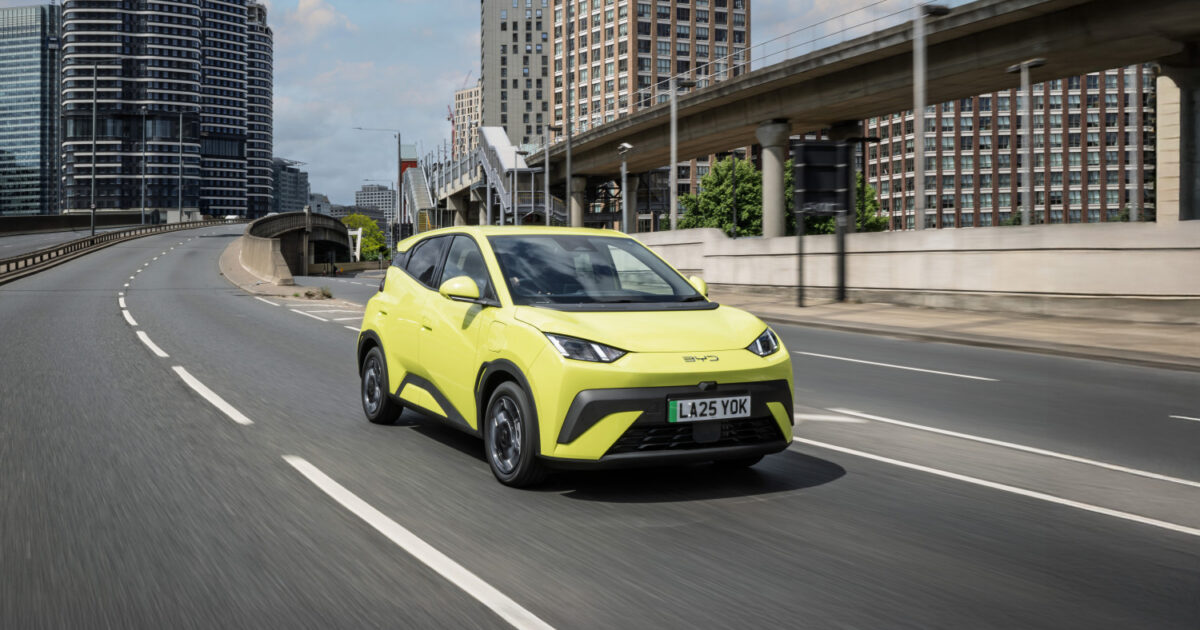
This guide compares dated primary documents and shows its own arithmetic. BYDToday did not conduct a road test or derive an industry conversion coefficient. The cover is an official BYD Dolphin Surf image, used for the European example.