Updated July 17, 2026. Southeast Asia is no longer only an export destination for Chinese electric cars. It is becoming a group of distinct EV markets with different sales definitions, incentive deadlines, factories and local brands. Thailand is the clearest Chinese-brand stronghold; Indonesia is forcing a shift from imports to production; Malaysia is protecting local assembly; and Vietnam is led by VinFast rather than a Chinese marque.
Quick answer
- The Southeast Asia EV market more than doubled to over 500,000 electric-car sales in 2025, close to one in five new cars, according to the IEA.
- Chinese brands accounted for more than half of the region’s electric-car sales, while a Vietnamese manufacturer accounted for roughly one-third.
- Thailand’s Chinese manufacturers reached 90.6% of passenger-BEV registrations in January–May 2026, but that is a brand-origin share, not proof that every car was imported from China.
- Localization is the central 2026 story: tariff and subsidy rules in Thailand, Indonesia and Malaysia increasingly reward domestic production rather than indefinite CBU imports.
Last verified: July 17, 2026. Sales, registrations, incentive rules and factory-status claims are current through that date; company-reported figures remain labelled as such.
Southeast Asia EV market at a glance
The regional headline is powerful, but country totals are not directly interchangeable. The IEA’s regional series measures electric-car sales. Thailand publishes registrations by powertrain, Indonesia’s industry association commonly reports manufacturer-to-dealer wholesale, Malaysia provides road registrations, and VinFast reports its own deliveries in Vietnam. BYDToday keeps those labels visible instead of adding unlike numbers into a false regional total.
| Market | 2025 position | Latest 2026 checkpoint | What the number measures |
|---|---|---|---|
| Southeast Asia | More than 500,000 electric cars; close to 20% of new-car sales | Regional Q1 direction remained strong, but no complete H1 country-consistent total was available | IEA electric-car sales; more than 90% were BEVs |
| Thailand | About 140,000 electric cars; nearly 25% sales share | 85,322 passenger BEV registrations, Jan–May; +95.4% YoY | DLT registrations compiled by JETRO; excludes electric motorcycles |
| Indonesia | Electric cars reached 15% of new-car sales | 33,150 BEV wholesale units in Q1; +95.9% YoY | GAIKINDO manufacturer-to-dealer wholesale cited by Industry Ministry |
| Malaysia | Electric cars reached about 7% of new-car sales | 31,738 electric-car registrations in H1 | Sum of monthly JPJ car/electric rows in the official open dataset |
| Vietnam | Nearly 40% electric-car sales share; region’s largest EV-car market | VinFast reported 115,916 domestic EV deliveries in H1 | Company-reported deliveries; not an independent total-market series |
The regional number also needs a nationality check. The IEA reported that more than half of Southeast Asian electric cars sold in 2025 were Chinese brands and roughly one-third came from a Vietnamese manufacturer. A Chinese brand can be assembled in Thailand or Malaysia, while a Vietnamese-branded car can be exported to Indonesia. Brand nationality, production origin and sales market are three separate fields.
Thailand: the biggest Chinese-brand proof point
Thailand combines high demand, an established supplier base and explicit production-compensation rules. In 2025, electric-car sales rose about 70% to roughly 140,000, according to the IEA. Thai-made electric cars rose from about 5% of the market in 2024 to 20% in 2025, while China-made electric cars still represented about three-quarters. The two statements are compatible: local production grew rapidly from a small base while imports remained large.
The 2026 registration data show an even stronger brand result. JETRO’s calculation from Thailand’s Department of Land Transport recorded 85,322 passenger BEVs in January–May, up 95.4% year on year. BYD including Denza held 21.4%, Chery’s Omoda/Jaecoo 20.1%, SAIC Motor’s MG 14.4% and GAC Aion 11.3%. Chinese manufacturers together held 90.6% of passenger-BEV registrations. For market timing and discounts, see BYDToday’s separate Thailand EV price-war guide.
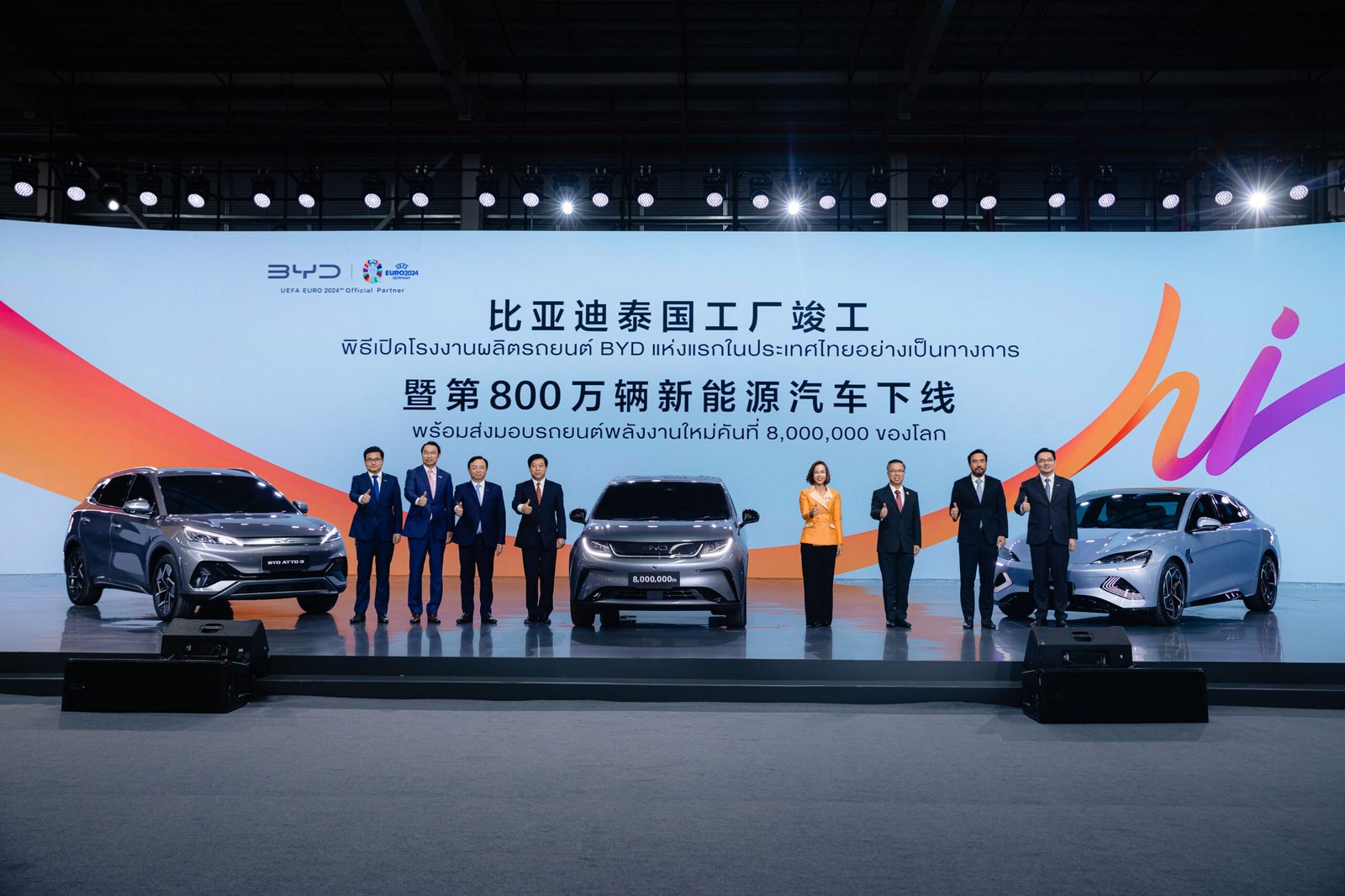
Thailand’s EV3 and EV3.5 schemes tie earlier import benefits to later domestic output. The 2026 policy update lets one exported locally produced EV count as 1.5 vehicles toward production compensation, extends some registration windows and tightens subsidy disbursement where production plans are missed. It also reflects a policy risk: the government is trying to avoid oversupply and a destructive inventory cycle while preserving Thailand’s role as an export base.
Indonesia: from import-led growth to localization
Indonesia’s electric-car sales more than doubled in 2025 to 15% of new-car sales, the IEA said. About 75% of electric cars sold were imports from China; much of the remainder came from locally produced Chinese models, especially Wuling, plus imports from Vietnam and Thailand. The import mix was partly a deadline effect: manufacturers accelerated shipments before investment-linked tariff waivers expired at the end of 2025.
Demand remained strong in 2026. Indonesia’s Industry Ministry cited GAIKINDO wholesale of 33,150 BEVs in Q1, up 95.9% year on year. Across all powertrains, BYD recorded 17,993 wholesale units in January–May and ranked sixth among vehicle brands. These are dealer shipments, not registrations or confirmed end-customer deliveries.
| Evidence | Verified result | Interpretation | Confidence note |
|---|---|---|---|
| Q1 2026 BEV market | 33,150 wholesale; +95.9% YoY | Strong dealer pipeline after the 2025 import surge | Official ministry citation |
| BYD Jan–May 2026 | 17,993 wholesale; No. 6 all-brand ranking | BYD moved beyond a niche EV ranking | GAIKINDO |
| Passenger-car local content | 40% minimum schedule for 2022–2026 | Qualifying incentives increasingly depend on local industrial value | Regulation |
| BYD Subang plant | 150,000-unit announced annual capacity; construction/finalisation and trial units reported in 2026 | Do not call full mass production operational until BYD issues a clear start-of-production announcement | Transition |
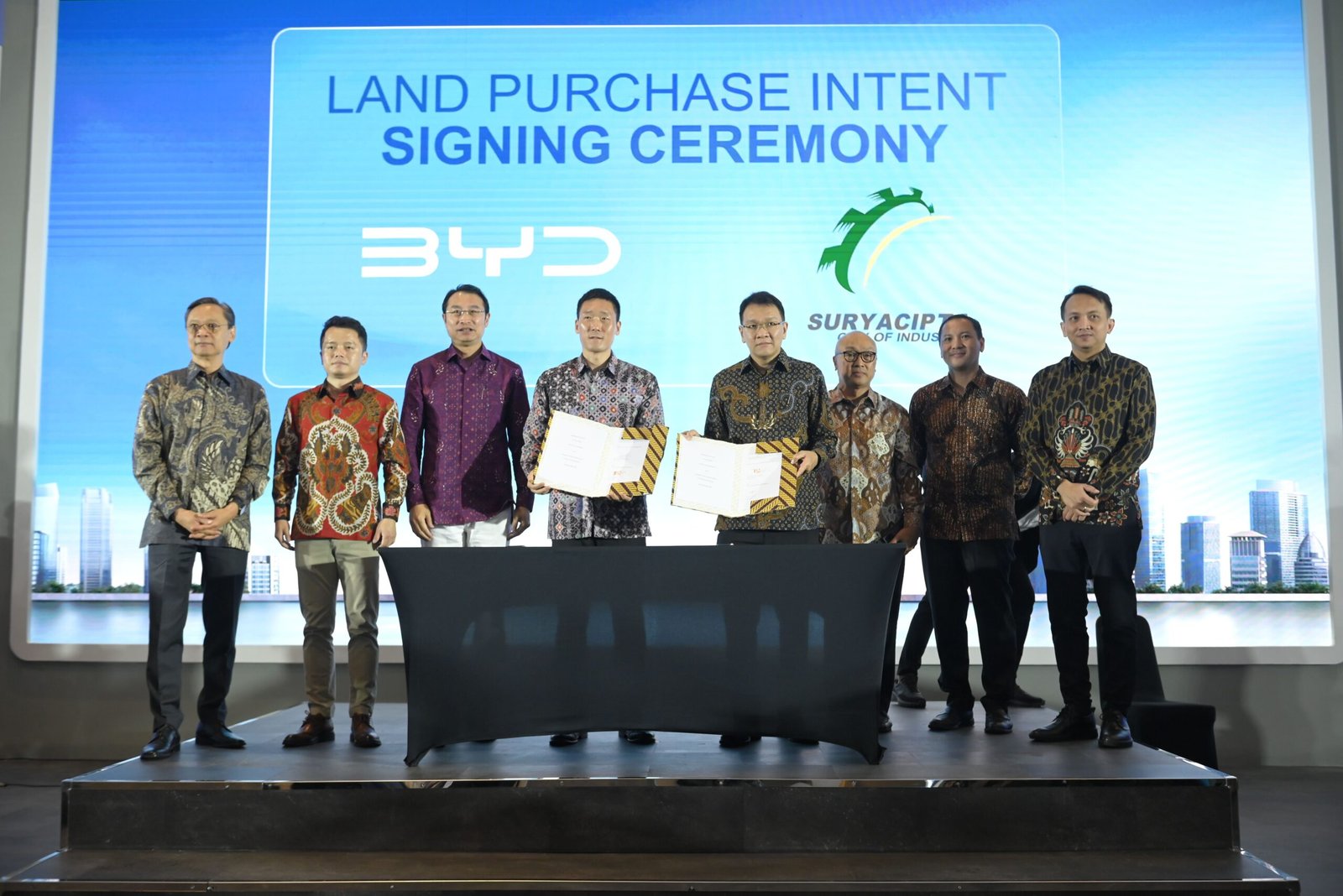
Indonesia’s incentive detail is still a live policy area. A June-targeted 2026 government-borne VAT plan was described by officials as offering different support by battery type with a local-content condition, but public reporting in mid-June still said final implementing rules were pending. BYDToday’s Indonesia incentive tracker therefore needs to be read as a developing-policy page, not as tax advice. Check the final Finance Ministry regulation and qualifying-model list before pricing a vehicle. The BYD Indonesia plant tracker follows the separate production timeline.
Malaysia: the tax advantage shifts to CKD production
Malaysia’s EV adoption doubled in 2025 but remained lower than Thailand, Indonesia and Vietnam, at about 7% of new-car sales. The IEA estimated Chinese models accounted for nearly 80% of electric-car sales. That share includes a changing mix of imported brands and models connected to Chinese technology partnerships.
The official JPJ monthly dataset recorded 31,738 electric-car registrations in January–June 2026: 6,239 in January, 3,635 in February, 4,717 in March, 5,894 in April, 5,038 in May and 6,215 in June. The broader all-vehicle electric total was 43,398 because it also includes motorcycles and other vehicle types. Those are registrations, not active-license stock or sales invoices.
Policy now favours local assembly. Malaysia’s special treatment for fully built imported EVs ended on December 31, 2025. MITI said that from July 1, 2026, new CBU EV imports under the relevant franchise rules face a minimum CIF value of RM200,000 and a minimum motor output of 180 kW. Tax relief for locally assembled CKD EVs remains available through the end of 2027 under qualifying rules.
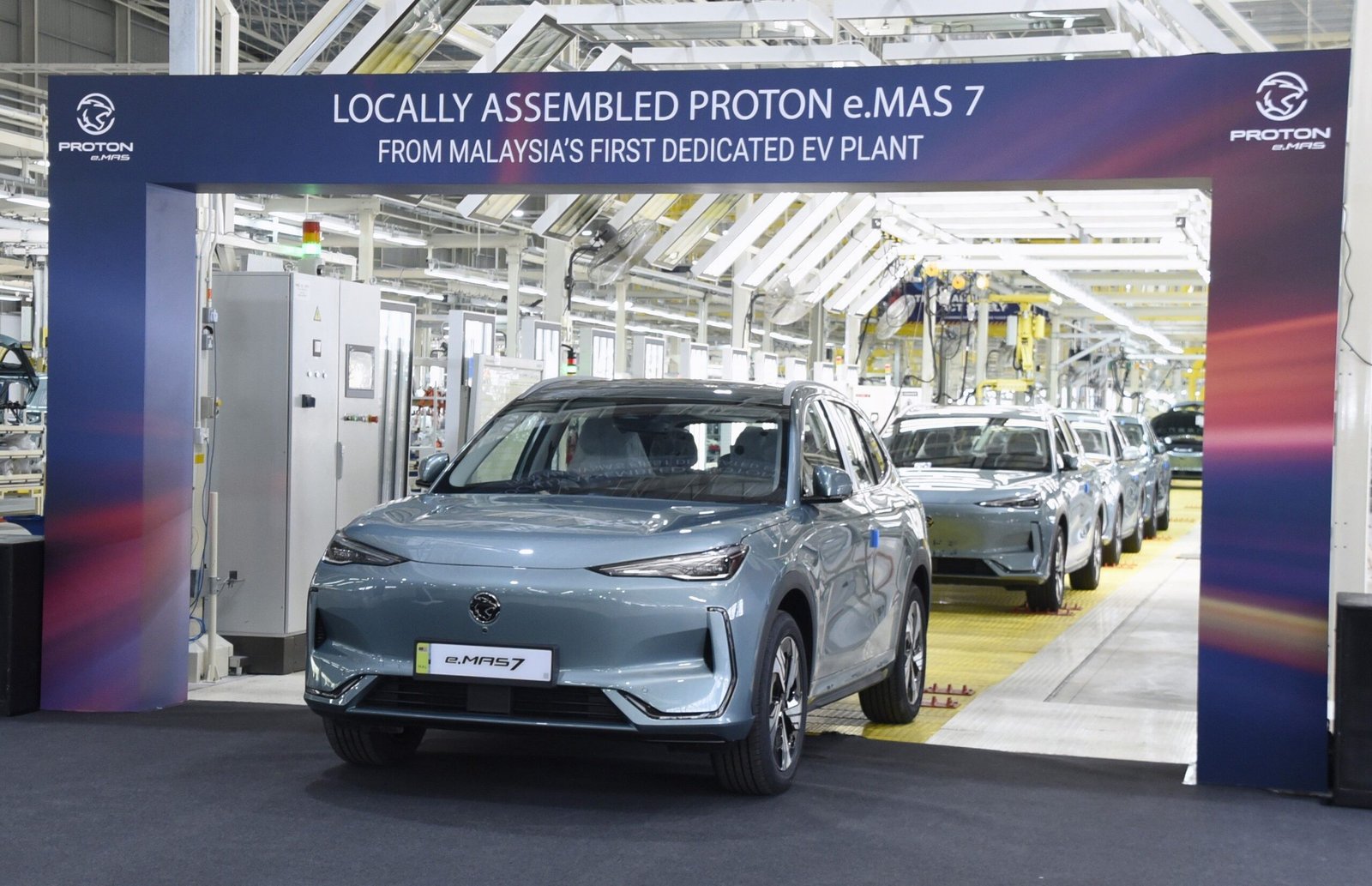
Malaysia also complicates the “Chinese versus local” label. Proton’s e.MAS vehicles are built through its Geely partnership, while local assembly, Malaysian employment and supplier development add domestic value. For another example of partnership-led localization, see BYDToday’s XPeng G6 Malaysia assembly brief.
Vietnam: the regional exception led by VinFast
Vietnam was Southeast Asia’s largest electric-car market in 2025, according to the IEA, with nearly 40% of new-car sales electric. VinFast captured almost the entire market and reported 175,099 domestic EV deliveries for the year. Its small VF 3 and VF 5 helped put EVs into mass-market segments rather than leaving electrification only at premium prices.
VinFast then reported 115,916 EV deliveries in Vietnam during the first half of 2026, up 72% year on year, including 17,955 in June. This is useful evidence of scale, but it remains a company-reported figure. Without a complete independent H1 market total on the same basis, it should not be converted into a precise national market share.
Vietnam is therefore not evidence that Chinese brands dominate every Southeast Asian country. It is evidence that an affordable domestic product range, charging ecosystem, fleet demand and purchase policy can create a different competitive structure. Chinese brands still matter as competitors and suppliers, but VinFast defines the national EV baseline.
How EV policy differs across the four markets
Every country supports electrification differently, and the direction is changing from demand stimulus toward industrial conditions. The table summarizes the practical policy signal rather than promising that a particular buyer or model qualifies.
| Country | Demand support | Localization lever | 2026 watch item |
|---|---|---|---|
| Thailand | EV3/EV3.5 subsidies and tax treatment continue under scheme conditions | Imported vehicles create later production-compensation obligations; exported local EVs can count 1.5× | Inventory, subsidy disbursement and whether output becomes sustainable exports |
| Indonesia | Government-borne VAT support was being redesigned by battery type | 40% passenger-car BEV local-content schedule in 2026 and investment-linked import treatment | Final Finance Ministry implementing regulation and qualifying model list |
| Malaysia | Special CBU treatment ended after 2025 | CKD EV tax relief remains available through 2027 under qualifying rules | July CBU import thresholds, local assembly ramp and consumer pricing |
| Vietnam | BEV registration-fee support and company charging programmes helped adoption | Domestic VinFast production anchors the market | Public-transport electrification, charging access and independent market reporting |
Factory map: operating, transitioning and announced are different
Capacity announcements are not sales forecasts. A plant can be inaugurated before reaching stable output; a model can move from CBU to CKD in stages; and locally produced vehicles may be exported rather than registered domestically. The table below uses status language deliberately.
| Country / project | Stated capacity | Current status | What is safe to say |
|---|---|---|---|
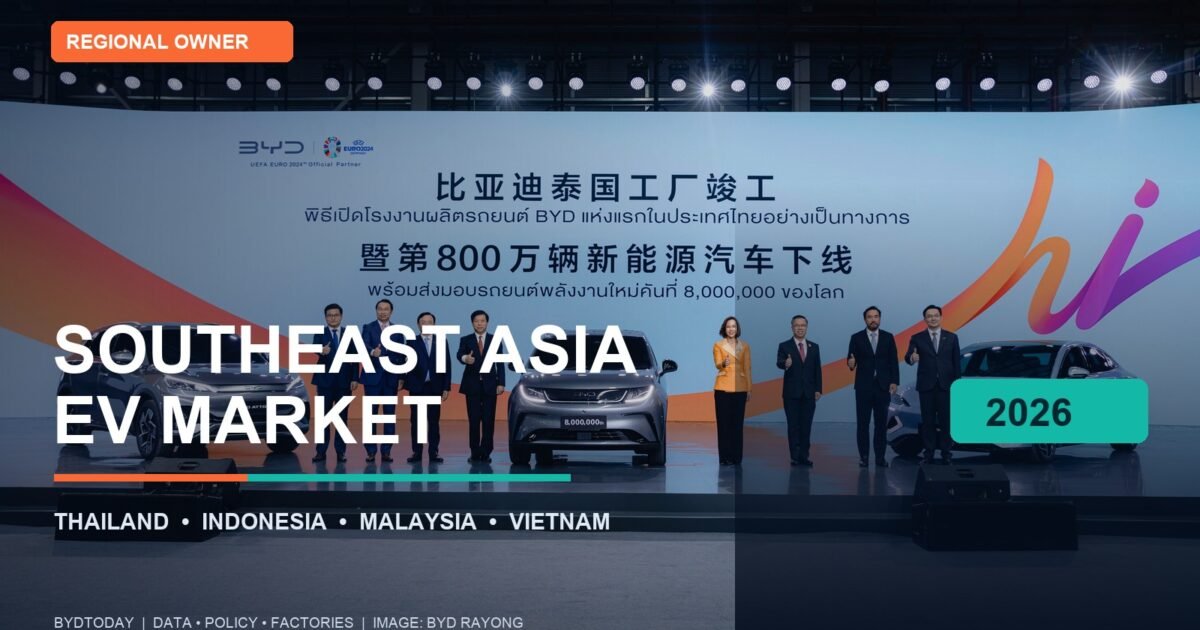
| Thailand — BYD Rayong | 150,000 vehicles/year | Operating | Opened July 2024; integrated vehicle and component processes. |
| Malaysia — Proton AHTV | 20,000 current; 42,000 planned after expansion | Operating / expanding | e.MAS 7 locally assembled; e.MAS 5 was announced to join the line. |
| Indonesia — BYD Subang | 150,000 vehicles/year announced | Finalisation / trial transition | Do not mark full mass production confirmed without a clear company start-of-production release. |
| Vietnam — VinFast | Existing domestic manufacturing footprint | Operating | Use company deliveries for VinFast performance, not as a substitute for an independent total market. |
What the 2026 shift means
- For buyers: compare actual transaction price, warranty, battery support, insurance, software, parts and charging access. An incentive headline can expire before delivery.
- For manufacturers: localization is becoming the price of durable market access. Assembly alone may not satisfy future supplier-development or local-content expectations.
- For investors: separate nameplate capacity from utilization, and separate company overseas sales from exports out of China.
- For policymakers: a rapid EV share can coexist with oversupply, price pressure and weak charging coverage. Registration growth is not a complete ecosystem score.
- For analysts: label every figure as sale, registration, wholesale, delivery, import or production. Never sum unlike country series.
The broader China NEV export tracker explains CAAM, customs and CPCA shipment definitions. This owner answers a different question: what happens after vehicles, factories and brands enter Southeast Asian markets. Browse BYDToday Regions for localized country coverage and the China NEV Knowledge Hub for company, battery, technology and market owners.
Frequently asked questions
How large is the Southeast Asia EV market?
The IEA reported more than 500,000 electric-car sales in 2025, over twice the 2024 level and close to 20% of new-car sales. More than 90% of the region’s electric-car sales were battery-electric vehicles.
Do Chinese EV brands dominate Southeast Asia?
At the regional level, Chinese brands held more than half of 2025 electric-car sales. The result varies sharply by country: Chinese manufacturers held 90.6% of Thailand’s passenger-BEV registrations in January–May 2026, while Vietnam was led by domestic manufacturer VinFast.
Which Southeast Asian country has the largest EV market?
Vietnam became the region’s largest electric-car market in 2025 in the IEA series, with nearly 40% of new-car sales electric. Thailand was second at about 140,000 electric-car sales and close to a 25% share.
Are Chinese EVs made in Southeast Asia?
Increasingly, yes. BYD operates a 150,000-unit plant in Rayong, Thailand. Proton locally assembles Geely-linked e.MAS vehicles in Malaysia. BYD’s Subang project in Indonesia was moving through finalisation and trial stages in 2026, but its full mass-production status should be confirmed from a company announcement.
Why do Thailand, Indonesia and Malaysia EV numbers differ?
Thailand commonly reports road registrations, Indonesia commonly reports manufacturer-to-dealer wholesale and Malaysia reports registrations in its JPJ open dataset. Company deliveries and IEA modeled or harmonized sales add other definitions. Always retain the period and measurement label.
Will localization make EVs cheaper in Southeast Asia?
It can reduce logistics costs and preserve access to incentives, but it does not guarantee a lower retail price. Scale, local component cost, taxes, exchange rates, dealer margins, finance, warranty and factory utilization all matter.
Primary and current sources
- International Energy Agency, Global EV Outlook 2026 — trends in electric cars and manufacturing and trade.
- JETRO, using Thailand Department of Land Transport data, Thailand January–May 2026 BEV registrations.
- Thailand Government Public Relations Department, EV3 and EV3.5 policy update.
- Indonesia Ministry of Industry, Q1 2026 BEV wholesale and local supply-chain update.
- GAIKINDO, Indonesia brand wholesale, January–May 2026.
- Indonesia Directorate General of Taxes, battery-EV local-content schedule.
- Malaysia Road Transport Department via data.gov.my, monthly vehicle registrations by vehicle and fuel type.
- Malaysia Ministry of Investment, Trade and Industry, end of special CBU EV import treatment and 2026 EV market-research and pre-assembly import guidelines.
- Proton, May 2026 NEV plant expansion and e.MAS sales update.
- VinFast, company-reported H1 2026 Vietnam deliveries.
- Vietnam Ministry of Industry and Trade, March 2026 electric-mobility policy discussion.