Indonesia’s most aggressive electric vehicle incentive package to date took effect this month, offering qualifying battery-electric vehicles a full value-added tax (VAT) exemption — effectively a 0% rate versus the standard 11% — in exchange for meeting a 40% domestic component (TKDN) requirement that will rise sharply in the years ahead.
Announced by Finance Minister Purbaya Yudi Sadewa on May 12, 2026, and effective from June, the policy allocates subsidies for 100,000 electric cars and 100,000 electric motorcycles in 2026 alone. It represents Southeast Asia’s most ambitious EV incentive framework — but it comes with hard industrial-policy strings attached, as detailed by Sohu News.
The VAT Gradient: Nickel-Based Batteries Win Big
Indonesia’s incentive structure creates a clear hierarchy of winners and losers based on two factors: TKDN compliance and battery chemistry:
| Condition | VAT Treatment | Effective Tax Rate |
|---|---|---|
| TKDN ≥ 40% + nickel-based battery (NMC) | Full exemption | 0% |
| TKDN ≥ 40% + non-nickel battery (LFP) | Partial reduction | Reduced rate |
| TKDN < 40% | No incentive | 11% (full rate) |
For a typical EV priced at around 400 million Indonesian rupiah (approximately $26,000), the full VAT exemption delivers savings of roughly 44 million rupiah ($2,860) — a significant competitive advantage. The nickel preference is strategic: Indonesia is the world’s largest nickel producer and wants EV manufacturers to build battery supply chains around its domestic resource, according to China Daily.
The TKDN Ratchet: 40% Today, 80% by 2030
The 40% TKDN threshold is just the starting point. Indonesia’s roadmap escalates aggressively:
- 2026: 40% TKDN required for full incentives
- 2027–2029: TKDN rises to 60%
- 2030 onwards: TKDN hits 80%
Failure to meet TKDN thresholds does not merely mean losing incentives — it can result in sales restrictions and registration blocks. TKDN is calculated based on local production processes (stamping, welding, painting, assembly), local component procurement (seats, wiring harnesses, tires), and local battery pack assembly.
What It Means for Chinese Automakers
Indonesia’s policy fundamentally changes the math for Chinese EV brands eyeing Southeast Asia’s largest auto market. Pure import strategies are no longer viable for brands that want to compete on price. The winners will be companies that commit to local CKD (completely knocked-down) assembly and local battery pack production.
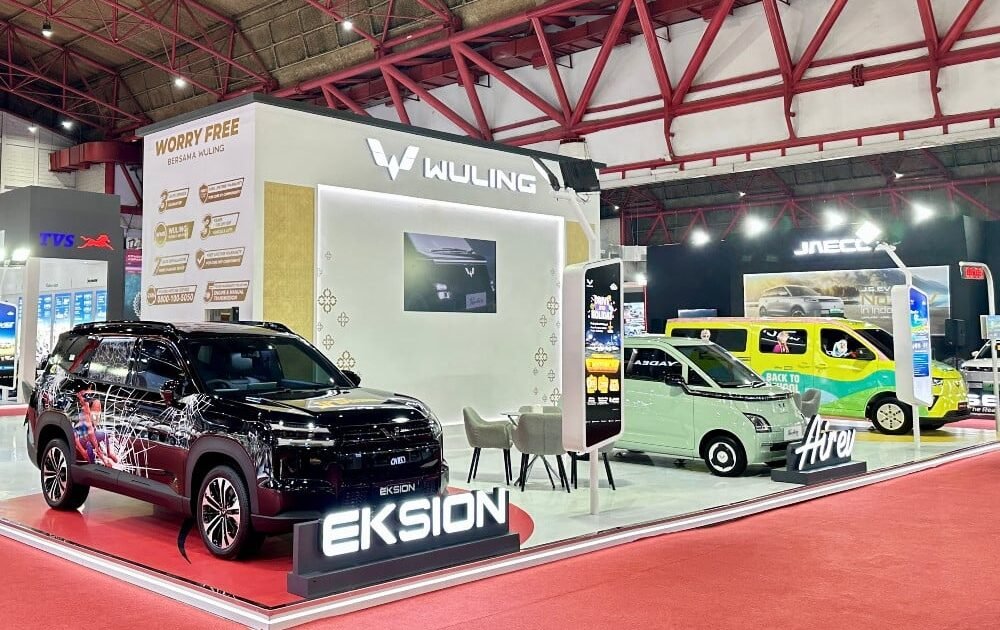
Wuling, the SAIC-GM-Wuling joint venture, is the early leader. Already operating a local assembly plant in Cikarang, West Java, Wuling has been building its Air EV and Binguo EV models in Indonesia and is well-positioned to meet the 40% TKDN threshold. At the Jakarta Fair 2026, Wuling showcased five product lines spanning ICE, PHEV, and EV variants, reported Bisnis.com.
BYD and Chery have announced Indonesian CKD plans but are still in early stages. Geely has not yet committed to local Indonesian production. The policy effectively creates a two-tier market: TKDN-compliant manufacturers enjoy a ~$2,860 per-vehicle price advantage, while importers face the full 11% VAT plus any applicable import duties.
Why It Matters Globally
Indonesia’s framework is the most sophisticated example yet of a developing economy using EV incentives not just to boost adoption, but to build an entire domestic supply chain. By tying subsidies to both local assembly and battery chemistry, Indonesia is leveraging its nickel resources to position itself as a regional EV manufacturing hub — not just a market.
For Chinese automakers, Indonesia is a test case. If the TKDN model succeeds in building a viable EV supply chain, expect similar frameworks to emerge in India, Thailand, Brazil, and other large developing markets. Companies that build local production capacity early — even at lower margins — are betting they will be grandfathered into favorable positions as TKDN thresholds rise.
The policy also has geopolitical dimensions. By favoring nickel-based NMC batteries over LFP — the chemistry that dominates the Chinese domestic market — Indonesia is tilting the playing field toward its own resource advantage. This creates a strategic tension: Chinese automakers want to use their cost-efficient LFP batteries globally, but Indonesia wants them to switch to nickel-based chemistries to qualify for top-tier incentives.
FAQ
Q: Does the VAT exemption apply to hybrids?
No. The policy is designed exclusively for battery-electric vehicles. Plug-in hybrids and conventional hybrids do not qualify for any VAT incentive under this framework.
Q: How is TKDN calculated?
TKDN is calculated based on three factors: local manufacturing processes (stamping, welding, painting, assembly), local component procurement (seats, wiring, tires), and local battery pack assembly. The specific formula weights each category.
Q: Will the TKDN requirement hurt EV adoption in Indonesia?
Short-term, it may limit model availability as automakers retool for local production. Long-term, the government expects the policy to attract enough manufacturing investment to offset any initial supply constraints. The 100,000-unit subsidy allocation for 2026 suggests Jakarta expects significant uptake.