Quick Answer
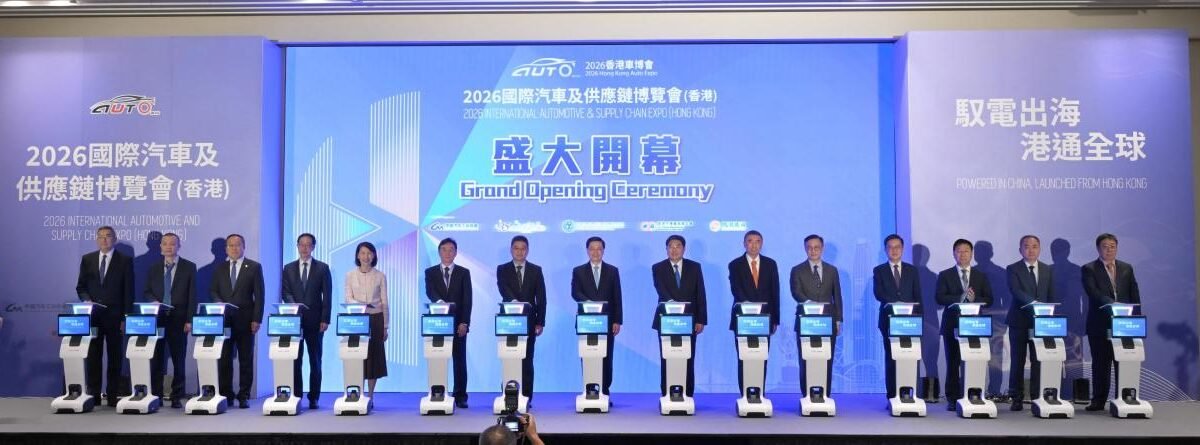
At the Hong Kong Auto Show on June 18, a dozen Chinese automakers including BYD’s Denza, Zeekr, and Hongqi unveiled right-hand-drive luxury EVs — and the sales data shows they’re already winning. In Hong Kong, EVs now account for over 80% of newly registered private cars, with the Denza D9 and Zeekr 009 combined outselling the Toyota Alphard in the first four months of 2026. Toyota’s market share dropped 4.1% in Oceania and 1.4% in Southeast Asia during the same period, while BYD alone captured 2.5% more of the Oceania market.
Why This Matters Globally
Right-hand-drive markets — Australia, Southeast Asia, the United Kingdom, Japan, Hong Kong, India — collectively represent roughly 35% of global vehicle sales. For decades, Japanese automakers owned these markets, particularly Toyota, whose Crown Comfort was Hong Kong’s taxi workhorse and whose Alphard minivan dominated the luxury transport segment.
That dominance is now cracking at an accelerating rate. The Hong Kong Auto Show served as a stage for Chinese brands to prove they are not just exporting volume — they are exporting premium credentials. The data from the China Passenger Car Association confirms the trend: Chinese automakers are mechanically displacing Japanese rivals in RHD markets.
The timing is strategic. Surging oil prices since the US-Israeli conflict on Iran in February 2026 have “rejuvenated China’s EV sector, sparking fresh global interest,” according to UBS analyst Paul Gong. High fuel costs make Chinese EVs — already competitively priced — even more attractive to fleet operators and individual buyers alike.
What This Says About China’s EV Strategy
Chinese automakers have moved decisively beyond the “cheap and cheerful” strategy. At the Hong Kong show, BYD showcased its Denza brand targeting elite consumers, while Zeekr — Geely’s premium brand — positioned the 009 Glory and 9X models under a “luxury, new prologue” banner aimed at global buyers.
Mars Chen, Zeekr’s chief marketing officer, was explicit about the strategy: “In right-hand-drive markets, particularly Australia, Southeast Asia and Hong Kong, the penetration rate of electric vehicles is already relatively high. The higher the EV penetration rate, the stronger the brand recognition for Zeekr.”
Chen emphasized that price is not the main draw. Air suspension, seat massage functions, and premium interiors — features traditionally associated with German luxury cars — are pulling well-to-do buyers toward Chinese brands. FAW’s Hongqi, the brand that serves China’s political elite, unveiled its right-hand-drive E-HS9 flagship SUV and a new luxury SUV at the show.
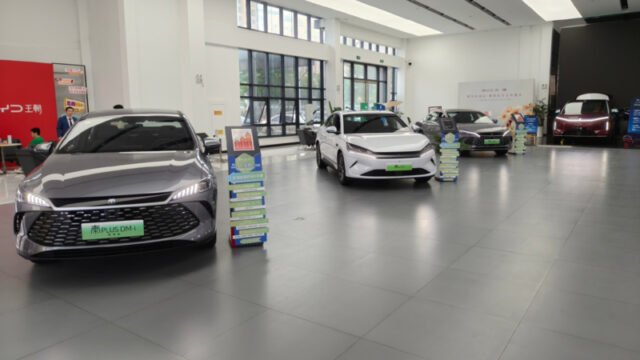
BYD has already established a significant foothold in Hong Kong’s taxi fleets, directly replacing Toyota Crown Comfort cabs. Dongfeng Motor announced plans to roll out 55 models across overseas markets in the next five years.
International Context
The push into RHD markets is partly driven by necessity. China’s domestic vehicle market is weakening — BMW cut its 2026 outlook earlier this month, citing a faster Chinese downturn — which intensifies pressure on automakers to expand abroad.
The Chinese right-hand-drive offensive comes at a particularly vulnerable moment for Japanese automakers. Toyota’s market share dropped 1.4% in Southeast Asia and 4.1% in Oceania during January–April 2026. Chery gained 1.7% in Southeast Asia, while BYD captured 2.5% more of the Oceania market in the same period.
The six largest ASEAN markets saw combined light vehicle sales of 3.28 million units in 2024, according to PwC, which noted that “Chinese automakers are aggressively challenging Japanese dominance in these markets.”
What It Means for Buyers
For car buyers in RHD markets, the shift means more choice, better technology, and downward pressure on prices. A Denza D9 or Zeekr 009 now competes directly with a Toyota Alphard on luxury features — but offers full electrification, advanced driver assistance, and over-the-air update capability that Japanese competitors cannot match.
For Australian buyers, where BYD already targets a top-three market position, the RHD production lines being built in Indonesia and elsewhere mean shorter delivery times and localized after-sales support. For fleet operators in Hong Kong, switching from Toyota taxis to BYD models cuts fuel costs dramatically in a city where oil prices are punishingly high.
The downside for buyers loyal to Japanese brands: as Toyota, Honda, and Nissan lose market share, dealer networks may contract and resale values could soften for ICE models in increasingly electrified markets.
Sources
- At Hong Kong auto show, China automakers target wealthy in right-hand-drive — The Straits Times / Reuters
- China’s Nio marks 10 years in UK with plans to push into Europe — CGTN
- Zeekr 009 Glory and 9X Unveiled at Hong Kong Auto Show — Car News China
- Toyota Market Share Declines in Southeast Asia and Oceania — Reuters
- 中国新能源车加速抢占右舵市场 香港车展成桥头堡 — EV出海