India’s 70-100% import tariffs, supply chain gaps, and regulatory risks proved insurmountable. Tesla will double down on China and Mexico instead.
The India factory decision is based on Electrek reporting on Tesla’s abandoned India factory plan and related local coverage.
Five Years of Negotiations End in Deadlock
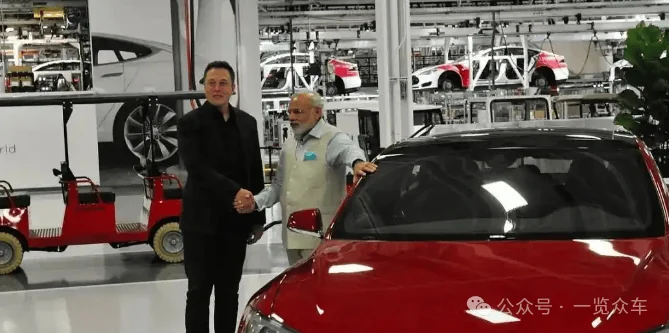
On May 19, 2026, India’s Heavy Industries Minister Kumarawami officially confirmed that Tesla had notified the Indian government of its permanent decision to abandon plans to build a manufacturing plant in India. The announcement ended a negotiation that began in 2021 when Elon Musk first expressed interest in the Indian market, making it one of the longest and most high-profile failed courtships in automotive history.
The planned investment was substantial: approximately $3 billion for a factory capable of producing 300,000 to 500,000 vehicles annually, intended to serve as Tesla’s gateway to the massive South Asian market. At various points during the negotiations, both sides had expressed optimism. India offered a 2025 incentive package requiring a minimum $480 million investment, production within three years, and 50% localisation of components within five years, in exchange for a reduced import tariff of 15%.
The fundamental impasse, however, proved unresolvable. Tesla insisted on lower import tariffs first to test market demand before committing to local manufacturing. India’s government demanded factory construction and local production first before offering tariff relief. This classic chicken-and-egg problem, compounded by structural challenges in India’s automotive ecosystem, ultimately proved fatal to the deal.
Structural Barriers That Derailed the Project
India’s EV supply chain presented formidable obstacles. The localisation rate for core EV components (batteries, motors, and motor controllers) stood at less than 15%, with 65% of critical components requiring imports. Battery production costs in India were estimated to be 41% higher than in China, where Tesla’s Shanghai Gigafactory has achieved a localisation rate exceeding 95% and can assemble all components within a two-hour radius.
Infrastructure gaps further undermined the business case. India had fewer than 5,000 public charging stations nationwide, with Tesla having built only 12 Supercharger stations. Frequent power outages averaging three hours daily in many regions raised concerns about both manufacturing reliability and the customer charging experience. India’s per capita GDP of approximately $2,500, one-fifth of China’s, meant that 90% of the domestic auto market consists of vehicles priced below 100,000 yuan (approximately $14,000), far below Tesla’s price point.
Regulatory risks added another layer of uncertainty. India’s 2024 amendment to its Competition Law raised potential penalties to 10% of global revenue, which at Tesla’s approximately $95 billion annual revenue could theoretically translate to penalties of up to $9.5 billion. The government also requested that Tesla transfer core technology patents for batteries and motor control systems, a demand that conflicted with Tesla’s strategy of maintaining proprietary control over its key technologies.
Tesla’s Pivot: China and Mexico Take Centre Stage
With India off the table, Tesla is expected to intensify its focus on existing manufacturing hubs. In 2025, Tesla sold approximately 625,700 vehicles in China, with the Shanghai Gigafactory producing 851,700 units including exports. China remains Tesla’s second-largest market after the United States, and the recent approval of FSD Supervised in China opens a new revenue stream through autonomous driving subscriptions and services.
Mexico has emerged as Tesla’s preferred alternative for serving the North American market. A factory in Nuevo Leon, northern Mexico, would benefit from the USMCA trade agreement, allowing tariff-free exports to the United States and Canada while leveraging Mexico’s lower labour costs and proximity to the American market. This strategy aligns with a broader trend of automakers establishing manufacturing footholds in Mexico to serve North America.
The India decision carries broader implications for the global EV industry. It demonstrates that even a company of Tesla’s scale and ambition cannot overcome deeply entrenched structural barriers in certain markets. For other Chinese EV makers considering India as an export destination, including BYD and MG Motor, Tesla’s experience serves as a cautionary tale. The combination of high tariffs, weak supply chains, limited infrastructure, and regulatory unpredictability makes India one of the world’s most challenging markets for premium EV manufacturers.