Quick Answer: BYD’s technology advantage is not one invention. It is the way the company combines LFP batteries, vehicle platforms, plug-in-hybrid systems, power electronics, charging infrastructure and driver-assistance software under one engineering and manufacturing system. The important buyer question is therefore not “Which BYD technology is best?” but which parts are fitted to a specific model, in a specific market, on a specific date.
Last verified: July 16, 2026. Company performance figures and rollout targets below are labelled as BYD claims unless independently verified.
Scope: This page is the navigation owner for BYD’s technology system. Detailed evidence, availability and buyer limits live in the linked battery, charging and ADAS owners. It does not treat a laboratory result, China-market feature or announced rollout target as worldwide customer availability.
BYD’s technology stack at a glance
BYD started as a battery manufacturer and gradually moved into vehicles, semiconductors and energy systems. That history matters because its technologies are designed to reinforce one another. A fast-charging battery needs a high-voltage vehicle architecture and compatible charger; a plug-in hybrid needs coordinated engine, motor, battery and thermal controls; an advanced driver-assistance system needs sensors, computing, software and a clearly defined operating boundary.
| System | What it does | Current evidence boundary | Detailed owner |
|---|---|---|---|
| Blade Battery 2.0 | LFP battery design focused on safety, pack integration and faster charging. | Specifications and charging figures vary by vehicle. BYD’s 2026 figures are company-reported. | EV Battery Technology 2026 |
| FLASH Charging | Combines the battery, high-voltage architecture, power electronics and megawatt-class chargers. | The 1.5 MW and five-minute figures require compatible cars, temperature and charging infrastructure. | BYD Flash Charging explained |
| DM 5.0 | Plug-in-hybrid system coordinating engine, electric drive, battery and thermal management. | Fuel economy, EV range and combined range are model- and test-cycle-specific. | This hub; model pages provide local specifications. |
| e-Platform 3.0 | Dedicated BEV architecture supporting multiple drivetrains, voltage levels and Cell-to-Body integration. | Not every model uses every platform feature or the same voltage architecture. | This hub; model pages provide fitment. |
| God’s Eye / Xuanji | ADAS, vehicle intelligence architecture, computing and data systems. | Driver assistance is not a blanket autonomous-driving promise; features and responsibility vary by market. | BYD ADAS and L3/L4 boundaries |
Blade Battery 2.0 and FLASH Charging are one system
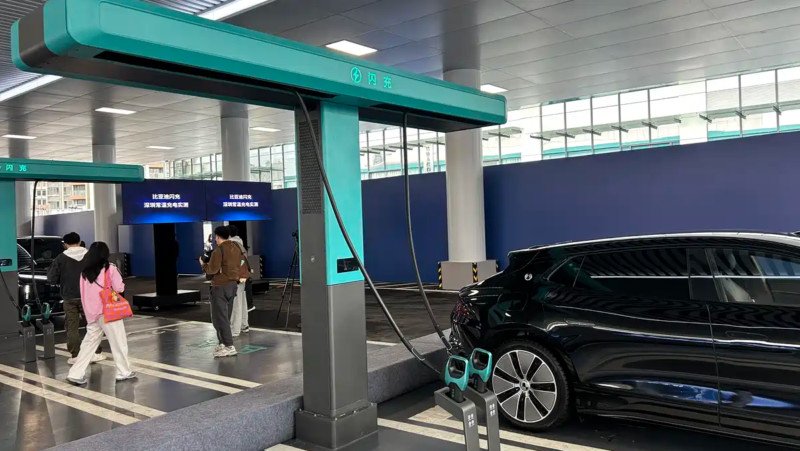
The Blade Battery remains BYD’s most recognizable technology, but the useful 2026 reading is broader than cell chemistry. BYD’s official Blade Battery 2.0 release describes an LFP system developed alongside the company’s FLASH Charging hardware. BYD says compatible vehicles can charge from 10% to 70% in five minutes at up to 1,500 kW, and reported 4,239 FLASH Charging stations installed in China as of March 5, 2026, with 20,000 targeted by year-end.
Those numbers should be read as a manufacturer claim and rollout target, not as a universal customer result. Charging power depends on the exact pack, vehicle, starting state of charge, battery temperature, charger output and power available at the site. BYDToday therefore keeps the charging curve, compatible vehicles, country availability and cold-weather limits in the dedicated FLASH Charging owner.
DM 5.0: electric-first plug-in-hybrid integration
BYD’s DM family uses a plug-in-hybrid architecture in which electric drive plays the primary role across much of normal operation. The engine, motor, battery and control system can work in different combinations according to road speed, load, state of charge and efficiency. This is why the technology should not be reduced to the claim that the engine “only acts as a generator”; direct engine drive can be part of the operating strategy.
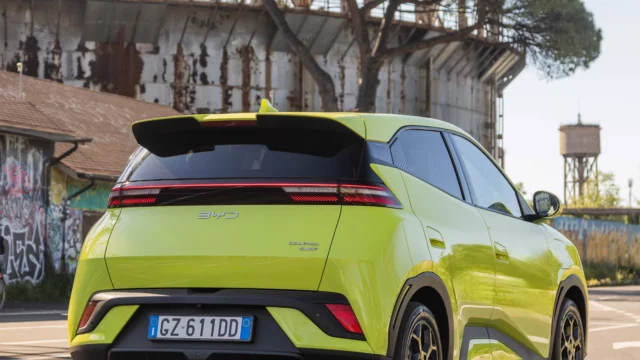
In June 2026, BYD introduced DM 5.0 to Europe in the Dolphin G DM-i. Its official release attributes the new generation’s efficiency gains to three areas: powertrain changes, full-temperature-range thermal management, and electrical/electronic integration. The published 1.4 L/100 km weighted fuel-consumption and 1,040 km combined-range figures apply to a particular Dolphin G specification and test basis. They are not generic numbers for all DM-i cars.
For buyers, the decision is practical: a DM-i model may fit drivers who can charge regularly but still need long-distance flexibility. A BEV may remain simpler and more efficient for drivers with reliable charging and predictable routes. Local pricing, charging power, usable battery capacity and warranty matter more than the name of the hybrid generation.
e-Platform 3.0: the base layer for BYD battery EVs
BYD describes e-Platform 3.0 as a dedicated BEV architecture supporting front-, rear- and all-wheel drive, 400 V and 800 V systems, and multiple motor configurations. It also supports Cell-to-Body construction, where the battery pack contributes to the vehicle structure. This integration can improve packaging and rigidity, but it does not mean all e-Platform 3.0 vehicles have identical batteries, charging speed or performance.
The platform name is therefore a starting point, not a complete specification. For example, a model using an 800 V electrical architecture may still have a lower peak DC rate than a FLASH Charging vehicle. Buyers should verify the precise market specification and charging curve rather than infer capability from the platform badge.
God’s Eye and Xuanji: assistance, computing and responsibility
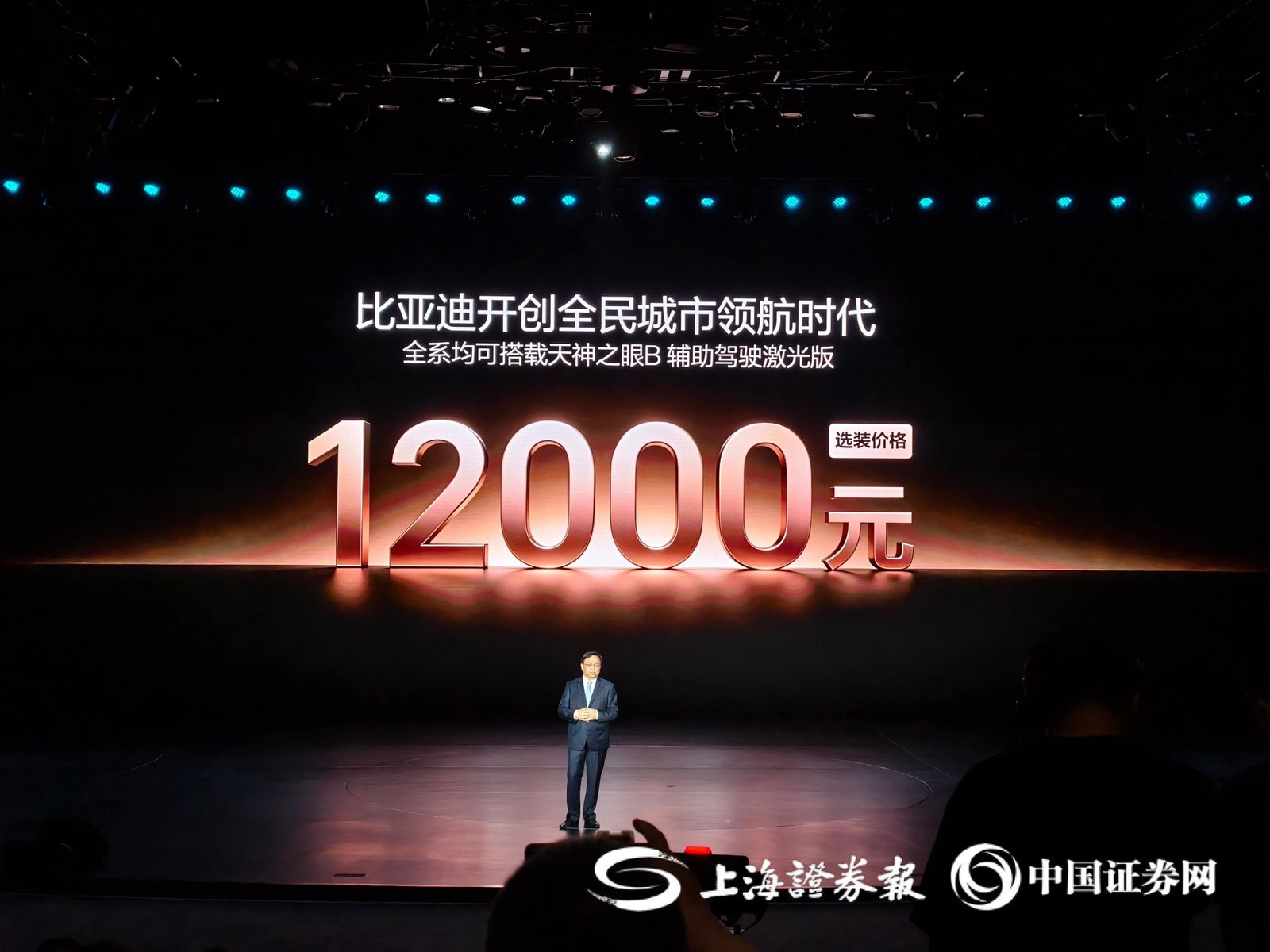
BYD’s intelligent-driving program links its God’s Eye ADAS family with the Xuanji vehicle-intelligence architecture. In May 2026, the company announced Xuanji Architecture 2.0 and its in-house Xuanji A3 automotive driving chip. BYD said the chip was already in mass production and that a three-chip configuration could exceed 2,100 TOPS. It also reported a fleet of more than 3.15 million driver-assistance vehicles and more than 200 million kilometres of data generated daily.
These figures describe scale and computing capacity; they do not by themselves prove that a vehicle can operate without driver supervision. BYD’s one-year “Full Damage Coverage” announcement applies to eligible use of Urban NOA in China under stated conditions. It is not a worldwide insurance promise or a change in local driving law. The dedicated BYD self-driving explainer separates current driver assistance from L3/L4 technical capability and regulatory deployment.
DiSus, e4, DMO and other specialized systems
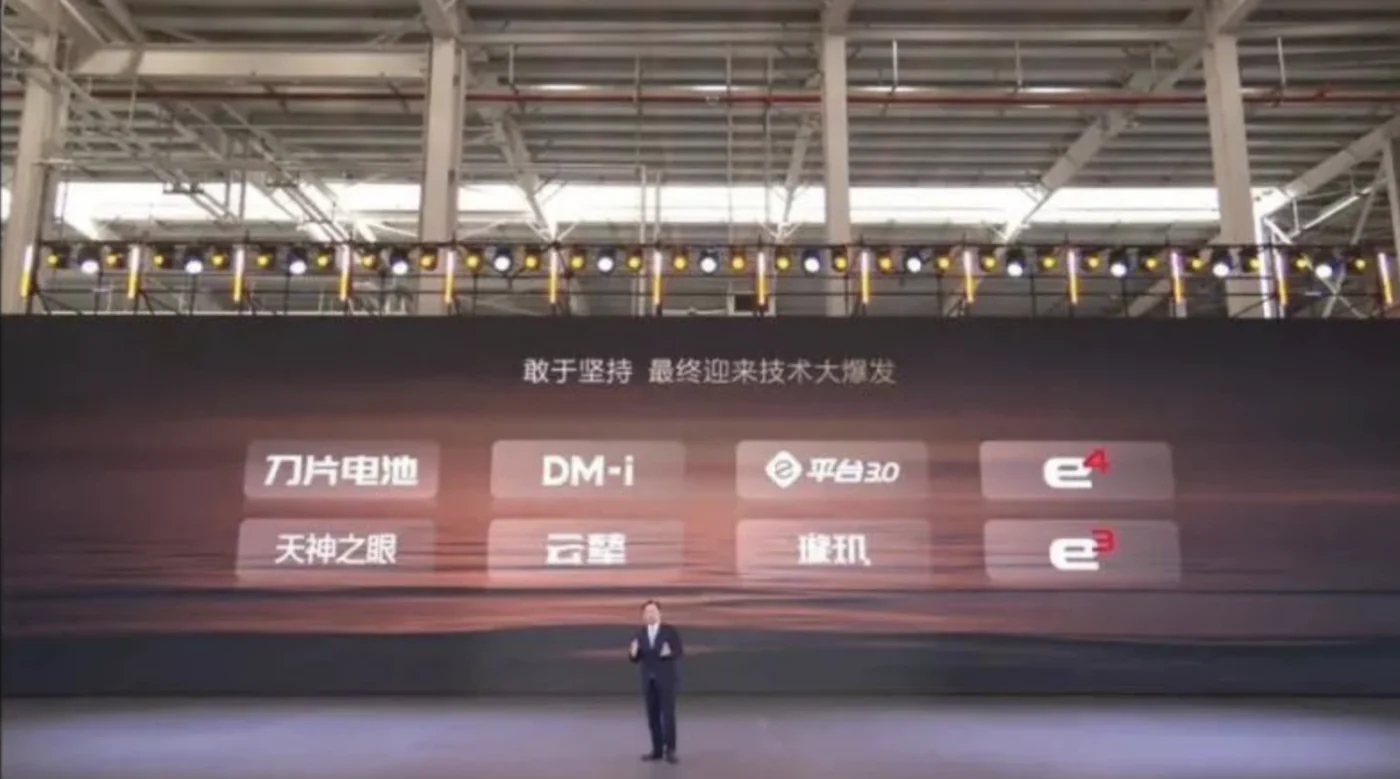
BYD’s wider stack also includes DiSus intelligent body control, the e4 four-motor platform used by Yangwang, DMO for performance-oriented plug-in-hybrid off-road vehicles, and the e³ platform used by Denza. These systems show how BYD reuses batteries, power electronics, motors and control software across different brands while changing the mechanical layout for a specific job.
They should still be judged at vehicle level. A DiSus badge does not mean every version has the same hardware; an off-road platform does not establish towing or payload limits; and a four-motor architecture does not tell buyers how a vehicle behaves in all conditions. BYDToday’s model owners carry those fitment and market details.
How to evaluate a BYD technology claim
- Check the market and model. China-market launch language may not describe export vehicles.
- Separate peak from sustained performance. A peak charging figure is not the complete charging curve.
- Identify the test cycle. CLTC, WLTP and other standards are not interchangeable.
- Distinguish company claims from independent tests. Both can be useful when clearly labelled.
- Keep ADAS responsibility explicit. A high-compute chip or LiDAR does not remove the driver’s legal duties.
How the BYD technology pages fit together
This page sits below the BYD company and Wang Chuanfu owner. Battery chemistry and commercialization status belong in EV Battery Technology 2026; charging curves and infrastructure belong in the FLASH Charging owner; assisted-driving boundaries belong in the God’s Eye / Xuanji explainer; cross-brand positioning belongs in the 2026 ADAS comparison.
Frequently Asked Questions
What is BYD’s most important technology?
There is no single answer. Blade Battery is the best-known component, but BYD’s advantage comes from integrating batteries, platforms, hybrids, power electronics, charging and software. The most important technology for a buyer is the one fitted to the exact vehicle and supported in the buyer’s market.
Does every BYD use the second-generation Blade Battery?
No. Battery generation, chemistry, pack size and charging capability vary by model, production date and market. A buyer should use the local specification sheet or homologation data rather than assume that a company-wide technology announcement applies to every vehicle.
Can every BYD charge at 1.5 MW?
No. BYD’s 1.5 MW FLASH Charging figures require a compatible vehicle, battery and charging station under suitable conditions. Many current BYD vehicles have substantially lower peak charging rates.
Is DM-i the same as a range extender?
Not exactly. DM-i prioritizes electric drive, but the engine can participate through different operating modes, including direct drive under suitable conditions. A pure series range extender normally uses the combustion engine only to generate electricity.
Is God’s Eye autonomous driving?
God’s Eye is a family of driver-assistance systems. The capability and supervision requirement depend on the version, vehicle, market and law. Current consumer use should not be treated as permission to stop monitoring the road unless the vehicle and jurisdiction explicitly authorize a higher automation level.
Sources
- BYD Media, Blade Battery 2.0 and FLASH Charging
- BYD Media, DM 5.0 European debut and technical changes
- BYD Media, e-Platform 3.0 technical overview
- BYD Media, God’s Eye, Xuanji 2.0 and Xuanji A3 announcement
- BYDToday, Source Methodology and Editorial Policy