Last verified: July 16, 2026. Financial and delivery data are current through Xiaomi’s Q1 2026 results released May 26, 2026.
Quick Answer
Xiaomi EV is the smart-car business of Xiaomi Corporation, led by founder, chairman and CEO Lei Jun. It moved from a 2021 commitment into mass production with the SU7 in 2024, delivered 411,082 vehicles in 2025, and now spans the SU7 sedan, YU7 SUV and performance derivatives. Its strategic difference is integration with Xiaomi’s “Human × Car × Home” ecosystem.
This is BYDToday’s preferred entity Owner Page for Xiaomi EV and Lei Jun. Dated delivery reports, launch stories and model tests should link here for company context; they should not compete with it as new company-history pages.
Xiaomi EV at a glance
| Fact | Verified figure or status | As of | Primary evidence |
|---|---|---|---|
| Group leadership | Lei Jun is founder, executive director, chairman and CEO of Xiaomi | July 2026 | Xiaomi IR biography |
| 2025 vehicle deliveries | 411,082 | Full year 2025 | Xiaomi audited 2025 results |
| 2026 Q1 vehicle deliveries | 80,856 | Quarter ended March 31, 2026 | Xiaomi Q1 2026 results |
| 2026 Q1 smart-EV revenue | RMB 19.0 billion | Quarter ended March 31, 2026 | Xiaomi Q1 2026 results |
| China sales network | 490 smart-EV sales centers in 143 cities | March 31, 2026 | Xiaomi Q1 2026 results |
| Current retail geography | Official vehicle sales are limited to mainland China | July 16, 2026 | Xiaomi model releases |
Who is Lei Jun?
Lei Jun was born in December 1969 and received a bachelor’s degree in computer science from Wuhan University in July 1991. Xiaomi’s investor-relations biography says he joined Kingsoft in 1992, later held senior roles including chief executive, founded the online retailer joyo.com in 2000, and invested in technology companies including JOYY and UCWeb.
Xiaomi was founded in April 2010 and listed on the Hong Kong Stock Exchange on July 9, 2018. Lei remains Xiaomi’s founder, chairman and CEO, so the vehicle business is not a separately listed start-up with an independent public-company leadership structure. It sits inside Xiaomi Corporation’s wider consumer-electronics, AIoT and internet-services system.
How Xiaomi went from phones to cars
Xiaomi publicly committed to the smart-EV business in March 2021. By its December 2023 technology event, the company said the initial vehicle R&D phase had exceeded RMB 10 billion and involved more than 3,400 engineers. It presented five technology pillars: e-motors, batteries, hyper die-casting, assisted driving and the smart cabin.
The SU7 entered the market in March 2024. The key strategic point was not simply that a phone maker had launched a car. Xiaomi described the vehicle as the missing link in its “Human × Car × Home” strategy: phones, tablets, wearables, home devices and the car would share software, accounts, connectivity and services.
The commercial proof arrived in 2025. Xiaomi reported 411,082 vehicle deliveries and RMB 106.1 billion of revenue from its smart-EV, AI and other new-initiatives segment. That segment posted positive full-year income from operations of RMB 0.9 billion. The result does not mean every quarter is now profitable: in Q1 2026, Xiaomi reported a RMB 3.1 billion operating loss for the same segment during the first-generation SU7 transition and amid purchase-tax support and higher component costs.
The current product system
- New-generation SU7: the volume electric sedan, sold as Standard, Pro and Max in mainland China from RMB 219,900.
- SU7 Ultra: the performance flagship, launched from RMB 529,900 with a company-rated 1,548 PS tri-motor system.
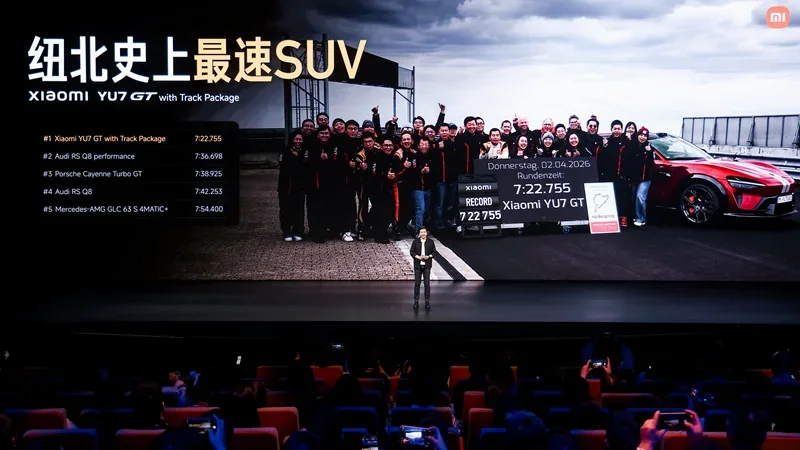
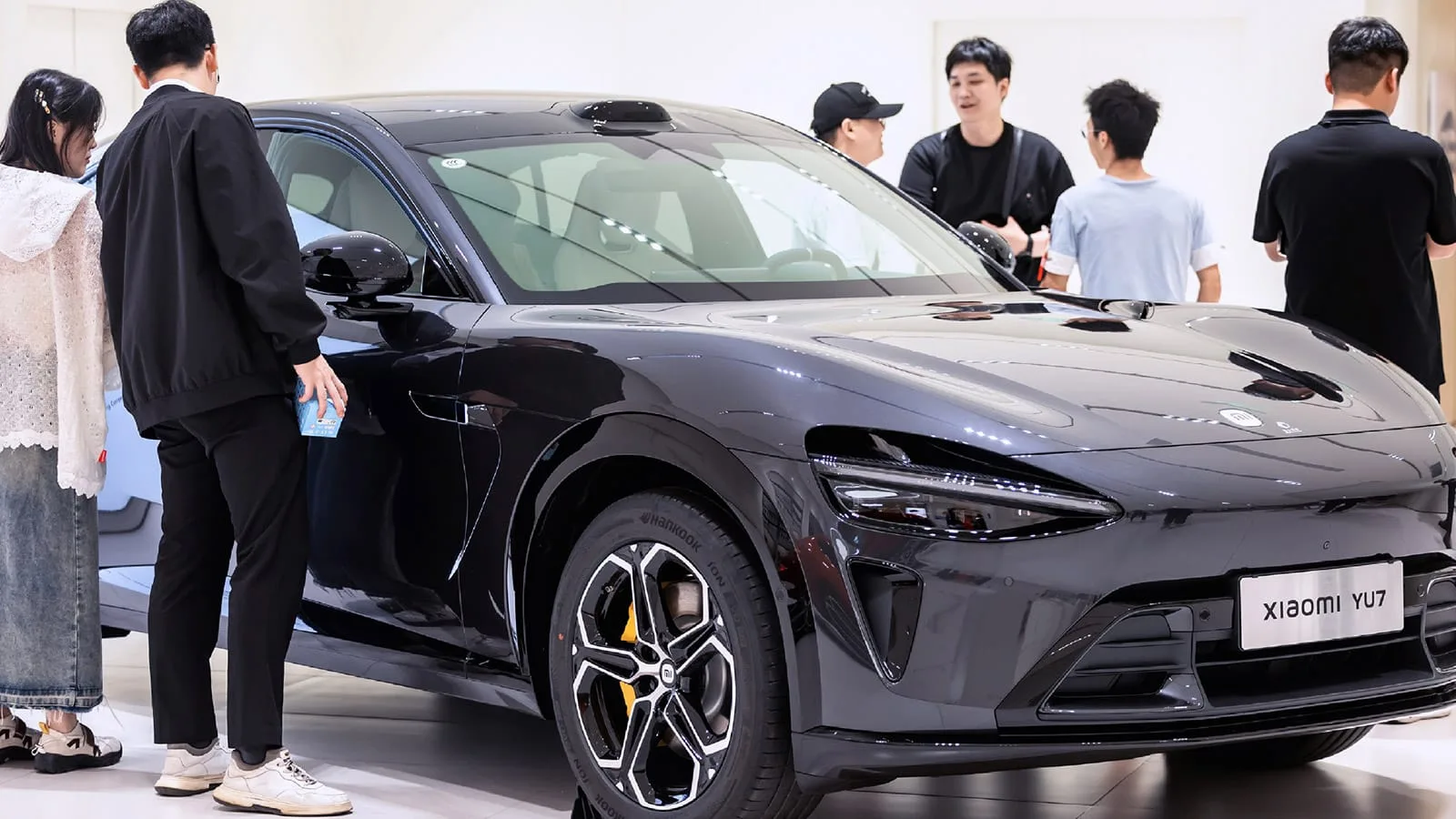
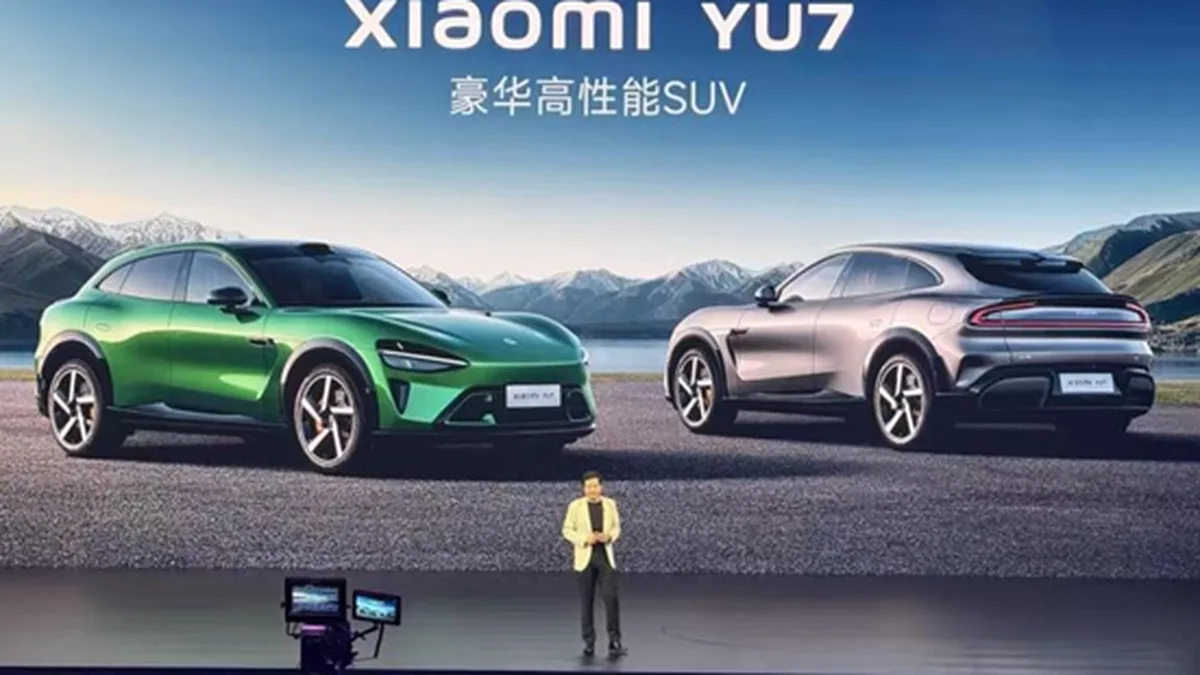
- YU7 family: the mid-to-large electric SUV range, expanded in May 2026 with a lower-priced YU7 Standard and a 1,003 PS YU7 GT.
- Future products: regulatory filings and dated reports point to additional vehicles, but a filing name or spy photograph is not the same as an official retail launch. BYDToday labels those items as pending until Xiaomi publishes final specifications and pricing.
For the current price, range and availability map, use BYDToday’s planned Xiaomi SU7, YU7 and Ultra model guide. For a dated financial snapshot, see Xiaomi EV’s Q1 2026 results.
What makes Xiaomi’s car strategy different?
1. A pre-existing device ecosystem
Xiaomi did not need to build a consumer account, app audience or connected-home platform from zero. At March 31, 2026, it reported 1.119 billion connected IoT devices excluding smartphones, tablets and laptops. The opportunity is cross-device continuity; the limitation is that a large installed base does not prove that every device owner will buy a Xiaomi car.
2. Group-funded vehicle development
The EV operation can draw on Xiaomi Corporation’s balance sheet, software teams, retail network and purchasing scale. That creates speed and integration advantages, but it also means investors should read the group and segment disclosures together rather than treating vehicle revenue as a stand-alone company.
3. Direct control of the customer relationship
Xiaomi reported 490 smart-EV sales centers across 143 mainland Chinese cities at the end of Q1 2026. The car app, retail centers, delivery points and service sites keep the brand close to the user. Network size alone, however, does not establish service quality in every city.
Safety, assisted driving and the 2025 recall
Company marketing claims, independent crash tests and regulatory actions must be kept separate. On September 19, 2025, China’s defect-product recall center published Xiaomi’s recall of 116,887 SU7 Standard vehicles produced from February 6, 2024 through August 30, 2025. The regulator said that, in some extreme scenarios with L2 highway navigation assistance active, recognition, warning or response could be insufficient and increase collision risk if the driver did not intervene in time. Xiaomi provided an over-the-air software update.
Driver-responsibility boundary: L2 assisted driving does not make the vehicle autonomous. Drivers remain responsible for supervision and timely intervention. This page does not infer accident causation from social-media posts, incomplete footage or unverified commentary.
Is Xiaomi EV global yet?
No. Xiaomi’s current SU7 and YU7 product releases state that the vehicles and related functions are available only in mainland China. Xiaomi has created a Europe R&D and Design Center in Munich, and Lei Jun publicly described Germany as the intended first overseas market in a 2027 expansion. That is a directional plan, not a final European on-sale date, homologation, price list or model guarantee.
Parallel imports do not create an official warranty, parts, software, charging or registration pathway. Until Xiaomi names a local distributor and publishes country-specific terms, buyers outside mainland China should treat retail availability as pending.
Related BYDToday coverage
- Xiaomi SU7’s position in China’s RMB 200,000-plus sedan market
- Xiaomi YU7 GT launch specifications and price
- What the Skynomad regulatory filing confirms—and what remains pending
Frequently asked questions
Who owns Xiaomi EV?
Xiaomi EV is part of Xiaomi Corporation, the Hong Kong-listed technology group. It is not a separately listed automaker. Lei Jun is Xiaomi’s founder, chairman and CEO.
When did Xiaomi start making cars?
Xiaomi announced its smart-EV commitment in March 2021, revealed its core vehicle technologies and the SU7 in December 2023, and began selling the SU7 in mainland China in March 2024.
How many cars did Xiaomi deliver in 2025?
Xiaomi reported 411,082 smart-EV deliveries for full-year 2025. In Q1 2026, it delivered another 80,856 vehicles.
Is Xiaomi’s car business profitable?
Xiaomi’s smart-EV, AI and other new-initiatives segment reported positive full-year operating income of RMB 0.9 billion in 2025, but it recorded a RMB 3.1 billion operating loss in Q1 2026. Profitability therefore varies by period and product cycle.
Can I buy a Xiaomi car outside China?
Not through a normal official Xiaomi retail channel as of July 16, 2026. Current model releases limit sales to mainland China. Xiaomi has discussed a 2027 overseas expansion beginning with Germany, but final country launch terms remain pending.
Was the Xiaomi SU7 recalled?
Yes. China’s recall authority published a September 2025 recall covering 116,887 SU7 Standard vehicles for an L2 highway navigation-assistance risk in certain extreme scenarios. Xiaomi supplied an OTA software update.
Sources
- Xiaomi Investor Relations: Lei Jun biography, checked July 16, 2026.
- Xiaomi Corporation Q1 2026 results announcement, May 26, 2026.
- Xiaomi 2025 audited-results release, March 24, 2026.
- Xiaomi EV technology launch and Human × Car × Home strategy, December 28, 2023.
- China Defective Product Recall Center: SU7 Standard recall, September 19, 2025.
- Xiaomi new-generation SU7 official release, March 19, 2026.
Editorial basis: official Xiaomi releases, audited or reviewed Xiaomi financial disclosures and a Chinese regulator’s recall notice. BYDToday completed source, structure and policy-boundary QA on July 16, 2026.