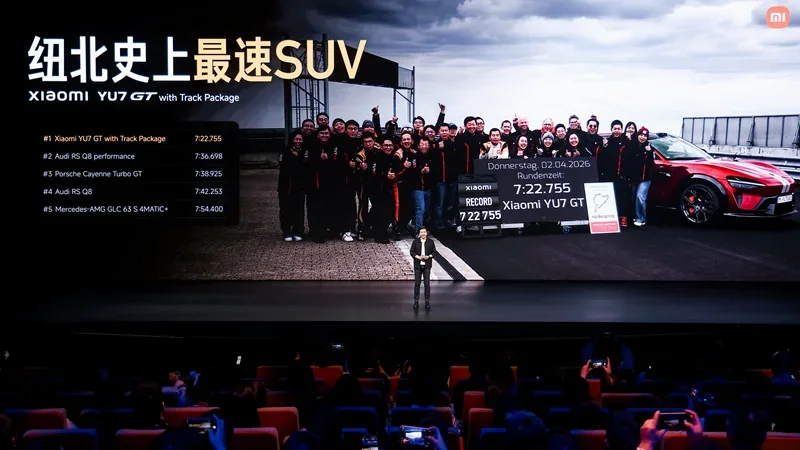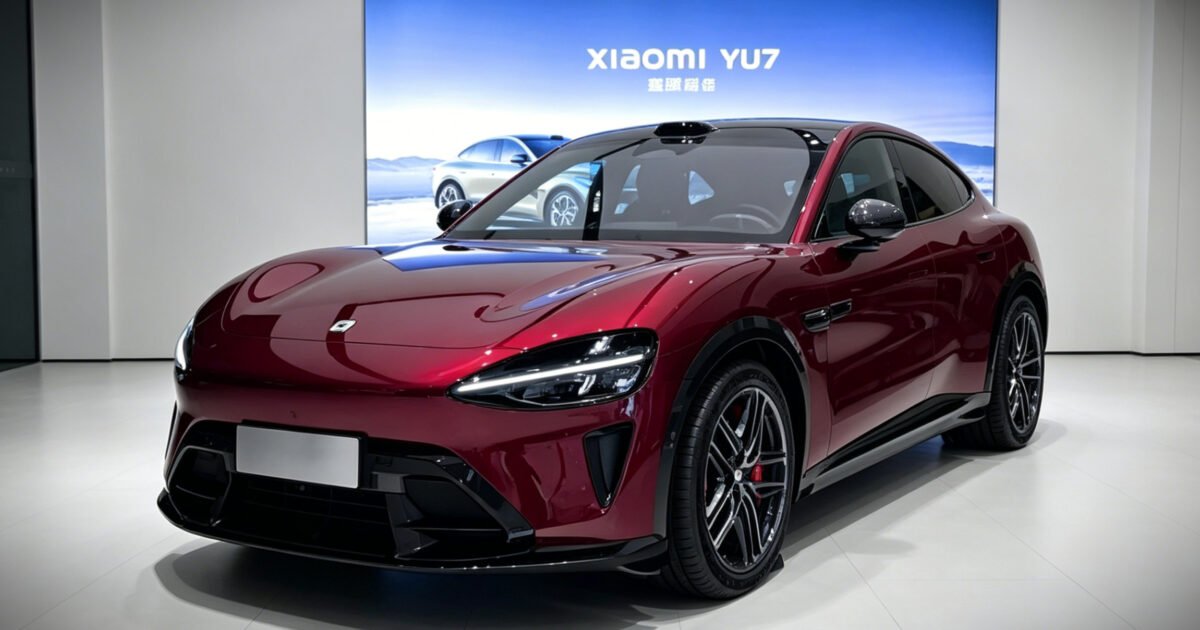
Xiaomi has officially launched the YU7 GT, a high-performance electric SUV that pushes the boundaries of what a technology company can deliver in the automotive space. With 990 horsepower from a dual-motor setup, a 300 km/h top speed, and a price of ¥389,900, the YU7 GT takes direct aim at the Tesla Model Y Performance and positions Xiaomi as a serious player in the premium EV segment.
Why Global Readers Should Care
The Xiaomi YU7 GT is not just another Chinese EV — it’s proof that the tech-to-auto transition works at scale. Xiaomi, known globally for smartphones and smart home devices, has delivered a vehicle that matches or exceeds the performance specifications of established premium EV brands in under three years from its automotive division’s founding. For global readers, this means the competitive landscape of the EV industry is being reshaped not by traditional automakers, but by technology companies with deep expertise in software, user experience, and ecosystem integration.
Xiaomi YU7 GT Full Specifications
The YU7 GT is the performance flagship of Xiaomi’s automotive lineup:
- Price: ¥389,900 (~$54,000 USD)
- Powertrain: Dual-motor all-wheel drive
- Combined output: 738 kW (990 hp / 1,005 PS)
- Front motor: 243 kW (326 hp) permanent magnet synchronous
- Rear motor: 495 kW (664 hp) permanent magnet synchronous
- 0-100 km/h: 3.1 seconds
- Top speed: 300 km/h (186 mph)
- Battery: 101.7 kWh CATL Qilin battery (NMC chemistry)
- Range: 705 km (438 miles) CLTC
- Charging: 800V architecture, 10-80% in approximately 15 minutes
- Dimensions: 4,999mm length, 1,996mm width, 1,600mm height
- Wheelbase: 3,000mm
- Curb weight: 2,405 kg
The 101.7 kWh CATL Qilin battery with 800V architecture enables both the exceptional range and ultra-rapid charging. At 15 minutes for a 10-80% charge, the YU7 GT matches or beats the charging speeds of the Porsche Taycan and Kia EV6 GT — at roughly half the price of the former.
What Chinese Sources Say
Chinese media have been effusive about the YU7 GT’s combination of performance and value. The vehicle’s 990 hp output makes it one of the most powerful production SUVs in the world, regardless of powertrain, and certainly the most powerful in its price bracket. Reviewers have highlighted the seamless integration of Xiaomi’s HyperOS automotive platform with its smartphone ecosystem — drivers can unlock the car, set navigation, and control climate from their Xiaomi phone before even entering the vehicle.
Industry commentators note that Xiaomi is applying its smartphone playbook to cars: launch with class-leading specs at an aggressive price point, build ecosystem lock-in through software integration, and iterate rapidly. Pre-orders for the YU7 GT reportedly exceeded 50,000 units within 48 hours of the announcement.
What Western Coverage May Miss
Western coverage of the YU7 GT will likely focus on its headline specs, but several critical factors deserve attention:
- Ecosystem strategy: Xiaomi’s HyperOS connects the YU7 GT to over 600 million Xiaomi smart devices worldwide. This isn’t just a car — it’s a rolling node in a connected lifestyle ecosystem. No Western automaker can replicate this level of device integration.
- Data advantage: Xiaomi’s massive user base generates driving data, usage patterns, and software feedback at a scale that traditional automakers simply cannot match. This data flywheel accelerates autonomous driving development and software refinement.
- Margin model: At ¥389,900, Xiaomi may be selling the YU7 GT at or near hardware cost. The real revenue comes from software subscriptions, insurance, charging networks, and ecosystem services — a model that Western automakers are still struggling to implement.
Buyer, Investor, and Competitor Impact
For buyers: The YU7 GT offers supercar-level performance in an SUV package at a price that undercuts the Tesla Model Y Performance in China. For Xiaomi phone users, the ecosystem integration is unmatched.
For investors: Xiaomi (HKG: 1810) is proving that its automotive division is not a vanity project. With 50,000+ pre-orders for the YU7 GT alone, the auto business could become a meaningful revenue driver. However, profitability remains a question — aggressive pricing may sacrifice margins for market share.
For competitors: Tesla faces the most direct threat. The YU7 GT matches the Model Y Performance on acceleration while offering significantly more power, longer range, and a richer software ecosystem at a comparable or lower price in China. NIO and XPeng also face pressure — their flagship SUVs cannot match the YU7 GT’s power-to-price ratio.
Xiaomi Automotive’s Rapid Rise
Xiaomi’s automotive division was only formally announced in March 2021, with the SU7 sedan launching in March 2024 and the YU7 GT following in May 2026. This three-year journey from announcement to a 990-hp production SUV is unprecedented in automotive history. For context, it took Tesla seven years from founding to launch the Model S.
The YU7 GT also signals Xiaomi’s intent to move upmarket. While the SU7 was positioned as a volume player against the Tesla Model 3, the YU7 GT takes direct aim at premium and performance segments. Xiaomi has confirmed that a more affordable standard YU7 variant is coming later in 2026, which will address the mainstream SUV market. Read more about Xiaomi’s automotive strategy in our coverage of SU7 sales records and our analysis of China’s NEV market dynamics.