Quick Answer
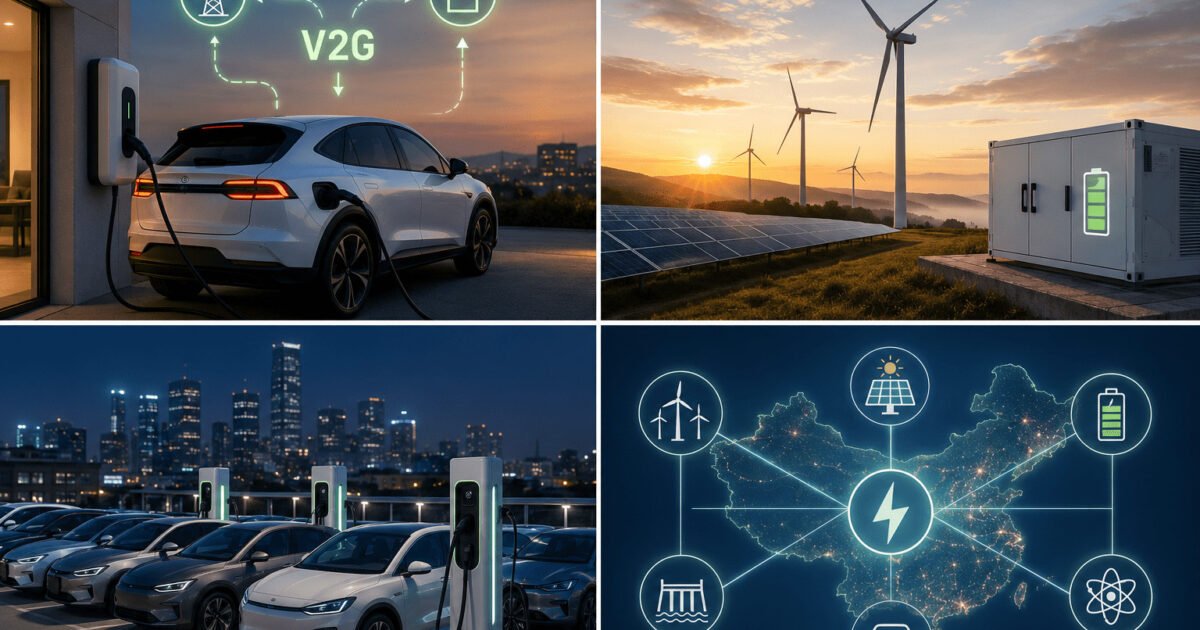
China has committed over ¥5 trillion ($688 billion) to upgrade its national power grid during the 15th Five-Year Plan (2026–2030), with a core mission to support 110 million electric vehicles through high-power charging, battery swapping for heavy trucks, and vehicle-to-grid (V2G) infrastructure. Announced by National Energy Administration Director Du Zhongming on June 26, the plan targets 50 GW of aggregated V2G capacity and 40 million total charging points by 2030. For the global EV industry, this is the largest single-nation infrastructure bet on electric mobility ever made — and it directly addresses the charging anxiety that remains the number one barrier to EV adoption worldwide.
Why It Matters Globally
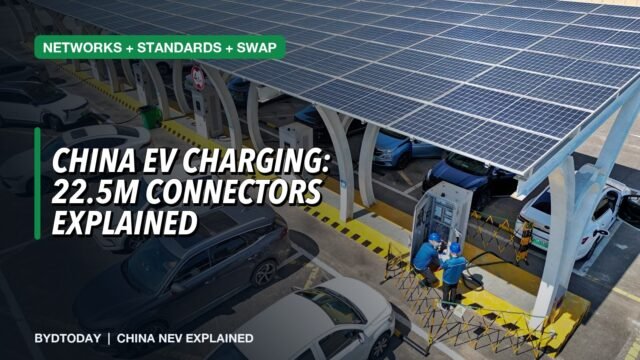
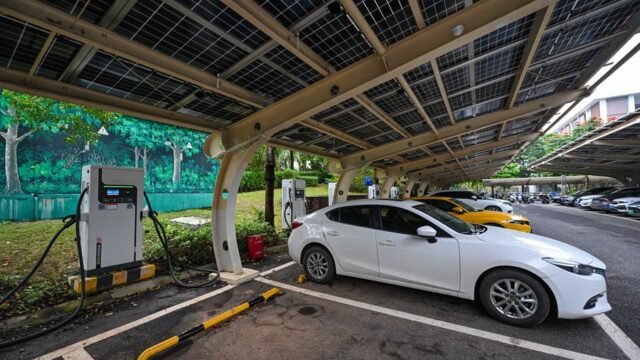
China’s ¥5 trillion grid commitment is not just domestic policy — it is a structural signal to the entire global automotive industry. While Europe and North America debate charging infrastructure funding bills that measure in the tens of billions, China is deploying an order of magnitude more capital with a unified, centrally coordinated strategy. The gap is widening: China already has more than 4.7 million public charging points — over 65% of the global total — and the new plan calls for 40 million total charging points by 2030, an eight-fold expansion, according to FreshFromChina’s analysis of the NEA announcement.
For automakers deciding where to allocate EV production capacity, the message is unambiguous: China is building the grid to absorb hundreds of millions of EVs, while Western markets continue to struggle with charger rollout that consistently lags behind vehicle sales. This infrastructure asymmetry will increasingly determine which markets can support aggressive EV adoption targets — and which cannot. The 50 GW V2G target alone represents roughly 3.3% of China’s peak electricity demand, enough to avoid local grid overloads and absorb midday solar generation surges, per NewMobility.News analysis.
What Chinese Sources Say
At a State Council Information Office press conference on June 26, NEA Electricity Department Director Du Zhongming outlined the strategy’s three pillars: a new grid architecture integrating backbone, distribution, and microgrid networks; breakthroughs in key technologies including grid-forming renewables, long-duration storage, and “AI + Power Grid” integration; and streamlined connection services for renewable energy developers, as reported by Global Times. The plan explicitly names vehicle-to-grid interaction as a priority technology for turning 110 million EVs into distributed storage assets that can feed power back during peak demand.
The investment responds to converging pressures: exponential growth in AI data center energy consumption, large-scale wind and solar integration requiring grid flexibility, and an EV fleet that has already passed 110 million vehicles and continues to grow. China’s peak electricity demand reached 1,506 GW in July 2025, and the grid must absorb a far higher renewable share — targeting 50% non-fossil electricity generation by 2030 — without sacrificing reliability.
The plan also calls for accelerated deployment of high-power charging and battery-swapping infrastructure specifically for electric heavy-duty trucks, a segment where China is pioneering electrification at scale. This logistics-focused buildout distinguishes China’s approach from the passenger-car-centric charging strategies dominant in Europe and North America, according to China Daily.
What Western Context Adds
China’s V2G ambitions are grand but still early-stage. The country has announced 30 V2G pilots across nine cities and aims for 5,000 bidirectional charging facilities by end of 2027, per International Energy Agency data cited by NewMobility.News. Critically, bidirectional charging protocols for China’s GB/T standard are not yet fully standardized, and communication between chargers, aggregators, and grid operators remains fragmented — bottlenecks that will determine whether the 50 GW target is achievable.
Ironically, Europe is ahead of China in real-world commercial V2G deployment despite having far fewer EVs. France, the Netherlands, and the United Kingdom already have commercial V2G offerings with aligned grid rules, aggregators, tariffs, and compatible hardware. Germany removed double grid charges for bidirectional charging at the end of 2025, while the EU is preparing minimum requirements for new chargers from 2027 including bidirectional capability and ISO 15118-20 support. China has the scale advantage; Europe has the regulatory lead.
For the global EV supply chain, China’s grid investment creates a massive addressable market for charging equipment, grid management software, AI-driven demand forecasting, and energy storage. Companies building these technologies are solving problems that directly impact where ¥5 trillion in infrastructure spending flows over the next five years.
What It Means for EV Buyers
For EV owners in China, the grid investment plan translates to practical improvements: more charging stations, faster high-power chargers, and eventually the ability to earn money by allowing their vehicles to feed power back to the grid during peak hours. The 40 million charging point target by 2030 — up from 4.7 million at end-2025 — would bring China close to the International Energy Agency’s recommended ratio of one public charger per 10 EVs, a benchmark that most Western markets remain far from achieving.
For prospective EV buyers outside China, the grid infrastructure gap should factor into purchasing decisions. In markets where charging rollout is slow and fragmented, the EV ownership experience will remain constrained by range anxiety and charger availability, regardless of how advanced the vehicle itself becomes. China’s ¥5 trillion bet underscores a fundamental truth of the EV transition: the car is only half the product. The grid is the other half — and China is building both simultaneously at a scale no other nation can currently match.
For fleet operators and logistics companies, China’s explicit focus on heavy-truck charging and battery-swapping infrastructure signals that commercial EV adoption will accelerate faster in China than in markets where such buildout is not prioritized. This has competitive implications for global logistics firms evaluating electric fleet transitions.
FAQ
When will the grid investment start delivering visible results? The 15th Five-Year Plan runs from 2026 to 2030, with the 40 million charging points and 50 GW V2G capacity as 2030 targets. Near-term milestones include 5,000 V2G facilities by end of 2027 and 30 pilot programs across nine cities already underway.
How does China’s grid investment compare to other countries? The ¥5 trillion ($688 billion) over five years is unprecedented in scale. By comparison, the US Bipartisan Infrastructure Law allocated $7.5 billion for EV charging — roughly 1% of China’s commitment. Even adjusted for GDP differences, China is investing proportionally far more in electrification infrastructure.
Will V2G actually let EV owners sell power back to the grid? The technology exists but regulatory and commercial frameworks are still developing. Current pilots focus on smart charging (V1G) — delaying charging to off-peak hours — which provides most of the grid benefit without requiring bidirectional hardware. True two-way V2G is expected to scale from 2027 onward.
Related Coverage
- CATL Tener Sodium-Ion Energy Storage Launch: 15,000 Cycles for Grid-Scale Applications
- China Sets Charging Safety Standards and Solid-State Battery Rules Starting July 1