Updated October 19, 2026: Added Norway service-network evidence and a practical repair-booking checklist. The event and source are dated September 24; passport evidence retains its October 16 verification date and other historical sections retain their stated dates.
Quick Answer
CATL, short for Contemporary Amperex Technology Co., Limited, is the battery company founded in 2011 by a team led by Robin Zeng, also known as Zeng Yuqun. It led global EV battery deployment with a company-reported 39.2% share in 2025. On August 17, 2026, CATL said all 20 of its battery plants had been certified carbon neutral, completing its core-operations target; the company’s full value-chain target remains a goal for 2035.
Update scope: This update distinguishes reported service coverage, future network targets and individual vehicle eligibility. Older production, financial, carbon and product figures remain dated context, not a claim that every legacy figure was reverified today.
Cover image: A CATL traction-battery pack displayed at IAA Transportation 2024. Photo: Matti Blume / Wikimedia Commons. This 16:9 cropped derivative is shared under CC BY-SA 4.0; no generative edits.
This guide is BYDToday’s main reference for CATL and Robin Zeng. Dated earnings reports, individual battery launches and customer announcements provide supporting context and link back here for the company and founder overview.
What changed in CATL’s European battery service network?
CATL reported opening an 8,000-square-metre NING SERVICE centre in Oslo on September 24, 2026. Its same-day announcement describes a Nordic service and technician-training hub. This is a September event, not a new October opening.
The release reports 1,394 service locations across 85 countries and regions. These are company-reported network figures, not an independent site audit. Its targets of 100 countries and regions by 2027 and 10,000 locations by 2030 are future ambitions, not operating totals. The August figures below remain a dated earlier snapshot.
What should a vehicle owner check before booking?
Editorial checklist: a network total does not establish that a particular workshop can repair your vehicle or that a repair is covered by its warranty. Before arranging transport or authorizing work, obtain answers in writing:
- Vehicle and battery: give the service provider the exact model, model year and battery identification; ask whether that location accepts the specific job.
- Scope and cost: distinguish diagnosis, repair, replacement and transport charges. Ask which costs require separate approval and who supplies the estimate.
- Warranty route: confirm the process with the vehicle manufacturer or warranty administrator. Do not assume a battery supplier’s service announcement changes your vehicle contract.
- Timing and documentation: request an appointment, parts-availability check and written completion estimate. Keep the diagnosis and final work record for future service.
This checklist is reader guidance, not a promise from CATL. The cited announcement does not provide a vehicle-by-vehicle eligibility list, local price schedule or a universal customer turnaround guarantee. For the distinction between extending use and recovering materials, see our battery recycling explainer.
What does CATL’s battery passport pilot actually establish?
CATL’s October 12, 2026 announcement establishes participation in the third GBA Battery Passport pilot wave, not a sustainability ranking or a finished passport for every CATL battery. CATL says it is the only battery company with passports published in all three waves. That company claim is narrower than universal product certification.
The Global Battery Alliance’s operational-trials page identifies CATL as a participant and lists completion of ESG assessments and product carbon-footprint calculations among its milestones. GBA dates the results launch to September 16, 2026; October 12 is CATL’s publication date, not the start of a new trial.
The important limit: GBA says the trials use draft methodologies and warns readers not to draw general or comparative sustainability conclusions about participating companies or products. The exercise tests reporting and assurance methods ahead of a planned 2027 launch.
Swipe sideways to view all columns →
| Evidence | Supported reading | Do not infer |
|---|---|---|
| Three pilot waves | CATL reports continuing participation. | Every CATL product has a completed passport. |
| Trial assessments | Data and assessment methods are being tested. | CATL is more sustainable than another manufacturer. |
| 2027 launch plan | The scheme is moving toward implementation. | Trial participation alone establishes compliance with every applicable rule. |
For buyers and supply-chain readers: ask which battery model the record covers, which reporting period and facilities it includes, what an assurance provider actually checked, and which information remains unavailable. Those checks distinguish a useful product record from a corporate headline. A passport announcement also cannot tell you a particular vehicle’s range, charging performance or warranty.
Source boundaries: the CATL October 12 release supplies the company’s participation claim; GBA supplies the trial disclaimer. This update does not independently audit CATL’s underlying data or determine legal compliance. For end-of-life processes and their separate evidence requirements, see our EV battery recycling guide.
Has CATL started battery production in Hungary?
CATL announced that its Debrecen cell factory began trial production on September 22, 2026. Its dated announcement describes equipment and process validation before series production, not a completed production ramp.
Swipe sideways to view all columns →
| Measure | Company-reported position | What it does not establish |
|---|---|---|
| Battery modules | Manufactured since autumn 2024; 537,000 produced by the announcement. | This is not a count of cells or vehicles. |
| Battery cells | Trial operations on the first two lines began September 22. | Trials are not series production. |
| Full site | 100 GWh planned once all facilities are ready. | Planned capacity is not actual annual output. |
Evidence limits: The release discusses permits and inspections, but this update has not independently examined regulatory records. It provides no series-production start date, utilization rate, yield or current annual cell output. Readers comparing European battery supply should keep these measures separate.
What did CATL’s August 17 carbon-neutrality update establish?
CATL said all 20 of its battery plants had obtained carbon-neutral certification, completing its 2025 target for core operations. The August 17 announcement does not establish carbon neutrality across battery raw materials, logistics, product use or recycling. CATL’s full value-chain target remains set for 2035.
| Item | CATL’s statement | Evidence boundary |
|---|---|---|
| Certified plants | All 20 battery plants were certified carbon neutral. | CATL uses the certification of its 20 battery plants to support its core-operations claim; the release does not publish the individual certificate boundaries. |
| Electricity | Zero-carbon electricity accounted for 100% of electricity used in core operations in 2025. | Company-reported; the release does not provide a plant-by-plant power mix in the article. |
| Energy use | Energy consumption per unit of product at battery manufacturing bases fell 28% from 2022. | Company-reported intensity measure, not a 28% reduction in absolute energy use. |
| Emissions intensity | Carbon-emissions intensity fell approximately 77% from 2022. | Company-reported intensity measure, not an independently audited absolute-emissions comparison in the release. |
| Cumulative reduction | CATL reported more than 10 million metric tons of CO₂-equivalent reductions from 2023 through 2025. | The release does not publish the calculation workbook or make this figure the same as CATL’s remaining annual footprint. |
| Value-chain exposure | More than 80% of product-lifecycle emissions came from the supply chain; value-chain emissions exceeded core-operations emissions by more than five times. | CATL’s lifecycle assessment and boundary, not a universal figure for every battery maker. |
| Supplier data | CATL said its Green Procurement Guidelines would require new suppliers to provide product carbon-footprint data from 2027. Renewable-electricity use and energy efficiency will be included separately in annual supplier reviews. | A CATL procurement policy, not a government regulation or proof that the requirement is already operating. |
| First supplier cohort | CATL selected an initial group of 30 core suppliers for joint decarbonization work. | An initial program, not evidence that CATL’s full supplier base is covered. |
The procurement change is the part most likely to affect companies outside CATL. Under comparable conditions, CATL said suppliers with stronger low-carbon performance could receive priority in order allocation and support through long-term agreements. That creates a commercial incentive to measure product-level emissions, but the announcement does not disclose contract volumes, supplier score weights or guaranteed orders.
CATL first announced its 2025 core-operations and 2035 value-chain targets in April 2023. The August 2026 update reports the first milestone as completed, but CATL’s own figures show why the second is harder: the company says value-chain emissions are more than five times its core-operations emissions.
CATL at a glance
| Metric | Verified figure | Period | Evidence boundary |
|---|---|---|---|
| Operating revenue | RMB 423.7 billion | Full year 2025 | CATL annual report release |
| Net profit attributable to shareholders | RMB 72.2 billion | Full year 2025 | CATL annual report release |
| Lithium-ion battery sales | 661 GWh | Full year 2025 | CATL annual report release |
| Global EV battery share | 39.2% | Full year 2025 | SNE Research figure cited by CATL |
| R&D investment | RMB 22.1 billion | Full year 2025 | CATL annual report release |
| Revenue / net profit | RMB 129.1bn / 20.7bn | Q1 2026 | Unaudited quarterly report |
The 39.2% figure is a deployment-market estimate from SNE Research reproduced by CATL, not a share of every battery category or every geography. CATL also reported 30.4% of global energy-storage battery shipments in 2025, which uses a different market and denominator. The two percentages should not be combined.
Who is Robin Zeng?
Robin Zeng is the international name used by Zeng Yuqun (曾毓群). CATL’s 2025 annual report identifies him as chairman of the board, executive director and general manager, responsible for the group’s overall strategy and development. CATL’s English communications commonly describe that operating role as chairman and CEO.
The same filing says Zeng received a bachelor’s degree from Shanghai Jiao Tong University in July 1989 and a doctoral degree in physics in 2006. It also records his earlier leadership roles at Amperex Technology Limited, or ATL, and at TDK. These filings are a stronger basis than unsourced online biographies that assign him a different undergraduate department, invent a specific childhood narrative or attach unverified quotations.
Zeng’s strategic importance is not just that he founded CATL. He helped turn experience in consumer lithium-ion batteries into a supplier built for the much longer validation cycles, safety requirements and manufacturing scale of vehicles and stationary storage.
From ATL to the world’s largest EV battery supplier
| Year | Confirmed milestone | Why it matters | Primary source |
|---|---|---|---|
| 1999 | The founding team established ATL | Created the consumer-battery base from which CATL’s team emerged | CATL company profile / prospectus |
| 2005 | TDK acquired ATL and retained Zeng in management | Connected the team to a larger electronics manufacturing system | CATL prospectus |
| 2011 | The team led by Zeng established CATL | Separated the EV and energy-storage opportunity into a dedicated company | CATL prospectus |
| 2012 | CATL began a strategic partnership with BMW | Helped establish CATL as an automotive-grade supplier | CATL company profile |
| 2018 | CATL listed in Shenzhen as 300750 | Expanded access to capital for battery manufacturing and R&D | CATL company profile |
| 2025 | CATL listed in Hong Kong as 03750 | Added an international capital-market platform to its A-share listing | CATL HKEX release |
The official record supports a founding-team narrative, not a one-person myth. Zeng led the group and remains the central strategist, but CATL’s growth also depends on a large engineering organization, manufacturing system, customers, capital and public-policy environment.
How CATL’s battery strategy works
CATL does not rely on one chemistry or one vehicle segment. Its core approach combines chemistry choices with pack integration, thermal control, charging rate, manufacturing scale and software. For a chemistry-level explanation, see BYDToday’s EV battery technology guide.
| Product | Primary role | Confirmed 2026 position | Evidence boundary |
|---|---|---|---|
| Shenxing, third generation | LFP fast charging | Presented with equivalent 10C and peak 15C charging claims | CATL laboratory and product claims; vehicle results vary |
| Qilin, third generation | Premium long-range EVs | NCM system presented at 280 Wh/kg cell level with 10C capability | Cell figure is not whole-pack energy density |
| Qilin Condensed | High-energy passenger EVs | Condensed-electrolyte product presented at 350 Wh/kg cell level | Range claims depend on pack size, vehicle and test cycle |
| Freevoy, second generation | Long-electric-range hybrids | LFP, NCM and mixed-material configurations presented | Not one universal chemistry or specification |
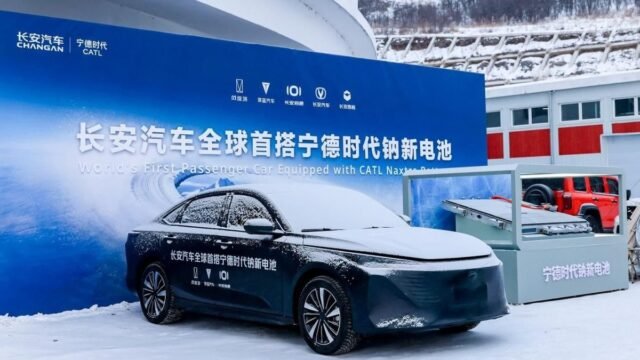
| Naxtra sodium-ion | Cold-weather and resource-diverse applications | GWh-scale industrialisation reported; full-scale production planned by end-2026 | Final mass-production timing remains pending |
That portfolio shows why “Which CATL battery is best?” has no universal answer. LFP prioritises cost, durability and safety; NCM supports higher energy density; sodium-ion adds a different resource and temperature profile; pack and thermal engineering can matter as much as chemistry. CATL’s 2026 product claims are useful for understanding direction, but they are not independent road-test results or guarantees for every vehicle.
What did CATL’s August 9 aviation-battery announcement establish?
CATL said its passenger-eVTOL aviation battery system passed a non-propagation validation in which two adjacent cells were triggered into thermal runaway simultaneously at different pack locations, including middle and corner positions. CATL said the system used prismatic cells rated at 350 Wh/kg, and that a representative appointed by the Civil Aviation Administration of China witnessed cell and system production, inspection and testing. The August 9 release did not state the exact test date or publish the full protocol.
| Item | CATL’s August 9 statement | Evidence boundary |
|---|---|---|
| Energy density | 350 Wh/kg | Prismatic-cell figure, not full-pack energy density |
| Test trigger | At different pack locations, including middle and corner positions, two adjacent cells were triggered simultaneously | CATL reported no thermal propagation; the exact test date and full protocol were not published |
| Regulatory role | A CAAC-appointed representative witnessed production, inspection and testing | Witnessing is not a type certificate, airworthiness approval or permission for commercial passenger service |
| Commercial status | CATL said the system has mass-production capability and would first be used by AutoFlight’s passenger eVTOL | No delivery volume, in-service date, pack density, cycle life or aircraft range was disclosed |
The aviation release supports a narrow conclusion: CATL announced a two-cell thermal-runaway non-propagation result under regulatory witness. It does not establish standalone CAAC approval for the battery or show that AutoFlight’s intended passenger eVTOL has obtained a type certificate, standard airworthiness certificate or commercial passenger-service authorization. The 350 Wh/kg aviation-cell figure also must not be confused with the separate 350 Wh/kg Qilin Condensed passenger-EV product listed above. Source: CATL’s August 9, 2026 release.
BYDToday’s dated CATL Super Tech Day coverage tracks the launch context; this guide focuses on the durable product architecture and evidence boundaries.
CATL is more than an EV-cell vendor
Power batteries
Vehicle batteries remain CATL’s defining business. The company competes through cell chemistry, pack systems such as CTP, battery-management software, manufacturing consistency and the ability to support multiple automakers. Its scale is a commercial advantage, but it also creates exposure to vehicle demand, pricing pressure and customer concentration.
Energy storage
Stationary storage uses different duty cycles and economics from passenger vehicles. CATL reported leading energy-storage battery shipments for a fifth consecutive year in 2025. Storage diversifies demand, while bringing its own risks around project finance, grid rules, safety standards and long-duration performance.
Recycling and circularity
CATL reported processing 210,000 tonnes of spent batteries in 2025 and regenerating 24,000 tonnes of lithium salts. Recycling does not eliminate the need for new mining, but it can return material to the supply chain and reduce waste when collection, chemistry sorting and recovery economics work.
Charging and battery swapping
CATL is extending from the battery pack into Choco-Swap passenger-car stations, QIJI heavy-truck swapping and integrated charging-and-swap sites. This creates a service and infrastructure layer, but rollout targets remain plans until stations are built, compatible vehicles are sold and utilization is demonstrated.

How large is CATL’s Ning Service network?
CATL said its Ning Service aftermarket brand opened ten sites on August 10, 2026, while setting out a plan to roll out direct-operated experience centers across 100 cities in the second half of 2026. The company also reported a network spanning 84 countries and 1,376 professional service stations, plus operation-and-maintenance support for 1,505 battery-swap stations. Those figures are company-reported, not an independent site audit.
| Measure | CATL’s figure | Status and boundary |
|---|---|---|
| Same-day site openings | 10 sites | CATL reported openings in Haikou, Hangzhou, Zibo, Shenyang, Guangzhou, Suining, Ningbo, Hong Kong, Norway and Türkiye; no street-level list or independent count was provided |
| Current service footprint | 84 countries; 1,376 professional service stations | Company-reported network; CATL did not define how many are direct-operated or publish a complete station list |
| Battery-swap support | 1,505 stations | Operation-and-maintenance support, not a claim that Ning Service built, owns or operates every station |
| Direct-operated experience centers | 100 cities | Second-half 2026 rollout plan, not 100 completed centers |
| Mobile inspection and repair vehicle | 800 km CATL-stated combined range; 30+ inspection and 50+ repair operations | Product claims; CATL did not publish the range test cycle or validation method |
CATL also said the mobile workshop could address 90% of repair scenarios other than deep repair and reduce difficult-fault repair time from 72 hours to 48 hours. These are product and service claims, not audited average repair outcomes. CATL did not disclose the scenario denominator, geographic conditions or performance sample. Source: CATL’s August 10, 2026 Ning Service release.
This update adds a missing part of CATL’s business model: battery value does not end when a pack leaves the factory. Diagnostics, repair authorization, parts, recycling and swap-station maintenance can extend CATL’s role into the operating life of vehicles and infrastructure. For CATL’s separate infrastructure roadmap, see BYDToday’s CATL charging-and-swap analysis.
What the 2025 results say about CATL’s strategy
CATL’s 2025 results show a company using scale to fund several technology routes at once. Revenue rose 17%, net profit attributable to shareholders rose 42%, and R&D investment reached RMB 22.1 billion. Production capacity reached 772 GWh, with another 321 GWh under construction at year-end. Those figures explain why CATL can pursue EV batteries, storage, sodium-ion, recycling and infrastructure in parallel.
Q1 2026 continued that growth: unaudited revenue reached RMB 129.1 billion, up 52.45% year on year, and net profit attributable to shareholders reached RMB 20.7 billion, up 48.52%. Quarterly growth should not be annualised mechanically; product mix, raw-material prices, capacity ramp-up and one-off items can change margins.
For the dated financial details, use BYDToday’s CATL 2025 results report. This guide explains how those numbers connect to the company’s technology and business model.
What readers should not assume
- Market-share leadership is not permanent. The 39.2% figure is for a defined 2025 global EV battery deployment dataset.
- A product launch is not the same as broad vehicle availability. Naxtra’s end-2026 full-scale production target is still pending.
- Cell-level energy density is not pack-level energy density. Cooling, structure, safety and electronics add mass and volume.
- Fast-charge claims need conditions. Charger power, starting state of charge, temperature, vehicle voltage and battery protection all affect real results.
- CATL’s technology claims are first-party evidence. They establish what the company announced, not independent validation of every performance claim.
Robin Zeng has also argued publicly against overhyping solid-state timelines. BYDToday’s solid-state battery reality check covers that separate forward-looking debate.
Continue in the Knowledge Hub: Use the China NEV Knowledge Hub to move between company and founder guides, battery technologies, business models, vehicles and markets.
Frequently asked questions
What does CATL stand for?
CATL stands for Contemporary Amperex Technology Co., Limited. It is a Chinese battery and zero-carbon technology company headquartered in Ningde, Fujian.
Who founded CATL?
A founding team led by Zeng Yuqun, widely known internationally as Robin Zeng, established CATL in 2011 after earlier building experience at consumer-battery maker ATL.
Who is Robin Zeng?
Robin Zeng is the English name used by Zeng Yuqun. CATL’s 2025 annual report identifies him as chairman, executive director and general manager; CATL’s English releases describe him as chairman and CEO.
Is CATL the world’s largest EV battery maker?
By global EV battery deployment, yes for 2025. CATL cited SNE Research showing a 39.2% global share and a ninth consecutive year in first place. That measure is not the same as revenue share or every battery market.
What battery types does CATL make?
CATL develops LFP and NCM lithium-ion batteries, sodium-ion batteries, condensed-electrolyte products, energy-storage systems and multiple pack architectures. The correct product depends on vehicle, climate, charging, cost and lifecycle requirements.
Does CATL make cars?
CATL’s core role is supplying batteries, storage systems, chassis and energy infrastructure rather than selling a mass-market CATL-branded passenger-car range. It works with automakers and infrastructure partners instead.
How large is CATL’s Ning Service network?
CATL reported 1,394 service locations across 85 countries and regions on September 24, 2026. Its targets of 100 countries and regions by 2027 and 10,000 locations by 2030 are plans, not completed coverage. These company figures do not establish eligibility or warranty coverage for an individual vehicle.
Did CATL’s August 9 aviation-battery release announce CAAC approval?
No. CATL said a CAAC-appointed representative witnessed a two-adjacent-cell thermal-runaway non-propagation test. The release did not announce a type certificate, standard airworthiness certificate or commercial passenger-service authorization for AutoFlight’s passenger eVTOL; 350 Wh/kg is a prismatic-cell figure, not pack energy density.
Is CATL’s entire battery value chain carbon neutral?
No. CATL said all 20 battery plants had been certified carbon neutral and used those certifications to support its core-operations claim; the release does not publish each certificate’s boundary. CATL’s full value-chain carbon-neutrality target remains 2035, and the new-supplier carbon-footprint data requirement announced for 2027 is a future procurement policy rather than a completed value-chain result.
Has CATL started cell production in Hungary?
CATL announced Debrecen cell trial production on September 22, 2026. Trial operations are not confirmation of series production or realization of the full planned 100 GWh capacity.
Does CATL’s battery passport pilot prove its batteries are more sustainable?
No. GBA says its 2026 operational trials use draft methodologies and should not be used to draw general or comparative sustainability conclusions about participating companies or products. CATL’s participation is evidence of trial involvement, not a ranking or proof that every CATL battery has a finished passport.
Sources
- CATL: Norway NING SERVICE centre and network update, September 24, 2026; checked October 19.
- CATL: third GBA Battery Passport pilot wave, October 12, 2026; checked October 16.
- GBA: 2026 operational-trials results and disclaimer, results launched September 16, 2026; page checked October 16.
- CATL: Debrecen cell-building trial operations, September 22, 2026; checked October 5, 2026.
- CATL: 2025 annual report highlights, March 10, 2026.
- CATL 2025 Annual Report, published March 2026.
- CATL 2026 First Quarterly Report, April 15, 2026.
- CATL company profile and official history, checked July 16, 2026.
- CATL 2026 Super Technology Day: six major innovations, April 21, 2026.
- CATL Hong Kong listing announcement, May 20, 2025.
- CATL Hong Kong prospectus, May 2025.
- CATL: 350 Wh/kg aviation-battery adjacent-cell thermal-runaway validation, August 9, 2026.
- CATL: Ning Service Brand Day, network metrics and second-half rollout plan, August 10, 2026.
- CATL: original 2025 core-operations and 2035 value-chain carbon-neutrality plan, April 18, 2023.
- CATL: core-operations carbon-neutrality result and 2035 value-chain roadmap, August 17, 2026.
Editorial basis: CATL and exchange filings were used for corporate, financial and leadership facts; product, network, service and carbon figures are explicitly labeled as company claims. No named human reviewer was fabricated.