Quick answer: Neta Auto is the EV brand of Hozon New Energy Automobile, founded in 2014 by Fang Yunzhou. It led China’s EV startups by deliveries in 2022 before falling sales, losses and a funding crisis. A court accepted Hozon into bankruptcy reorganization on June 12, 2025. Evidence located through July 17, 2026 did not show a liquidation order, corporate cancellation or approved reorganization plan.
Last verified: July 17, 2026. Legal status is sourced to the court platform, the court-appointed administrators and exchange-facing disclosures. A company statement is used only for what Neta said about overseas operations and planned production support on July 21, 2025.
Page role: This is BYDToday’s single Neta Auto / Hozon company-history and failure-analysis Owner. The Chinese EV startups overview remains the parent comparison; regional price, model and after-sales stories remain supporting pages.
Neta Auto, Hozon Auto and Nezha: which name is correct?
Hozon New Energy Automobile Co., Ltd. is the legal company. Neta Auto is its vehicle brand. “Nezha” is a common transliteration of the Chinese brand name 哪吒, drawn from the rebellious mythological figure, but the company’s international branding uses NETA. Searchers therefore encounter Hozon Auto, Neta Auto, Nezha Auto and 哪吒汽车 for the same corporate-brand system.
The distinction became essential after the court case began. The debtor in case (2025) Zhe 0483 Po 28 is Hozon New Energy Automobile Co., Ltd.; a model badge, overseas distributor or local assembly partner is not automatically the same legal debtor. This page uses “Hozon” for the company and “Neta” for the brand unless a source uses a different label.
| Name | What it means | Where it appears | Do not infer |
|---|---|---|---|
| Hozon New Energy | Chinese legal automaker and parent company | Court, registry, financing and application-proof documents | It is not a currently listed public company. |
| Neta Auto | Consumer EV brand launched in June 2018 | Vehicles, dealers, export subsidiaries and marketing | The brand name is not the debtor’s full legal name. |
| Nezha Auto | Alternative English rendering of 哪吒汽车 | Media, databases and some search results | It is not a separate automaker from Neta. |
| Overseas Neta entities | Local subsidiaries, distributors or partners | Thailand, Indonesia and other markets | Legal and operational status must be checked entity by entity. |
Who founded Neta Auto?
Fang Yunzhou founded Hozon and served as chairman. Hozon’s 2024 Hong Kong application proof identifies him as the founder, executive director and board chairman; Neta Thailand also introduced him as founder and chairman in 2023. The administrators’ August 2025 recruitment notice still listed Fang as legal representative and chairman.
That does not mean one person alone explains the operating company. Neta’s growth involved a wider executive team, including former chief executive Zhang Yong, engineers, local-government investors, suppliers and overseas partners. In late 2024, company communications identified Fang as chairman and CEO after a management reset. Once reorganization was accepted, however, present control and asset decisions also became subject to the court-supervised process and the administrators. Historical titles should not be used to bypass that legal reality.
Neta Auto history: from low-cost challenger to court-supervised reorganization
Neta’s early strategy was straightforward: obtain production qualifications, launch accessible battery-electric vehicles and use lower-tier cities and fleet demand to build volume before moving upmarket. It worked quickly. Hozon was founded in October 2014, opened a Yangtze River Delta research center in 2015, received a national development-and-reform production qualification in 2017 and a Ministry of Industry and Information Technology production license in 2018. The Neta brand and N01 arrived that year.
The Neta V became the scale product, supported by the Neta U. Neta then tried to expand its price ceiling with the S sedan and GT, while building the X and L families and accelerating overseas assembly. The strategic question changed from “can Neta sell an affordable EV?” to “can it finance a broader lineup, factories, software and global network while every vehicle remains economically sustainable?”
| Date | Milestone | Why it mattered | Evidence boundary |
|---|---|---|---|
| 2014–2018 | Hozon founded; R&D center and production qualifications established; Neta brand launched. | Created a legally qualified EV manufacturer rather than a design-only startup. | Company history and HKEX application proof. |
| 2020 | Neta V launched after Neta U. | Affordable crossovers became the main volume engine. | Model specifications varied by year and export market. |
| 2022 | 152,073 vehicles delivered in the application proof. | Neta briefly led China’s EV startups by annual volume. | Company-reported deliveries, not registrations in every market. |
| 2023–2024 | 124,189 deliveries in 2023; S, GT, X and L broadened the lineup; overseas assembly expanded. | Moved from one value product toward a multi-segment and international strategy. | Expansion increased execution and funding demands. |
| June 2024 | Hozon filed a Hong Kong listing application. | The draft disclosed revenue, losses, financing and business risks. | An application proof is not a completed IPO; Hozon never became HKEX-listed. |
| June 12, 2025 | Jiaxing Intermediate People’s Court accepted bankruptcy reorganization. | Moved Hozon into a formal court-supervised rescue process. | Reorganization is not liquidation or cancellation. |
| April–June 2026 | Third creditors’ meeting held; a June exchange document said the plan draft still awaited review and ruling. | Shows an active process after investor recruitment. | No court-approved plan was located by the cutoff. |
How large did Neta become?
Hozon’s draft Hong Kong application proof reported deliveries rising from 64,230 in 2021 to 152,073 in 2022, then falling to 124,189 in 2023. Revenue rose from RMB5.09 billion in 2021 to RMB13.55 billion in 2023. Growth therefore did not disappear overnight; the deeper problem was that scale did not produce a durable profit engine.
The same application materials showed negative gross profit in each of 2021, 2022 and 2023 and cumulative net losses above RMB18 billion across those three years. Average selling price increased as the lineup moved upmarket, but a higher selling price did not overcome production cost, price competition, research spending, sales-channel expense and the capital burden of a wider footprint.
Important: These are historical figures from a draft 2024 application proof, not audited 2025–2026 operating results. After the filing, Neta’s sales and financing situation deteriorated and comparable current financial statements were not located.
| Year | Deliveries | Revenue | Profit signal |
|---|---|---|---|
| 2021 | 64,230 | RMB5.09bn | Negative gross profit and net loss |
| 2022 | 152,073 | About RMB13.05bn | Volume peak, but negative gross profit and net loss |
| 2023 | 124,189 | RMB13.55bn | Delivery decline; gross margin still below zero |
| 2021–2023 | Not added here | Not added here | Cumulative net losses exceeded RMB18bn |
Why Neta Auto rose so quickly
Affordable products matched the first mass-market EV wave
Neta V and U reached buyers who wanted an electric car below the premium price bands occupied by many early startups. That expanded the addressable market beyond wealthy coastal consumers. The approach also aligned with fleet, ride-hailing and lower-tier-city demand, where purchase price and operating cost could matter more than brand prestige.
Production qualifications and local-government resources solved an early barrier
China’s early EV startups could design cars without holding the required production permissions. Hozon obtained its qualifications and built physical capacity in Tongxiang, then invested in Yichun and Nanning. The administrators’ 2025 notice listed industrial land, production lines, molds, test equipment, software and trademarks. Those assets help explain both Neta’s early speed and the complexity of rescuing the company later.
Overseas markets offered a second growth path
Thailand became Neta’s most visible overseas market, with the V entering in 2022 and local V-II production beginning in March 2024. Indonesia added local CKD assembly in May 2024. These operations gave the brand real customer and manufacturing footprints outside China, not merely export announcements. They also created country-specific responsibilities for parts, warranties and service when the parent entered reorganization.
Why the strategy broke down
No single model or executive decision “caused” Neta’s failure. The evidence instead shows a business whose operating losses, product expansion and capital needs became harder to finance as competition intensified.
| Pressure | Evidence | Why it mattered | What cannot be proved |
|---|---|---|---|
| Loss-making scale | Negative gross profit and large net losses in the 2021–2023 application-proof period. | Each additional sale could not reliably fund the wider organization. | One historical margin does not measure every later model. |
| Price war and weak differentiation | China EV prices fell while Neta’s volume products faced newer rivals. | Low-cost positioning limited room to absorb discounts and rising feature expectations. | Competition alone does not explain internal cash allocation. |
| Portfolio and capacity expansion | S, GT, X and L plus multiple domestic and overseas assets. | More segments and factories raised working-capital, R&D and channel requirements. | Administrator asset descriptions are preliminary, not final valuations. |
| Financing gap | Hong Kong IPO application did not become a completed listing; court later accepted reorganization for inability to pay due debt. | A cash-burning automaker needs continuous funding until operations self-finance. | A filed IPO never guaranteed proceeds. |
| Product and trust risk | The Malaysia-spec Neta V received zero stars under ASEAN NCAP’s 2021–2025 protocol in December 2024. | Safety perception complicated overseas value positioning and after-sales confidence. | The result covers the tested specification and did not itself cause the court case. |
Governance also matters, but it should be discussed carefully. Management changes, overdue obligations and supplier or employee claims are signals of distress; they do not justify invented motives or claims that one person diverted the company. The court process exists precisely because creditor claims, assets and rescue proposals require formal verification.
What is Neta Auto’s legal status now?
The precise term is bankruptcy reorganization. On June 12, 2025, the Jiaxing Intermediate People’s Court accepted Hozon’s reorganization case and appointed a joint administrator. The case was transferred to Tongxiang People’s Court on June 18 and assigned number (2025) Zhe 0483 Po 28.
The administrators publicly recruited investors in August 2025. That announcement was an invitation and expressly said it was not an offer or binding investment agreement. A final investor, signed investment agreement, creditor vote and court-approved reorganization plan are separate gates. Reporting one interested party or deposit does not prove that all gates were completed.
On January 30, 2026, the court platform published the first batch of employee claims and said other claims still involved arbitration, litigation or additional investigation. A Shenzhen Stock Exchange prospectus dated June 2026 later said Hozon’s third creditors’ meeting had been held on April 11 and that the reorganization-plan draft still awaited review and court ruling. BYDToday found no later official court order approving a plan or converting the case to liquidation by the July 17 cutoff.
| Label | Status at cutoff | Meaning | Evidence needed to advance it |
|---|---|---|---|
| Bankruptcy reorganization | Confirmed | Court-supervised attempt to preserve operating value and settle debts under a plan. | Already established by the acceptance ruling and court notices. |
| Investor recruitment | Confirmed historical step | Administrators solicited and evaluated potential rescue investors. | Does not prove a final investor or effective agreement. |
| Plan approved | Not verified | Creditors vote and court ruling would create an enforceable restructuring path. | Official vote result and court approval order. |
| Liquidation | Not verified | Assets would be realized and distributed rather than preserved under a rescue plan. | Court order converting or accepting liquidation. |
| Dissolved / cancelled | Not verified | Corporate existence would end through legal and registry procedures. | Registry cancellation and relevant court/administrator notices. |
| Production resumed | Not verified for the Chinese parent | Actual, sustained vehicle output—not a plan, trial or qualification-preservation step. | Dated factory evidence plus deliveries or regulator/company records. |
Did Neta restart production?
Not on evidence used for this page. Neta Indonesia’s July 21, 2025 statement said Hozon was preparing a detailed production-restoration plan and gradually restoring parts and after-sales support. Those were company intentions at a particular date. They are not proof that the Tongxiang or other Chinese lines returned to sustained commercial output.
Overseas operations must be separated. The same statement said most overseas subsidiaries and partners, including entities in Thailand, Brazil and Indonesia, were operating normally at that time and were not themselves subjects of Hozon’s Chinese reorganization. “At that time” matters. Dealers, inventories, local assembly, parts and warranties can change independently, so buyers should check the current local legal seller and service network before purchase.
That regional distinction is explored in BYDToday’s Southeast Asia EV market Owner and Thailand EV price-war guide. A parent-company court case can affect confidence and supply without automatically closing every overseas entity.
Neta model map: what each vehicle was trying to do
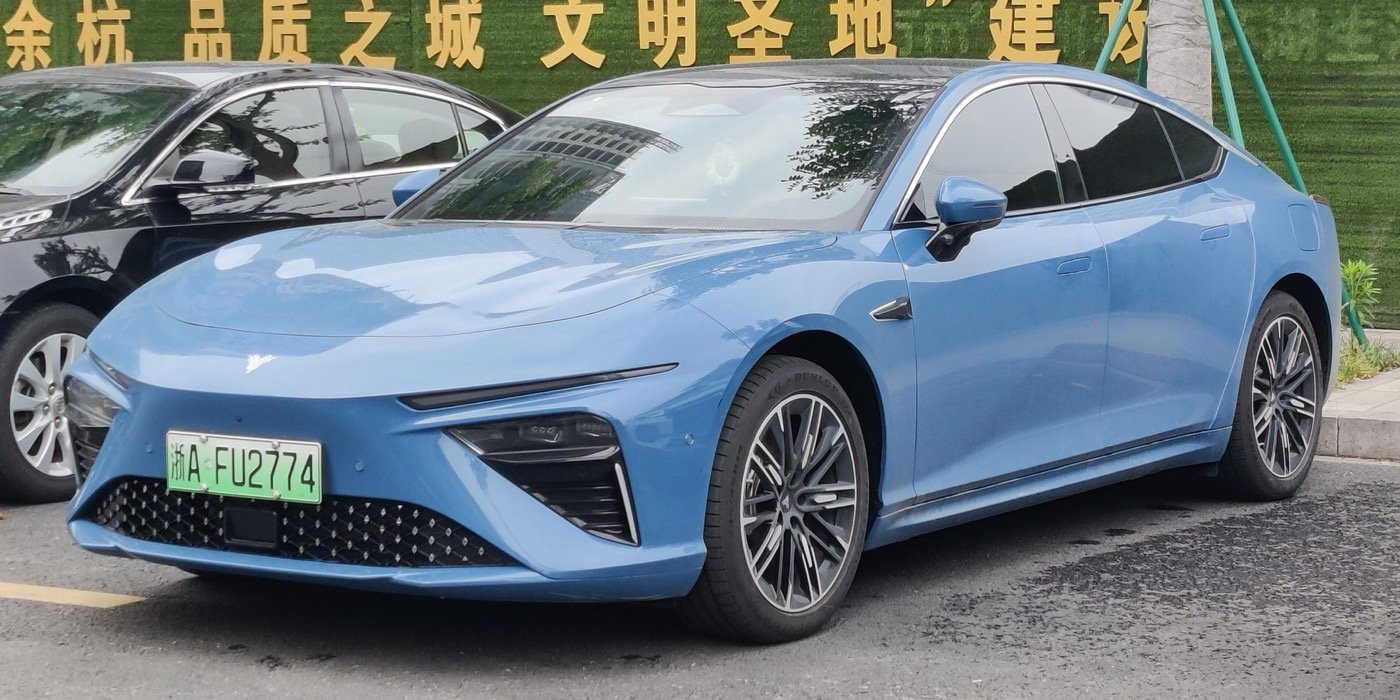
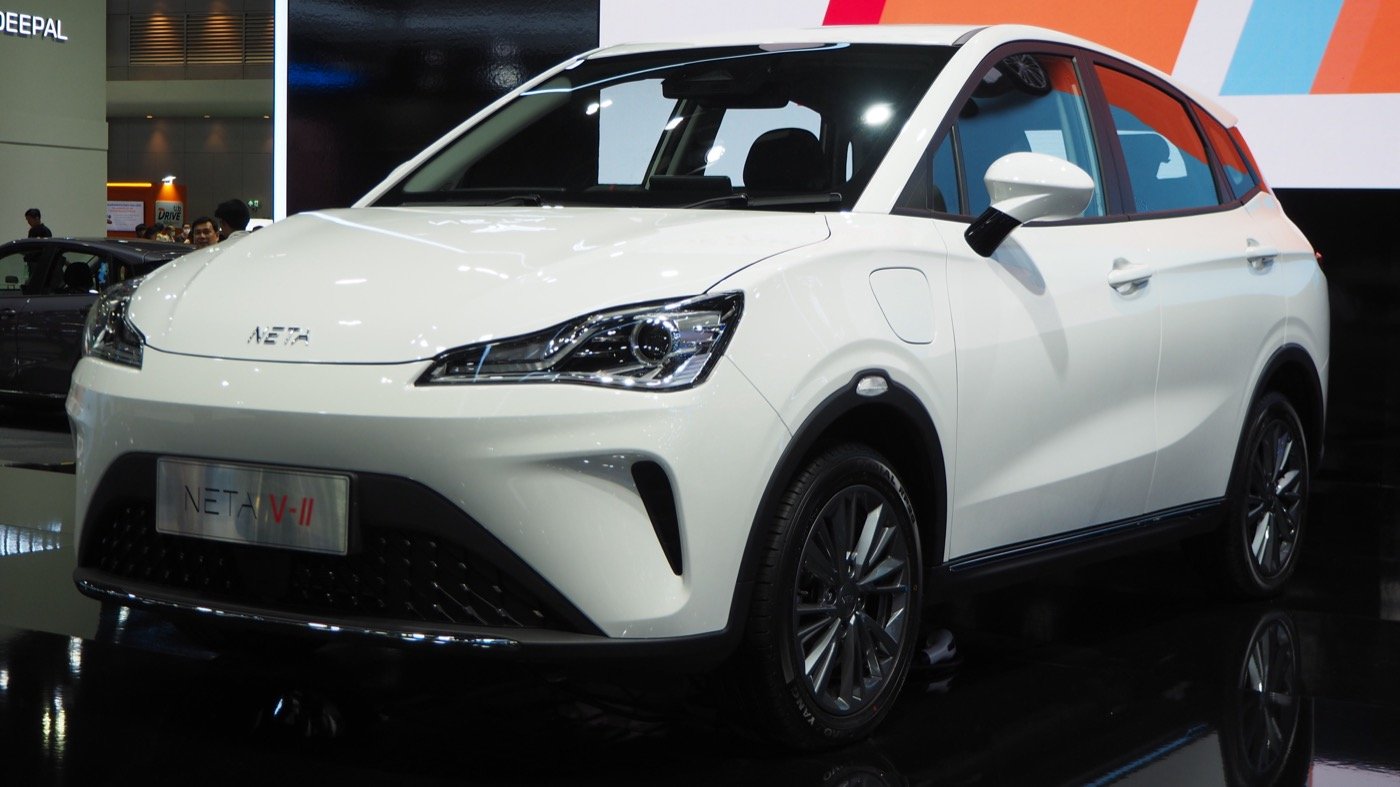
Neta’s model history helps explain both the rise and the strategic stretch. N01 proved the brand could ship a small EV. V—later Aya in China and V-II in several export markets—generated volume. U and X covered compact and mid-size SUV demand. S and GT attempted a higher-price, technology-led identity. L added both battery-electric and range-extended options in China.
| Family | Body / powertrain | Strategic role | Availability boundary |
|---|---|---|---|
| N01 | Small battery-electric SUV | First production product and proof of execution. | Historical model; not a current global product. |
| V / Aya / V-II | Subcompact battery-electric crossover | Main volume and export entry model. | Name, equipment and safety specification vary by market and year. |
| U / X | Compact to mid-size battery-electric SUVs | Family-use expansion above the V. | Local model pages must confirm current sale and support. |
| S | Mid-size sedan; BEV and range-extended versions | Attempt to raise price, technology image and margin. | Production and current availability require fresh local verification. |
| GT | Electric sports coupe | Brand halo and design statement. | Halo interest did not equal high volume. |
| L | Family SUV; BEV and range-extended versions | Response to China’s family-SUV and EREV demand. | Launch plans preceded the court case; present output is not assumed. |
What Neta’s collapse teaches about China’s EV market
Neta is a stronger lesson than a simple “price war victim” story. It reached real scale, held production qualifications, sold multiple models and built an overseas footprint. Yet those achievements could not substitute for positive unit economics, disciplined capital allocation and dependable financing.
The closest comparison is not one winning brand. NIO, XPeng and Li Auto followed different product, financing and infrastructure paths. Their survival does not prove every strategy is safe; it shows that volume, margin, cash, product cadence and access to capital must work together.
- Volume is not solvency: leading startup deliveries in one year did not offset persistent negative gross profit.
- Assets are both capability and burden: factories and tooling enable scale but require utilization and cash.
- Going upmarket is not automatic: a low-cost brand needs product and service credibility before higher prices repair margins.
- Globalization creates local obligations: warranties and parts depend on the local seller, importer and service network.
- Legal labels matter: reorganization, plan approval, liquidation, dissolution and restart are different events.
What to watch next
- An official court ruling on the reorganization-plan draft.
- The identity, funding proof and binding obligations of any final investor.
- Creditor voting results and the treatment of employee, supplier and secured claims.
- Audited asset values rather than preliminary administrator descriptions.
- Verified Chinese vehicle output and customer deliveries—not production intentions.
- Country-by-country parts, warranty and dealer continuity for existing owners.
Explore the wider system: Use the China NEV Knowledge Hub to move between company Owners, founders, vehicles, technologies and market explainers.
Frequently asked questions
Who owns Neta Auto?
Neta Auto is the vehicle brand of Hozon New Energy Automobile Co., Ltd. Hozon is a privately held Chinese company in court-supervised bankruptcy reorganization; it is not a currently listed stock.
Who founded Neta Auto?
Fang Yunzhou founded Hozon and is identified in the 2024 Hong Kong application proof as founder and chairman. The administrators’ August 2025 notice also listed him as legal representative and chairman.
Is Neta Auto bankrupt?
Hozon is in a bankruptcy proceeding, specifically bankruptcy reorganization accepted on June 12, 2025. That term is more precise than saying the brand has been liquidated or closed.
Has Neta Auto been liquidated?
No liquidation order was located by the July 17, 2026 cutoff. A June 2026 exchange document said the reorganization-plan draft still awaited review and ruling. Liquidation, dissolution and registry cancellation would require different official evidence.
Did Neta Auto restart production?
Sustained production by the Chinese parent was not verified. A July 2025 company statement described a production-restoration plan under preparation, which is not evidence that output or deliveries resumed.
Can existing Neta owners still get parts and warranty service?
It depends on the country, legal seller, distributor and dealer network. Neta said in July 2025 that it was gradually restoring parts and after-sales support and that most overseas entities were then operating, but owners should verify current local coverage rather than rely on that dated global statement.
Sources
- National Enterprise Bankruptcy Information Disclosure Platform, Hozon employee-claims notice and case transfer details, January 30, 2026
- Zhejiang Association of Bankruptcy Administrators, court-appointed administrators’ investor recruitment notice, August 1, 2025
- Shenzhen Stock Exchange filing, Songyuan Automotive Safety Systems prospectus, June 2026, p. 158
- Shanghai Securities News, shareholder accounting disclosure on Hozon investment, July 10, 2026
- HKEX, Hozon English application proof, June 26, 2024
- HKEX, Hozon Chinese application proof, June 26, 2024
- Neta Indonesia, company milestone history
- Neta Thailand, Fang Yunzhou founder and chairman profile, July 11, 2023
- Neta Indonesia, reorganization, production-plan and overseas-operations statement, July 21, 2025
- Neta Thailand, Thailand mass-production announcement, March 15, 2024
- Neta Indonesia, Indonesia CKD production announcement, June 5, 2024
- ASEAN NCAP, Neta V zero-star assessment, December 9, 2024
- BYDToday, Source Methodology and Editorial Policy