Last verified: July 17, 2026. Prices are live Tesla China list prices observed on that date; factory scale uses Tesla’s Q1 2026 update and Shanghai’s 2025 reporting. Driver-assistance status is limited to what Tesla China and China’s Ministry of Industry and Information Technology state.
Quick Answer
Tesla China is built around Gigafactory Shanghai, which delivered 851,000 vehicles in 2025 and has installed annual capacity above 950,000 Model 3/Y units. Its China strategy combines a narrow locally built lineup, direct pricing, exports and supervised driver assistance. The 851,000 figure is factory deliveries—including exports—not Chinese retail registrations.
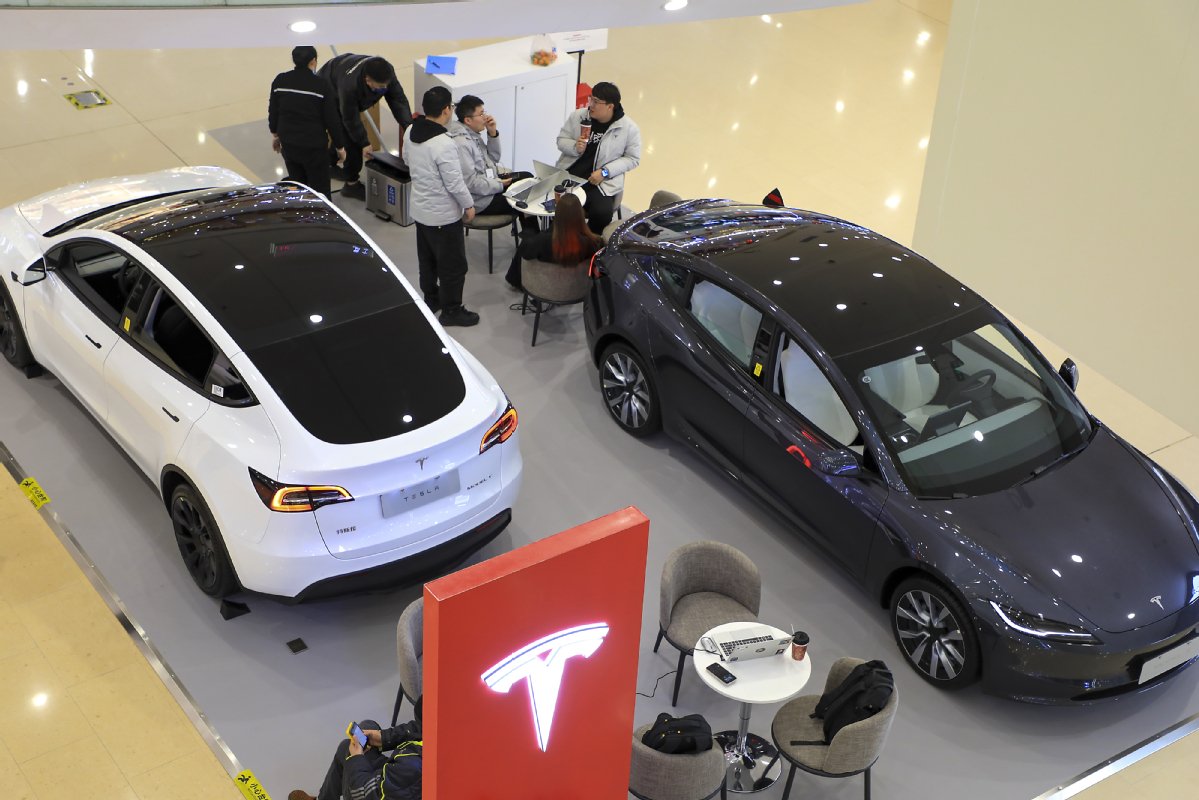
This is BYDToday’s preferred entity Owner Page for Tesla’s China business. Dated monthly sales, individual price campaigns, software updates and export shipments remain supporting coverage. They should link here for durable context rather than becoming competing Tesla-in-China history pages.
Tesla China at a glance
| Metric | Verified figure | Evidence date | What it means |
|---|---|---|---|
| Installed annual vehicle capacity | >950,000 | Q1 2026 update | Model 3/Y manufacturing capacity, not guaranteed output |
| Shanghai factory deliveries | 851,000 | Full year 2025 | Factory total serving China and export markets |
| Share of Tesla global deliveries | About 52% | Full year 2025 | 851,000 versus Tesla’s roughly 1.64 million global deliveries |
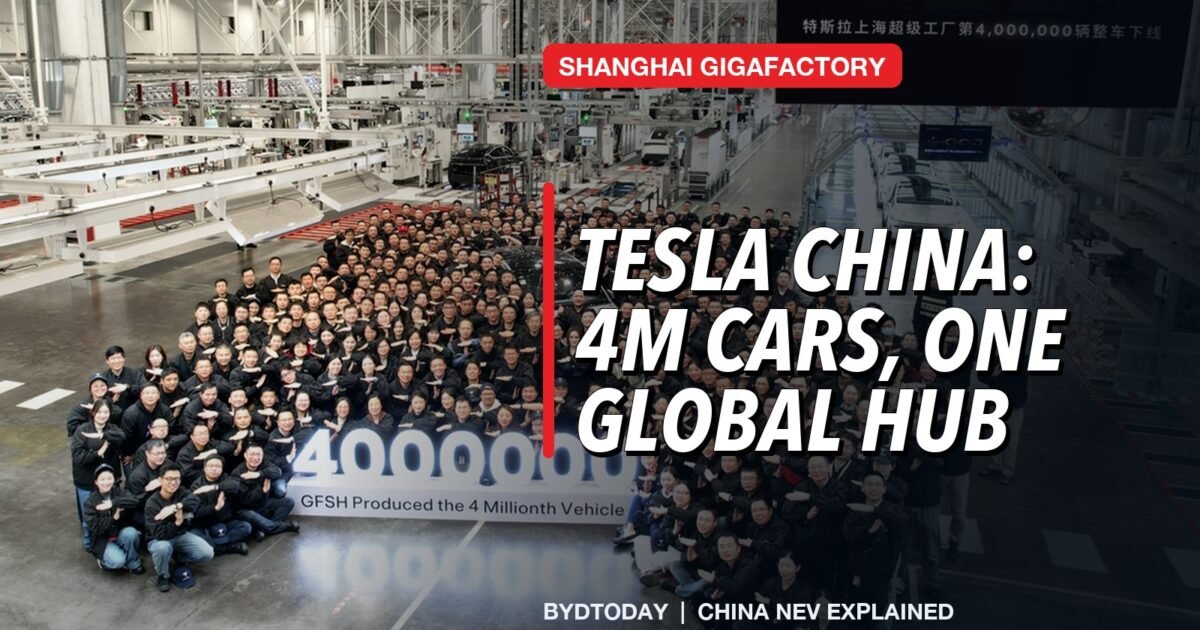
| Cumulative Shanghai output | 4 million | December 8, 2025 | Milestone since local Model 3 production began |
| Reported localization | 95% | December 2025 report | Company/municipal reporting, not an audited supplier census |
| Tier-one supplier network | >400 | December 2025 report | More than 60 also serving Tesla’s global network |
Capacity, production, factory deliveries, wholesale volume, domestic retail sales and registrations are different measures. Tesla itself warns that installed capacity is not the same as production rate. Shanghai’s 851,000 figure counts the factory’s total deliveries to both China and overseas markets; it should not be presented as 851,000 Chinese customer sales.
Why Gigafactory Shanghai changed Tesla
Shanghai gave Tesla local manufacturing in the world’s largest EV market and an export base for Asia-Pacific and Europe. Tesla’s 2025 Form 10-K says international factories in China and Germany improve affordability by reducing transport and manufacturing costs and limiting some tariff exposure. The filing lists both Gigafactory Shanghai and Megafactory Shanghai as primary manufacturing facilities; Tesla owns the buildings and holds 50-year land-use rights.
The vehicle factory’s first locally produced Model 3 deliveries came in 2019. By December 2025, the site had produced its four-millionth vehicle. Shanghai municipal reporting says the integrated stamping, welding, painting and assembly operation can turn out a vehicle roughly every 30 seconds. That is a reported line-rate illustration, not a promise that the plant sustains the same pace every hour of the year.
The factory is also a supply-chain strategy. Shanghai reported more than 400 tier-one suppliers, 95% localization and more than 60 Chinese suppliers serving Tesla globally. Those figures help explain cost and speed, but they are company/municipal claims rather than a public, component-by-component audit.
How to read Tesla China sales numbers
Tesla’s Shanghai total is unusually easy to misread because one factory supplies several markets. A useful hierarchy is:
- Factory deliveries or wholesale: vehicles released from the plant into domestic and export channels.
- Exports: the portion shipped outside mainland China; this can move sharply as vessels and destination batches change.
- Domestic retail or registrations: vehicles purchased or registered by customers in China; this is the closest measure of local demand.
In 2025, Shanghai reported 851,000 factory deliveries. Tesla’s annual report recorded roughly 1.64 million global vehicle deliveries, which makes Shanghai about 52% of the global total. That calculation is strategically meaningful, but it still does not reveal the annual domestic-versus-export split.
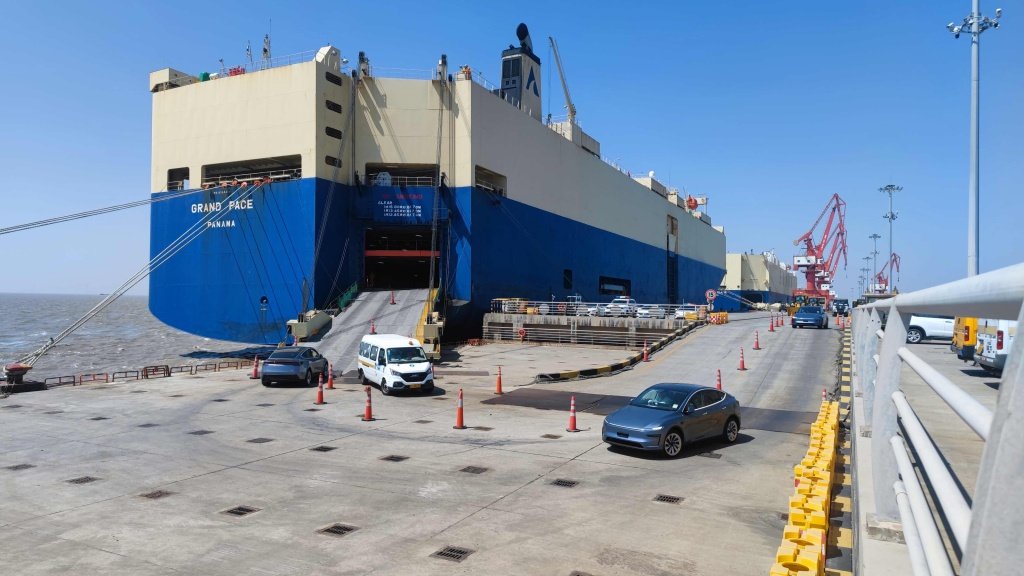
Monthly news needs the same discipline. BYDToday’s April 2026 Shanghai delivery report is useful as a dated data point, not as a permanent trend line. The Model Y L export analysis explains why Shanghai’s role extends beyond the Chinese retail market.
Tesla China prices in July 2026
Tesla’s direct-sales configurator makes list prices visible, but conditional insurance subsidies, paint benefits, financing and inventory discounts can produce a lower transaction figure. For a stable comparison, start with the base list price and label every campaign separately.
| Model | Version | List price | Pricing boundary |
|---|---|---|---|
| Model 3 | Rear-wheel drive | RMB 235,500 | Before conditional campaign benefits |
| Model 3 | Long-range rear-wheel drive | RMB 259,500 | Live configurator list price |
| Model 3 | Long-range all-wheel drive | RMB 285,500 | Live configurator list price |
| Model 3 | Performance all-wheel drive | RMB 339,500 | Live configurator list price |
| Model Y | Rear-wheel drive | RMB 263,500 | Before options and campaign benefits |
| Model Y | Long-range rear-wheel drive | RMB 288,500 | Live configurator list price |
| Model Y | Long-range all-wheel drive | RMB 313,500 | Live configurator list price |
| Model Y L | Six-seat long-wheelbase | RMB 339,000 | Live configurator list price |
A Tesla China page observed on the same date showed a conditional RMB 8,000 insurance subsidy reducing a configured Model 3 rear-wheel-drive vehicle price to RMB 227,500. That does not make RMB 227,500 the universal list price: eligibility, delivery timing, insurance purchase and other terms apply. Readers should recheck Tesla’s configurator before buying.
FSD in China: what is actually available?
In China, Tesla’s configurator now labels the top package Tesla Assisted Driving rather than promising unrestricted full self-driving. The page is explicit: currently available functions require active driver supervision, the vehicle is not fully autonomous, and future functions depend on further development and administrative approval.
| Package | Price | Current scope | Evidence boundary |
|---|---|---|---|
| Basic Autopilot | Included | Traffic-aware cruise control and lane-centering assistance | Driver remains responsible |
| Enhanced Autopilot | RMB 32,000 | Includes navigation-assisted driving, lane changes, parking and summon functions listed as available | Availability can vary by vehicle, software and road conditions |
| Tesla Assisted Driving | RMB 64,000 | Includes lower packages; broader functions are described as coming later | Future activation depends on R&D and administrative approval |
China’s Ministry of Industry and Information Technology published mandatory standard GB 47955—2026 on June 27, 2026, with implementation scheduled for January 1, 2027. It defines combined driver assistance on the premise that the driver continuously observes traffic and controls the vehicle. The standard reinforces why a purchasable software package, a supervised feature rollout and approval for unsupervised autonomy are not interchangeable claims.
BYDToday’s Tesla China FSD approval report should be read as dated rollout coverage. This Owner Page supplies the durable boundary: the live Tesla China wording still requires supervision and says future capability remains approval-dependent.
How Tesla competes with Chinese EV makers
Tesla’s China proposition is concentrated: two locally built core nameplates, a direct-sales model, a high-throughput factory, a recognizable charging/software ecosystem and a global export role. Chinese rivals often compete with broader price coverage, more body styles, faster model cadence and driver-assistance packages bundled across more trims.
The strategic question is not whether one company is universally “ahead.” It is whether Tesla’s manufacturing efficiency and software model can offset a narrower product range and intense local feature competition. Older comparison numbers and price examples should not replace the live figures on this page.
Elon Musk’s role in Tesla China
Elon Musk is Tesla’s chief executive. Tesla Investor Relations says he has served as CEO since October 2008 and on the board since April 2004. His product, manufacturing and AI priorities shape the China business, but Gigafactory Shanghai is not a one-person story: local management, engineers, workers, suppliers, customers and regulators determine day-to-day execution.
For BYDToday’s information architecture, Musk belongs here as a concise leadership entity, not as a separate China-personality URL. Search demand for “Elon Musk China” is broad and event-driven, while the durable reader need is Tesla’s factory, sales, pricing, exports and assisted-driving status.
What to watch next
- Domestic retail versus export mix: factory delivery growth can hide weaker local demand or stronger export batching.
- Price realization: list prices, conditional subsidies, finance support and inventory discounts should be tracked separately.
- Assisted-driving approvals: supervised availability is not approval for autonomous operation.
- Model breadth: use confirmed China configurator entries and keep unannounced or speculative model names outside the comparison.
- Supply-chain resilience: localization lowers logistics exposure but does not remove policy, commodity or supplier risk.
- Local competition: feature content, charging, service and residual value may matter as much as headline acceleration or range.
Explore the wider system: Use the China NEV Knowledge Hub to move between company and founder Owners, technologies, factories, vehicles and markets.
Frequently asked questions
Does Tesla have a factory in China?
Yes. Gigafactory Shanghai builds Model 3 and Model Y vehicles. Tesla’s Q1 2026 update listed installed annual capacity above 950,000 vehicles, while warning that installed capacity is not the same as actual production rate.
How many vehicles did Tesla Shanghai deliver in 2025?
Shanghai municipal reporting put 2025 factory deliveries at 851,000 vehicles, about 52% of Tesla’s roughly 1.64 million global deliveries. The figure includes vehicles for China and export markets; it is not a mainland-China retail-registration total.
What are Tesla’s current prices in China?
On July 17, 2026, Tesla China listed Model 3 versions from RMB 235,500 to RMB 339,500 and Model Y versions from RMB 263,500 to RMB 339,000. Conditional campaign benefits can lower a configured transaction figure, so buyers should recheck live terms.
Is Tesla FSD fully approved in China?
No public Tesla China wording supports calling the vehicle fully autonomous. Tesla sells a RMB 64,000 Tesla Assisted Driving package, but says current functions require active supervision and future functions depend on further development and administrative approval.
Does Gigafactory Shanghai export vehicles?
Yes. The Shanghai plant supplies markets across Asia-Pacific and Europe. Export volume can be uneven because shipments are batched; for example, 3,015 refreshed Model Y vehicles left Shanghai for Australia in April 2025.
Who leads Tesla and what is Elon Musk’s China role?
Elon Musk has been Tesla’s CEO since October 2008. He sets company-level product, manufacturing and AI direction, while Tesla China’s operating results also depend on local teams, the Shanghai supplier network, customers and regulatory approvals.
Sources
- Tesla 2025 Annual Report on Form 10-K, filed January 2026.
- Tesla Q1 2026 update: installed manufacturing capacity, April 2026.
- Shanghai: Tesla plant delivered 851,000 vehicles in 2025, January 7, 2026.
- Shanghai: Gigafactory reaches four-million-vehicle milestone, December 9, 2025.
- Tesla China Model 3 configurator, checked July 17, 2026.
- Tesla China Model Y configurator, checked July 17, 2026.
- Tesla China inventory/configuration page: assistance package wording, checked July 17, 2026.
- MIIT: GB 47955—2026 combined driver-assistance safety standard, July 2, 2026.
- Tesla Investor Relations: Elon Musk biography, checked July 17, 2026.
- Shanghai: refreshed Model Y export shipment, April 21, 2025.
Editorial basis: Tesla/SEC filings were used for company scale and leadership; Tesla China pages were used for live prices and software wording; MIIT was used for the regulatory boundary; Shanghai government reporting was used for factory and export facts. BYDToday completed Codex/editorial source, structure, duplicate and policy-boundary QA on July 17, 2026. No named human reviewer was fabricated.