Why This Matters Globally
The European Union is preparing to impose countervailing duties on Chinese plug-in hybrid electric vehicles (PHEVs) in the coming weeks, closing a regulatory loophole that has allowed manufacturers like BYD to capture a rapidly growing share of Europe’s electrified car market. The move, first reported by Handelsblatt on June 20, marks a significant escalation in Brussels’ trade confrontation with Beijing — extending tariff barriers from battery-electric vehicles to the hybrid cars that European consumers are increasingly choosing.
Since October 2024, the EU has imposed additional tariffs on Chinese battery-electric vehicle (BEV) imports, with BYD vehicles subject to a 27% total duty (10% base plus 17% additional), Geely facing 28.8%, and SAIC bearing the highest rate at 45.3%. PHEVs, however, were exempt — subject only to the standard 10% import tariff. Chinese automakers exploited this asymmetry aggressively, shifting their European export mix toward plug-in hybrids and away from the tariff-burdened BEVs.
What Chinese Automakers Are Doing
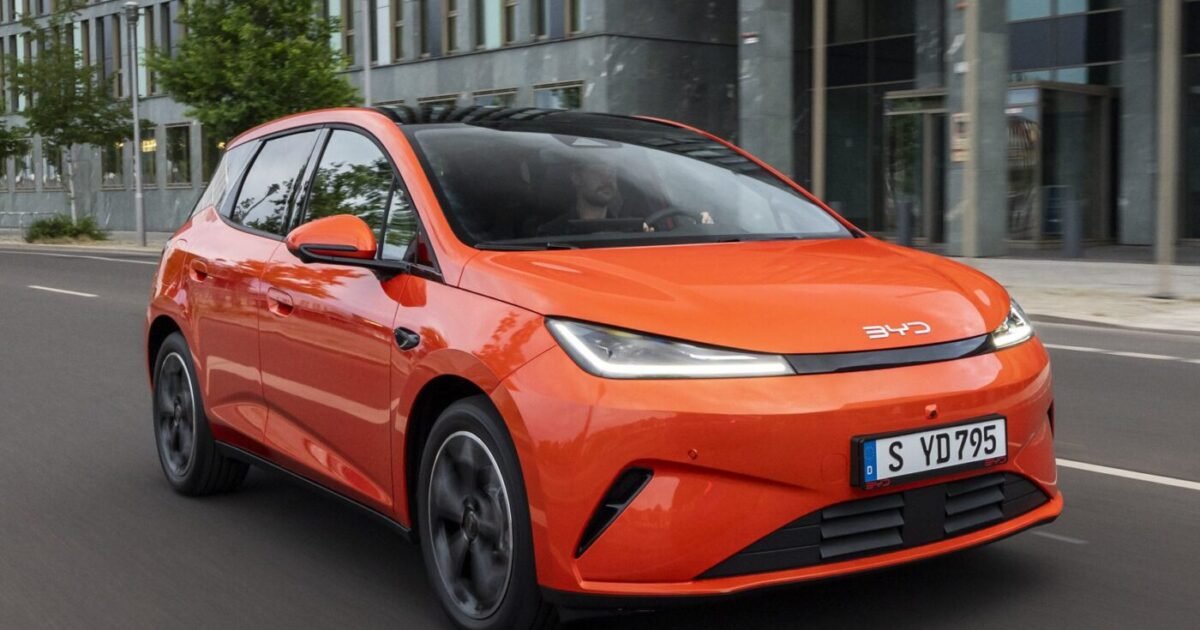
The strategy has delivered dramatic results. In May 2026, BYD announced it had become Germany’s best-selling PHEV brand for the first time, recording 4,290 new registrations. The compact Atto 2 DM-i SUV led the charge with 2,113 units, followed by the larger Seal U DM-i and Seal 6 DM-i Touring estate. According to industry data cited by electrive.com, roughly 70% of BYD’s new registrations in Germany are now plug-in hybrids, with only 30% being pure battery-electric vehicles.
BYD further expanded its PHEV lineup in June with the launch of the Dolphin G DM-i compact hatchback in Europe, while Chery and SAIC’s MG brand have similarly ramped up hybrid offerings. The pattern is unmistakable: Chinese manufacturers are using PHEVs as a tariff-arbitrage vehicle to build brand presence and dealership networks in Europe’s largest auto markets, even as BEV imports face prohibitive duties.
International Context: The EU’s Trade Calculus
The European Commission’s anti-subsidy investigation into Chinese PHEVs is reportedly already underway, according to senior EU officials cited by Handelsblatt. EU heads of state and government were scheduled to vote on the matter at the EU summit on Thursday evening, June 19, though the outcome remains undisclosed. Notably, the German federal government — which had previously opposed the BEV tariffs — appears not to be blocking the PHEV measures this time, signaling a hardening of Berlin’s position as Chinese hybrid imports surge.
The planned PHEV duties are expected to be manufacturer-specific, as with the BEV tariffs, but likely lower on average since the battery accounts for a smaller share of a PHEV’s value. This reflects the Commission’s calculation: Chinese BEVs captured headlines, but Chinese PHEVs are quietly building the dealership footprints and consumer trust that make long-term market dominance possible. Brussels appears determined not to let the hybrid channel become the unguarded back door that the BEV front door was meant to be.
What It Means for Global EV Buyers
For European car buyers, the immediate impact is straightforward: Chinese PHEVs are about to get more expensive. BYD’s Atto 2 DM-i, Seal U DM-i, and the newly launched Dolphin G DM-i — all currently priced aggressively against European competitors — could see price increases of several thousand euros once additional duties take effect. The window for buying a Chinese PHEV at current pre-tariff prices is narrowing fast.
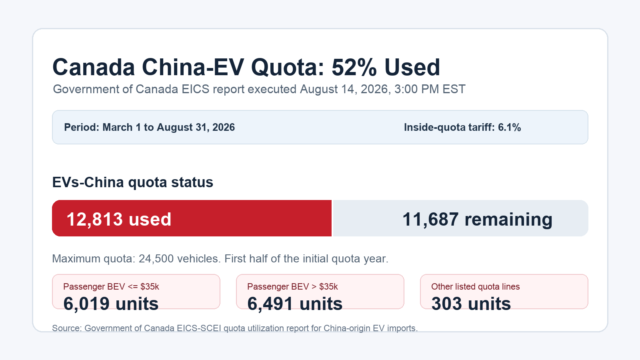
For the global auto industry, the EU’s move sets a precedent that other markets may follow. The United States already imposes a 125% tariff on Chinese EVs, and Canada recently introduced its own measures. If the EU successfully extends its tariff wall to PHEVs, it could trigger a domino effect in Latin America, Southeast Asia, and other regions where Chinese automakers are expanding. More fundamentally, the PHEV tariff escalation accelerates the urgency of BYD’s local-production strategy — its Hungary plant, set to begin assembly in Q4 2026, now looks less like a nice-to-have and more like an existential necessity for the European market.
The broader takeaway is that trade policy, not just product quality or pricing, is becoming the primary battleground for the global EV transition. Buyers caught between competitive Chinese technology and rising protectionist barriers face an increasingly complex purchasing decision — one where geopolitical positioning matters almost as much as range, charging speed, and sticker price.
Related Coverage
- EU’s Industrial Acceleration Act: New Rules Target Chinese EVs Where Tariffs Failed
- BYD Hungary Plant Starts Q4 Production, Pauses Turkey Project to Hunt for Second European Base