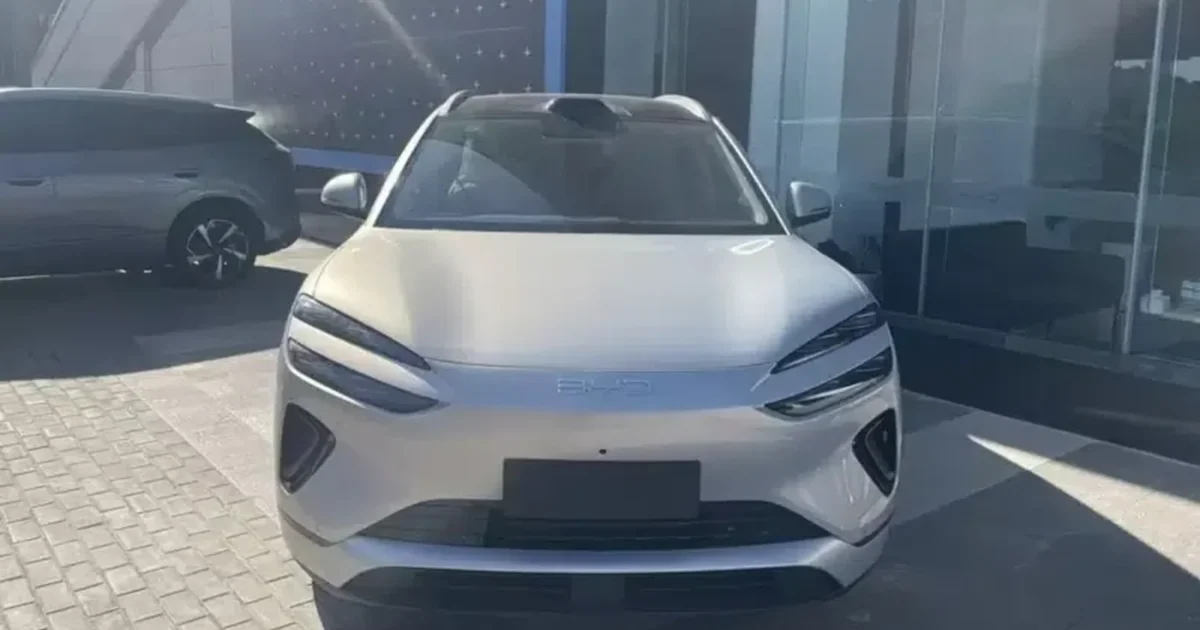
BYD has officially introduced its DM-i (Dual Mode Intelligent) plug-in hybrid technology in India, marking the Chinese automaker’s first foray into the country’s hybrid segment. The BYD Seal U PHEV — known as the Sealion 6 in other markets — will be the first model to carry the technology, with a launch confirmed before the end of 2026. The move positions BYD to capture a growing middle ground between India’s dominant ICE vehicles and its nascent EV market.
Background
India’s passenger vehicle market remains overwhelmingly powered by internal combustion engines, with EV penetration still in single digits. BYD, which has sold over 14,000 vehicles in India to date, has until now offered only battery-electric models such as the Atto 3, e6, and Seal sedan. The DM-i platform bridges the gap for consumers who want electric driving characteristics without range anxiety, combining a 1.5-liter Xiaoyun gasoline engine with BYD’s signature Blade Battery for a combined range exceeding 1,200 km, per BYD India’s official announcement.
Globally, BYD has sold over 8 million plug-in hybrid vehicles and commands more than 35% of the world’s PHEV market, according to the company. The DM-i system debuted in China in 2021 and has since become one of the best-selling hybrid platforms worldwide.
Key Numbers and Details
The BYD Seal U PHEV (Sealion 6) brings several headline figures to India’s hybrid segment:
| Specification | Value |
|---|---|
| Combined range | Over 1,200 km |
| Fuel consumption (NEDC) | 4.8 L/100 km |
| 0-100 km/h | Under 5.5 seconds |
| Battery | Blade Battery (LFP) |
| Engine | 1.5L Xiaoyun |
| Display | 15.6-inch rotatable touchscreen |
| Safety | 7 airbags, L2 ADAS, 360° camera |
| V2L | Yes (Vehicle-to-Load) |
The DM-i system operates in three modes — pure EV for daily commuting, series hybrid where the engine acts as a generator, and parallel hybrid where both power sources drive the wheels. According to BYD, the system automatically selects the optimal mode without driver intervention. The Seal U PHEV measures nearly 4.8 meters in length, positioning it as a premium mid-size SUV in the Indian market. Pricing is expected between Rs 35-50 lakh (approximately $42,000-$60,000), per Indian automotive media reports from CarToq and AutoGuide India.
Industry Impact
BYD’s entry into India’s hybrid segment comes at a strategic inflection point. The Indian government’s FAME II subsidies have expired, and while EV adoption is accelerating in urban centers, charging infrastructure remains limited outside major cities. A plug-in hybrid with 1,200 km of combined range eliminates the single biggest barrier to electrification in India: charging anxiety.
The move also puts BYD in direct competition with Maruti Suzuki’s strong hybrid technology and Toyota’s hybrid lineup, both of which dominate India’s nascent electrified vehicle segment. Unlike those mild hybrids, BYD’s DM-i offers genuine electric-only driving capability backed by the proven Blade Battery platform, as CnEVPost reported in its coverage of BYD’s annual shareholder meeting.
For BYD’s global strategy, India represents a critical volume market. The company’s chairman Wang Chuanfu told shareholders on June 6 that international markets will drive growth alongside domestic demand once battery capacity ramps up, according to CnEVPost. India’s 1.4 billion population and low vehicle penetration rate make it a long-term growth engine.
What’s Next
The BYD Seal U PHEV is expected to launch before the end of 2026, with pricing and variant details to be confirmed closer to the date. BYD India is also expanding its dealer network to support the broader product lineup. The company’s existing EV-only showrooms in major metros — Delhi, Mumbai, Bangalore, and Hyderabad — will serve as the primary retail channel. As BYD scales its second-generation Blade Battery production, more DM-i models could reach India, potentially including smaller and more affordable variants that address the sub-Rs 30 lakh segment.