Quick Answer: An 800V EV uses a higher-voltage traction architecture so the same charging power can flow at lower current than in a 400V system. That can reduce cable heat and support a broader fast-charging curve, but it does not guarantee a charging time. The car, charger, battery temperature, state of charge and site power must all align.
Last verified: July 27, 2026. Vehicle and charger figures below are manufacturer specifications or stated ideal-condition results, not universal real-world promises. Availability is kept to the market scope named by each source.
Scope: This guide explains 400V, 800V, 900V and 1000V EV architectures, C-rate, charging curves, silicon carbide and infrastructure limits. For national charging networks and standards, see China EV Charging Infrastructure; for chemistry, safety and degradation, see the EV Battery Technology Guide.
What does 800V EV charging actually mean?
“800V” normally describes the voltage class of a vehicle’s high-voltage traction system, not a voltage held at exactly 800.0 volts throughout every drive or charge. A pack’s voltage changes with cell chemistry, series cell count, state of charge, temperature and load. Manufacturers also use 800V, 900V and 1000V as platform labels, so two cars carrying the same label can have different usable voltage windows.
The attraction is simple electrical engineering. Charging power equals voltage multiplied by current. To deliver 300 kW at 400V would require about 750A in a simplified calculation; at 800V it would require about 375A. If cable resistance stayed unchanged, halving current would reduce resistive heat, which follows current squared times resistance, to one quarter. Real systems also change cable size, cooling, connectors and conversion hardware, so that result is a design illustration rather than a guaranteed vehicle-efficiency gain.
Core relationship: Power (kW) = Voltage (V) × Current (A) ÷ 1,000. Higher voltage can reduce current for the same power; it cannot make the battery accept power that its cells, thermal system or battery-management software will not allow.
| Label | What it usually means | Potential benefit | What it does not prove |
|---|---|---|---|
| 400V class | A conventional high-voltage passenger-EV architecture, with actual pack voltage varying by design and state of charge. | Mature components, broad charger compatibility and lower system cost can be advantageous. | It does not impose one universal 150–200 kW ceiling; some designs use voltage boosting or high current. |
| 800V class | A higher-voltage family used across the battery, inverter, motor and charging path to different degrees. | Lower current at equal power, reduced cable heat and more headroom for sustained high power. | It does not guarantee 350 kW, a flat charging curve or a particular 10–80% time. |
| 900V class | A marketing or engineering label for a system whose nominal or operating voltage sits above typical 800V designs. | Additional voltage headroom can support high power without extreme current. | There is no single global “900V” standard shared by every brand. |
| 1000V class | A passenger-EV or charger architecture designed around operation near the upper end of today’s high-voltage equipment. | Can enable megawatt-class peak claims when paired with very high current and a capable battery. | It does not mean every public connector supplies 1000 kW or every market receives the vehicle. |
Why peak kW is not the same as charging speed
A charger display’s highest kW number is only one point on a time-based charging curve. The battery-management system changes allowable current as cells warm, approach voltage limits or become nearly full. Cold-soaked batteries may begin slowly; a correctly preconditioned pack can enter its strongest window sooner. Power usually tapers as state of charge rises, especially near the upper part of the pack.
The useful comparison is energy added across a stated state-of-charge window divided by elapsed time. If a 100 kWh pack adds 70 kWh between 10% and 80% in 12 minutes, its average power over that interval is about 350 kW: 70 kWh divided by 0.2 hour. A 525 kW peak can therefore coexist with a much lower average. The peak is not false; it simply answers a different question.
Range added per minute is even less portable. It depends on the test cycle, vehicle efficiency, wheels, weather and the starting state. BYD’s official “400 km in five minutes” statement for the Han L is a company range-add claim for a specified China-market setup, not a 10–80% result and not a global charging promise.
| Metric | Definition | Useful for | Common mistake |
|---|---|---|---|
| Peak kW | The highest instantaneous charging power reported or observed. | Checking whether the car and charger can reach a high ceiling. | Treating one brief peak as the average for the whole session. |
| Average kW | Energy added in kWh divided by charging time in hours. | Comparing how much work the session actually completed. | Using gross battery capacity instead of measured energy added. |
| C-rate | Charge current relative to rated battery capacity; “5C” is a five-times-capacity rate under the maker’s definition. | Comparing battery stress and rate capability across pack sizes. | Assuming 5C means a full charge in 12 minutes under all conditions. |
| SoC window | The start and end state of charge, such as 10–80%. | Making time claims comparable and identifying taper. | Comparing 10–80% with 30–80% or an unspecified range-add test. |
| Charging curve | Power plotted against time or state of charge. | Seeing warm-up, plateau, taper and consistency. | Publishing a peak without the curve, temperature or charger limit. |
What does 5C or 10C charging mean?
C-rate relates charge current to battery capacity. As a rough energy-based intuition, a 100 kWh pack at 5C corresponds to about 500 kW. The shortcut is not a complete electrical model: C-rate is formally current-based, pack voltage changes, usable and gross capacity differ, and cell-level ratings do not automatically become full-pack or full-session performance.
A theoretical 1C rate could move one rated capacity in one hour; 5C could do so in one fifth of an hour. A road car cannot simply hold that maximum to 100% because cell voltage, heat, state of charge and longevity protections intervene. Manufacturers may quote a maximum cell C-rate, a pack peak or a limited SoC-window result. Readers should require the definition and window before comparing two claims.
Does an 800V EV need silicon carbide (SiC)?
Silicon carbide, or SiC, is a semiconductor material used in power devices such as traction inverters, onboard chargers and DC/DC converters. Compared with conventional silicon devices in an appropriate design, SiC can switch efficiently at high voltage and frequency, helping reduce switching loss, cooling demand and passive-component size. Those advantages are attractive in 800V-class systems.
But “800V requires SiC” is incorrect. Engineers can build high-voltage systems with different semiconductor choices, including silicon IGBTs, and SiC itself does not create a fast-charging battery. The vehicle still needs cells with low internal resistance, a strong thermal system, high-voltage contactors and insulation, suitable busbars and connectors, control software and a charger capable of supplying the requested voltage and current.

Which production EVs use 800V or 1000V charging?
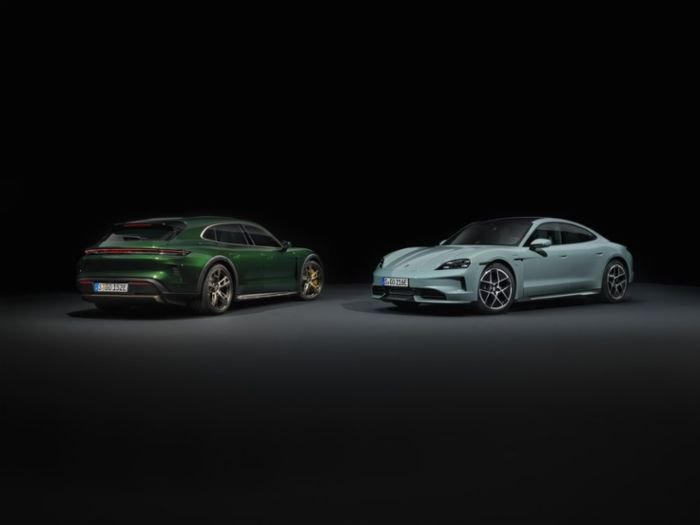
Real vehicles show why voltage, charger power and market scope must remain separate. Porsche’s updated Taycan is an established 800V production example. Porsche states up to 320 kW at an 800V DC station and 10–80% in 18 minutes under ideal conditions. It also fits a 150 kW DC/DC converter intended to improve charging on 400V networks. The cited release covers 2025-model-year cars and U.S. timing; trims and equipment should be checked in the destination market.
XPENG’s June 2025 European announcement said the new G6 and G9 use an 800V SiC platform and 5C batteries across all trims, with peaks of 451 kW and 525 kW respectively and a stated 10–80% time of 12 minutes. The initial registration and order statement named the Netherlands, Belux, Norway, Denmark, Sweden and France. That supports a Europe-market claim, not automatic worldwide availability.
BYD’s Super e-Platform goes beyond the 800V label. The company launched it on March 17, 2025 as a full-domain 1000V architecture, claiming 1,000A, 10C and 1MW peak capability. It said the first cars were the Han L and Tang L opening for pre-sale in China. See the BYD Super e-Platform guide for brand-specific battery, motor, dual-gun and station rollout details.
| Example | Architecture or equipment | Stated charging figure | Correct boundary |
|---|---|---|---|
| Porsche Taycan | 800V production vehicle; 150 kW DC/DC converter for 400V networks. | Up to 320 kW; 10–80% in 18 minutes under ideal conditions. | Updated 2025-model-year release; exact trim, battery and market equipment vary. |
| XPENG G6 / G9 | 800V SiC platform with 5C battery across the announced European trims. | 451 / 525 kW peak; stated 10–80% in 12 minutes. | June 2025 Europe-market announcement naming selected countries; not a global claim. |
| BYD Han L / Tang L | Full-domain 1000V Super e-Platform with a stated 1,000A battery capability. | 1MW peak; Han L claim of 400 km range added in five minutes. | March 2025 company launch and initial China pre-sales; range-add is not 10–80%. |
| Huawei FusionCharge | Charging infrastructure, not a vehicle platform; liquid-cooled power unit and connector system. | Power unit up to 720 kW; a single connector up to 500A in the cited solution. | Cabinet/power-unit output is not guaranteed to one car; site allocation and vehicle request govern delivery. |
Why a 720 kW or 1MW charger may deliver much less
Charging equipment has its own hierarchy. A site can advertise the maximum output of a power cabinet shared across dispensers, the limit of one dispenser, the current rating of a cable or the power delivered to one vehicle. Those numbers are not interchangeable. Huawei’s Power2Drive Europe release, for example, says the liquid-cooled power unit supports up to 720 kW while a single connector supports up to 500A. A 500A connector at 800V is roughly 400 kW before losses; the 720 kW cabinet figure should not be copied as one-car output.
The car and charger negotiate a voltage and current request. Delivered power is limited by the lowest active constraint: charger voltage, connector current, cable temperature, vehicle pack voltage, battery-management request, the car’s charging curve, power shared with other stalls, on-site transformer capacity and grid connection. Battery-buffered storage can help a constrained site supply brief high power without sizing every upstream component for simultaneous peaks, but storage adds cost, conversion loss and operating complexity.

Can an 800V car charge on a 400V charger?
Often yes, but the result is vehicle-specific. Some 800V vehicles use a DC/DC boost converter so a lower-voltage charger can feed the higher-voltage battery. Others can reconfigure parts of the pack or accept charging only within a limited charger voltage range. The Porsche Taycan example explicitly includes a converter for 400V networks. The presence, rating and behavior of such hardware must be verified for the exact model and market.
The reverse is also not automatic: a charger capable of 1,000V does not force 1,000V into a 400V car. Standards-based DC charging uses communication and safety checks before energy flows. CharIN’s CCS material emphasizes interoperable charging processes, power classes, load balancing and conformance, which is why connector shape alone is not enough to predict session power.
| Constraint | Question to ask | Evidence to record | Likely effect |
|---|---|---|---|
| Battery state | Was the pack preconditioned, warm and at a low enough SoC? | Arrival SoC, pack/ambient temperature and navigation preconditioning. | Cold or high-SoC packs request less power. |
| Vehicle curve | What peak and average does this exact battery/trim sustain? | A full power-versus-SoC graph, not one dashboard photo. | Early taper can outweigh a high peak. |
| Charger path | Can the dispenser supply the car’s required voltage and current? | Per-connector rating, cable type and session voltage/current. | A current limit caps power even when cabinet kW is higher. |
| Site sharing | Is cabinet power dynamically shared with another stall? | Occupied dispensers, cabinet layout and operator documentation. | Available power can fall as other sessions begin. |
| Grid and storage | Is the transformer, connection or battery buffer constrained? | Site design, storage SoC and operator status. | The station may advertise a hardware maximum it cannot sustain everywhere. |
| Market specification | Does this region receive the same battery and charging hardware? | Local configurator, homologation sheet and owner’s manual. | A foreign press release may not describe the delivered car. |
What should EV buyers and fleet operators compare?
- Use a common SoC window: compare 10–80% with 10–80%, at a stated temperature and charger power.
- Prefer average power and curve shape: a broad plateau can matter more than a headline peak.
- Check 400V behavior: converter capacity may shape road-trip performance where high-voltage sites are scarce.
- Verify the local trim: battery chemistry, pack capacity, software and charging option can change by country.
- Separate vehicle and site limits: a 500 kW car is not useful if the route supplies 150 kW, and a 500 kW charger cannot override a 200 kW vehicle request.
- Do not chase 100% on a fast stop: charging commonly tapers at high SoC; depart when the next leg is covered unless a fuller battery is operationally necessary.
High-voltage architecture is valuable because it widens the engineering envelope. It is not a single-number ranking of EV quality. Thermal consistency, efficiency, usable range, charger coverage, navigation and preconditioning, warranty and repeatable average power determine whether a technically impressive platform saves time in the real world.
Related BYDToday research: Use the China NEV Knowledge Hub to move between vehicle, technology, company and market explainers without treating a model launch as a universal market specification.
Frequently Asked Questions
What is 800V EV charging?
It is DC charging for a vehicle built around an approximately 800V-class traction architecture. The actual battery voltage changes by design and state of charge; the label does not mean a constant 800 volts or a guaranteed charging time.
Is 800V twice as fast as 400V?
No. Doubling voltage can halve current for the same power and reduce resistive heat, but charging time also depends on the battery, thermal system, charging curve, state of charge, charger and site power.
What is the difference between 800V, 900V and 1000V EV systems?
They are higher-voltage architecture classes with different engineering and marketing definitions. A higher label can provide more voltage headroom, but there is no universal pack voltage, power or charge time attached to each number.
What does 5C charging mean?
5C means a charge-current rate five times the battery’s rated ampere-hour capacity under the maker’s definition. It is a peak capability, not proof that the car can charge from empty to full in 12 minutes.
Does an 800V EV require silicon carbide?
No. SiC power electronics can reduce switching losses and help high-voltage systems, but an 800V architecture can use other semiconductor designs. SiC also does not replace fast-charge cells, cooling or control software.
Can an 800V car use a 400V charger?
Many can, using a DC/DC boost converter or another pack strategy, but compatibility and power are model-specific. Check the local owner’s manual and charging specification rather than assuming every 800V car behaves the same way.
Sources
- BYD, Super e-Platform launch, March 17, 2025
- Porsche Newsroom USA, updated 2025 Taycan charging specifications
- XPENG, new G6 and G9 for Europe, June 12, 2025
- Huawei Digital Power, FusionCharge at Power2Drive Europe 2025
- Huawei Digital Power, ultra-fast charging variables and 600 kW solution
- CharIN, CCS architecture, power classes and interoperability
- U.S. Department of Energy Alternative Fuels Data Center, charging time and equipment variables
- Joint Office of Energy and Transportation, battery-buffered charging and grid-constrained sites
- U.S. Department of Energy, vehicle-grid integration assessment
- BYDToday, Source Methodology and Editorial Policy