XPeng’s humanoid robot division has lost its product head, a sudden departure that comes at a critical juncture as the company races to begin mass production of its IRON robot by the end of 2026. The personnel change raises questions about the timeline and execution of one of the most ambitious robotics programs in China’s automotive sector.
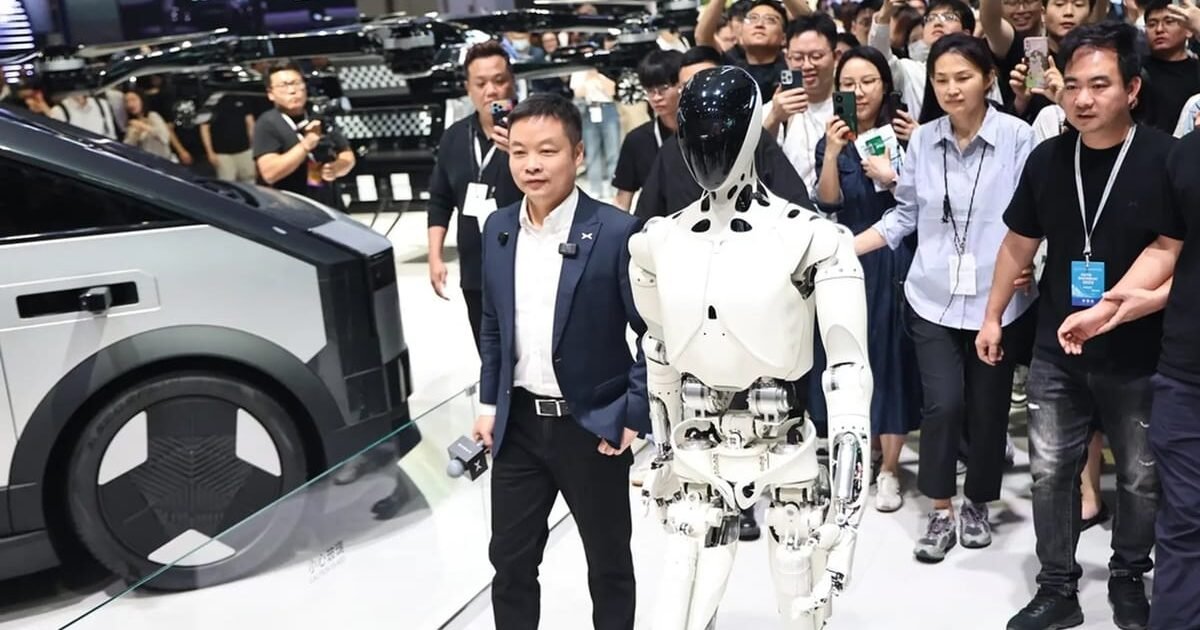
XPeng chairman He Xiaopeng set an unambiguous target in early 2026: the company aims to be the first in the world to achieve scale mass production of advanced humanoid robots. The IRON robot, which XPeng showcased at CVPR 2026 for the third consecutive year, represents the company’s bet that the same AI and sensor expertise used in autonomous driving can be transferred to physical robotics.
The IRON Robot Program
The XPeng IRON is a full-size humanoid robot designed for both industrial and consumer applications. Plans call for the robot to enter XPeng’s offline retail stores as a shopping guide in Q1 2027, providing a visible proof point for the technology. Beyond retail, XPeng has outlined ambitions for the IRON in manufacturing, logistics, and eventually household assistance.
Per CnEVPost’s reporting, the departure of the robotics product head creates a leadership vacuum at precisely the moment when the program needs to transition from prototype demonstrations to production engineering — a notoriously difficult shift that has tripped up many robotics companies before.
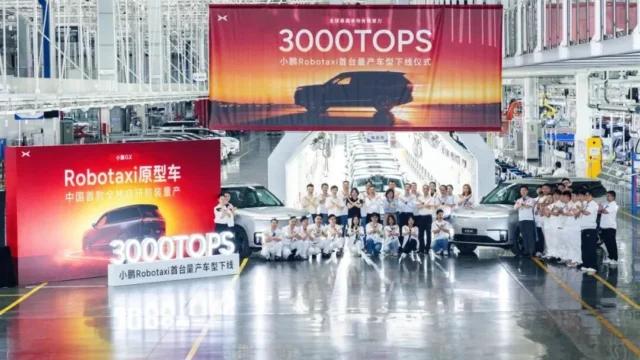
XPeng’s automotive division has its own challenges: the company is scrambling to boost GX SUV production as wait times hit 35 weeks, and the automotive business remains the revenue engine that funds everything else. Balancing resources between a high-volume car business and a speculative robotics venture is a tension that few companies have managed successfully.
Industry Context
The XPeng IRON program exists within a broader Chinese push into humanoid robotics that includes players like UBTECH, Fourier Intelligence, and Tesla’s Optimus program globally. The Chinese government has included humanoid robots in its strategic technology priorities, and multiple companies have announced 2026-2027 production targets.
The difference between announcing a target and achieving mass production of a humanoid robot is enormous. No company has yet achieved true scale production of a general-purpose humanoid robot, and the technical challenges — from battery density to actuator reliability to software generalization — remain substantial.
XPeng’s advantage, if any, lies in its existing AI infrastructure: the neural networks trained for XNGP autonomous driving can theoretically be adapted for robot perception, and the company’s sensor supply chain for LiDAR and cameras can serve both products. Whether this cross-pollination can survive the loss of key product leadership remains an open question.
Related: China robotaxi commercial scale | XPeng GX deliveries