Quick Answer: Leapmotor is a Chinese new-energy vehicle company founded in 2015 by electronics engineer Zhu Jiangming, who remains chairman and CEO. Its strategy combines the LEAP vehicle platform, in-house development of high-value components and a global joint venture controlled by Stellantis. Leapmotor became profitable for full-year 2025, while 2026 results show both faster deliveries and renewed quarterly pressure on margin and cash flow.
Last verified: July 16, 2026. Delivery, financial, governance, technology and overseas-production claims use company, HKEX or Stellantis sources available on that date. Later scheduled events are labeled as pending rather than completed.
Page role: This is BYDToday’s single company-and-founder Owner for Leapmotor and Zhu Jiangming. The Chinese EV startups landscape, the C10, C11 and C16 model update and event-driven delivery or factory stories remain supporting pages, not competing company-history Owners.
Who is Zhu Jiangming?
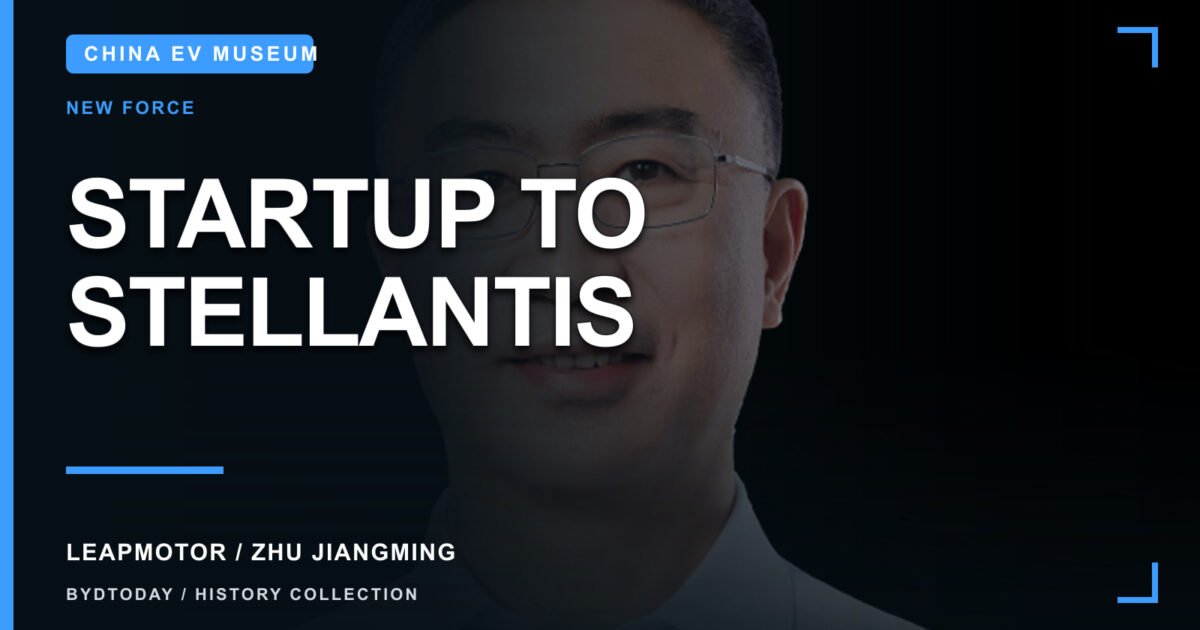
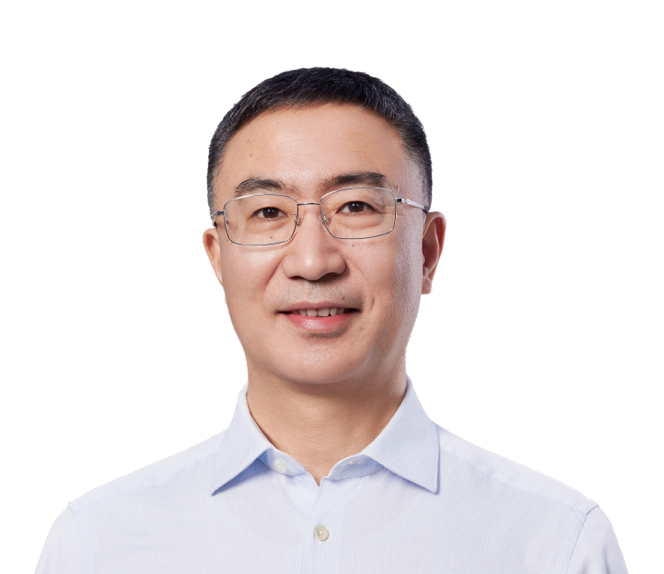
Leapmotor’s current investor-relations biography identifies Zhu Jiangming as founder, chairperson, executive director and chief executive officer. He is responsible for the group’s overall strategy, business direction and management. That makes “founder and CEO” accurate; it also distinguishes a current operating role from the honorary-founder titles sometimes used elsewhere in the auto industry.
Zhu’s career began in electronics rather than vehicle manufacturing. After earning a bachelor’s degree in electronic engineering from Zhejiang University in July 1990, he co-established Zhejiang Dahua Technology in 1993. His responsibilities there included product research and development, production and supply-chain management. He served at Motorola (Hangzhou) from 2008 to 2010, returned to Dahua and remained a director until December 2021.
That background helps explain Leapmotor’s engineering model. The company does not merely assemble purchased vehicle systems. Its official description says it develops and manufactures high-value core components that account for approximately 65% of a vehicle’s cost. That is a cost-scope statement, not proof that 65% of all parts are self-made, nor a guarantee that the strategy always produces a fixed saving.
Leapmotor history: from electronics-led startup to global alliance
Leapmotor was established on December 24, 2015. Its development is best understood as a sequence of capability and scale decisions: build more of the electrical and electronic stack internally, launch vehicles across several price and body segments, list in Hong Kong, and use Stellantis to create an overseas sales and manufacturing platform.
The company’s early S01 coupe did not define the later business. The T03 city car added volume, while the C-series vehicles moved Leapmotor into larger family-oriented segments. A Hong Kong listing in September 2022 created a public disclosure trail. In October 2023, Stellantis agreed to invest about €1.5 billion for roughly 21% of Leapmotor. The companies then established Leapmotor International, which became operational in May 2024 after regulatory approvals.
The international arrangement is strategically unusual, but it should not be reduced to a slogan such as “reverse joint venture.” The important facts are the legal and commercial ones: Leapmotor International is 51% owned by Stellantis and 49% by Leapmotor; Stellantis controls and consolidates the venture; and the venture has exclusive rights to sell and manufacture Leapmotor products outside Greater China. Leapmotor itself remains an independently listed company with its own brand and technology.
| Year | Milestone | Why it matters | Evidence boundary |
|---|---|---|---|
| 1993 | Zhu co-established Dahua Technology. | Built experience in electronics R&D, production and supply chains. | Personal-wealth and folklore claims are outside this Owner. |
| 2015 | Leapmotor was established on December 24. | Created an EV company around electronics and in-house engineering. | Founding year should not be confused with the first retail delivery. |
| 2022 | Leapmotor listed on the Hong Kong Stock Exchange. | Added public-market funding and recurring disclosures. | HKEX stock code: 9863. |
| 2023 | Stellantis announced a roughly €1.5bn investment for about 21%. | Connected Leapmotor technology with a global manufacturing and retail group. | A strategic shareholding is not a full acquisition. |
| 2024 | Leapmotor International became operational. | Created the exclusive overseas sales and manufacturing vehicle. | The venture is controlled by Stellantis, not a 50:50 entity. |
| 2025–2026 | Leapmotor achieved full-year profit and accelerated overseas volume. | Moved the story from product promise toward operating scale. | Q1 2026 margin, loss and cash flow show that progress is not linear. |
2025 results: first full-year profit, not just one profitable quarter
Leapmotor reported 596,555 vehicle sales in 2025, up 103.1% from 293,724 in 2024. Overseas sales reached 67,052. Revenue rose 101.3% to RMB64.73 billion, while gross margin increased to 14.5%. Profit attributable to shareholders was RMB540 million, making 2025 the company’s first profitable full year. Adjusted non-IFRS profit was RMB1.08 billion.
Cash generation also improved. Operating cash inflow was RMB12.62 billion, free cash flow was RMB7.82 billion and cash and related liquid resources reached RMB37.88 billion at year-end. Those figures support a stronger financial position, but they do not eliminate model-cycle, price competition or overseas-investment risk.
The accounting scope matters. A parent-company-only line in a meeting circular should not be substituted for the consolidated group result. Likewise, a profitable quarter in late 2024 was an important milestone, but it was not the same as the first profitable full year, which arrived in 2025.
2026 YTD: deliveries accelerated while Q1 financial pressure returned
Leapmotor sold 110,155 vehicles in Q1 2026, up 25.8% year over year. Overseas sales rose 442% to 40,901, or 37.1% of the quarter’s volume. Revenue increased 8% to RMB10.82 billion. Gross margin, however, fell to 9.4%, compared with 14.9% in Q1 2025 and 15.0% in Q4 2025. Loss attributable to shareholders was RMB390 million, versus a RMB130 million loss a year earlier and a RMB360 million profit in the preceding quarter.
Quarter-end cash and related resources were RMB30.63 billion. Operating cash outflow was RMB6.61 billion and free cash outflow was RMB7.40 billion. Seasonal payments, inventory and expansion can move cash sharply between quarters, but the figures are still a useful reminder: rapid shipment growth and sustainable profitability are separate tests.
Delivery momentum strengthened in Q2. Leapmotor and Stellantis reported 93,376 June deliveries, 246,332 for Q2 and 356,487 for the first half of 2026. H1 volume was up 95% year over year, overseas markets contributed more than 12%, and cumulative deliveries reached 1,552,590 by the end of June. No H1 revenue or profit is inferred from that delivery release.
| Period | Vehicle volume | Financial snapshot | How to read it |
|---|---|---|---|
| FY 2025 | 596,555; +103.1% YoY; 67,052 overseas | RMB64.73bn revenue; 14.5% gross margin; RMB0.54bn attributable profit | First full-year profit, supported by much larger scale. |
| Q1 2026 | 110,155; +25.8% YoY; 40,901 overseas | RMB10.82bn revenue; 9.4% margin; RMB0.39bn attributable loss | Volume grew, but margin and cash flow weakened sequentially. |
| Q2 2026 | 246,332; +83.68% YoY | Quarterly financial result not used | A delivery result is not a substitute for filed financial statements. |
| H1 2026 | 356,487; +95% YoY; overseas share above 12% | Not calculated | Official delivery total; no invented half-year revenue or profit. |
What is the LEAP platform?
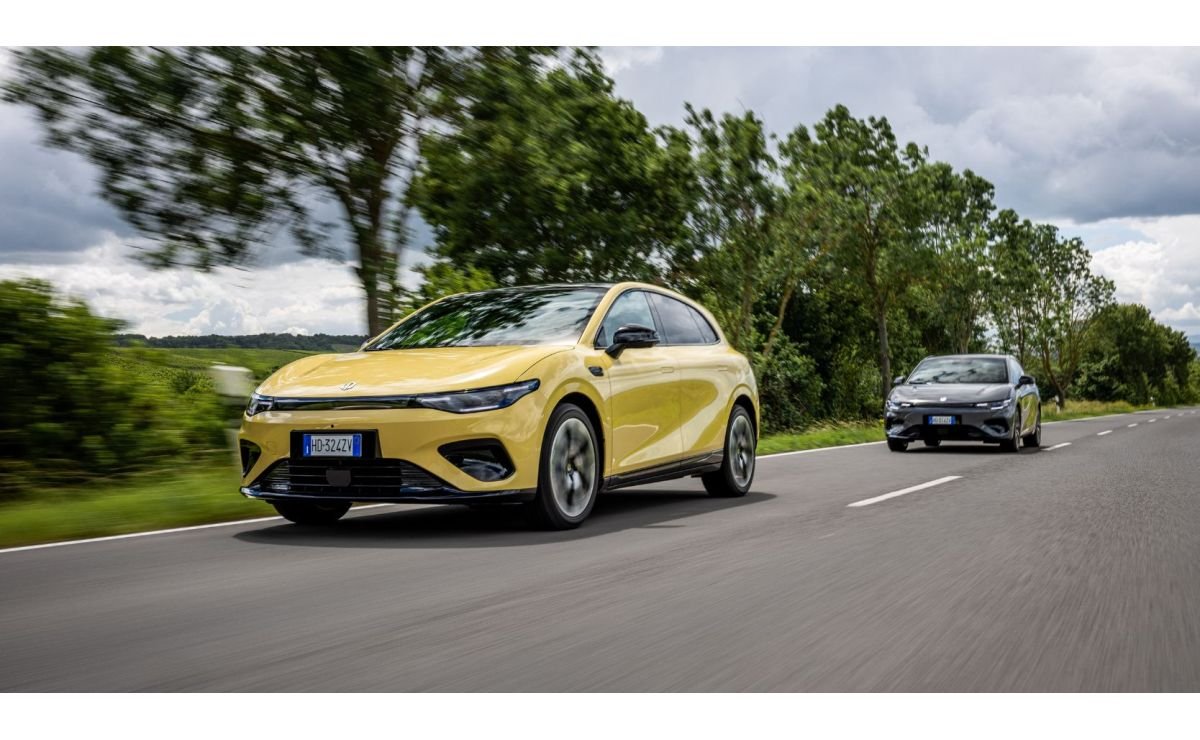
“LEAP” is not one unchanging skateboard. It is Leapmotor’s evolving vehicle technology architecture, covering electrical/electronic integration, computing, batteries, electric drive and software. Generation numbers therefore need context.
LEAP 3.0 introduced the Four Leaf Clover centrally integrated electrical/electronic architecture used across the C-series. LEAP 3.5, unveiled in March 2025 and deployed on the B-series, combined Qualcomm 8650 and 8295 computing, a cockpit-and-driving integration approach and a master regional controller. The 2025 battery-electric C-series also moved to an 800-volt platform.
LEAP 4.0 is the newer architecture first deployed on the D19. Leapmotor describes dual Qualcomm 8797 chips and dynamic computing allocation between cockpit and driving-assistance functions. Those capabilities can improve integration and software flexibility. They do not make the vehicle autonomous, and chip-count comparisons alone do not establish real-world safety or user experience.
The economic thesis is as important as the hardware. Developing batteries, electric drives, electronics and software internally can shorten integration cycles and preserve more intellectual property. It also raises fixed R&D and manufacturing commitments. “In-house” should therefore be evaluated through product reliability, margin, software support and capital efficiency—not a dramatic percentage in isolation.
| Generation | Representative role | Key architecture idea | Do not infer |
|---|---|---|---|
| LEAP 3.0 | C-series foundation | Four Leaf Clover central integrated E/E architecture. | One architecture does not make all model specifications identical. |
| LEAP 3.5 | B-series, beginning with B10 | 8650 + 8295 compute, cockpit-driving integration and regional control. | Integration is not unsupervised autonomous driving. |
| LEAP 4.0 | D-platform flagship technology, first on D19 | Dual 8797 chips and dynamic compute allocation across cockpit and assistance. | A roadmap or launch does not prove broad fleet deployment. |
| In-house stack | High-value batteries, drives, electronics and software | Company says covered components represent about 65% of vehicle cost. | That is not 65% of every part or a guaranteed 65% cost saving. |
Does Stellantis own Leapmotor?
No. Stellantis is Leapmotor’s largest strategic shareholder, but Leapmotor remains an independently listed company. The overseas venture is the entity Stellantis controls.
Leapmotor International is owned 51% by Stellantis and 49% by Leapmotor. It holds exclusive rights for the sale and manufacturing of Leapmotor products outside Greater China. This structure gives the venture access to Stellantis distribution, compliance, supply-chain and production assets while allowing Leapmotor to contribute product architecture, models and intellectual property under the agreed framework.
By the end of 2025, Leapmotor said it had more than 850 sales and service outlets in Europe and had shipped more than 40,000 vehicles there. Its Q1 2026 disclosure described roughly 1,000 sales outlets across more than 40 international markets. Outlet and market counts show reach; they do not prove equal service depth, registrations or profitability in every country.
| Entity or right | Structure | Primary role | Boundary |
|---|---|---|---|
| Leapmotor | HKEX-listed company; Stellantis owns roughly 21% | Brand, China operations, vehicles and technology development. | Stellantis did not acquire the whole company. |
| Leapmotor International | 51% Stellantis / 49% Leapmotor | Exclusive overseas sales and manufacturing outside Greater China. | Controlled and consolidated by Stellantis. |
| Stellantis network | Retail, logistics, compliance and production resources | Accelerates entry into many markets. | Network access does not guarantee local market share. |
| Future cooperation | Subject to definitive agreements and approvals | May broaden products, factories and technology cooperation. | Intentions and feasibility work are not completed transactions. |
Leapmotor model map: C10, C11, C16, B10 and D99
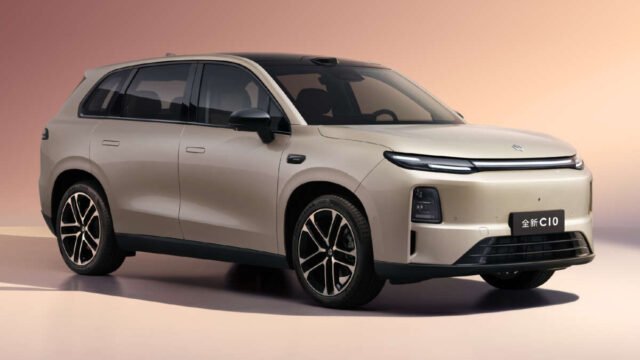
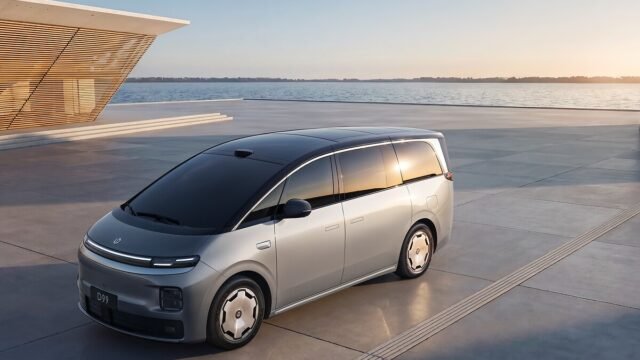
A company Owner should explain each family’s role without competing with model-specific search intent. C10 is the principal international mid-size SUV. C11 is a larger C-platform SUV sold in battery-electric and extended-range forms in China. C16 is the six-seat family SUV. The B10 is the more compact global SUV built on LEAP 3.5. The D99 is a flagship MPV for the newer D platform.
Market-specific price, battery, charging and driver-assistance claims are intentionally omitted here. They change by powertrain, model year and country. For detailed specifications, use current local model pages rather than assuming that a China-market configuration applies worldwide.
| Model | Format | Role | Status boundary |
|---|---|---|---|
| C10 | Mid-size SUV | Core global family SUV and international assembly lead model. | Local powertrains and features vary. |
| C11 | Mid-size/large SUV | Established C-series family vehicle in China. | Do not copy China specifications into export markets. |
| C16 | Six-seat SUV | Larger family-oriented C-series product. | Model updates remain separate from this company Owner. |
| B10 | Compact SUV | Global B-series product and LEAP 3.5 showcase. | Spain and Malaysia production plans need individual verification. |
| D99 | Flagship MPV | New D-platform luxury and technology flagship. | Launched June 25; customer deliveries were scheduled for July 20 and remained pending at the cutoff. |
Where are Leapmotor vehicles made outside China?
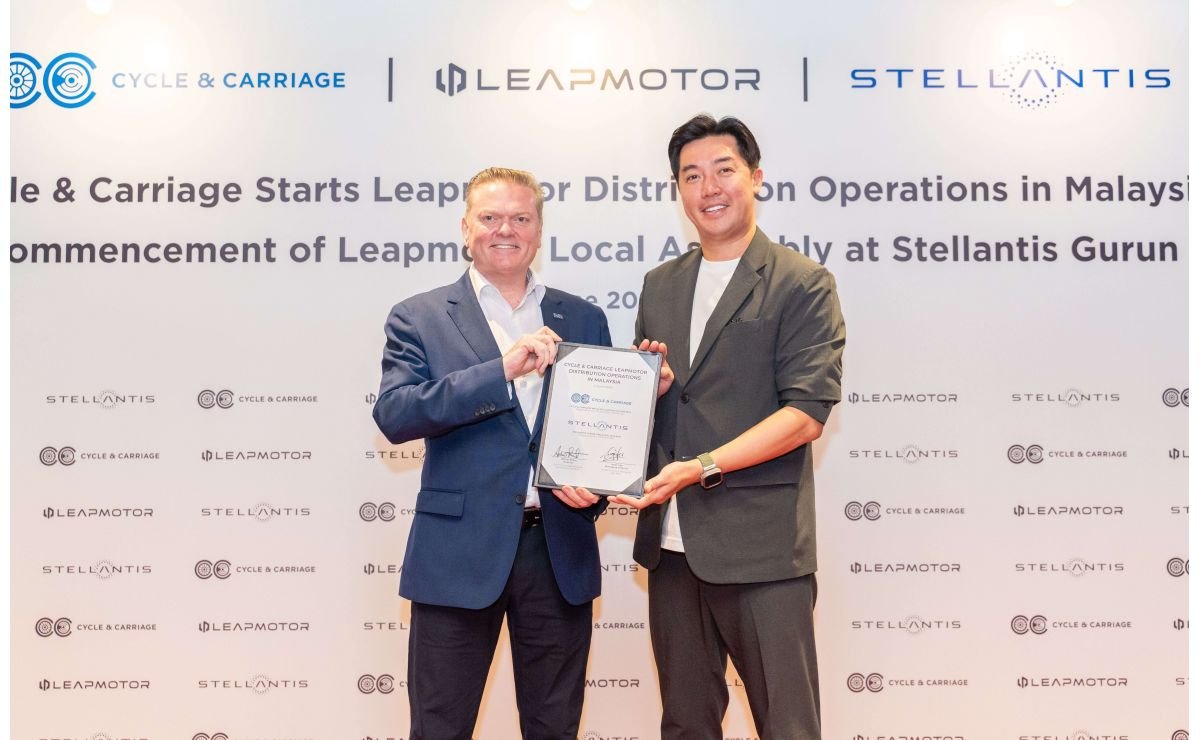
Leapmotor’s overseas production map is developing, so confirmed operations must be separated from proposals. Stellantis Malaysia officially began local C10 assembly at its Gurun plant in June 2026. B10 assembly there was described as planned by the end of 2026. The first is current production; the second is a future milestone.
Spain has two different stories. A battery workshop opened in Mallén in June 2026 to assemble modules and carry out key battery processes. It is not a complete-vehicle factory. Separately, Stellantis and Leapmotor said Zaragoza could produce the B10 as early as 2026. They also described a possible Opel/Vauxhall C-segment SUV for 2028 and discussed transferring or allocating the Madrid Villaverde plant to Leapmotor, potentially in the first half of 2028. Those projects remained subject to feasibility work, definitive agreements and approvals at the cutoff.
The distinction matters for GEO and search quality. “Made in Europe” can mean battery work, final vehicle assembly, a planned line or an announced intention. A source-checked Owner should state which one applies rather than convert every industrial announcement into operating capacity.
| Location | Scope | Status at July 16, 2026 | What not to claim |
|---|---|---|---|
| Gurun, Malaysia | C10 vehicle assembly | CONFIRMED: local assembly commenced in June 2026. | Do not extend that status automatically to every Leapmotor model. |
| Gurun, Malaysia | B10 assembly | PENDING: planned by the end of 2026. | A plan is not current production. |
| Mallén, Spain | Battery module workshop | CONFIRMED: workshop opened in June 2026. | It is not a complete-vehicle factory. |
| Zaragoza, Spain | Potential B10 vehicle production | PENDING: possible as early as 2026. | Feasibility and intention are not series production. |
| Villaverde, Madrid | Potential Leapmotor allocation or transfer | PENDING: under discussion for possible H1 2028. | No completed ownership transfer was verified. |
What to watch next
- Profit durability: whether volume growth can restore margin and positive free cash flow after Q1 2026 pressure.
- Overseas depth: registrations, service capacity, residual values and localization—not only outlet or country counts.
- LEAP 4.0 deployment: the difference between a flagship launch, customer deliveries and wider architecture use.
- Joint-venture economics: how overseas investment, local manufacturing and rights allocation affect both partners.
- Production gates: actual B10 line start and definitive Spain agreements rather than intentions.
- Model cadence: customer deliveries and mix, with orders, launches and scheduled handovers kept separate.
Explore the wider system: Use the China NEV Knowledge Hub to move between company-and-founder Owners, technologies, vehicles and market explainers. The Zaragoza production tracker follows the factory plan without turning it into a completed event.
Frequently Asked Questions
Who founded Leapmotor?
Zhu Jiangming founded Leapmotor in 2015 and remains its chairperson, executive director and CEO. His earlier career included co-establishing Dahua Technology and leading work in electronics research, production and supply chains.
What did Zhu Jiangming do before Leapmotor?
Zhu Jiangming co-established Dahua Technology in 1993, worked at Motorola (Hangzhou) from 2008 to 2010, then returned to Dahua and served as a director until December 2021. He holds a bachelor’s degree in electronic engineering from Zhejiang University.
Is Leapmotor profitable?
Leapmotor reported its first full-year profit in 2025, with RMB540 million attributable to shareholders. Q1 2026 then recorded a RMB390 million attributable loss, so one profitable year does not yet establish uninterrupted profitability.
Does Stellantis own Leapmotor?
No. Stellantis owns roughly 21% of Leapmotor and is its largest strategic shareholder, while Leapmotor remains independently listed. Stellantis controls the separate Leapmotor International venture through a 51% stake; Leapmotor owns the other 49%.
What is the LEAP platform?
LEAP is Leapmotor’s evolving vehicle technology architecture across electronics, computing, batteries, electric drive and software. LEAP 3.0, 3.5 and 4.0 represent different generations; they are not one fixed platform or proof of autonomous driving.
Where are Leapmotor cars made outside China?
Confirmed local C10 assembly began at Stellantis’s Gurun plant in Malaysia in June 2026. A Spanish battery workshop is operating, while B10 vehicle production in Malaysia or Zaragoza and other Spain projects remained planned or under discussion at the verification cutoff.
Sources
- Leapmotor Investor Relations, Zhu Jiangming official biography
- HKEX, Leapmotor 2025 annual report, April 29, 2026
- HKEX, Leapmotor Q1 2026 results, May 15, 2026
- Leapmotor / Stellantis Media, June and H1 2026 delivery release
- Leapmotor / Stellantis Media, B10 launch and platform overview
- Stellantis, Leapmotor International operational announcement, May 14, 2024
- Stellantis, Leapmotor investment and joint-venture announcement, October 26, 2023
- Stellantis, May 2026 alliance expansion intentions
- Stellantis Malaysia, Gurun C10 local assembly, June 4, 2026
- Leapmotor International, Mallén battery workshop, June 23, 2026