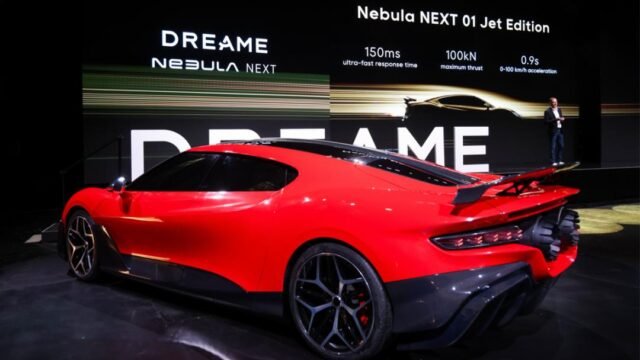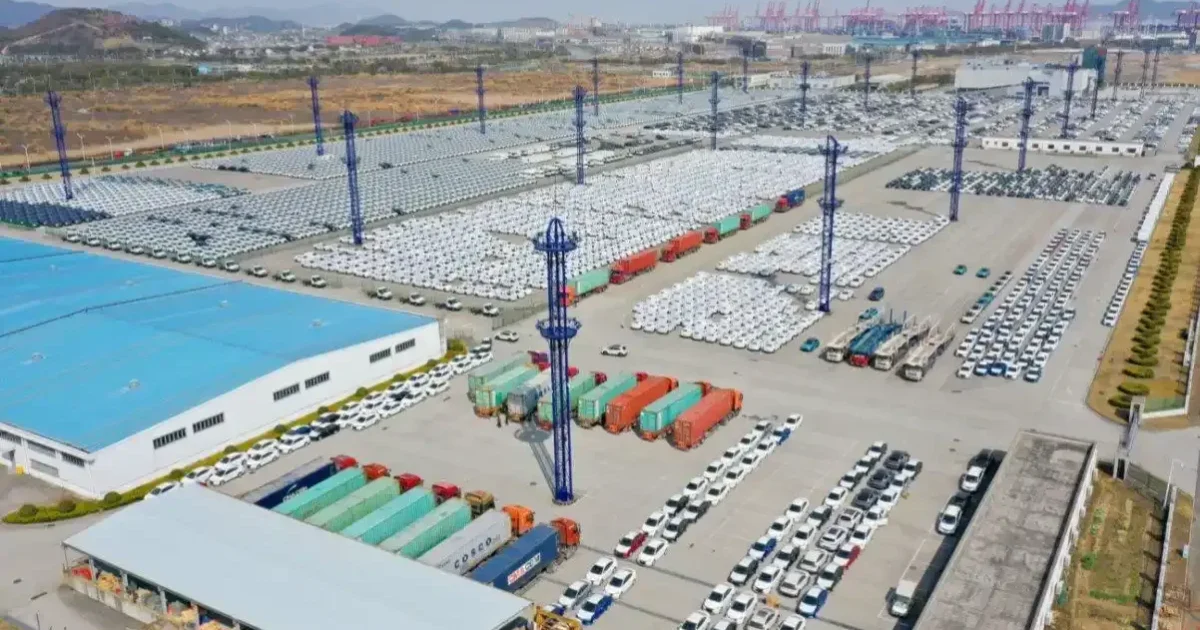
China’s Jan-Apr NEV export count reached about 1.384 million units as the global shift toward Chinese-made electric vehicles accelerates, with overall auto exports also moving higher in the first four months. China NEV export data visualization, Jan-Apr 2026. Source: CPCA / CNR
Jan-Apr export context is based on People’s Daily Online coverage of China’s 1.384 million NEV exports, with CnEVPost and Global Times used for market cross-checks.
April NEV Exports Reach 463,000 Units
China exported 463,000 new energy vehicles in April 2026, a 59% increase over the same month in 2025, according to data released by CPCA Secretary-General Cui Dongshu on May 25. The cumulative January-April total reached 1.384 million NEV exports, growing about 120% year-over-year under the MOFCOM/official-media count. Total automobile exports for the first four months stood at 3.26 million units, up 51%, with single-month April auto exports reaching 940,000 units (up 52% month-over-month). According to reporting by CNR (China National Radio), NEVs now account for approximately 49% of China’s total vehicle exports by volume, up from roughly 35% a year earlier. The Ministry of Commerce (MOFCOM) separately reported slightly different figures: total auto exports of 3.127 million units (up 61.5%) and NEV exports of 1.384 million units (up 120%) for the same period. The discrepancy reflects different statistical methodologies between CPCA and CAAM/MOFCOM, but both confirm the same trend of rapid acceleration in NEV export volumes.
BYD and Chery Lead the Export Charge
BYD continues to dominate China’s NEV export rankings by volume, with strong performances in Brazil, Southeast Asia, and Australia. Per CAAM data, Chery Group set a new single-month export record for any Chinese brand in April at 251,400 total vehicles, with exports consistently exceeding 50% of the company’s total sales. According to the Ningxia CCPIT report published on May 20, 19 listed automakers have disclosed their NEV delivery data for April, showing broad-based export growth across the industry.
Trade Policy and Factory-Building Accelerate the Shift
The export surge reflects a strategic pivot from ‘selling globally’ to ‘manufacturing globally.’ BYD is building factories in Hungary, Brazil, and Turkey; Chery has operations in Spain and Argentina; and SAIC has expanded its European presence through MG and IM brands. According to a Xinhua News Agency analysis published on May 19, this localization strategy helps Chinese automakers circumvent tariff barriers while reducing logistics costs. The European Union’s ongoing anti-subsidy investigation into Chinese EVs has not yet materially impacted export volumes, though final tariff decisions expected later in 2026 could alter the trajectory.
What the Numbers Mean for the Global EV Market
At about 1.38 million NEVs exported in four months under the official-media count, China is on track to export well over 4 million NEVs in 2026 if the pace holds, which would represent approximately 30-35% of global EV sales. According to the IEA’s Global EV Outlook 2026, Chinese-made EVs are expected to capture nearly 30% of the global EV market this year. The combination of cost leadership, rapid technology iteration, and expanding manufacturing footprints abroad means that Chinese automakers are no longer merely exporting vehicles but are becoming deeply integrated into global automotive supply chains.
Sources
- People’s Daily Online, China’s NEV exports hit 1.384m units in Jan-Apr
- CnEVPost, China’s April NEV sales hold steady as exports offset domestic weakness
- Global Times, China’s Jan-Apr automobile output, sales both surpass 10m for first time