China has released QC/T1086-2026, a revised national industry standard for extended-range electric vehicle (EREV) range extenders, replacing an eight-year-old framework that had become increasingly misaligned with the technology’s rapid evolution. The update arrives as annual EREV sales in China surpassed 1 million units in 2024 and exceeded 1.2 million in 2025, according to CPCA data.
The new standard shifts from qualitative, manufacturer-defined specifications to quantified performance thresholds — a change that reflects EREV’s transition from a niche bridge technology to a mainstream powertrain choice for millions of Chinese consumers.
Key Technical Requirements
The revised standard introduces precise output power control requirements for the first time. For systems rated at 50 kW and below, output deviation must stay within ±1.5 kW. Higher-output systems must achieve ±3% accuracy. These thresholds were calibrated using production data from major automakers and suppliers, with the explicit goal of being achievable by mainstream suppliers while weeding out underperforming designs.
Durability testing has also been dramatically strengthened. The new framework mandates a 750-hour alternating load test and 100,000 start-stop cycles — designed to simulate approximately 300,000 km of real-world usage, including the frequent engine restarts typical of congested urban driving. Industry participants involved in drafting the standard confirmed these requirements were derived from actual vehicle operating data and damage-equivalent models, rather than directly adopted from existing international standards.
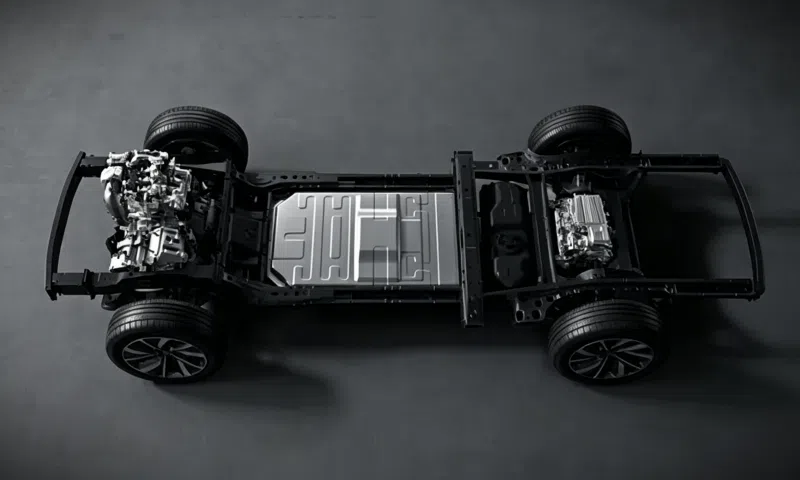
For the first time, the standard explicitly covers integrated electric drive systems — units that combine power generation and drive functions within a shared gearbox assembly — reflecting the industry’s trend toward higher powertrain integration.
EMC and NVH Requirements
Earlier range extenders functioned primarily as onboard generators that activated only when the battery was depleted. Modern range extenders operate as integrated energy management components, working in concert with the battery pack, electric motors, and vehicle control systems. The new rules effectively bring electromagnetic compatibility (EMC) performance, vibration isolation, and acoustic management into the baseline technical assessment for the first time.
This change reflects a practical reality: as EREV engines run more frequently and in more varied conditions, their electromagnetic and acoustic signatures have become a quality differentiator that older standards simply did not address.
Market Impact
The EREV segment has become one of the most competitive battlegrounds in China’s NEV market. Li Auto built its brand on the technology, and competitors including Seres (AITO), Deepal, Leapmotor, and Huawei’s HIMA have all invested heavily in range-extended platforms. Per CarNewsChina, the Zeekr 9X EREV achieved over 50,000 cumulative deliveries within months of launch, while the IM Motors LS8 EREV offers a CLTC pure-electric range of 430 km.
The standard takes effect on November 1, 2026, giving automakers and suppliers roughly five months to align their production and testing processes. Industry observers expect the tighter requirements to accelerate the exit of smaller, less capable range extender suppliers, potentially concentrating the supply chain among a smaller number of qualified players.
Related: China NEV penetration record 62.5% | Hongqi G919 four-motor EREV
Sources
- CarNewsChina, China upgrades range extender rules as EREV market surpasses 1 million annual sales
- CPCA, via BYDToday NEV penetration report
- Gasgoo, China Automotive News