
Quick Answer: Chery Automobile is the Hong Kong-listed passenger-vehicle company within the broader Chery business. Its five-brand portfolio, financial results and sales must be read within that listed-company perimeter. The latest sales comparison below separates it from Chery Group and from the group’s NEV subset.
Updated October 9, 2026: Added September and January–September sales scope comparison. Earlier financial and historical sections retain their stated reporting dates. The financial section was last verified August 21, 2026. The first-half financial update uses Chery Automobile’s August 20 HKEX announcement for the six months ended June 30, 2026. The results are unaudited, although Ernst & Young reviewed them under Hong Kong Standard on Review Engagements 2410. Chery Automobile and the broader Chery Holding group remain separated throughout.
Page role: This is BYDToday’s single Owner for Chery Automobile, Yin Tongyue, the five-brand structure, export system and core NEV technology. Individual Chery, Exeed, Jetour, iCAR, Luxeed, model and monthly export stories remain supporting pages.
Cover image credit: OMODA and JAECOO brand launch at the 2023 Shanghai Auto Show. Photo by Omoda South Africa via Wikimedia Commons, licensed under CC BY 3.0. The 1920×1080 source was converted and optimized by WordPress as a 1920×1080 JPEG without generative editing. This is contextual brand imagery, not a photograph of the August 20 interim-results announcement.
How do Chery Group and Chery Automobile sales differ?
Chery International’s October 8 newsroom update reports sales announced on October 1. The two company totals cover different reporting perimeters; NEVs are a subset, not an additional company total.
Swipe horizontally to compare reporting scopes.
| Reporting scope | September | January–September |
|---|---|---|
| Chery Group | 292,308 | 2,206,789 |
| Chery Automobile (9973.HK) | 276,949 | 2,076,891 |
| Group NEVs (subset) | 133,310 | 858,524 |
How to use this: Do not add these rows together or add September to a year-to-date total that already includes it. The gap between group and listed-company totals does not establish any individual brand’s sales. These unit counts are not revenue, profit or country-level retail registrations.
Not established here: The release also uses the term “global deliveries” for a separate series without a sufficiently clear definition. This update does not relabel that series as exports or use it to replace the dated export figures below.
What is Chery Automobile?
Chery Automobile Co., Ltd. is a Wuhu-based passenger-vehicle company listed on the Hong Kong Stock Exchange under 9973. It designs, develops, manufactures and sells internal-combustion and new-energy passenger vehicles. Its 2025 annual report identifies five major brands: CHERY, JETOUR, EXEED, iCAR and LUXEED.
That reporting perimeter is narrower than “Chery Group” or Chery Holding. The broader holding group also has commercial vehicles and other businesses that are outside the listed passenger-vehicle company. This is why official group headlines reported 2,806,393 total vehicle sales in 2025 while Chery Automobile’s five listed-company brands reported 2,631,381. Both figures are valid only within their stated scope.
CHERY itself contains Tiggo, Arrizo and Fulwin product families and treats OMODA and JAECOO mainly as overseas product series in the annual report. Market-facing sites may present OMODA and JAECOO as brands. For financial and sales comparisons, the exchange filing’s five-brand structure is the controlling definition.
Did Yin Tongyue found Chery?
Yin Tongyue is widely described as Chery’s founder because he joined the preparation team early and led its long development. The listed company’s disclosure is more precise: he participated in preparing the company in October 1996, became an executive director when it was established in January 1997, served as deputy general manager until 2004 and has been chairman since February 2004.
Chery began as a Wuhu local-government-backed industrial project, not a company wholly founded and personally owned by Yin. Calling him the sole founder erases the public-sector formation and the wider engineering team. “Founding executive and long-time leader” is the more accurate description.
His current role is clear. In May 2026, Chery’s newly elected board re-elected Yin as chairman and president for the sixth board term. He therefore holds both board leadership and top executive responsibility. The annual report also records that he has chaired Chery Holding since 2010.
| Date | Milestone | Why it matters | Boundary |
|---|---|---|---|
| 1996–1997 | Yin joined the preparation team; Chery Automobile was established in Wuhu. | Beginning of the company and Yin’s founding-executive role. | Government-backed project, not a sole-person startup. |
| 1999–2001 | First passenger car rolled off the line; Chery began exports with a small Middle East order. | Established production and an early globalization path. | Export start is not the same as current global sales scale. |
| 2004 | Yin became chairman. | Start of the long board-leadership period. | He previously served as deputy general manager. |
| 2010–2023 | Chery Holding, Jetour, Exeed, iCAR and Luxeed structures took shape. | Expanded one manufacturer into a multi-brand portfolio. | Brand formation dates and legal entities differ. |
| 2024 | Chery and EV Motors began EBRO joint production in Barcelona. | Added a European localization and industrial-partnership route. | EBRO is a joint venture and Spanish brand, not a sixth Chery Automobile reporting brand. |
| 2025–2026 | Chery Automobile listed in Hong Kong; Yin was re-elected chairman and president. | Introduced public financial disclosure and refreshed governance. | HKEX code 9973 covers Chery Automobile, not every Chery Holding activity. |
How CHERY, Jetour, Exeed, iCAR and Luxeed fit together
The five brands occupy different customer and technology positions but remain inside one listed reporting group. CHERY is the mass-market and family base. Jetour focuses on family travel and outdoor use. Exeed covers premium products and includes the Exlantix series. iCAR targets younger technology-oriented users, while Luxeed is the Chery-Huawei intelligent-vehicle collaboration distributed through Huawei’s HIMA ecosystem.
The original dossier confused several of these relationships. iCAR is not a Huawei co-created or HIMA brand, and Exeed is not defined by Huawei HI. Luxeed is the Huawei collaboration. That separation matters because product development, retail channel, software, brand positioning and reported sales are not interchangeable.
| Brand | Primary role | 2025 sales | H1 2026 sales | Correct boundary |
|---|---|---|---|---|
| CHERY | Mass-market family cars and SUVs; Tiggo, Arrizo, Fulwin, OMODA and JAECOO series. | 1,700,940 | 918,414; +25.2% | Largest reporting brand; OMODA/JAECOO sit inside this filing scope. |
| JETOUR | Family travel, outdoor leisure and increasingly off-road-oriented products. | 622,590 | 258,737; -13.6% | Separate Chery Automobile brand, not one CHERY model series. |
| EXEED | Premium sedans and SUVs across ICE, PHEV, REEV and BEV. | 120,369 | 33,188; -44.9% | Includes EXEED and EXLANTIX series; not the Huawei HIMA brand. |
| iCAR | Technology-oriented youth brand, focused on electric SUVs. | 96,989 | 45,392; +2.0% | Chery brand; not co-owned or co-created by Huawei. |
| LUXEED | Intelligent premium sedans and SUVs including S7 and R7. | 90,493 | 19,345; -56.9% | Chery-Huawei HIMA collaboration; still one of Chery’s five reported brands. |
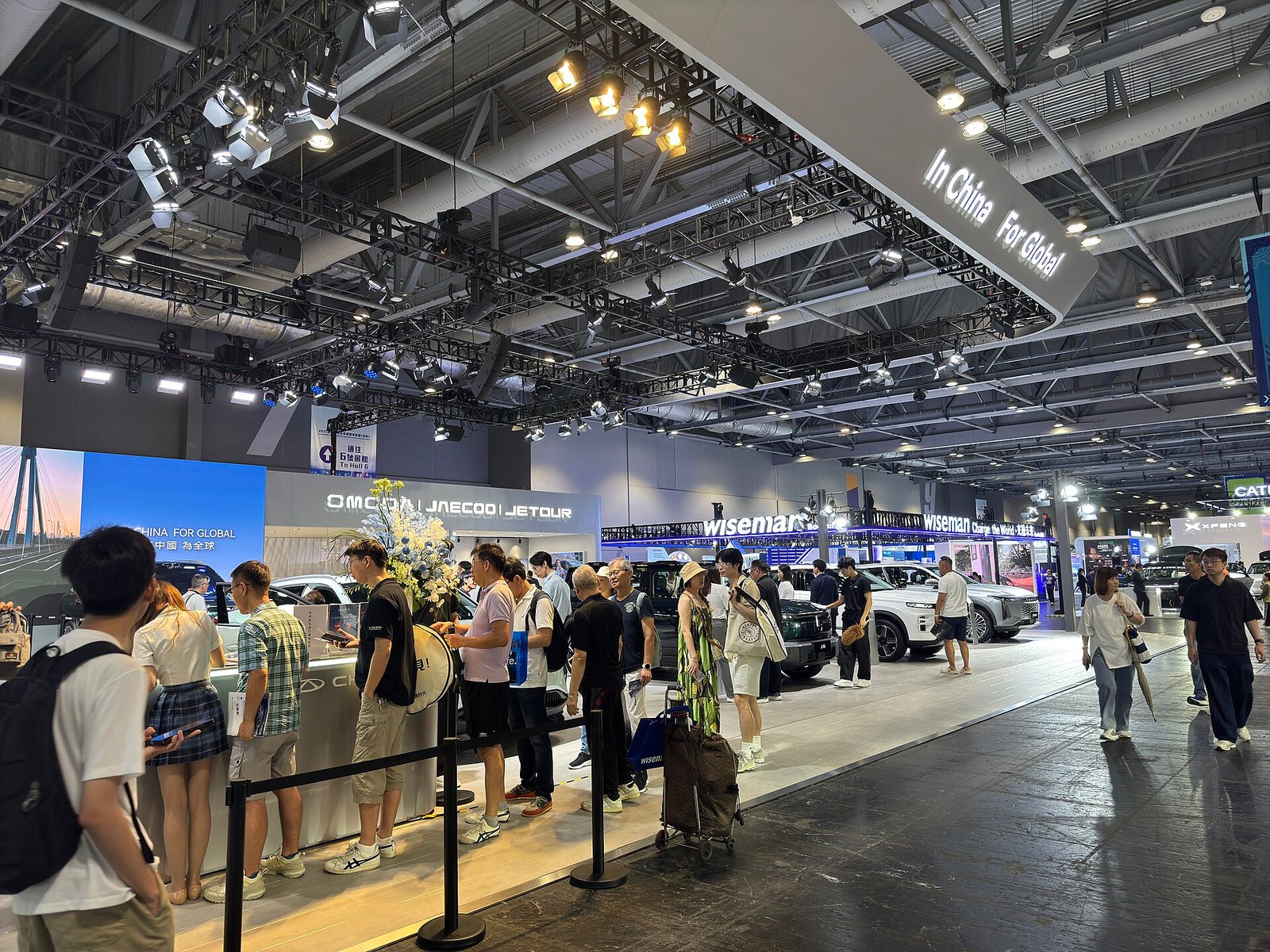
Technology boundaries: CSH/CDM, Falcon ADAS and Luxeed
Chery’s technology stack spans fuel engines, hybrids, range extenders, battery-electric platforms, assisted driving and intelligent cockpits. The 2025 annual report highlights ACTECO engines, Kunpeng SuperPower CDM hybrid systems, Falcon Advanced Intelligent Driving and the Lingxi Intelligent Cabin. International marketing commonly uses Chery Super Hybrid, or CSH, for hybrid products.
These are technology families, not one specification. A CHERY Tiggo CSH sold abroad does not automatically share the same engine, battery, transmission or software as a Fulwin CDM model in China. Falcon 500, 700 and 900 labels also represent different assisted-driving capabilities. NOA remains driver assistance unless a regulator approves a specific vehicle and operating domain for higher automation.
Luxeed must remain a separate technology boundary. Huawei participates deeply in product definition, intelligent driving, cockpit and HIMA retail, while Chery provides vehicle engineering and manufacturing. The wider Huawei HIMA Owner explains that ecosystem. Exeed’s Falcon-equipped products remain separate; BYDToday’s Exlantix ES update provides a model-level example.
| System | Role | Used for | Claim boundary |
|---|---|---|---|
| ACTECO / China New Fuel | Combustion engines and intelligent upgrading of fuel vehicles. | ICE and hybrid applications. | Company technology claim; engine generation varies by model. |
| Kunpeng SuperPower CDM / CSH | Hybrid-dedicated engines, transmissions and electric drive. | PHEV and hybrid products in China and overseas. | CSH is a global umbrella; do not assign one range or charge rate to every vehicle. |
| Falcon ADAS | Highway, urban and off-road navigation assistance at different tiers. | Selected CHERY, Exeed, Jetour and iCAR products. | Assisted driving, not universal autonomous driving. |
| Lingxi Intelligent Cabin | AI-assisted cockpit and multimodal interaction. | Selected new Chery-group vehicles. | Software and functions depend on trim, language and market. |
| Huawei / HIMA | Intelligent vehicle technology, product collaboration and retail ecosystem. | Luxeed. | Not the defining stack for iCAR or every Exeed/CHERY product. |
2025 sales and financial results
Chery Automobile reported 2,631,381 vehicle sales in 2025, up 8.0%. New-energy vehicle sales were approximately 827,000 and exports were 1.294 million, up 33.2%. The broader Chery Holding group separately reported 2,806,393 total sales, 903,847 NEV sales and 1,344,020 exports. The difference reflects businesses outside the listed passenger-vehicle perimeter.
Audited revenue increased 11.3% to RMB300.287 billion. Profit for the year increased 36.1% to RMB19.507 billion, and the stated net margin rose to 6.5%. Gross margin increased from 13.5% to 13.8%, while passenger-vehicle gross margin slipped from 13.2% to 12.8% as the lower-margin NEV mix expanded and competition intensified. R&D expense rose 23.8% to RMB11.444 billion.
H1 2026 financial results
The June 2026 HKEX sales announcement reported 1,275,076 vehicles across Chery Automobile’s five brands for the first half, up 7.8%. A broader Chery Group communication separately reported 1,357,533 vehicle sales, including 475,238 NEVs and 943,817 exports. The broader-group figures include a different reporting perimeter and should not be combined with the listed company’s five-brand total.
For the six months ended June 30, 2026, Chery Automobile reported revenue of RMB143.280 billion, up 1.2%, and gross profit of RMB23.044 billion, up 25.1%. Gross margin expanded to 16.1% from 13.0%. The stronger gross result did not carry through to the bottom line: profit for the period fell 9.0% to RMB9.016 billion, and profit attributable to owners fell 11.7% to RMB8.567 billion.
NEV revenue rose to RMB59.284 billion from RMB36.194 billion, an increase of about 63.8% calculated by BYDToday from the filing’s figures. It represented 41.4% of group revenue. NEV gross profit reached RMB7.561 billion and its gross margin rose to 12.8% from 5.2%. These are revenue and gross-profit measures; they are not NEV vehicle-sales counts.
Revenue attributed to customers in other countries and regions reached RMB98.968 billion, versus RMB65.547 billion a year earlier—about 51.0% growth calculated by BYDToday. Revenue attributed to customers in the PRC, including Hong Kong, Macau and Taiwan, was RMB44.312 billion. Customer-location revenue is an accounting geography measure; it is not the same as exports, vehicle registrations or local factory output.
R&D expense increased 28.3% to RMB6.672 billion. Net cash generated from operating activities was RMB37.762 billion, compared with RMB14.004 billion in the prior-year period. The filing’s interim figures are unaudited, although Ernst & Young reviewed them under HKSR 2410; a review is narrower than an audit.
| Metric | H1 2026 | Comparison | Change or reading | Scope note |
|---|---|---|---|---|
| Revenue | RMB143.280bn | Prior-year period | +1.2% reported | Consolidated group revenue. |
| Gross profit | RMB23.044bn | Prior-year period | +25.1% reported | Gross margin rose to 16.1% from 13.0%. |
| Profit for the period | RMB9.016bn | Prior-year period | -9.0% reported | Consolidated period profit. |
| Attributable profit | RMB8.567bn | Prior-year period | -11.7% reported | Profit attributable to owners. |
| NEV revenue | RMB59.284bn | RMB36.194bn | About +63.8% calculated; 41.4% of group revenue | Revenue, not unit sales. |
| NEV gross profit | RMB7.561bn | 5.2% prior-year margin | 12.8% gross margin | Product-category gross result, not net profit. |
| Other countries and regions revenue | RMB98.968bn | RMB65.547bn | About +51.0% calculated | By customer location; not exports or registrations. |
| PRC customer-location revenue | RMB44.312bn | Includes Hong Kong, Macau and Taiwan | Geographic disclosure | Customer-location accounting measure. |
| R&D expense | RMB6.672bn | Prior-year period | +28.3% reported | Expense, not total capitalized R&D investment. |
| Operating cash flow | RMB37.762bn | RMB14.004bn | Higher year on year | Net cash generated from operating activities. |
Why exports matter to Chery
Chery began exporting in 2001 and has built a business with unusually high overseas exposure. In 2025, listed-company exports represented about 49% of its vehicle sales. The annual report said products were available in more than 100 countries and regions, with operations reaching 16 European countries and European sales growing more than 200%.
High export volume does not prove identical profitability or market presence everywhere. Local pricing, tariffs, currency, dealer quality, parts supply and warranty coverage differ. BYDToday’s China NEV export coverage provides current market context without replacing this company Owner.
Overseas production and the EBRO boundary
At June 30, 2026, the listed company reported 12 major production bases, including three overseas bases. The interim filing does not identify the third overseas base in the disclosure used here, so BYDToday does not infer its location. Chery’s wider public communications count additional production and assembly partnerships, so higher network totals should not be inserted into the listed-company perimeter without explanation.
Spain is the clearest localization example. Chery and EV Motors formed two joint ventures in 2024, with EBRO as majority partner. The first vehicle rolled off the Barcelona line in November 2024. By April 2026, Chery had opened a European Operations Center and Spain R&D Institute, and the company said the EBRO cooperation had created more than 1,000 local jobs. EBRO models use Chery platforms and industrial support, but EBRO is a Spanish joint-venture brand, not a sixth brand in Chery Automobile’s five-brand sales table.
Plans and company claims versus results
Chery says it will continue investing in solid-state batteries, large AI models and advanced assisted driving while expanding in regulated markets. The CHERY brand has separately announced a goal of serving ten million global family users by 2030 and launching 13 major new models in 2026–2027. These are management plans, not completed results or exchange guarantees.
The same rule applies to thermal efficiency, safety awards, export leadership and factory capacity. A company-reported engine figure is not a fuel-economy result for every vehicle. A maximum production-line capacity is not annual output. A model launch in one country does not establish sales, service or warranty coverage in another.
What to watch next
- Profit conversion: whether stronger gross profit and operating cash flow can translate into higher profit attributable to owners.
- NEV margin durability: whether the 12.8% first-half NEV gross margin holds as the mix, pricing and product cycle change.
- Geographic revenue quality: customer-location revenue should be read alongside currency, warranty, receivables, dealer inventory and regional concentration.
- Five-brand balance: whether growth is broad-based across CHERY, JETOUR, EXEED, iCAR and LUXEED.
- Huawei boundary: whether Luxeed scale strengthens without confusing HIMA technology with iCAR or Exeed.
- European localization: whether EBRO and Chery’s operations center expand verifiable local production, engineering, parts and service.
For technology context, use BYDToday’s 2026 EV battery guide; individual model, price and regional availability pages should remain separate.
Explore the wider system: Use the China NEV Knowledge Hub to move between company and leader Owners, technologies, vehicles and markets.
Frequently Asked Questions
What is Chery Automobile?
Chery Automobile is a Hong Kong-listed Chinese passenger-vehicle company. It reports five major brands: CHERY, JETOUR, EXEED, iCAR and LUXEED.
Did Yin Tongyue found Chery?
Yin Tongyue participated in Chery’s preparation in 1996 and became a director when it was established in 1997. He is a founding executive and long-time leader, but Chery was a government-backed Wuhu project rather than his sole personal startup.
What is Yin Tongyue’s current role?
Yin Tongyue is chairman and president of Chery Automobile. He was re-elected to both positions by the company’s sixth board in May 2026.
Which brands are part of Chery Automobile?
Chery Automobile’s five reported brands are CHERY, JETOUR, EXEED, iCAR and LUXEED. OMODA and JAECOO are grouped under CHERY in the 2025 annual report.
What did Chery Automobile report for H1 2026?
Chery Automobile reported H1 2026 revenue of RMB143.280 billion, gross margin of 16.1%, profit attributable to owners of RMB8.567 billion and NEV revenue of RMB59.284 billion. The results were unaudited but reviewed by Ernst and Young under HKSR 2410.
Can Chery Group and Chery Automobile sales be added together?
No. They are overlapping company reporting scopes. Group NEV sales are also a subset, not a third total to add.
Is Luxeed owned by Huawei?
Luxeed is one of Chery Automobile’s five brands and is jointly developed with Huawei through the HIMA ecosystem. Huawei supplies technology and leads major retail and user-experience functions; this does not make iCAR or Exeed Huawei brands.
Sources
- Chery Automobile / HKEX, 2026 interim results announcement, published August 20, 2026
- Chery Automobile / HKEX, 2025 annual report
- Chery Automobile / HKEX, June and first-half 2026 sales announcement
- Chery Automobile / HKEX, Yin Tongyue chairman and president election
- Chery Holding, 2025 broader-group sales summary
- Chery International, Yin Tongyue chairman page
- Chery International, Hong Kong listing and portfolio material
- Chery International, European Operations Center, Spain R&D and EBRO update
- Chery International, first-half 2026 broader-group sales and exports
- EBRO EV Motors / BME Growth, Chery-EBRO joint-venture structure
- BYDToday, Source Methodology and Editorial Policy