Quick Answer
BYD has opened the world’s first automotive-grade sulfide all-solid-state battery mass production line to the media at its Chongqing Bishan base. The 20 GWh facility, with equipment installation nearly complete, is set to begin production in Q3 2026. The batteries deliver 400 Wh/kg energy density — roughly 2.5x current LFP — enabling 1,218 km CLTC range with 10-minute fast charging to 80%. BYD claims a 6-12 month lead over Toyota, BMW, and CATL, and targets “liquid-solid price parity” by 2030. This is the single most important battery manufacturing development of 2026.
Why This Matters Globally
For a decade, solid-state batteries have been the “holy grail” of EV technology — promising double the range, near-zero fire risk, and a lifespan that outlasts the vehicle itself. Every major automaker from Toyota to Volkswagen has poured billions into solid-state R&D. But until June 2026, no company had demonstrated a complete, automotive-certified mass production line ready for volume output.
BYD’s 20 GWh Chongqing facility changes that equation. With 400 Wh/kg cells already passing China’s full automotive safety certification, the path from laboratory samples to factory-floor reality is now visible. This isn’t a prototype announcement — it’s an operational production line with tooling installed and Q3 2026 start date, as confirmed by on-site media reports.
The implications cascade across the entire global auto industry. If BYD hits its 2027 small-batch target and 2030 “liquid-solid price parity” goal, internal combustion engine vehicles lose their last remaining competitive advantage: refueling speed. A solid-state EV that charges 500-800 km of range in 10 minutes, lasts 10,000+ cycles, and costs the same as today’s LFP packs would make gasoline engines economically obsolete.
What Chinese Sources Reveal
The BYD sulfide all-solid-state battery passed full-dimensional automotive safety and reliability testing by CATARC (China Automotive Technology and Research Center) in April 2026, making it the first domestically certified automotive-grade solid-state product and one of very few globally, according to detailed technical reports.
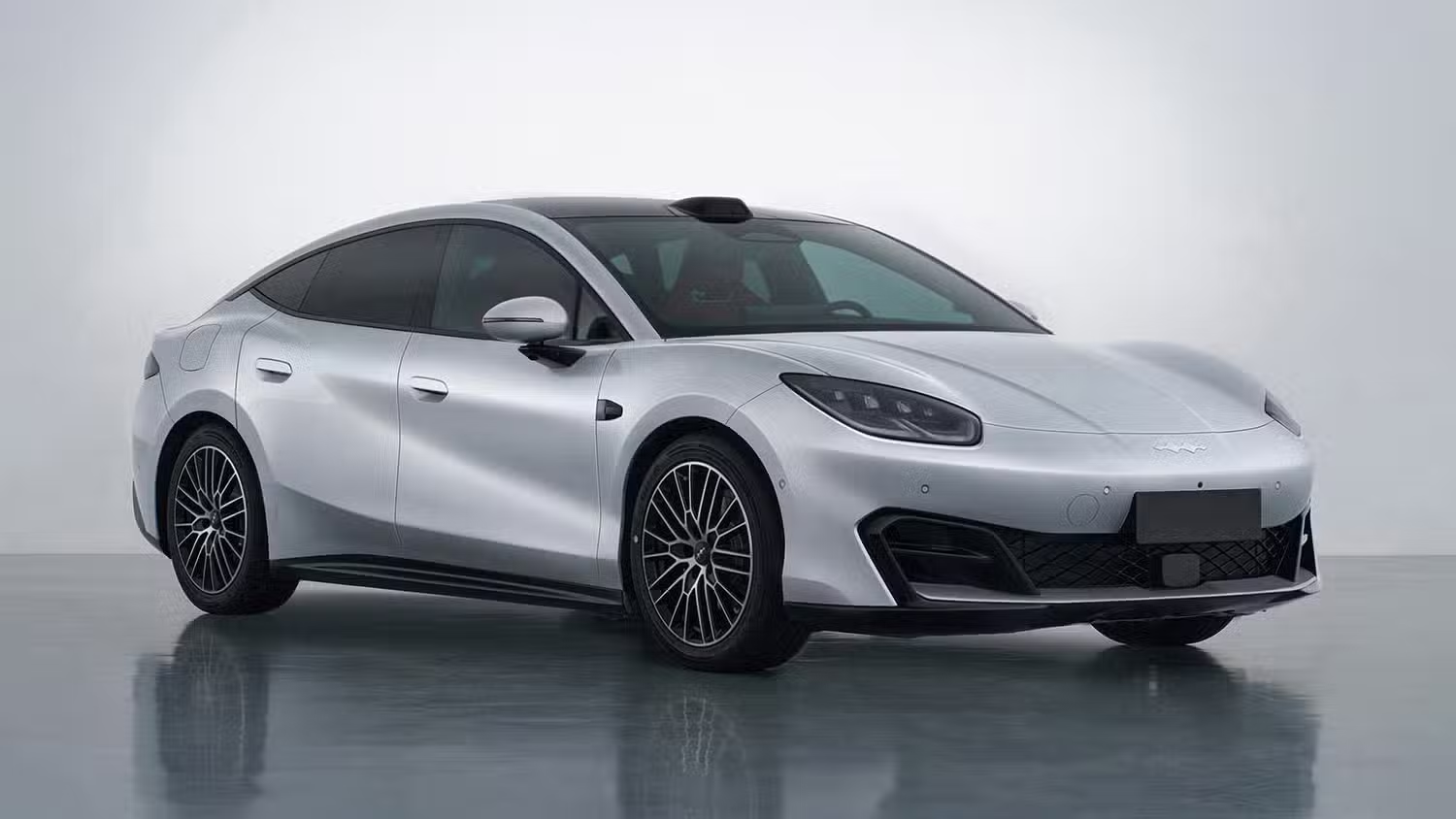
Key specifications disclosed during the June media tour: single-cell energy density of 400 Wh/kg, a Yangwang U9 prototype achieving 1,218 km CLTC range, 10-minute 10-80% fast charging delivering 500-800 km, -30°C discharge efficiency above 85%, and cycle life exceeding 10,000 cycles — roughly six times that of conventional liquid-electrolyte batteries. In the nail penetration test — the industry’s most severe safety benchmark — the cell surface temperature peaked at just 32°C with no smoke, fire, or electrolyte leakage.
BYD CTO Sun Huajun outlined the commercialization roadmap: small-batch demonstration deployment in 2027 (Yangwang U9 and Han EV premium editions first), scaling toward mass commercialization by 2030 with the explicit goal of “liquid-solid price parity.” BYD claims its vertical integration — from raw materials through cell manufacturing to pack assembly — gives it a structural cost advantage no competitor can match.
International Context
Toyota, once the presumed solid-state frontrunner, has pushed its mass production target from 2027 to 2030 after cumulative R&D investment exceeding ¥1.5 trillion ($10.5 billion), as tracked by industry analysts. BMW, partnering with Solid Power, targets demonstrator vehicles in the late 2020s. CATL’s Hefei sulfide solid-state pilot line has achieved 500 Wh/kg lab samples but targets small-batch production only by 2027 and mass production by 2030.
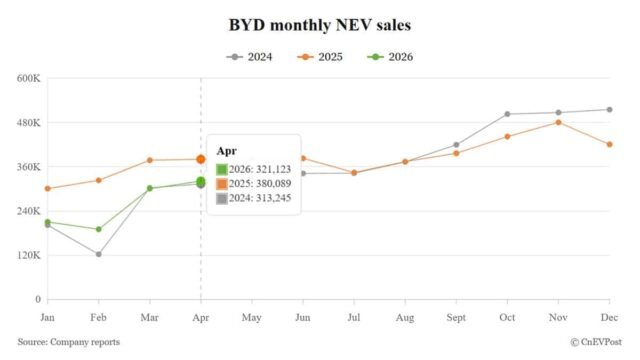
Western automakers face a compounding challenge: they are simultaneously trying to close the gap on both conventional LFP cost (where BYD’s vertical integration already dominates) and next-generation solid-state technology. BYD sold 160,000 vehicles overseas in May 2026 alone — exports now account for over 40% of monthly volume — and the solid-state production line announcement signals that the technology gap may widen rather than narrow.
What This Means for EV Buyers
For consumers considering an EV purchase in 2026-2027, the solid-state production milestone introduces a genuine technology transition risk. A 400 Wh/kg battery with 10,000-cycle durability and a 2030 price-parity target means that today’s best LFP and NMC batteries could feel outdated within a single vehicle ownership cycle.
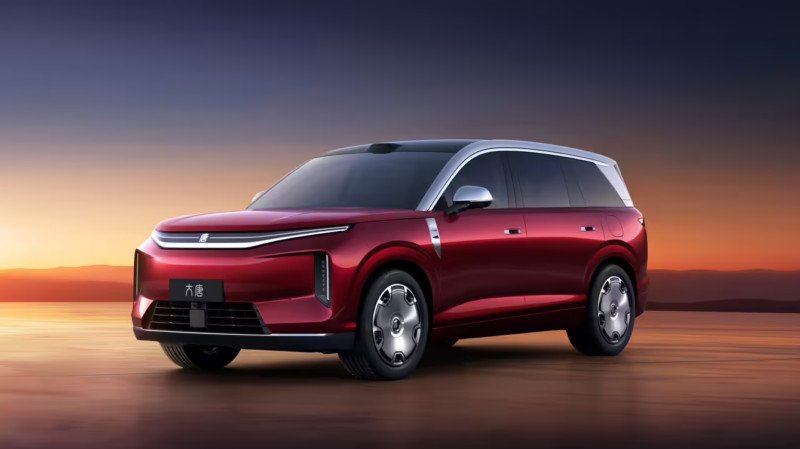
However, BYD’s phased rollout plan provides some clarity. Solid-state batteries will debut in premium models (Yangwang U9, Han EV) in 2027, with mass-market penetration not expected until 2028-2030. The mainstream LFP and Blade Battery 2.0 products launching throughout 2026-2027 remain excellent value, especially given that solid-state price parity is still 4-5 years away. The near-term practical advice: if you’re buying a premium EV in 2027-2028, waiting for solid-state may be worth it; for mainstream buyers, today’s LFP offerings are safe buys with 5+ years of competitive relevance.
The bigger picture is that solid-state batteries are no longer a “maybe someday” technology. With BYD’s 20 GWh production line going live in Q3 2026, the solid-state era has begun — and the countdown to liquid-electrolyte obsolescence has started.
Sources
- BYD Opens World’s First Automotive-Grade Sulfide Solid-State Battery Mass Production Line — Baijiahao/Baidu (June 21, 2026)
- Inside BYD’s Solid-State Battery Gigafactory: 20 GWh, Q3 Production — Baijiahao/Baidu (June 2026)
- 2026 Solid-State Battery Production Year: BYD vs CATL vs Toyota Gap Analysis — SMZDM (June 24, 2026)
- BYD Solid-State Battery Breakthrough: Timeline, Specs, and Market Impact — Autohome (June 2026)