Quick Answer
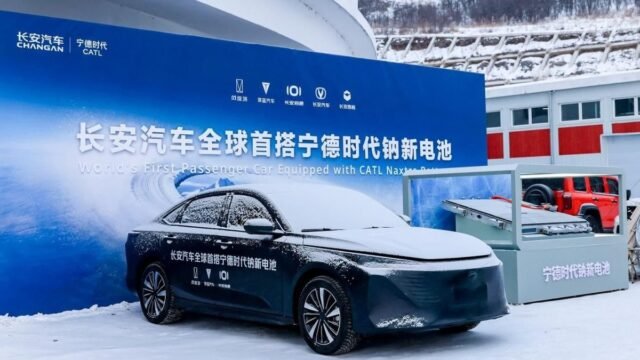
Semi-solid-state batteries are no longer a premium-only luxury — in 2026, they are entering the mass market at under $14,000. The MG4 Semi-Solid-State Edition launched at ¥99,800 (~$13,800), the Dongfeng eπ007 mixed solid-liquid version arrives in September, and BYD plans to equip the Yangwang U8 and Han L with semi-solid-state packs in Q4 2026. A new national safety standard taking effect July 1, 2026 formally incorporates semi-solid-state batteries into mandatory testing for the first time. This marks the most significant democratization of advanced battery technology since LFP went mainstream.
Why This Matters Globally
The semi-solid-state battery represents a pragmatic bridge between today’s liquid-electrolyte lithium-ion cells and tomorrow’s all-solid-state batteries. By replacing a portion of the flammable liquid electrolyte with solid or gel-like materials, semi-solid-state cells deliver 20-40% higher energy density, substantially better safety performance (especially in nail penetration and thermal runaway scenarios), and meaningfully improved low-temperature range retention — all without the manufacturing complexity and cost barriers of full solid-state technology.
In 2024, semi-solid-state batteries were confined to a handful of premium models starting above ¥300,000 ($41,000). In 2026, the technology is cascading down to the sub-¥100,000 ($13,800) segment, fundamentally reshaping what entry-level EV buyers can expect for their money. This has direct global implications: if Chinese automakers can export semi-solid-state-equipped vehicles at these price points, Western and Japanese competitors selling conventional lithium-ion cars at higher prices face an increasingly impossible value proposition.
What Chinese Sources Reveal
The price barrier collapsed with the MG4 Semi-Solid-State Anxin Edition at ¥99,800, making it the lowest-priced semi-solid-state EV on the market, according to comprehensive industry reports. In the 200,000-300,000 yuan family SUV segment, the Dongfeng eπ007 mixed solid-liquid version has confirmed a September 2026 delivery timeline, while the IM L6 Light Year Edition (launched 2024, 1,000+ km CLTC range) and NIO ET9 (150 kWh semi-solid-state pack, 4C super-fast charging) continue to anchor the premium tier.
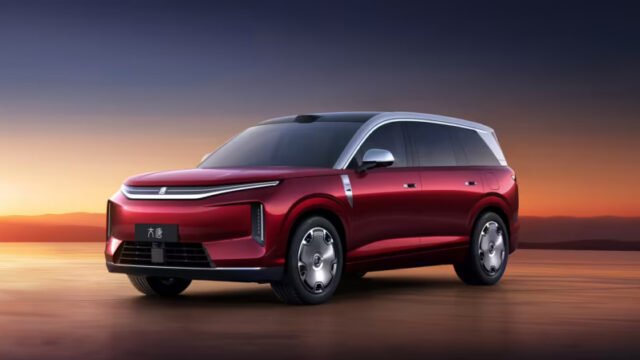
BYD’s entry is particularly significant. The company plans to equip the Yangwang U8 facelift and Han L flagship editions with semi-solid-state batteries in Q4 2026, leveraging its vertically integrated manufacturing to bring aggressive pricing to the premium segment. Parallel developments from Chery (Exeed EX7/ES8 solid-liquid hybrid, Q4 2026) and GAC (Hyper brand with 400 Wh/kg quasi-solid-state cells) confirm that semi-solid-state adoption is becoming an industry-wide trend, not a niche experiment.
The new national mandatory safety standard (GB standards) effective July 1, 2026 formally incorporates semi-solid-state batteries into China’s compulsory testing framework for the first time. This means every semi-solid-state-equipped vehicle sold in China must pass more rigorous safety certification, providing an additional layer of consumer protection and standardization.
International Context
No Western or Japanese automaker currently offers a semi-solid-state battery vehicle at any price point below $80,000. Toyota’s solid-state efforts remain focused on full solid-state technology targeted at 2030. European automakers like Mercedes and BMW have partnered with solid-state startups (Factorial Energy, Solid Power) but are still in the demonstrator phase. The semi-solid-state gap — a practical, near-term technology that Chinese brands are already shipping at scale — represents a category of competitive advantage that Western incumbents simply have no answer to in the 2026-2028 timeframe.
This matters because semi-solid-state batteries address the three objections that consistently rank highest in global EV consumer surveys: range anxiety, fire safety concerns, and winter performance degradation. A $14,000 Chinese EV that genuinely solves all three — while a $35,000 Western EV still uses conventional lithium-ion — creates an asymmetric competitive dynamic that tariffs alone cannot neutralize.
What This Means for EV Buyers
If you are shopping for an EV in 2026, the semi-solid-state battery should be on your checklist. The technology delivers real, tangible improvements in the areas that matter most in daily use: more accurate range (less inflated claims), better safety margins, and dramatically reduced winter range loss — a pain point that has frustrated Northern-climate EV owners for years.
The sweet spot for value is the ¥200,000-300,000 ($27,500-$41,000) family SUV segment, where semi-solid-state models arriving in late 2026 will offer premium-tier battery technology at mainstream prices. Budget buyers can now access the technology at the MG4’s ¥99,800 entry point, though with more modest range and specification. The key decision point: semi-solid-state batteries arriving in H2 2026 offer 80%+ of the benefits of full solid-state technology at a fraction of the cost premium, making them the smart near-term upgrade path while full solid-state technology matures toward 2030.
Sources
- 2026 EV Revolution: Semi-Solid-State Batteries Go Mass Market From ¥100K to ¥1M — QQ News (June 2026)
- MIIT Launches 2026 NEV Safety Investigation: New National Standards Take Effect July 1 — QQ News (June 1, 2026)
- China’s Safety Bottom Line Tightens: MIIT Launches 2026 NEV Safety Inspection — 36Kr (May 28, 2026)
- 2026 Week 26 New Car Roundup: Li Auto L8, Leapmotor D99 Lead Multiple Launches — Autohome (June 2026)