Quick Answer: CATL leads global third-party battery supply and held 40.2% of worldwide EV-battery usage in January–May 2026; BYD ranked second at 14.4% and gains a different advantage by integrating Blade batteries with its own vehicles. CATL offers the broader chemistry and customer portfolio. BYD controls more of the vehicle-to-charger system. Neither has one universally “better” battery.
BYD and CATL are often placed in a single “best battery” contest, but they compete through different systems. CATL is primarily a specialist battery supplier: it develops multiple chemistries and pack formats for a wide range of vehicle makers, storage customers and emerging applications. BYD is an automaker and battery producer whose strongest advantage is vertical integration across cells, packs, electric drivetrains, vehicles and charging infrastructure.
This page compares both businesses with one rule: figures must share the same period and statistical scope before they are ranked. Company launch claims are labelled as such, and cell-level numbers are not silently compared with pack-level or vehicle-level results.
BYD vs CATL at a glance
| Dimension | BYD / FinDreams Battery | CATL | What it means |
|---|---|---|---|
| Core model | Vertically integrated automaker and component producer | Independent battery and zero-carbon technology supplier | BYD optimises the whole vehicle system; CATL spreads R&D and factories across many customers. |
| Main power-battery position | Large internal demand from BYD, Denza, Fangchengbao and Yangwang, plus selected external programmes | Third-party supply across global and Chinese automakers | BYD has captive volume; CATL has broader customer diversification. |
| 2026 global usage share | 14.4% and 67.6 GWh, Jan–May | 40.2% and 188.4 GWh, Jan–May | Comparable SNE Research scope: batteries used in registered EVs, PHEVs and HEVs worldwide. |
| Current technology emphasis | Blade LFP, second-generation Blade and FLASH Charging | LFP, NCM, sodium-ion, hybrid systems, charging and swapping | BYD’s message is integrated mass-production performance; CATL’s is multi-chemistry coverage. |
| External proof | Toyota bZ3 uses an electric system based on BYD LFP cells | BMW, Volkswagen, Stellantis, Mercedes-Benz, Toyota, NIO, Li Auto and others appear in CATL disclosures | External customers are central to CATL’s model but selective for BYD. |
Market share: CATL leads, but the denominator matters
SNE Research counted 469.2 GWh of batteries used in EVs, plug-in hybrids and hybrids registered worldwide from January through May 2026. CATL supplied 188.4 GWh, or 40.2%; BYD supplied 67.6 GWh, or 14.4%. CATL therefore delivered about 2.8 times BYD’s usage volume in this dataset. Together they represented 54.6%.
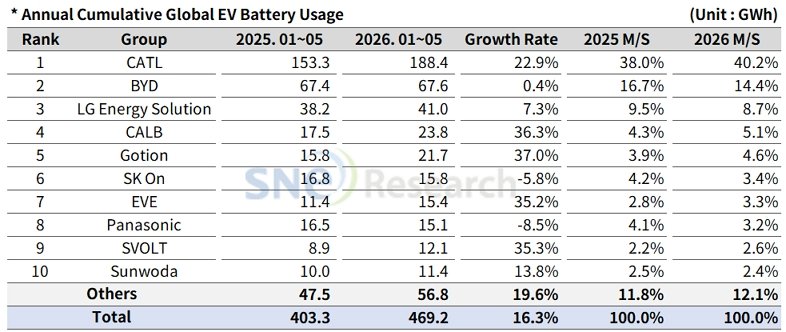
Do not mix these figures: CATL also reported 661 GWh of total lithium-ion battery sales in 2025, including power and energy-storage products. BYD reported 285.634 GWh of installed NEV power and energy-storage batteries in its 2025 monthly business update. Those company totals use different categories from SNE’s vehicle-usage dataset and should not be turned into a market-share ratio.
CATL’s 2025 annual-report summary said power-battery sales reached 541 GWh, total lithium-ion battery sales reached 661 GWh and global manufacturing capacity reached 772 GWh. It also cited a 39.2% global power-battery usage share for 2025. The trend into May 2026 is therefore continued leadership, not a one-month spike.
The real strategic difference: captive demand versus customer breadth
BYD’s vertical integration
BYD began as a battery company and later expanded into vehicles, electronics, semiconductors, power electronics and charging. That structure creates a feedback loop: vehicle teams can design around a cell and pack, factories can coordinate production with model demand, and charging claims can be engineered as a battery–vehicle–charger system rather than as a cell alone.
The advantage is control. BYD can choose pack dimensions, thermal management, charging hardware and software together. Its 2025 vehicle sales exceeded 4.6 million units, creating unusually large internal battery demand. The boundary is external adoption: another automaker may prefer a supplier that does not also compete for the same customer.
BYD does have external proof. Toyota said the China-market bZ3’s electric system was based on BYD lithium-iron-phosphate cells, combined with Toyota-developed structure, cooling, control and safety monitoring. That is stronger evidence than vague lists of rumoured customers. However, BYD does not publish a current, auditable “internal versus external” battery split, so the old 70/30 claim should not be repeated as fact.
CATL’s specialist platform
CATL’s advantage is breadth. Its disclosures name customers including Volkswagen, BMW, Volvo, Stellantis, Toyota, Mercedes-Benz, Nissan, Geely, Xiaomi, Li Auto and NIO. The company can amortise research, validation and capacity across several segments, then adapt chemistry and form factor to a customer’s vehicle programme.
That breadth creates dependency risk as well as strength. CATL’s 2025 annual report said its five largest customers produced 38.96% of revenue and the largest produced 13.73%. Concentration is material, but no single customer dominated the business. CATL also exports know-how through licensing: Ford’s Michigan LFP plant is owned by Ford while using CATL’s LFP cell knowledge and services. This asset-light structure is different from CATL owning a US cell factory.
Battery technology: compare products, not slogans
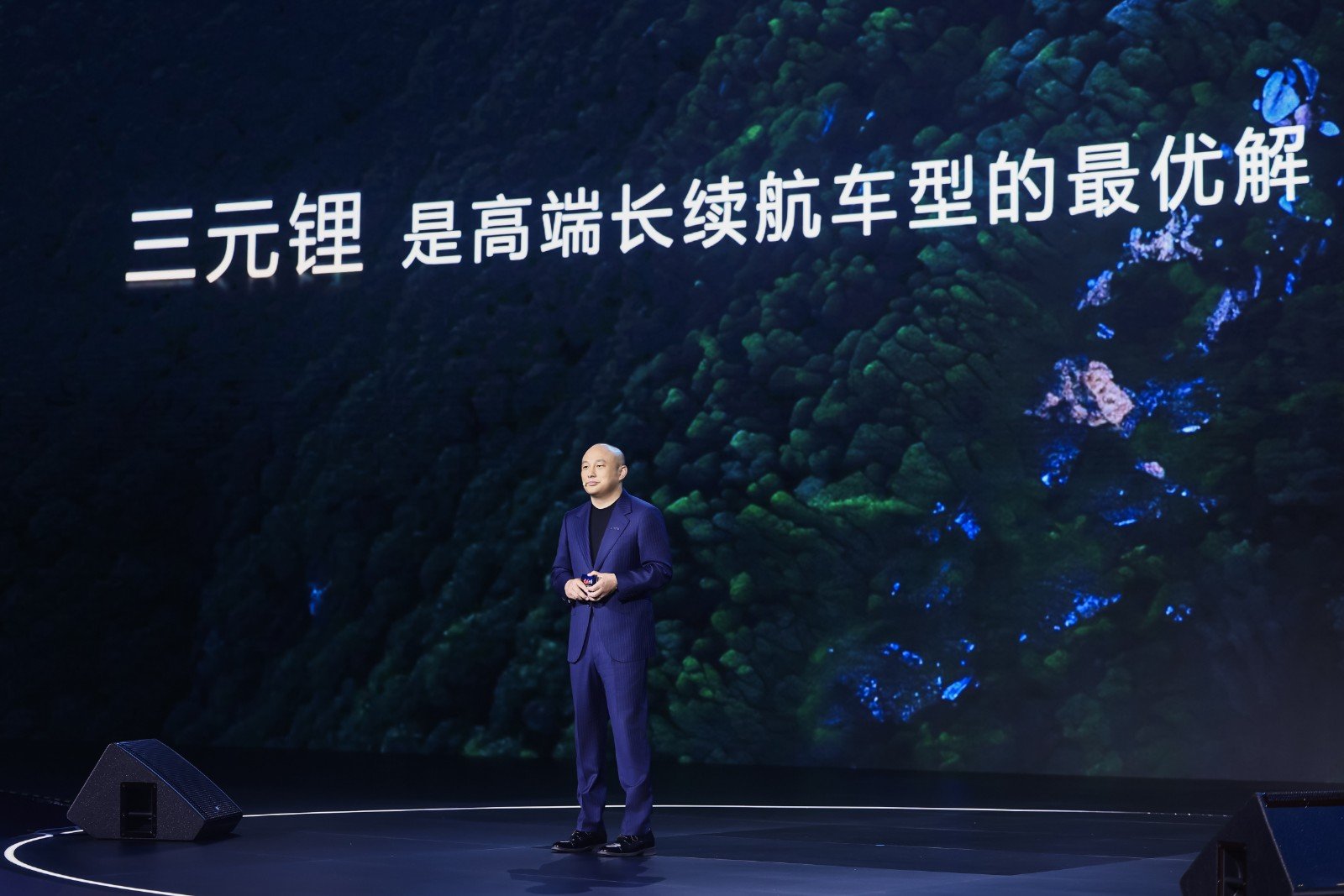
“Blade,” “Shenxing” and “Qilin” are product families, not chemical formulas that stay fixed forever. A model year, chemistry, pack size, voltage, cooling system and compatible charger all affect the outcome. CATL’s April 2026 portfolio also shows why a one-row comparison is inadequate: it included third-generation Shenxing, third-generation Qilin, Qilin Condensed, second-generation Freevoy, Naxtra sodium-ion and a combined charge-and-swap network.
| Product | Company | Positioning | Current official claim | Comparison caution |
|---|---|---|---|---|
| Blade Battery 2.0 | BYD | Mass-production LFP system integrated with FLASH Charging | 10%–97% in nine minutes at up to 1,500 kW; 20%–97% in 12 minutes at −30°C | System claim requires a compatible vehicle, temperature, state of charge and FLASH station. |
| Third-gen Shenxing | CATL | Very-high-rate charging with cycle-retention emphasis | CATL says 10%–80% in 3 minutes 44 seconds and above 90% capacity after 1,000 full cycles | Company test conditions; vehicle implementation and charging infrastructure decide road results. |
| Third-gen Qilin | CATL | Premium long-range, high-power product | CATL says 280 Wh/kg at cell level, 10C charging and a 625 kg pack | Cell-level density is not pack-level density; advertised vehicle range includes vehicle efficiency. |
| Qilin Condensed | CATL | High-nickel, high-density premium product | CATL says 350 Wh/kg cell density and 760 Wh/L | New product announcement; verify actual vehicle, homologation and delivery status. |
| Naxtra sodium-ion | CATL | Resource diversification and extreme-temperature use | Full-scale production targeted by the end of 2026 | A production target is not proof of broad vehicle deployment. |
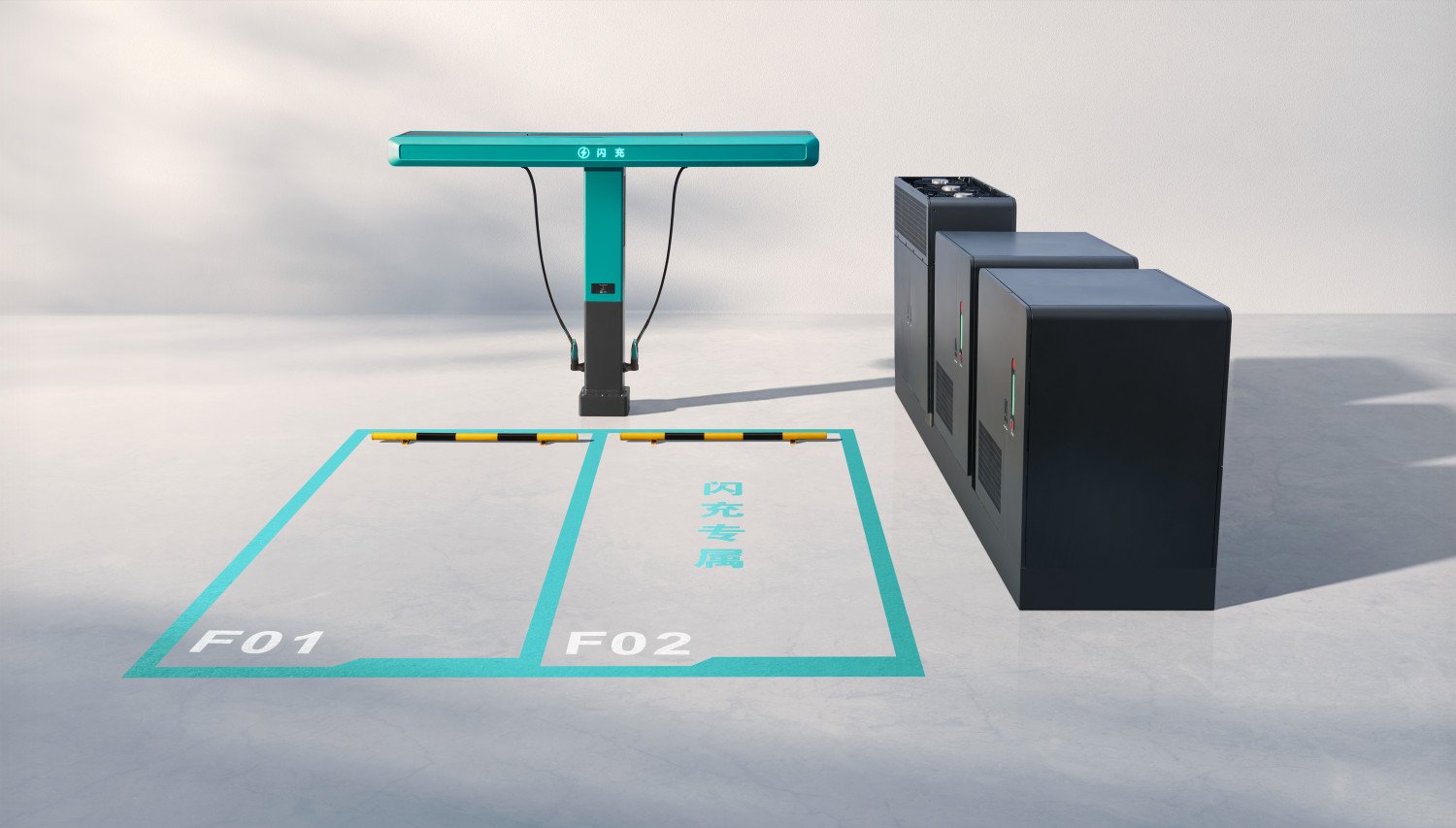
BYD’s newest headline is charging speed, not a published universal cell-energy-density number. The company’s official European release states that Blade Battery 2.0 and its 1,500 kW FLASH charger can move from 10% to 97% in nine minutes. It also says 20,000 stations are planned in China by the end of 2026. Until that network and compatible cars are widely delivered, the number is a system capability under stated conditions rather than every owner’s charging time.
Safety and battery life: no single test creates a winner
BYD built the Blade brand around LFP chemistry, a long thin cell format and visible abuse tests. In Europe, BYD extended Blade Battery coverage to eight years or 250,000 kilometres with at least 70% state of health. BYD also says the battery exceeded 5,000 charge–discharge cycles in its testing. Those are meaningful first-party signals, but the warranty applies to stated markets and terms; it is not a global promise for every model.
CATL uses several chemistries, so “CATL battery safety” cannot be reduced to one chemistry. Its 2026 product release describes thermal-propagation controls, bottom-impact protection, internal-short-circuit measures and cycle-retention targets across different products. Buyers should compare the homologated pack in the exact vehicle, not a brand’s most dramatic laboratory demonstration.
Better buying rule: check the vehicle’s usable capacity, charge curve, battery warranty, repair policy, thermal management and local fast-charger compatibility. A pack with a lower peak number but a flatter charging curve can finish a road-trip stop sooner than a pack with a brief higher peak.
Charging speed: how to read the numbers
| Metric | What to ask | Why it changes the result | Minimum disclosure |
|---|---|---|---|
| Charge window | 10%–80%, 10%–97% or another range? | The final 10–20% usually slows sharply. | Starting and ending state of charge |
| Time versus power | Average power or only peak kW? | A short 1,500 kW peak does not describe the full curve. | Time, energy added and average power |
| Temperature | Was the pack preconditioned? | Cold cells accept power more slowly and may heat first. | Ambient and battery temperature |
| Range added | Which test cycle and vehicle? | CLTC, WLTP and EPA range are not interchangeable. | Test cycle, model and consumption |
| Infrastructure | Can the station sustain the voltage and current? | The car and charger negotiate to the lower limit. | Charger rating and compatible site |
Supply chain and global expansion
BYD’s supply-chain strategy begins with internal coordination. It can route battery innovation directly into vehicle platforms, use vehicle demand to support factories and package charging rollout with car launches. The trade-off is that external automakers may view BYD as both supplier and rival. Toyota’s bZ3 demonstrates that a carefully bounded partnership is possible, but it does not prove that every large automaker will source BYD packs.
CATL’s strategy is to become infrastructure for many manufacturers. Its BMW relationship now extends beyond cell supply into battery-passport data and carbon accounting. Its network spans China and overseas factories, licensing arrangements, recycling and service. That creates more interfaces and customer requirements, but also reduces dependence on CATL-branded vehicles because CATL does not sell a competing passenger-car lineup.
Raw-material ownership is not the only route to resilience. CATL’s multi-chemistry approach uses LFP, NCM and sodium-ion to match cost, range and temperature requirements. BYD’s LFP scale reduces nickel and cobalt exposure while its vehicle business provides a destination for output. Both companies also operate storage and recycling businesses, but claims about mine ownership or self-sufficiency should be tied to a dated filing rather than recycled from old investment rumours.
Where Tesla 4680 fits
Post 189 previously presented Tesla 4680 beside Blade, Qilin and Shenxing as if all four were equivalent products with directly comparable energy density, cycle life and charge time. They are not. “4680” identifies a cylindrical cell format and manufacturing architecture; chemistry and pack implementation can vary. Blade, Shenxing and Qilin are branded product families that also evolve by generation.
Tesla remains a useful benchmark because it pursues cell design, structural integration and vehicle manufacturing together, closer to BYD’s system-control logic than to CATL’s broad supplier model. But Tesla should not receive a precise “winner” row unless the figures come from the same test scope. This owner therefore keeps Tesla as a structural benchmark, while the head-to-head decision remains BYD versus CATL.
Who wins the BYD vs CATL comparison?
| Decision | Current advantage | Reason | What could change it |
|---|---|---|---|
| Global third-party supply | CATL | 40.2% Jan–May 2026 usage share and a much broader disclosed OEM base | Customer insourcing, rival suppliers and localisation rules |
| Vehicle–battery integration | BYD | Control across battery, drivetrain, vehicle and charging system | External platforms adopting equally deep supplier integration |
| Chemistry breadth | CATL | LFP, NCM, sodium-ion and hybrid-material portfolios | Commercial scale and vehicle delivery of announced products |
| Captive volume | BYD | More than 4.6 million BYD NEV sales in 2025 support internal demand | Vehicle cycle, overseas factories and model mix |
| Buyer choice | No universal winner | The exact vehicle, warranty, charge curve and local infrastructure matter more than the logo | Independent same-vehicle or same-pack testing |
For chemistry definitions and the status of LFP, sodium-ion, solid-state, swapping and ultra-fast charging, use the broader EV Battery Technology Guide 2026. For company history and founder context, see CATL and Robin Zeng. For BYD’s wider platform, see BYD Technology Explained. Browse the site’s permanent research structure in the knowledge hub.
Frequently Asked Questions
Which is better, BYD or CATL battery technology?
Neither is universally better. CATL leads global third-party supply and offers a broader chemistry and customer portfolio. BYD’s advantage is integrating its Blade batteries with its own vehicles and charging system. The better choice depends on the exact car, pack, warranty and local charging network.
Does CATL have a larger battery market share than BYD?
Yes. SNE Research reported that CATL held 40.2% of global EV-battery usage from January through May 2026, while BYD held 14.4%. Both figures use the same worldwide EV, PHEV and HEV registration-based dataset.
Does BYD make its own batteries?
Yes. BYD’s battery operations sit within its vertically integrated group and supply its own vehicle brands at large scale. BYD also participates in selected external programmes, including the Toyota bZ3 electric system based on BYD LFP cells.
Who are CATL’s car-company customers?
CATL disclosures name customers including Volkswagen, BMW, Volvo, Stellantis, Toyota, Mercedes-Benz, Nissan, Geely, Xiaomi, Li Auto and NIO. Individual battery chemistry, plant and supply terms differ by vehicle programme.
Is BYD Blade Battery safer than CATL batteries?
That cannot be concluded from one nail-penetration demonstration. Blade’s LFP chemistry and structural design have strong safety characteristics, but CATL supplies several chemistries and pack designs with different safeguards. Compare the homologated pack and safety record in the exact vehicle.
Which charges faster, BYD Blade 2.0 or CATL Shenxing?
Both companies publish very fast 2026 system claims, but the charge windows and test conditions differ. BYD states 10%–97% in nine minutes for Blade 2.0 with FLASH Charging; CATL states 10%–80% in 3 minutes 44 seconds for third-generation Shenxing. They are not an apples-to-apples test.
Primary sources
- SNE Research: January–May 2026 global EV-battery usage
- CATL: 2025 annual-report summary
- CATL: April 2026 Super Technology Day product portfolio
- CATL: 2025 annual report
- CATL and BMW: cylindrical-battery supply agreement
- CATL and BMW: 2026 battery-passport and decarbonisation MOU
- BYD: Blade Battery 2.0 and FLASH Charging
- BYD: European Blade Battery warranty and endurance claims
- Toyota: bZ3 electric system based on BYD LFP cells
- Ford: Michigan LFP plant using CATL technology and services