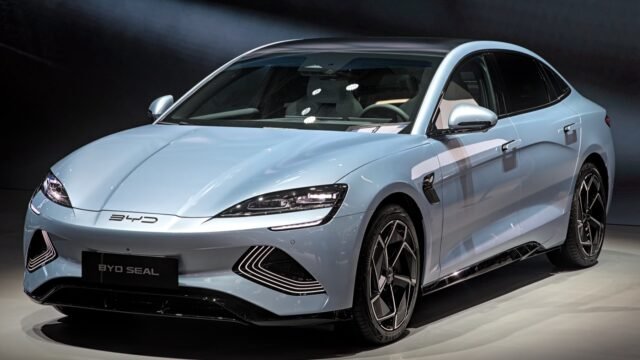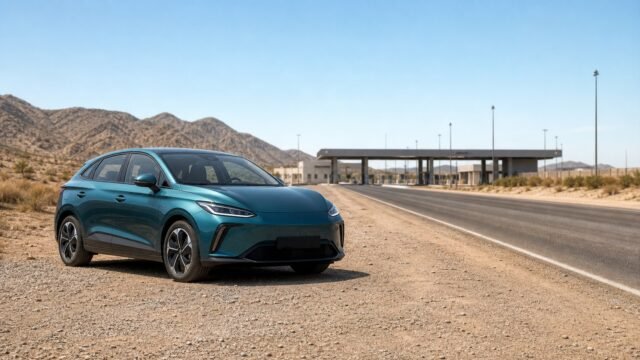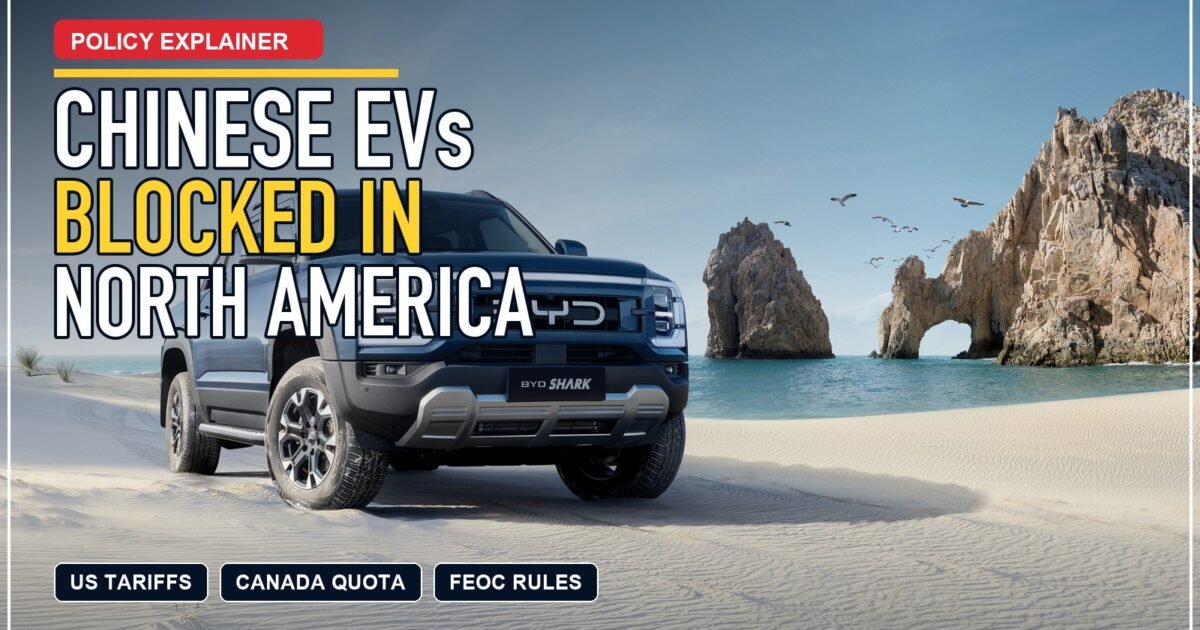
Last updated July 17, 2026. Chinese electric cars are not universally illegal in North America. The real answer is a stack of separate rules: origin-based tariffs, vehicle-safety certification, emissions paperwork where applicable, tax-credit eligibility, and a phased U.S. restriction on connected-vehicle software, hardware and certain manufacturers. Canada now uses a limited low-tariff quota, while Mexico sells Chinese brands but does not provide an automatic back door into the United States.
Quick answer
- The United States applies an additional 100% Section 301 duty to covered China-origin EVs, effective September 27, 2024. Other ordinary and Section 232 duties may also apply.
- A car still needs a lawful U.S. import basis and Federal Motor Vehicle Safety Standards compliance. Paying duty alone does not make a nonconforming vehicle road-legal.
- The connected-vehicle rule is phased: key manufacturer and software restrictions begin with model year 2027; covered hardware restrictions begin with model year 2030, or January 1, 2029 for hardware without a model year.
- The U.S. Section 30D consumer clean-vehicle credit ended for vehicles acquired after September 30, 2025. FEOC is therefore no longer a current 30D buyer-credit test for a new 2026 purchase.
- Canada replaced its 100% surtax with a 49,000-vehicle annual quota at 6.1% from March 1, 2026. Mexico raised the tariff on new electric cars from non-FTA countries to 50% from January 1, 2026.
Last verified: July 17, 2026. Tariff, certification, tax-credit, connected-vehicle and quota statuses are current through that date; future effective dates remain explicitly labelled.
The North American barrier stack
Headlines often collapse every obstacle into “the tariff” or “the ban.” That produces bad answers. A tariff changes the landed cost. A safety rule determines whether a vehicle can be imported permanently and registered. A tax-credit rule changes who can claim a subsidy. The connected-vehicle rule can prohibit specified transactions even when a vehicle is assembled outside China. Each question needs its own test.
| Layer | United States | What it controls | Common mistake |
|---|---|---|---|
| Section 301 | Additional 100% duty on covered China-origin EVs | Customs cost based on origin and tariff classification | Calling 100% the complete landed-duty stack or a retail-price increase |
| Section 232 | 25% automobile tariff from April 3, 2025, with special USMCA-content treatment | Separate national-security trade measure | Combining every percentage without checking current stacking rules |
| NHTSA / EPA | FMVSS certification; EPA rules for emissions-regulated vehicles and engines | Whether permanent importation and road use are lawful | Assuming payment of duty cures a nonconforming vehicle |
| Connected vehicles | MY2027 software/manufacturer restrictions; MY2030 hardware restriction | Specified ICTS transactions and supply-chain nexus | Saying all Chinese vehicles were banned on March 17, 2025 |
| 30D / FEOC | 30D ended for vehicles acquired after September 30, 2025 | Historical consumer-credit eligibility, not import legality | Presenting FEOC as a current 2026 consumer import ban |
| State rules | Title, registration, insurance and road-use requirements vary | Whether a federally imported vehicle can practically be used | Stopping the analysis at Customs clearance |
U.S. tariffs: 100% is an additional Section 301 duty
USTR’s September 2024 final modification raised the Section 301 rate on covered electric vehicles of China to 100%, effective for entries on or after September 27, 2024. This is an additional trade-remedy duty. It is not a statement that the final showroom price doubles, and it is not necessarily the vehicle’s entire duty burden.
CBP’s general vehicle-import guidance lists the ordinary duty at 2.5% for automobiles and 25% for trucks. A separate 2025 Section 232 measure added a 25% tariff to covered imported automobiles from April 3, 2025. For qualifying USMCA vehicles, the Section 232 proclamation allows the 25% charge to be applied to approved non-U.S. content. Current classification, origin, exclusions and duty-stacking instructions therefore matter more than a single viral percentage.
Certification is a separate gate from tariffs
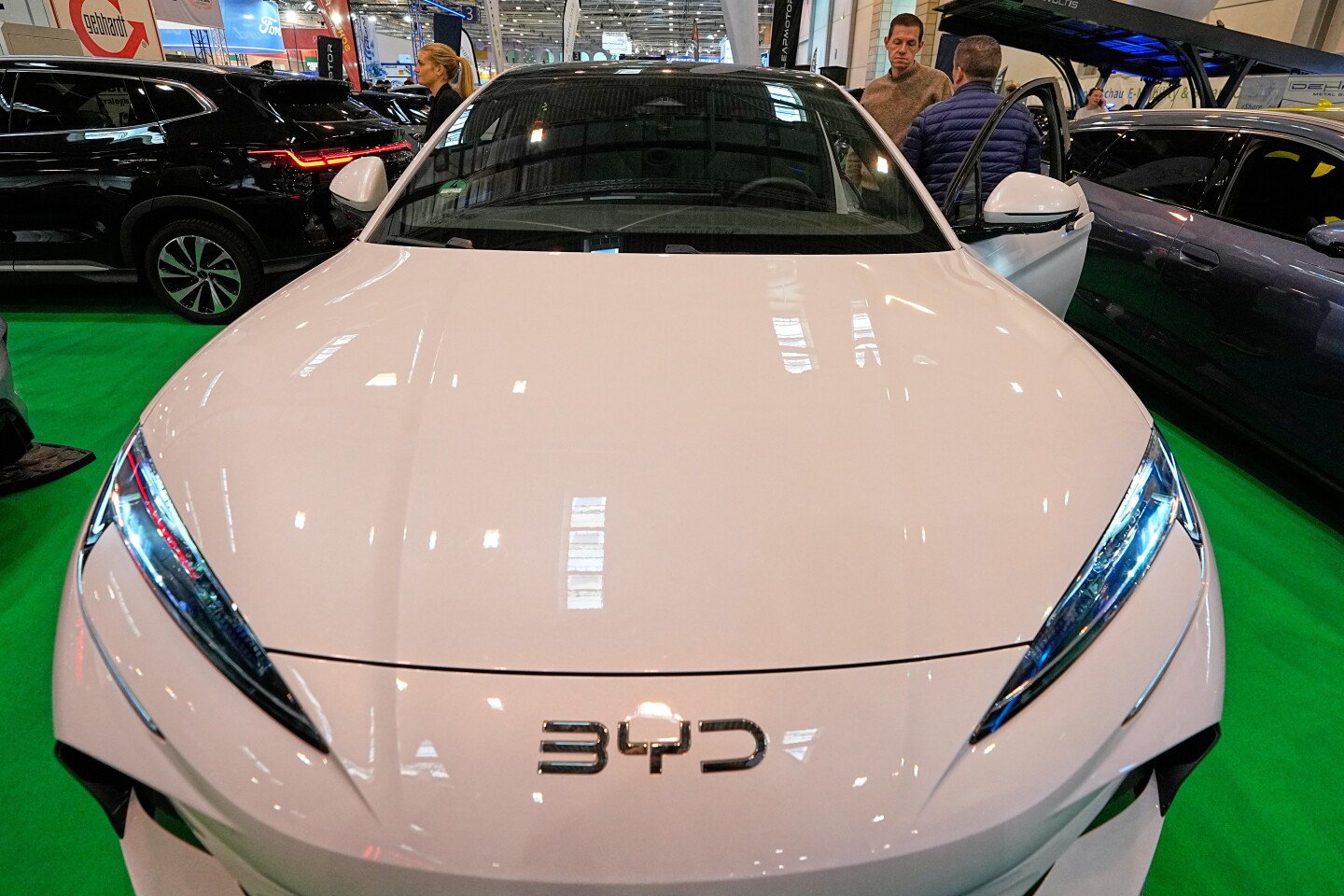
For a vehicle less than 25 years old, NHTSA says permanent importation is generally straightforward only when the original manufacturer built it to all applicable Federal Motor Vehicle Safety Standards and affixed the required certification label. A nonconforming vehicle cannot simply be brought across the border and modified informally.
If NHTSA has determined a nonconforming make, model and model year eligible, a Registered Importer may import it under bond and perform the required work. NHTSA’s FAQ states that the bond is 150% of the vehicle’s declared value and that compliance work normally must be completed within 120 days. Many China-market vehicles have no substantially similar U.S.-certified model and no existing eligibility determination, which can make an individual conversion impractical.
EPA requirements are a second federal track for vehicles and engines subject to emissions rules. EPA advises an owner of a non-U.S.-conforming vehicle that does not qualify for an exemption to use an Independent Commercial Importer authorized for the specific make and model. A pure BEV does not create the same tailpipe-certification issue as a combustion vehicle, but import documentation, NHTSA compliance and state registration still remain.
A temporary entry is not a permanent workaround. CBP says a nonresident may bring a nonconforming vehicle for personal use for up to one year when the vehicle accompanies the owner, but it must be exported, cannot be sold in the United States and receives no extension. Research, demonstration and show-or-display routes also have narrow conditions.
The connected-vehicle rule: the dates that matter
The Commerce Department’s connected-vehicle final rule became effective on March 17, 2025, but its main prohibitions are phased by model year. The rule applies to connected vehicles under 10,001 pounds and focuses on Vehicle Connectivity System hardware, covered VCS and Automated Driving System software, and manufacturers with a sufficient nexus to China or Russia.
| Date / model year | Rule milestone | Practical effect | Important boundary |
|---|---|---|---|
| March 17, 2025 | Final rule effective | Compliance framework, authorizations and declarations begin | Not a same-day ban on every Chinese car |
| Model year 2027 | Covered software and manufacturer prohibitions | PRC/Russia-linked manufacturers cannot sell covered connected vehicles; covered software is restricted | Manufacturer prohibition can apply even if final assembly occurs in the U.S. or Mexico |
| January 1, 2029 | Hardware without a model year | Covered VCS hardware import restriction begins for those units | Component timing differs from vehicle-model-year timing |
| Model year 2030 | Covered VCS hardware prohibition | Imports of specified PRC/Russia-linked connectivity hardware are prohibited | Hardware, software and platform are separate tests |
| Ongoing | Declarations and authorizations | Annual declarations; general or specific authorizations may apply | Authorization is fact-specific, not a blanket exemption |
FEOC and the IRA: important history, but not a 2026 buyer credit
Foreign Entity of Concern rules were a major restriction inside the former Section 30D New Clean Vehicle Credit. Beginning in 2024, a qualifying vehicle could not contain battery components manufactured or assembled by a FEOC. Beginning in 2025, the battery also could not contain applicable critical minerals extracted, processed or recycled by a FEOC. These rules sharply constrained China-linked battery content in credit-eligible vehicles.
That does not mean FEOC was an import ban. It meant a vehicle failed a federal consumer-tax-credit test. More importantly, Public Law 119-21 terminated the 30D, 25E and 45W clean-vehicle credits for vehicles acquired after September 30, 2025. A 2026 article that still tells a new buyer to check FEOC to claim a current $7,500 30D credit is out of date.
Prohibited Foreign Entity restrictions continue elsewhere in U.S. clean-energy policy. IRS Notice 2026-15 provides interim guidance for restrictions tied to Sections 45X, 45Y and 48E, including material assistance from a PFE. Those rules can affect battery-component manufacturing, energy storage and clean-electricity project economics. They are not a replacement consumer EV credit and do not independently legalize or prohibit importing a car.
| Rule | Relevant period | What it tested | 2026 reading |
|---|---|---|---|
| 30D battery-component FEOC rule | From 2024 until credit termination | Whether battery components were made or assembled by a FEOC | Historical credit eligibility; 30D ended for post-Sept. 30, 2025 acquisitions |
| 30D critical-mineral FEOC rule | From 2025 until credit termination | Whether critical minerals were extracted, processed or recycled by a FEOC | Historical credit eligibility, not import legality |
| PFE restrictions | Current under P.L. 119-21 and 2026 guidance | Status and material-assistance tests for specified energy credits | Relevant to projects and manufacturing credits, not a new $7,500 buyer credit |
Canada changed course in March 2026
Canada is no longer accurately described as applying a universal 100% surtax to Chinese EVs. Global Affairs Canada says the 2024 surtax was repealed when a country-specific quota took effect on March 1, 2026. The first-year quota is 49,000 vehicles, increasing 6.5% annually, and eligible vehicles within the quota pay the 6.1% most-favoured-nation tariff.
For the first six months, March 1 through August 31, 2026, the available quantity is 24,500 vehicles and permits are administered first-come, first-served. Administration from September may change, so importers should use the current Notice to Importers rather than relying on an early-2026 headline. Canada’s quota is a controlled market-access route, not an unlimited removal of trade barriers.

For buyer availability, permits and market-entry questions, use BYDToday’s dedicated guide to buying a Chinese EV in Canada. This North America owner keeps the Canada section at policy-comparison depth instead of duplicating that consumer intent.
Mexico is a market, not an automatic U.S. loophole
Chinese brands have a real retail presence in Mexico. But Mexico also tightened its own border treatment. The December 29, 2025 tariff decree set the rate for new electric vehicles under Mexican tariff line 8703.80.01 at 50%, effective January 1, 2026. The policy targets products from countries without a trade agreement or applicable quota; it is not limited to one named country.
Buying a China-origin car from a Mexican dealer does not convert it into a Mexican-origin vehicle. Permanent U.S. import still requires the tariff classification and country-of-origin analysis, NHTSA eligibility or original certification, any applicable EPA requirements, and state title and registration. BYDToday’s transaction-focused explainer covers the U.S. rules for China-made cars bought in Mexico.
Assembly in Mexico is more complex, but it is not a magic label change. To claim USMCA preferential tariff treatment, a vehicle must satisfy the automotive rules of origin, including the 75% regional-value-content requirement for passenger cars and light trucks, labor-value-content rules, steel and aluminum purchasing requirements, and producer certifications. A simple final assembly step with mostly Chinese content may not qualify.
Even a vehicle that qualifies for USMCA tariff treatment faces independent U.S. rules. The MY2027 connected-vehicle manufacturer prohibition can reach a PRC-linked manufacturer even when the vehicle is made in Mexico or the United States. Safety certification also remains separate. Readers considering a specific BYD transaction can use the narrower BYD-from-Mexico import guide.
| Market | Trade treatment | Market access | Cross-border warning |
|---|---|---|---|
| United States | 100% additional Section 301 duty on covered China-origin EVs; separate Section 232 measure | Certification plus phased connected-vehicle rules create independent gates | Customs payment alone does not make a vehicle road-legal |
| Canada | 49,000 annual quota at 6.1% MFN; 100% surtax repealed March 1, 2026 | Quota permits plus Canadian safety and sales requirements | Canadian admission does not create U.S. admission |
| Mexico | 50% tariff on new EVs from non-FTA countries from January 1, 2026 | Chinese brands can sell through Mexican channels | Purchase in Mexico does not alter Chinese origin; USMCA qualification is evidence-based |
Which pathways are actually viable?
- Direct China-to-U.S. retail import: theoretically possible only with the correct customs and compliance basis, but the tariff stack, absence of U.S. certification and future ICTS limits make normal retail distribution difficult.
- Individual gray-market import: not a general shortcut. Eligibility, Registered Importer support, a substantial bond and model-specific conversion evidence may be required.
- Mexico or Canada purchase: useful only for use in that market unless a separate U.S. import analysis succeeds. A foreign license plate or temporary admission does not become permanent eligibility.
- North American production: can change origin and logistics, but USMCA content, Section 232 treatment, FMVSS certification and connected-vehicle manufacturer/software rules remain.
- Licensing or supply agreements: may reduce direct brand exposure, but software, hardware, ownership/control and PFE sourcing tests must be analyzed separately.
For scale context, see BYDToday’s China NEV export tracker. Country-specific reporting is organized in Regions, while evergreen technology and policy explainers live in the Knowledge hub.
Frequently asked questions
Are Chinese EVs banned in the United States?
Not as one universal customs prohibition applying to every vehicle today. China-origin EVs face a 100% additional Section 301 duty and other possible duties, while permanent road use requires safety compliance. Separate connected-vehicle prohibitions begin mainly with model year 2027 for covered software and PRC-linked manufacturers, and model year 2030 for covered hardware.
What is the U.S. tariff on Chinese electric cars?
The Section 301 rate on covered China-origin EVs is an additional 100%, effective September 27, 2024. Ordinary customs duty and the separate 25% Section 232 automobile measure may also be relevant. The exact total depends on classification, origin, current stacking rules and any applicable exception, so 100% should not be presented as a universal final landed rate.
Does FEOC still determine whether a U.S. buyer gets a $7,500 EV credit in 2026?
No for a new 2026 acquisition. Section 30D ended for vehicles acquired after September 30, 2025. FEOC battery-component and critical-mineral tests were important to historical 30D eligibility, while newer PFE restrictions apply to specified manufacturing and clean-energy credits rather than reviving the consumer vehicle credit.
Can a Chinese automaker avoid U.S. rules by building cars in Mexico?
Not automatically. USMCA preferential treatment requires regional-value, labor-value, steel, aluminum and certification requirements. U.S. safety rules still apply, and the model-year-2027 connected-vehicle manufacturer restriction can cover a PRC-linked manufacturer even if final assembly occurs in Mexico or the United States.
Can Canadians buy Chinese EVs in 2026?
Canada implemented a 49,000-vehicle first-year quota on March 1, 2026. Eligible China-origin EVs imported within the quota pay a 6.1% MFN tariff, and the former 100% surtax was repealed. Import permits and Canadian safety, distribution and incentive rules still apply.
Can a U.S. resident buy a BYD in Mexico and drive it home permanently?
Buying the vehicle in Mexico does not change its origin or establish U.S. compliance. A permanent import needs the correct customs entry, NHTSA eligibility or original FMVSS certification, any applicable EPA documentation, and state title and registration. Temporary nonresident entry is limited, requires export and does not permit a permanent sale workaround.
Sources
- USTR, China Section 301 four-year review and September 2024 final modification.
- Federal Register, Proclamation 10908 on Section 232 automobile tariffs.
- U.S. Customs and Border Protection, Importing a motor vehicle.
- NHTSA, Importation and certification FAQs.
- U.S. EPA, Independent Commercial Importers.
- Bureau of Industry and Security, Connected Vehicles rule overview and final-rule release.
- Federal Register, connected-vehicle final rule.
- IRS, clean-vehicle credit termination FAQs.
- U.S. Department of Energy, Section 30D FEOC history.
- IRS, Notice 2026-15 PFE restrictions.
- Global Affairs Canada, Electric vehicle imports from China and Notice to Importers No. 1162.
- Diario Oficial de la Federación, Mexico’s December 29, 2025 tariff decree.
- USTR, USMCA automotive rules-of-origin fact sheet.