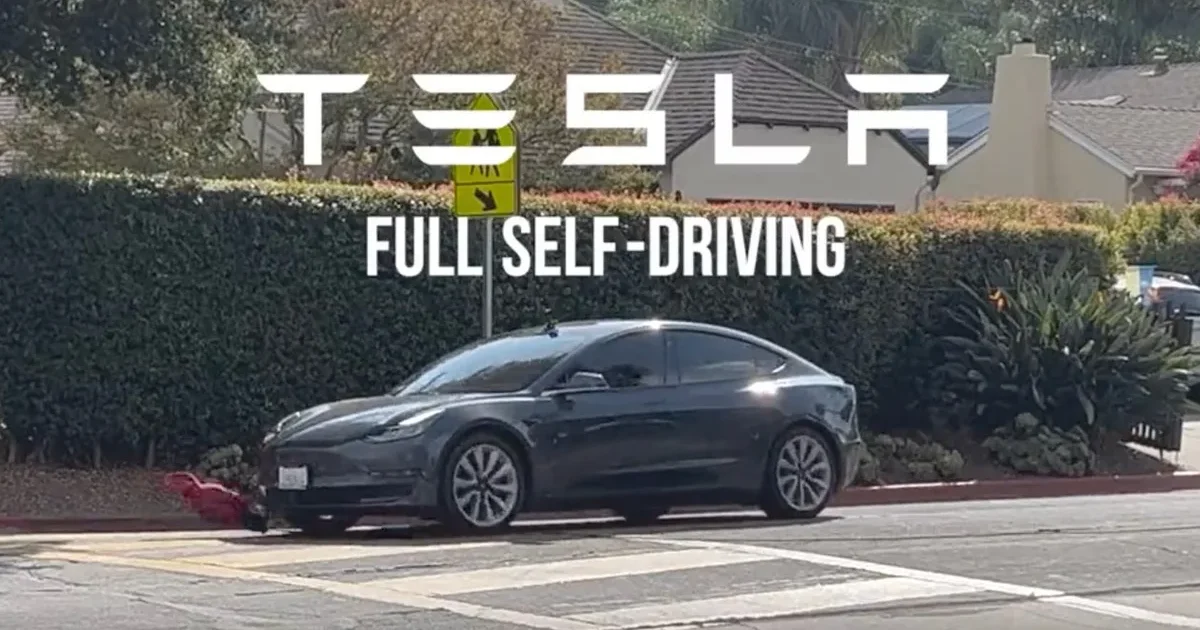
The Daxing District People’s Court in Beijing has held its first hearing in a class-action lawsuit brought by 10 Tesla owners who allege the company’s Full Self-Driving (FSD) feature constitutes false advertising and consumer fraud. The plaintiffs are seeking ¥3.95 million (approximately $548,000) in combined damages, claiming Tesla made misleading promises about autonomous driving capabilities that the FSD system has failed to deliver in China.
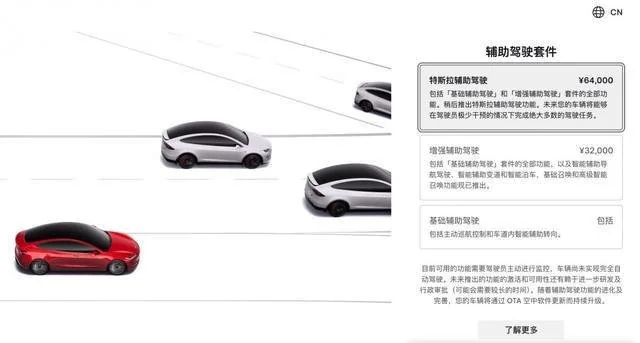
Per Electrek and multiple Chinese media outlets including Xinjing News (新京报), the lawsuit targets Tesla’s marketing of FSD as a “full self-driving” system when the feature in China remains limited to Level 2 driver assistance — requiring constant driver supervision and frequent intervention. The owners argue they paid significant premiums for FSD capability (¥64,000 / about $8,900 at the time of purchase for many plaintiffs) based on Tesla’s representations that full autonomy was imminent.
What FSD Actually Does in China
Tesla’s FSD in China operates under significantly more constrained conditions than in North America. Chinese regulations require all advanced driver assistance systems to comply with strict data security and mapping rules, limiting the scope of autonomous features. Unlike in the US, where Tesla’s FSD Beta has been deployed to hundreds of thousands of vehicles, the China version lacks city-street autonomous driving capability and is restricted primarily to highway Navigate on Autopilot and basic summon features.
The regulatory gap means Chinese Tesla owners have paid for FSD capability that may never be fully activated under current Chinese laws governing autonomous vehicles and data sovereignty. This contrasts sharply with domestic competitors like Huawei’s ADS 3.0 and XPeng’s XNGP, which offer urban NOA (Navigate on Autopilot) across hundreds of Chinese cities with regulatory approval.
Legal and Market Implications
The lawsuit, while modest in monetary terms, carries significant reputational risk for Tesla in China — its most important manufacturing and revenue market outside the United States. Tesla’s Shanghai Gigafactory produced 85,982 vehicles for delivery in May 2026 (a 39.4% year-on-year increase, per CPCA data), and China accounts for roughly one-third of Tesla’s global revenue.
A ruling against Tesla could set a precedent for hundreds of thousands of other Chinese FSD buyers and potentially trigger regulatory scrutiny from China’s State Administration for Market Regulation. According to Investing.com, the case is being closely watched by both the automotive and legal communities in China as a test of consumer protection law as applied to AI and autonomous driving features.
What’s Next
The Beijing court has not yet issued a ruling, and Tesla’s legal team is expected to argue that FSD is marketed as a continuously improving driver assistance system, not a fully autonomous product. The company recently shifted its Fremont production line from Model S/X to Optimus robots, signaling a strategic pivot toward AI and robotics. Whatever the legal outcome, the case highlights the growing tension between ambitious autonomous driving marketing and regulatory reality in China — the world’s largest EV market.