Quick Answer: SAIC Motor is a Shanghai state-controlled, stock-exchange-listed automotive group—not a founder-led startup. It owns MG, Roewe and Maxus, controls IM Motors and SAIC-GM-Wuling, and participates in separate joint ventures with Volkswagen and General Motors. SAIC sold 4.51 million vehicles in 2025; its official H1 2026 table recorded 2.05 million, with self-owned brands gaining share.
Last verified: July 17, 2026. Governance, sales, financial, joint-venture, overseas-production and tariff claims use SAIC, Shanghai Stock Exchange or European Commission material available on that date. Company targets and projects that are not operating are labeled rather than presented as facts.
Page role: This is BYDToday’s single Group Owner for SAIC Motor. It explains the company, leadership, brand and legal-entity boundaries. The Chinese EV startups landscape, EU tariff explainer and Southeast Asia market analysis remain supporting pages. Model launches, prices and monthly export stories belong on separate URLs in BYDToday’s knowledge hub.
What is SAIC Motor?
SAIC Motor Corporation Limited is a Shanghai-headquartered automobile group listed on the Shanghai Stock Exchange under code 600104. Its parent and ultimate control sit within Shanghai’s state-owned-assets system. That makes SAIC structurally different from privately founded EV companies: there is no single entrepreneur who can accurately be called “the founder of today’s SAIC Motor.”
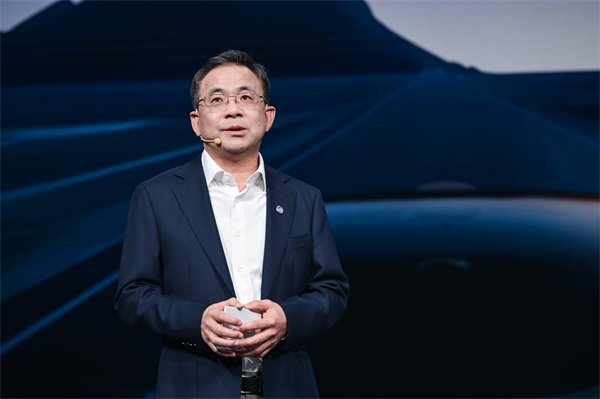
The current chairman and Party secretary is Wang Xiaoqiu. SAIC’s official biography says he was born in August 1964 and built his career across engineering, passenger vehicles, joint ventures and group management. He became group president in 2019 and chairman in July 2024. The current board term runs from June 27, 2025 to June 26, 2028. Jia Jianxu is the current president and a director. These are operating governance roles; neither executive should be described as SAIC’s founder or private owner.
The corporate perimeter is easy to misunderstand because “SAIC” appears in brands, subsidiaries and joint ventures. SAIC Passenger Vehicle is an operating branch, not a retail brand. MG, Roewe and Maxus are SAIC-owned brands or businesses. IM Motors is a controlled premium-EV subsidiary. SAIC-GM-Wuling, usually called SGMW, is controlled by SAIC but has substantial minority shareholders. SAIC Volkswagen and SAIC General Motors are equity-accounted joint ventures rather than brands SAIC owns outright.
SAIC history: from Shanghai manufacturing to a multi-brand group
SAIC’s roots are institutional, not a neat garage-startup story. Its official history begins in November 1955 with the Shanghai Internal Combustion Engine Spare Parts Manufacturing Corporation. The first Phoenix sedan was produced in September 1958. Subsequent reorganizations created the industrial base from which the modern listed group emerged.
International joint ventures became central to SAIC’s scale. Shanghai Volkswagen was founded in March 1985. The Shanghai General Motors contract was signed in March 1997 and the venture was established that June. SGMW was formed in November 2002. SAIC’s 2007 cooperation and consolidation with Nanjing Automobile brought MG into the group; that is more precise than saying SAIC simply purchased the original British MG Rover company in one direct transaction.
Roewe was launched in 2006 as a new SAIC brand. It is not the same legal brand as MG and was not founded in 2010. Maxus grew from SAIC’s commercial-vehicle operations. IM Motors was established later as a premium smart-EV venture and is now controlled by SAIC. This layered history explains why the group combines Chinese marques, an internationally recognized British-origin marque, controlled subsidiaries and long-running foreign joint ventures.
| Year | Milestone | Why it matters | Evidence boundary |
|---|---|---|---|
| 1955 | Shanghai engine-parts manufacturing organization established. | Official starting point for SAIC’s industrial history. | Not a private founder event. |
| 1958 | First Phoenix sedan produced. | Early passenger-car manufacturing capability. | Predates the present listed corporation. |
| 1985 | Shanghai Volkswagen founded. | Created a long-running international production venture. | The venture is not a wholly owned SAIC brand. |
| 1997 | Shanghai General Motors established. | Added another major technology, manufacturing and distribution partnership. | It remains a separate equity-accounted JV. |
| 2002 | SAIC-GM-Wuling formed. | Built a high-volume small-vehicle and commercial-vehicle base. | Controlled by SAIC, but not 100% owned. |
| 2006–2007 | Roewe launched; Nanjing Automobile consolidation brought MG into SAIC. | Expanded the self-owned passenger-car portfolio. | MG and Roewe are distinct brands. |
| 2020s | IM expanded premium-EV activity while JVs localized EV development. | Shows the group’s shift toward software, batteries and NEVs. | Announcements do not prove equal sales success. |
2025 results and 2026 YTD sales
SAIC sold 4,507,518 vehicles in 2025, up 12.3% year over year. Self-owned brands contributed about 2.93 million vehicles, or 65% of the group total, after growing 21.6%. New-energy vehicle sales reached 1.64 million, up 33.1%. Export and overseas-base sales reached 1.07 million, up 3.1%.
Financial results improved sharply from the 2024 low base. SAIC reported RMB656.24 billion of total revenue and RMB10.11 billion of net profit attributable to shareholders in 2025. Adjusted attributable profit was RMB7.42 billion, compared with a loss in 2024. The adjusted line matters because 2024 included major items related to SAIC-GM asset impairment and the change in accounting for JSW MG Motor India. A rebound is factual; describing the whole group as having “collapsed” is not.
For Q1 2026, SAIC reported RMB138.52 billion of operating revenue and RMB3.03 billion of attributable profit. Its investor headline also presented RMB140.42 billion of total revenue, which includes revenue outside the operating-revenue line. The two figures should not be mixed. Operating cash flow reached RMB31.99 billion, helped by timing and working-capital changes.
SAIC’s official H1 2026 sales table recorded 2,045,375 vehicles, down 0.35% year over year, despite a promotional release emphasizing record momentum in important categories. Self-owned-brand sales reached about 1.47 million, up 12.6% and equal to 71.8% of the group. NEV sales were 795,834, up 23.1%, and overseas sales were 734,676, up 48.7%. No H1 revenue or profit is inferred from those sales figures.
| Period | Vehicle result | Financial result | How to read it |
|---|---|---|---|
| FY 2025 | 4.508m; +12.3% YoY | RMB656.24bn total revenue; RMB10.11bn attributable profit | Strong recovery from a 2024 impairment-affected base. |
| FY 2025 NEV | 1.643m; +33.1% | Not a separate profit line | Shows powertrain transition, not segment profitability. |
| Q1 2026 | 973,000; about +3% | RMB138.52bn operating revenue; RMB3.03bn attributable profit | Do not substitute total revenue for operating revenue. |
| H1 2026 | 2.045m; -0.35% | Half-year financial result not used | Exact official table; no sales-to-profit extrapolation. |
| H1 2026 NEV / overseas | 795,834 / 734,676; +23.1% / +48.7% | Not disclosed in the sales table | Growth mix is stronger than the nearly flat total. |
Which brands belong to SAIC Motor?
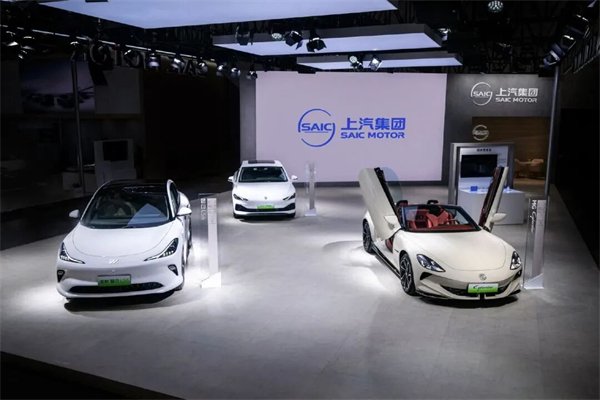
MG is SAIC’s internationally oriented passenger-car brand. Roewe is a separate China-focused marque. Maxus covers commercial vehicles, pickups, vans, MPVs and selected passenger products. IM Motors addresses premium smart EVs. Wuling and Baojun sit within SGMW, so they belong inside the controlled-subsidiary perimeter but should not be described as 100%-owned SAIC marques.
SAIC Passenger Vehicle is the internal operating branch that develops and manufactures major self-owned passenger vehicles. It is not a badge sold alongside MG or Roewe. In recent reorganization, Rising Auto’s activity has been integrated into the broader passenger-vehicle structure; treating it as a fully independent group pillar would overstate its current boundary.
2025 volume illustrates the different scales. SAIC Passenger Vehicle sold 886,742 vehicles, SGMW 1,615,066, Maxus 222,286 and IM 81,017. These entity figures cannot always be added as if they were brand retail registrations: reporting scopes include subsidiaries, branches, wholesale movements and market-specific entities.
| Name | What it is | SAIC relationship | Owner-page boundary |
|---|---|---|---|
| MG | Global passenger-car brand | SAIC-owned; obtained through the 2007 Nanjing Automobile consolidation | Local models, prices and exports belong on support pages. |
| Roewe | China-market passenger-car brand | SAIC-owned; launched in 2006 | Not a renamed MG entity. |
| IM Motors | Premium smart-EV company and brand | Controlled SAIC subsidiary | Not wholly equivalent to SAIC Passenger Vehicle. |
| Maxus | Commercial and passenger-vehicle business | Wholly owned SAIC subsidiary | Market names and product mix vary by country. |
| SAIC Passenger Vehicle | Operating branch | Internal SAIC entity supporting self-owned passenger cars | Not a consumer-facing marque. |
| Wuling / Baojun | Brands within SGMW | Inside a SAIC-controlled, multi-shareholder subsidiary | Control is not 100% ownership. |
How SAIC’s Volkswagen, GM and Wuling ventures differ
SAIC Volkswagen and SAIC General Motors are long-running joint ventures accounted for under the equity method. Their vehicles may count within SAIC’s group sales disclosure, but 100% of their revenue is not consolidated into SAIC Motor’s reported revenue. SAIC’s economic share appears through investment income and other equity-accounting effects.
SGMW has a different boundary. SAIC holds 50.1%, which gives it control, while General Motors and Guangxi Automobile Group hold the remaining interests. SGMW is therefore consolidated, with minority interests recognized. This distinction is why “SAIC owns Wuling” is directionally understandable but legally incomplete.
The joint-venture reset is not a simple retreat from foreign partners. SAIC’s annual report says SAIC Volkswagen and SAIC-GM adjusted production layouts and reused capacity for new products, including locally developed EVs. Audi’s E5 program and Buick’s Electra L7 illustrate a faster China-development approach. At the same time, H1 2026 sales fell 31.2% at SAIC Volkswagen and 5.7% at SAIC-GM, while SAIC Passenger Vehicle and IM grew. Product announcements do not erase current volume pressure.
| Entity | Structure | 2025 sales | H1 2026 status |
|---|---|---|---|
| SAIC Volkswagen | Equity-accounted JV with Volkswagen | 1.024m; -10.8% | 338,591; -31.2% |
| SAIC General Motors | Equity-accounted JV with General Motors | 535,000; +23.0% | 231,154; -5.7% |
| SAIC-GM-Wuling | SAIC-controlled subsidiary with GM and Guangxi Automobile shareholders | 1.615m; +20.5% | 681,094; -9.6% |
| JSW MG Motor India | SAIC retained 49%; equity-accounted after 2024 transaction | 69,997; +17.8% | 35,899; +12.6% |
Overseas production, MG exports and the EU tariff boundary
SAIC says its products and services reach more than 170 countries and regions, with cumulative overseas sales exceeding six million vehicles by the end of 2025. MG is the leading international brand. The annual report says MG sold more than 300,000 vehicles in Europe in 2025. That is company-reported wholesale or market activity, not a claim that every European country grew or generated profit.
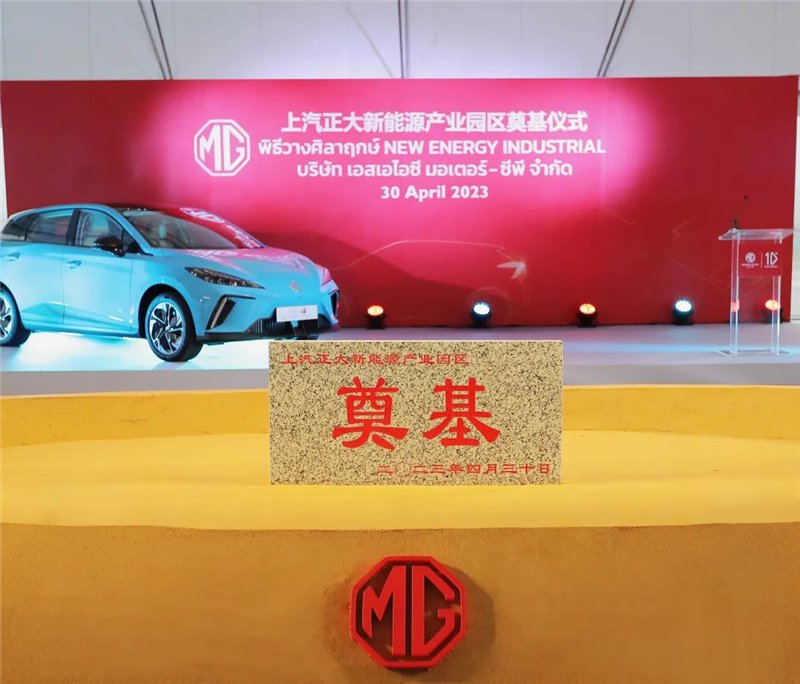
Confirmed overseas manufacturing includes SAIC Motor-CP in Thailand and Wuling’s Indonesian base. India is now structurally different: JSW MG Motor India is an equity-accounted venture after SAIC retained 49% in the 2024 transaction. SAIC’s official footprint also includes sales, R&D, parts and logistics operations. Those should not all be called complete-vehicle factories.
The European Commission imposed a definitive 35.3% countervailing duty on SAIC battery-electric vehicle imports in October 2024, in addition to the standard EU car import duty where applicable. A January 2026 Commission guidance document created a process for price-undertaking offers, assessed case by case. It did not automatically cancel or suspend SAIC’s duty.
No operating SAIC complete-vehicle factory in Europe was confirmed in the primary sources used for this cutoff. Future localization, capacity or model targets are PENDING: company intentions until a plant, transaction or production start is independently and officially confirmed.
| Market | Entity or role | 2025 / H1 2026 sales | Boundary |
|---|---|---|---|
| Thailand | SAIC Motor-CP; SAIC-controlled production operation | 29,391 / 12,531 | Current factory/industrial base is confirmed. |
| Indonesia | Wuling Indonesia controlled operation | 21,016 / 9,672 | Local production; results are not all MG-branded. |
| India | JSW MG Motor India | 69,997 / 35,899 | Equity-accounted; SAIC retained 49%, not control. |
| Europe | MG distribution, sales, service and R&D network | MG Europe above 300,000 in 2025; H1 2026 above 190,000 company-reported | No complete-vehicle factory confirmed here. |
| Other regions | Sales, logistics, parts and selected production networks | Included in 1.071m overseas sales in 2025 | Global footprint does not mean a factory in every country. |
What to watch next
Three tests matter more than a single launch. First, can SAIC Passenger Vehicle, IM, Maxus and SGMW keep raising the self-owned share without sacrificing margin? Second, can SAIC Volkswagen and SAIC-GM convert localized development and repurposed capacity into stable volume? Third, can MG preserve European scale while managing duties, pricing, dealer economics and possible localization?
Readers should also separate wholesale sales from registrations, group revenue from joint-venture revenue, and targets from completed assets. SAIC’s breadth is a strategic advantage, but it makes simple narratives unreliable. The group can grow in NEVs and exports while individual JVs contract; it can report higher profit while cash flow falls; and it can expand overseas without owning every foreign operation. Reporting scope should always be checked before comparing one entity with another.
Frequently asked questions
What is SAIC Motor?
SAIC Motor Corporation Limited is a Shanghai state-controlled automotive group listed on the Shanghai Stock Exchange under code 600104. It combines SAIC-owned brands, controlled subsidiaries and equity-accounted joint ventures.
Who owns SAIC Motor?
SAIC Motor is a publicly listed company ultimately controlled through Shanghai’s state-owned-assets system. It is not owned by chairman Wang Xiaoqiu, president Jia Jianxu or a private founder.
Which brands belong to SAIC Motor?
SAIC owns MG, Roewe and Maxus and controls IM Motors. Wuling and Baojun operate inside SAIC-GM-Wuling, a SAIC-controlled subsidiary with other shareholders. SAIC Passenger Vehicle is an operating branch, not a retail brand.
What is SAIC’s relationship with Volkswagen and General Motors?
SAIC Volkswagen and SAIC General Motors are separate equity-accounted joint ventures, not wholly owned SAIC brands. SAIC-GM-Wuling is different: SAIC holds 50.1% and controls the subsidiary, while General Motors and Guangxi Automobile Group hold minority interests.
How many vehicles did SAIC sell in 2025 and H1 2026?
SAIC sold 4,507,518 vehicles in 2025, up 12.3% year over year. Its official H1 2026 table recorded 2,045,375 vehicles, down 0.35%, while NEV and overseas sales grew 23.1% and 48.7% respectively.
Where does SAIC manufacture vehicles outside China?
Confirmed overseas vehicle-production operations include Thailand and Indonesia. India is handled through equity-accounted JSW MG Motor India after SAIC retained 49%. Europe has MG sales, distribution and R&D activity, but this Owner does not treat an operating complete-vehicle factory there as confirmed.
Sources
- SAIC Motor, 2025 annual report
- SAIC Motor, Wang Xiaoqiu official biography
- SAIC Motor, H1 2026 monthly sales table
- SAIC Motor, H1 2026 business release
- SAIC Motor, Q1 2026 results release
- SAIC Motor history, 1955 corporate roots, Volkswagen and GM joint ventures, and MG and Nanjing Automobile history
- SAIC Motor, JSW MG Motor India transaction
- European Commission, January 2026 price-undertaking guidance
- European Commission, definitive EV countervailing-duty decision, October 2024