Last updated: June 8, 2026.
Quick Answer: High oil prices make electrified cars more attractive, but they do not make every country a full-EV market overnight. Full EVs win fastest where home charging, cheap electricity and public fast charging are available. Plug-in hybrids win where gasoline is expensive but charging is uneven, road trips are long, or buyers cannot reliably charge at home.
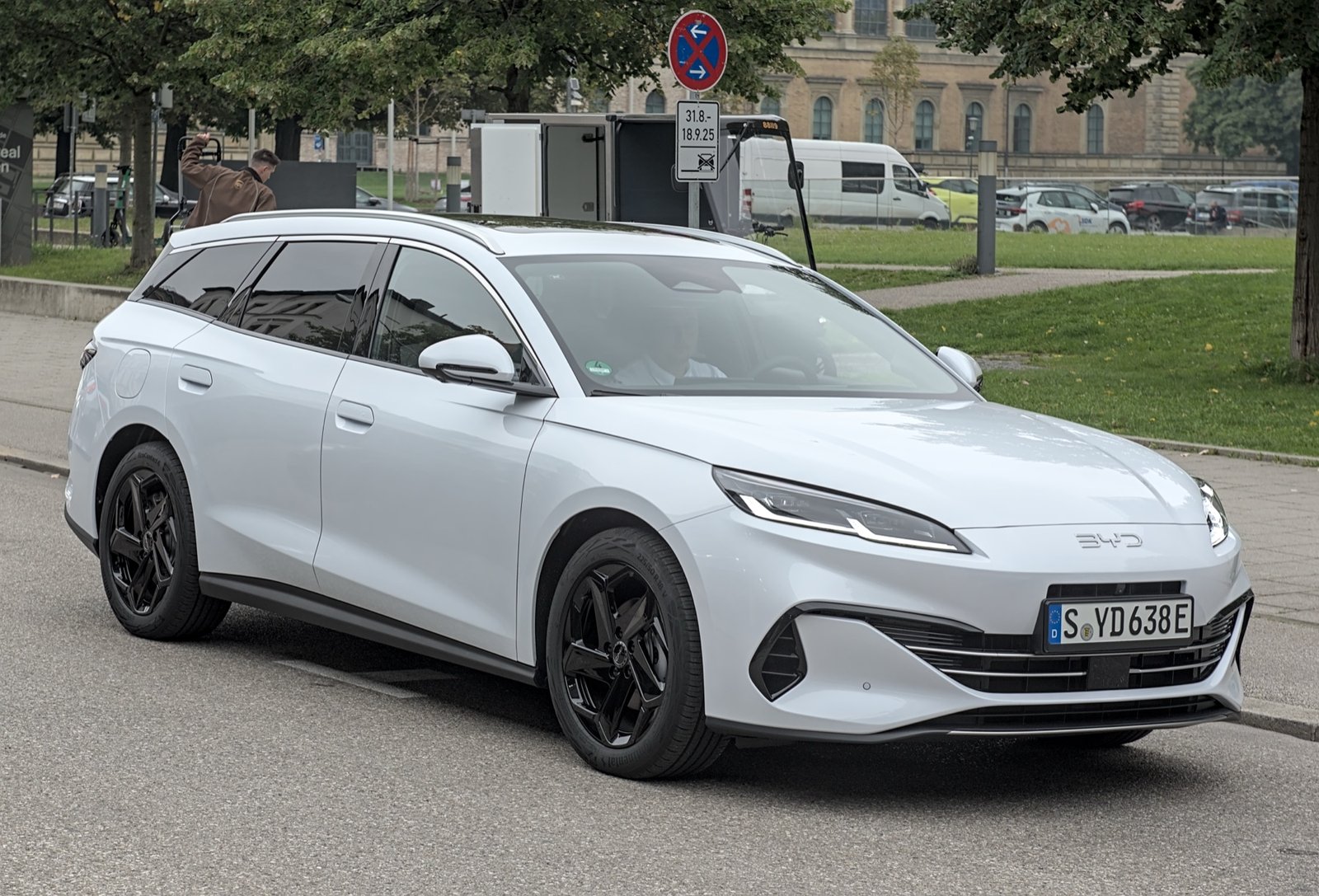
Why This Topic Is Hot
Whenever oil prices spike, consumers start recalculating the cost of every commute, delivery route and family road trip. EV searches rise because electricity is not directly tied to gasoline prices. But buyers still face one practical question: should they go full EV, or choose a plug-in hybrid first?
The answer depends on local infrastructure. The International Energy Agency has repeatedly framed electrification as a way to reduce exposure to oil shocks, but the fastest consumer adoption happens where charging, electricity pricing and vehicle availability align.
The Simple Rule
Choose a full EV when charging is easy. Choose a PHEV when fuel is painful but charging is uncertain.
That is why BYD’s DM-i plug-in hybrid strategy matters overseas. In China, consumers often focus on full EV range and fast charging. Overseas, the more important question may be whether the buyer has a driveway, apartment charging, long-distance highway chargers, and a service network nearby.
Region-by-Region Answer
| Market Type | Best First Choice | Why |
|---|---|---|
| Europe with strong home/public charging | Full EV | High fuel prices plus mature charging make EV savings clear. |
| Australia regional and towing-heavy users | PHEV or long-range EV | Distances and towing can make PHEV flexibility valuable. |
| Thailand and Southeast Asian cities | EV for home chargers, PHEV for mixed use | Urban EV use is strong, but charging quality varies by location. |
| Latin America | PHEV first in many markets | Fuel prices hurt, but charging and service networks are uneven. |
| Japan city drivers | Small EV | Short trips and compact parking favor small battery EVs. |
| United States mainstream buyers | Depends on model access | Chinese EVs remain blocked, so local availability shapes choices. |
When Full EVs Win
- You can charge at home or at work most days.
- Your local electricity price is stable and cheaper than gasoline per mile.
- Your road trips are covered by reliable fast chargers.
- You plan to keep the car long enough to benefit from lower maintenance and energy costs.
- You have access to official warranty and battery service.
This is why full EVs can be compelling in parts of Europe, China, some Australian cities, and dense urban markets with reliable charging.
When PHEVs Win
- You cannot reliably charge every day.
- You take long highway trips or regional drives.
- Public fast charging is expensive, crowded or unreliable.
- You want EV driving for weekday commutes but gasoline backup for weekends.
- Resale buyers in your market still fear full EV range or battery risk.
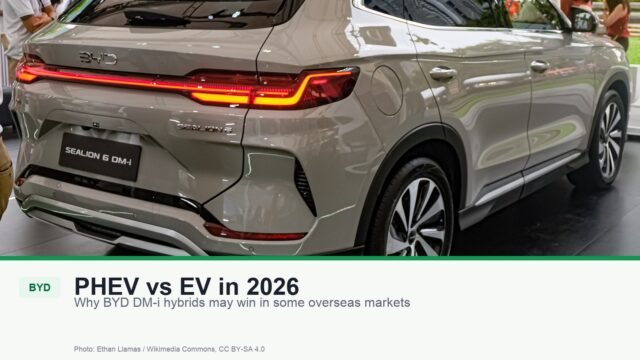
For this buyer, a BYD DM-i style plug-in hybrid can cut gasoline use sharply without forcing a full infrastructure bet. See our deeper explainer: PHEV vs EV in 2026: Why BYD DM-i Hybrids May Win Overseas.
The Buyer Math That Matters
| Question | Why It Matters |
|---|---|
| Can I charge at home? | Home charging is the strongest EV advantage. |
| How much is electricity per kWh? | Cheap electricity widens the savings versus gasoline. |
| How much public fast charging will I use? | Frequent fast charging can reduce or erase savings. |
| How many highway miles do I drive? | High-speed driving reduces EV range more than city driving. |
| How long will I keep the car? | Energy savings need time to offset purchase price and depreciation. |
Bottom Line
Oil shocks make EVs and PHEVs more attractive, but the best answer is local. Full EVs win where charging is easy and electricity is cheap. PHEVs win where fuel is expensive but charging remains patchy. That is why Chinese automakers with both EV and plug-in hybrid lineups, especially BYD, are well positioned in overseas markets where consumers want savings without taking on too much infrastructure risk.
FAQ
Do high oil prices automatically make EVs cheaper to own?
No. High oil prices help EVs, but total ownership cost still depends on electricity prices, charging access, insurance, depreciation, maintenance and purchase price.
Are PHEVs better than EVs during an oil shock?
Not always. Full EVs are best for drivers with easy charging. PHEVs are often better for drivers who face high fuel prices but cannot rely on charging everywhere.
Why does BYD benefit from this trend?
BYD sells both full EVs and plug-in hybrids, allowing it to match different markets instead of forcing every buyer into one technology path.